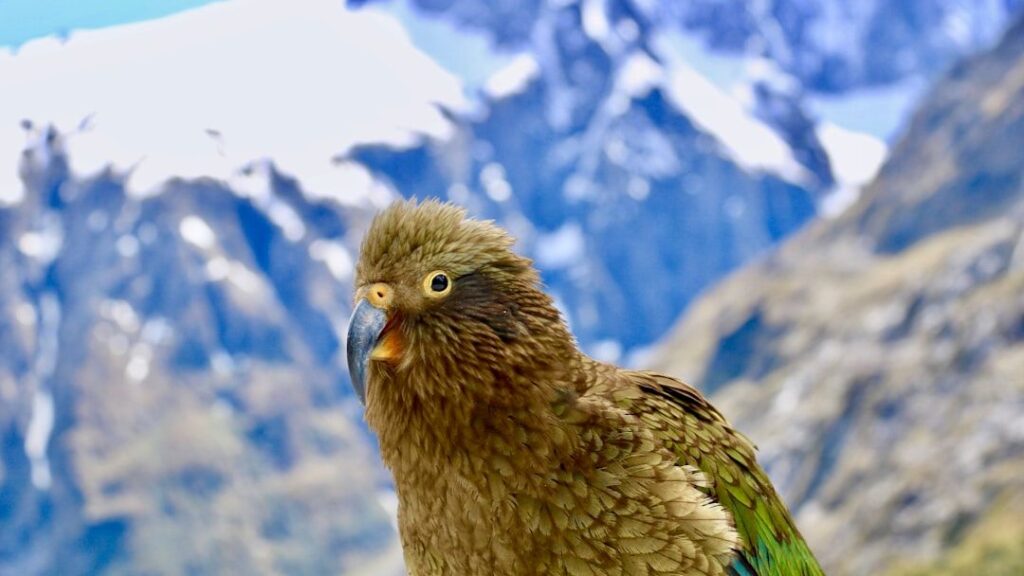

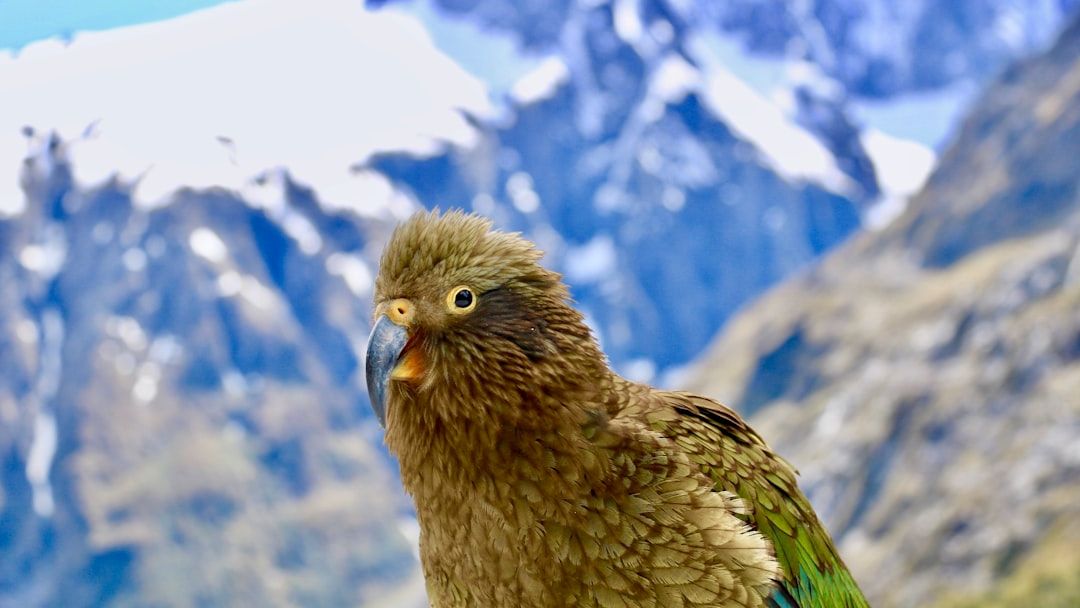
No beak = weak? Not for this New Zealand parrot that’s the alpha male of his flock – Image for illustrative purposes only (Image credits: Unsplash)
Recent observations of a captive kea parrot in New Zealand highlight how cognitive flexibility can sometimes offset severe physical limitations in animals. The case centers on a male bird that has lived without an upper beak for more than a decade yet consistently outcompetes others in social encounters. Researchers documented the bird’s unusual tactics and linked them to broader questions about survival strategies in endangered species. The findings add a concrete example to ongoing discussions about how large-brained birds adapt when standard tools for feeding or fighting are unavailable.
The Background of an Unusual Subject
The parrot, identified as Bruce, belongs to the kea species, which is native only to New Zealand’s South Island and currently listed as endangered. An estimated 4,000 adults remain in the wild, according to conservation assessments. Bruce was born in the wild but was brought into captivity roughly twelve years ago after losing his entire upper beak. He has since resided at the Willowbank Wildlife Reserve in Christchurch, where staff and visiting scientists have monitored his daily interactions.
Unlike most birds, whose beaks serve multiple essential roles in eating, grooming, and defense, Bruce has had to manage without the upper half of this structure. Staff at the reserve noted early on that he adapted his feeding methods, yet his social behavior proved even more distinctive. The reserve setting allowed close, repeated observation of how he navigated group dynamics with other keas that possess intact beaks.
Observed Tactics in Social Encounters
Researchers recorded Bruce taking part in 36 separate combative interactions with other keas. In every instance he emerged as the winner. Rather than relying on the typical beak-to-beak pushing or biting seen in the species, Bruce used his lower beak in a forward thrusting motion that resembled jousting. This approach differed from the techniques employed by birds with complete beaks, both in frequency and in the body areas he targeted.
Typical kea confrontations often focus on the head or neck, but Bruce directed his thrusts toward other regions, apparently exploiting openings created by his opponents’ more conventional movements. He also initiated these encounters more often than his flock mates. The pattern suggests he developed a specialized strategy that compensated for the missing upper beak while still allowing him to assert dominance.
What the Study Reveals About Flexibility
Lead author Alexander Grabham described the observations in a published statement, noting that Bruce demonstrates how behavioral innovation can help bypass physical disability in species capable of developing new solutions. The research also references earlier work connecting large brain size, behavioral flexibility, and species-level survival rates. In this instance, the adaptation appears limited to one individual rather than a population-wide trait.
Because the study examined a single bird in a captive environment, the authors caution against broad generalizations. It remains unclear whether similar innovations occur among wild keas facing comparable injuries or whether the captive setting influenced the development of the jousting technique. Further field observations would be needed to determine how common such adjustments might be outside controlled conditions.
Implications for Conservation and Future Research
The kea’s endangered status makes any insight into individual resilience potentially useful for management decisions. Captive programs already focus on maintaining genetic diversity and preparing birds for possible reintroduction efforts. Understanding how certain individuals cope with injury could inform enrichment strategies or health monitoring protocols at facilities like Willowbank.
At the same time, the case underscores limits to what one example can explain. Population declines in the wild stem primarily from predation, habitat loss, and human-related threats rather than isolated beak injuries. Conservation priorities therefore continue to center on reducing those external pressures while supporting research that tracks behavioral variation across both captive and free-ranging groups.
What matters now: Continued monitoring of Bruce and similar cases could clarify whether targeted behavioral adaptations improve long-term welfare for injured birds in managed populations, though broader threats to the species require separate, sustained attention.
The example of this particular kea illustrates one pathway by which cognitive capacity can intersect with physical challenge. Whether such flexibility proves decisive for the species as a whole will depend on larger-scale efforts to protect remaining habitat and reduce mortality factors that affect healthy birds as well as those carrying injuries.