Somewhere below the waves, the rules seem to bend. Instruments glitch, sounds echo from nowhere, and living things appear that look like they belong in science fiction concept art, not on a field report. For decades, oceanographers, geologists, and biologists have been cataloging these oddities, trying to pin them down with neat theories, and the ocean keeps shrugging them off.
What makes these mysteries so irresistible is that they sit right at the edge of what we know. We have data, we have photos, we sometimes even have samples in jars and freezers. And yet, the pieces never quite click into a complete picture. In a world where it feels like everything is already mapped, these ocean finds are a reminder that a huge part of our own planet is still stubbornly unknown.
#1 The Bloop: A Colossal Sound That Should Not Exist
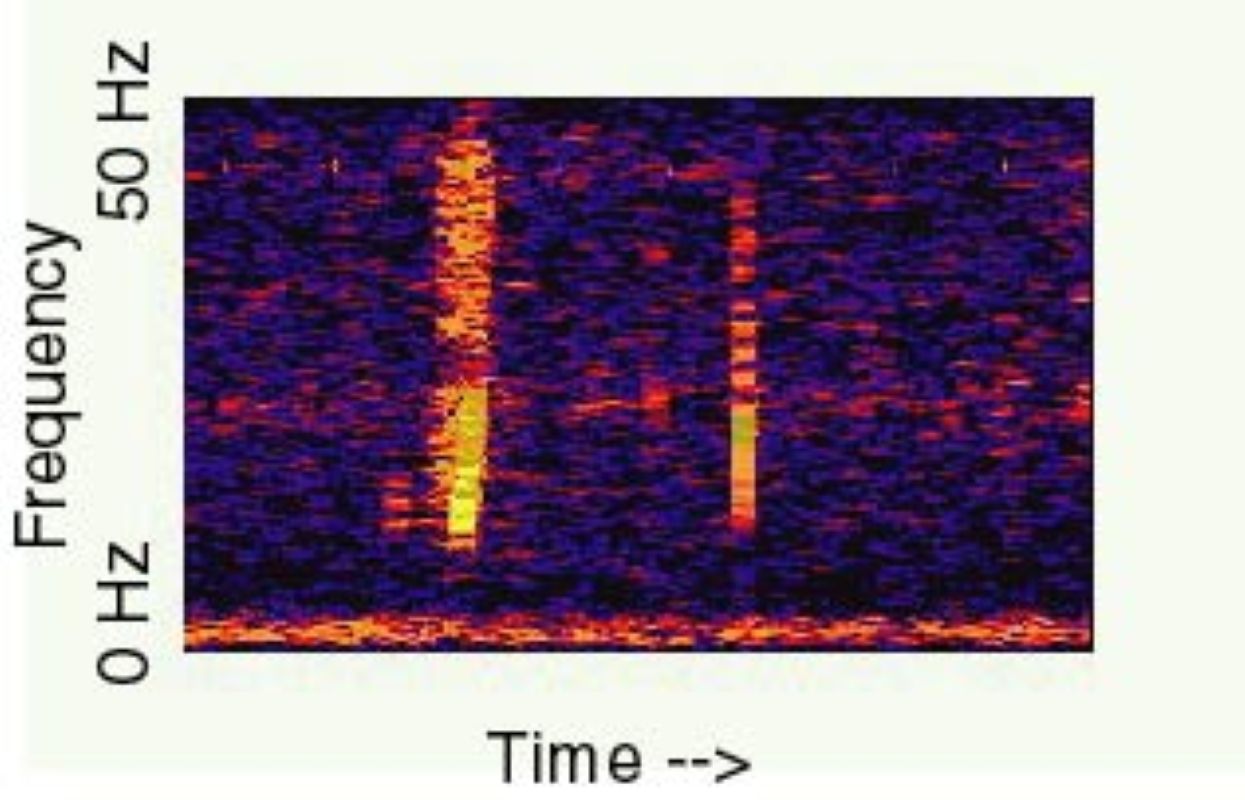
Imagine listening in on the deep Pacific and suddenly picking up a noise so loud and low that, if it were an animal, it would have to be bigger than any creature ever known. That is essentially what happened in the late 1990s, when underwater microphones detected a strange, ultra-powerful sound that came to be nicknamed the Bloop. Its signal rose in frequency in a way that resembled a biological call, but the sheer energy involved did not seem to match any known whale, fish, or invertebrate.
Researchers later suggested that it might have been the sound of a massive icequake or ice shelf fracturing, and that explanation fits a lot of the physics. Still, there is a lingering unease among people who have listened to the raw recordings: they hear something that feels alive. Personally, I lean toward the ice explanation because it lines up with what we already know about polar regions, but I love that the recording has become almost modern folklore – a scientific Rorschach test where you either hear geology or a monster the size of a small city.
#2 The Baltic Sea “Anomaly”: Natural Rock, Ancient Structure, Or Something Else?
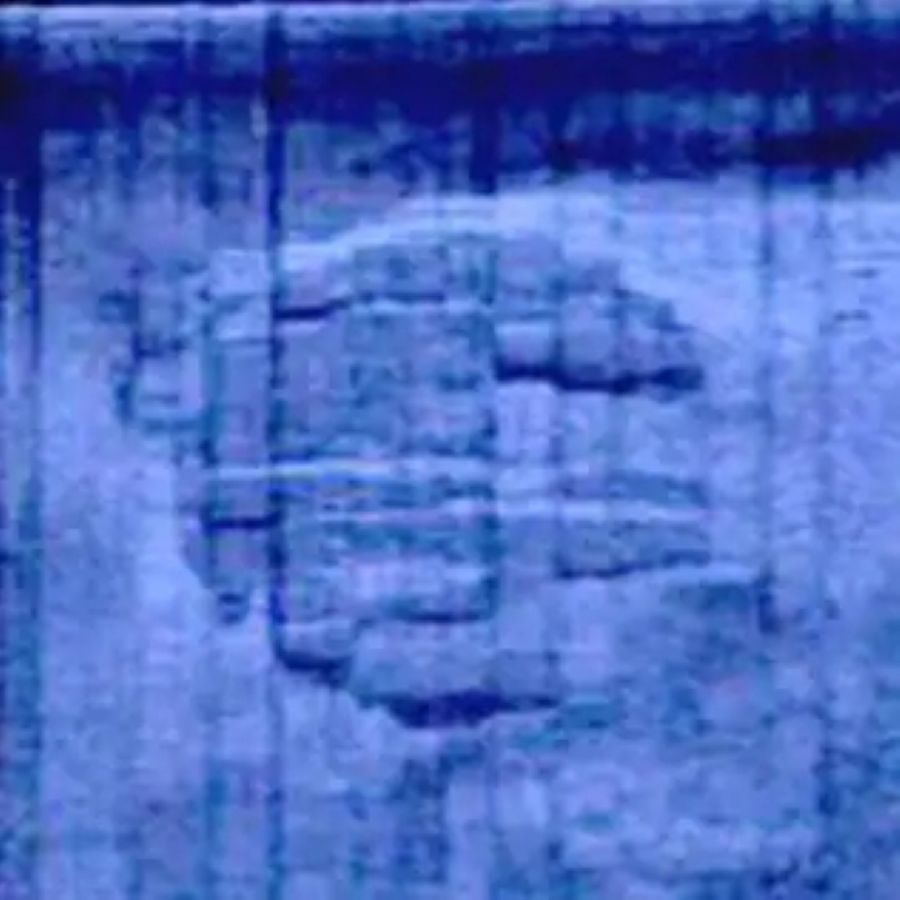
When a team of Swedish treasure hunters scanned the floor of the Baltic Sea in the early 2010s, they spotted a round, disc-like shape about the size of a modest building. Sonar images showed sharp edges, nearly geometric lines, and what looked suspiciously like steps leading up to it. The find was quickly dubbed the Baltic Sea Anomaly, and from day one it landed in the crossfire between sober geology and wild speculation.
Most marine geologists who have examined the available data argue that it is likely a natural rock formation shaped by glaciers and erosion, perhaps accentuated by sonar artifacts. Yet, some details in the scans – straight “corridors,” angular drops, and right angles – continue to make both laypeople and a few open-minded researchers squint a little harder. The uncomfortable truth is that without high-resolution mapping and extensive sampling, nobody can definitively close the book, which just fuels the sense that this thing might be more than a boring boulder.
#3 The Mariana Trench “Snailfish” And The Limits Of Life
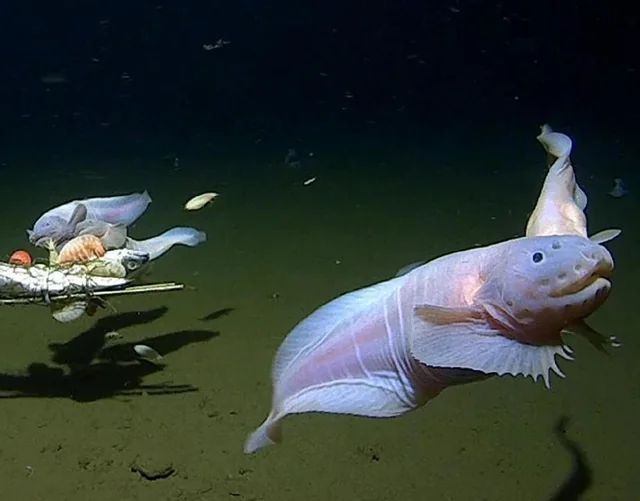
Deep in the Mariana Trench, in pressures equivalent to a stack of passenger jets balanced on your back, cameras have captured delicate, translucent fish that look like they should fall apart if you touched them. These snailfish are among the deepest-living vertebrates ever recorded, thriving in conditions that we once assumed were simply too extreme for complex animals. Their bodies are soft and almost ghostlike, with interiors that seem barely held together.
Scientists have learned that these fish use special molecules and flexible bones to cope with crushing pressure, but there is still no full picture of how their cells, membranes, and proteins avoid collapsing. Even more puzzling is how their entire physiology – from reproduction to digestion – works at such extremes without breaking down over time. To me, these fish are a polite slap in the face to our confidence: every time we draw a line on what life can handle, something from the deep slides right over it as if it never existed.
#4 Deep-Sea “Brine Pools”: Lakes At The Bottom Of The Ocean
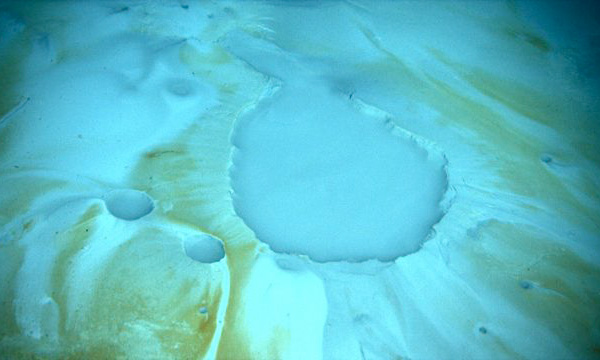
Picture a lake with waves, shores, and ripples – but it sits inside the ocean itself, like a second, denser sea resting on the seafloor. That is exactly what deep-sea brine pools look like in remotely operated vehicle footage. These are pockets of super-salty, often toxic water that refuse to mix with the surrounding seawater, creating a sharp boundary you can actually see, like a shimmering mirror on the bottom.
We know that these pools form when salt deposits buried beneath the seabed dissolve and seep out, creating dense, heavy brines. What remains baffling is how life clusters around these “deadly lakes.” Mussels, worms, and strange bacteria form communities along the edges, using chemicals like methane and hydrogen sulfide for energy instead of sunlight. We understand the broad strokes of this chemistry-based life, but the fine details – how entire mini-ecosystems stabilize on such a knife-edge of toxicity – are still frustratingly incomplete.
#5 The Yonaguni Underwater Structures: Natural Geology Or Lost Architecture?
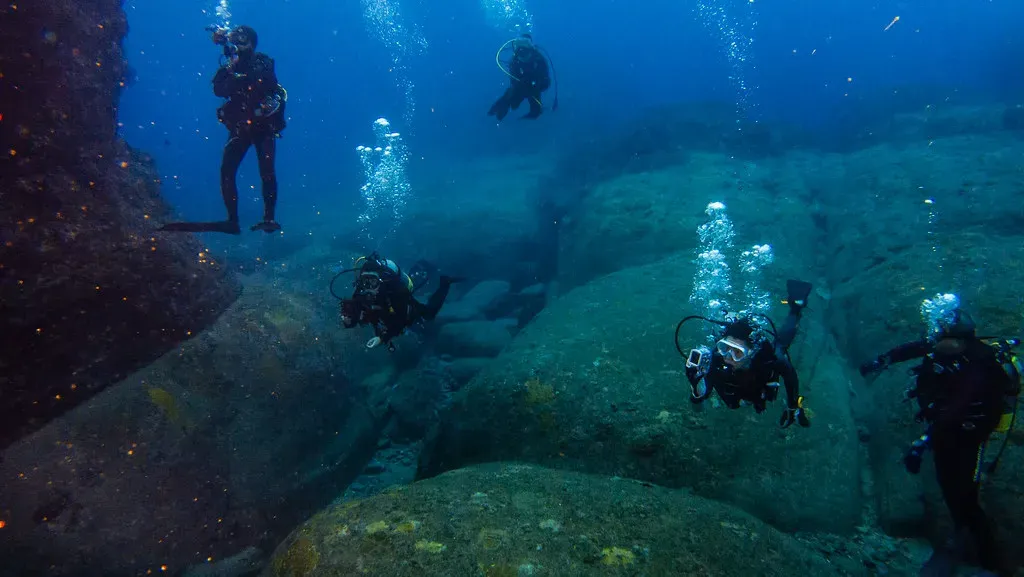
Off the coast of Yonaguni in Japan, divers discovered a series of stepped, terrace-like formations with flat surfaces, sharp angles, and what look suspiciously like carved staircases. The formations are huge, stretching dozens of meters, and have an eerie, temple-like presence when seen in clear water. To some eyes, it looks like a sunken city; to others, a stunning example of nature mimicking human design.
Most geologists argue for a natural origin, pointing out that layered sandstone can fracture into geometric blocks and platforms under the right stresses. However, there are enough features – apparent terraces, what resemble corridors, and oddly straight edges – to keep alternative interpretations alive. My opinion sits in the uneasy middle: I suspect it is largely natural rock, but I would not be shocked if ancient humans once modified parts of it, leaving behind a puzzle where geology and archaeology overlap so tightly that they are hard to separate.
#6 The “Milky Sea” Phenomenon: Oceans That Glow For Hundreds Of Kilometers
Imagine looking out from a ship at night and seeing the ocean glowing in a steady, ghostly white that stretches beyond the horizon. Sailors have reported these so-called milky seas for centuries, but only in recent decades have satellites started to confirm that massive patches of bioluminescence truly do appear, sometimes covering areas larger than small countries. The glow is continuous, not the brief sparkling we see when waves disturb plankton near shore.
The leading explanation is that huge populations of luminous bacteria bloom on or near the surface, switching on their light in a coordinated way, possibly triggered by chemical signals. The trouble is, scientists still do not fully understand what flips that switch on such a vast scale, or why these bacteria would invest so much energy into glowing for so long. It feels like staring at a neon sign with no clear message: spectacular, undeniable, and still oddly purpose-less from a human point of view.
#7 The “Black Smoker” Chimneys And Their Alien-Like Life
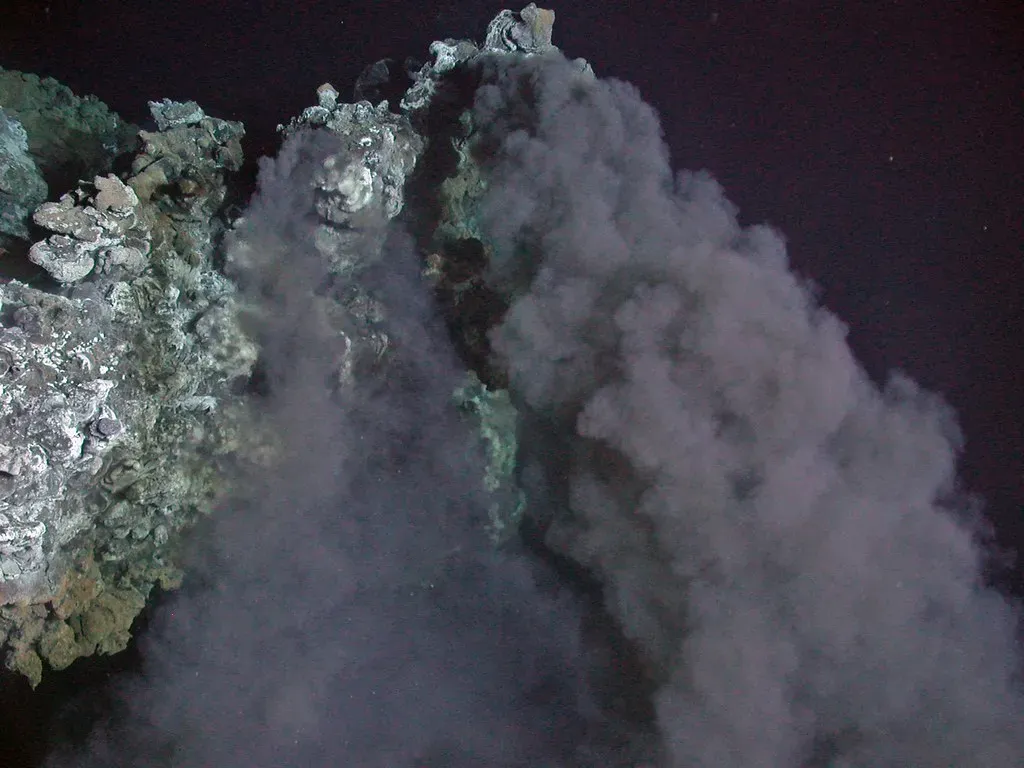
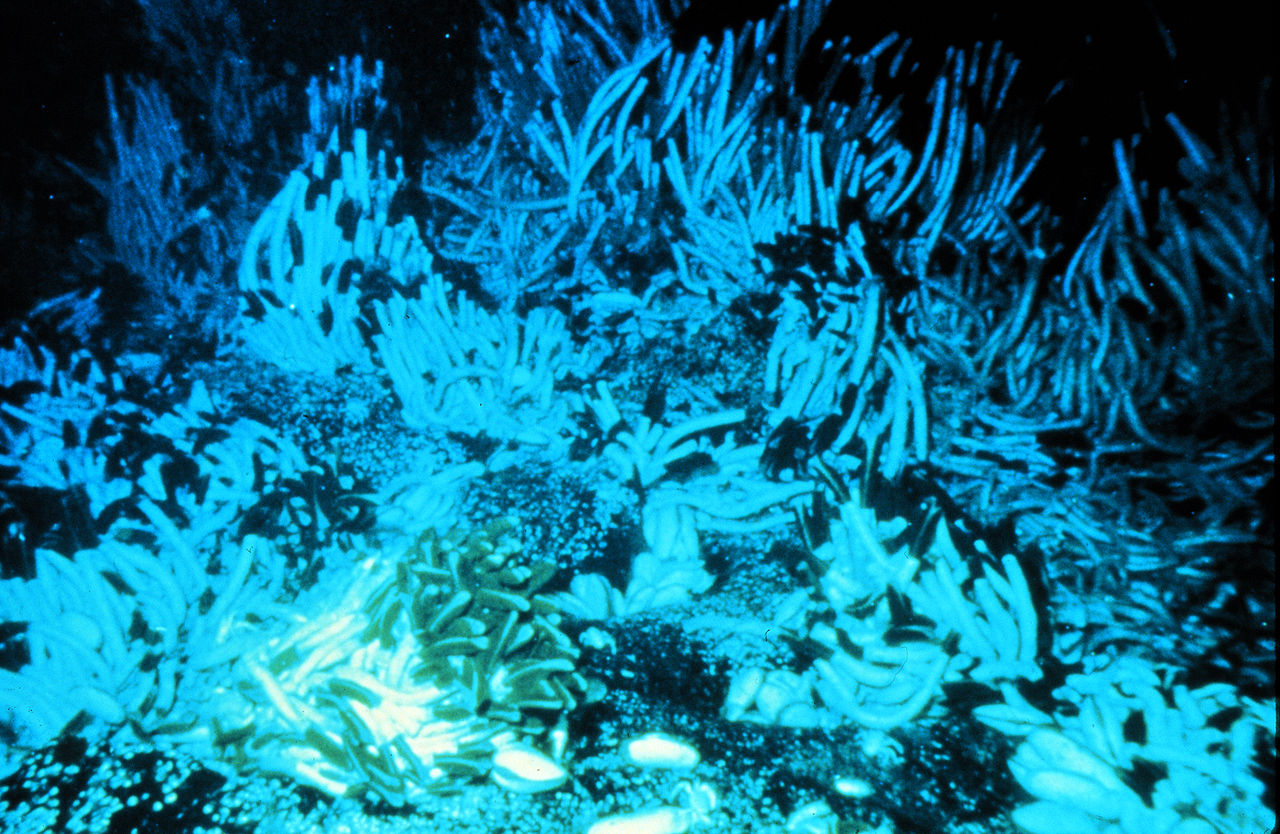
When hydrothermal vents – nicknamed black smokers – were discovered in the late 1970s, they overturned basic assumptions about how ecosystems start. These chimneys blast superheated, mineral-rich fluid into near-freezing water, creating dark plumes that look almost volcanic. Around them, scientists found communities of giant tube worms, clams, shrimp, and bizarre microbes thriving with zero sunlight, powered instead by chemical reactions.
We understand that certain bacteria use chemicals like hydrogen sulfide to build organic matter, and everything else in the vent community stacks on top of that chemical “photosynthesis substitute.” Yet, decades later, there are still major gaps: how did these species evolve such radical adaptations? How do they disperse between isolated vents that can be hundreds of kilometers apart? And do similar ecosystems exist on icy moons like Europa and Enceladus? I think vents are less a solved puzzle and more like a preview of how weird life in our universe might actually be.
#8 The “Underwater Waterfall” Off Mauritius
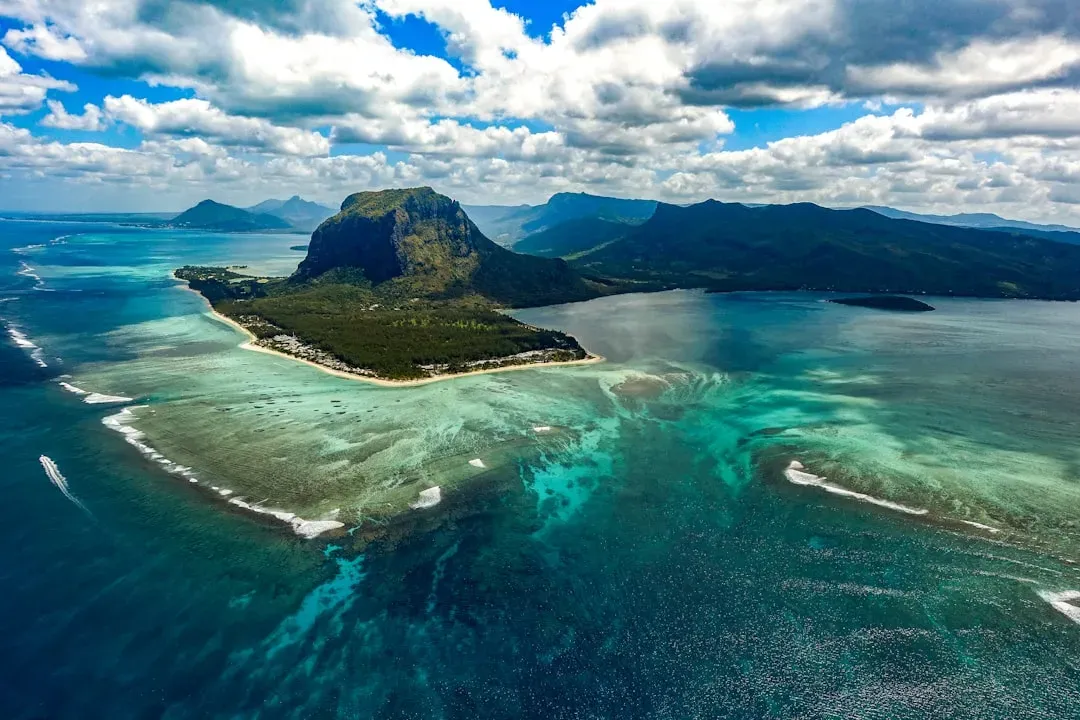
If you scroll through ocean photos online, you will eventually stumble on an image that looks like an enormous waterfall plunging into a hole in the ocean near Mauritius. While the dramatic version we see in pictures is enhanced by perspective and sand flowing off a submerged shelf, the underlying phenomenon is real: density-driven currents and seafloor shapes can make water cascade down underwater slopes like a hidden waterfall.
Oceanographers can describe how colder, saltier water flows beneath warmer, lighter water, creating these plunging flows along underwater ridges. What remains tricky is predicting and fully modeling these systems across long timescales. They may play a quiet but important role in how heat and carbon move around the planet, but our instruments barely scratch their full behavior. To me, these “waterfalls” are a humbling example of how even basic-seeming things like “water flowing downhill” get complicated and mysterious once you put them under a few hundred meters of ocean.
#9 The Origin Of Sargasso Sea Garbage Clusters
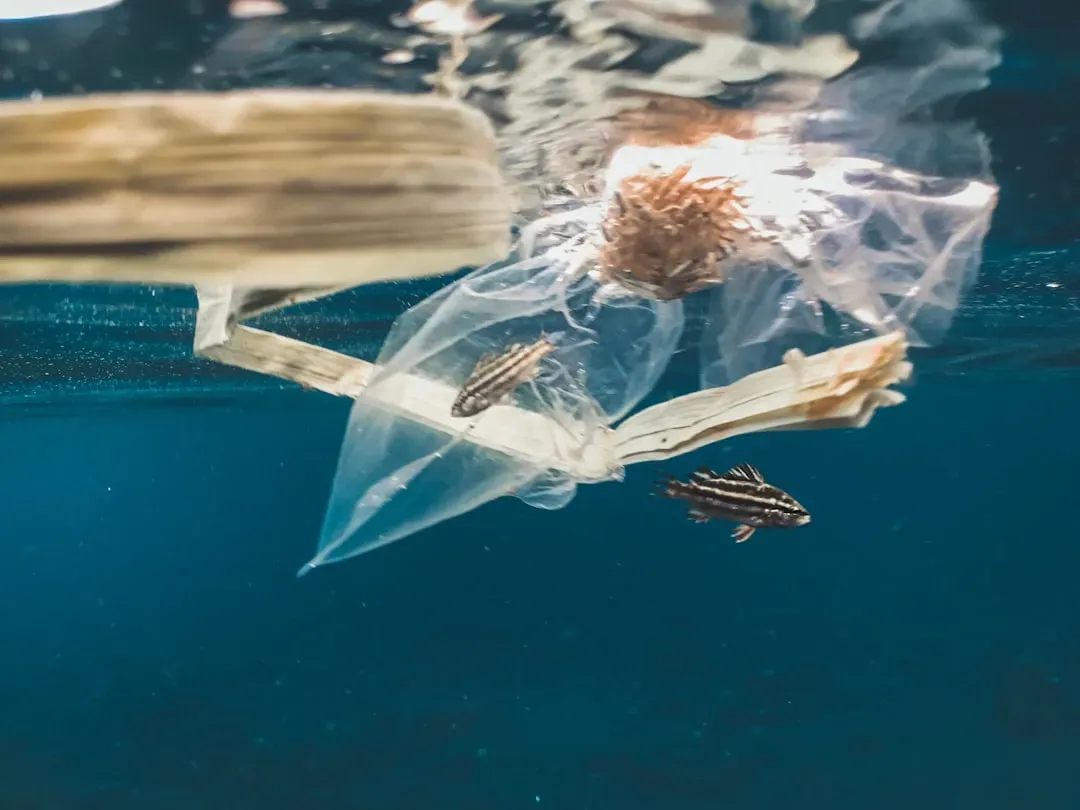
The Sargasso Sea in the North Atlantic is famous for its floating mats of golden-brown seaweed, but it is also infamous for swirling clusters of human-made debris. While we know ocean gyres act like slow-motion whirlpools that gather floating objects, the detailed behavior of these clusters – where they form, how they grow, and how long they persist – remains hard to predict. Plastic bottles, fishing gear, and microplastics seem to appear and disappear from surveys in ways that refuse to match simple models.
Researchers use satellite data, drifting buoys, and computer simulations to track currents and estimate where debris should concentrate, but reality often disagrees. Wind, waves, storms, and subtle density differences add layers of chaos that make accurate long-term forecasts almost impossible. It may not be as cinematic as a glowing sea or a sonic mystery, but for me, the way our own trash behaves in the Sargasso Sea is one of the most unsettling puzzles – partly because solving it is directly tied to how we clean up our mess.
#10 The Disappearing “Red Crabs” Swarms
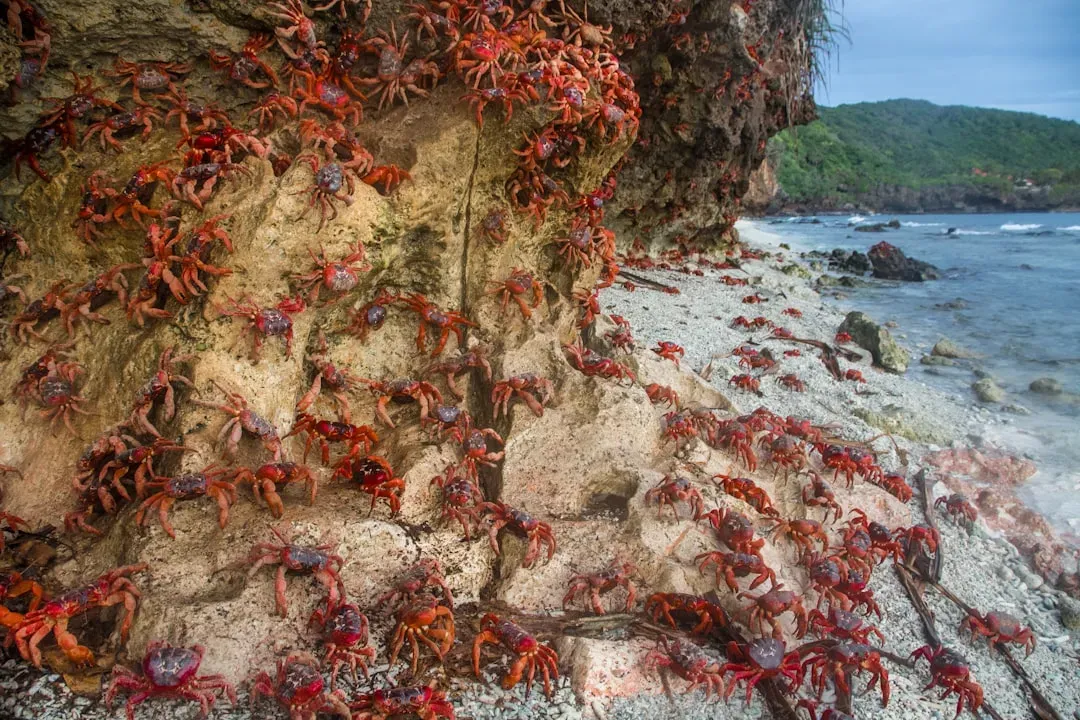
Every so often, cameras exploring deep slopes record vast carpets of red crabs crawling together in dense groups, turning the seafloor into a moving, rust-colored blanket. These swarms can stretch for hundreds of meters and seem almost coordinated, like the crabs are following some invisible command. Then, just as suddenly, they vanish, leaving behind almost no obvious trace of where they went or why they gathered in the first place.
Scientists suspect that these mass movements may be linked to breeding, feeding on seasonal food pulses, or reacting to changes in oxygen levels. The challenge is that the deep sea is huge, dark, and expensive to monitor continuously, so we mostly catch these events by luck rather than design. Until we can track individual animals for long periods and combine that with high-resolution environmental data, these red tides of crawling life will keep slipping in and out of view like a half-glimpsed secret.
#11 The “Bioluminescent Wave Walls” Near Shores
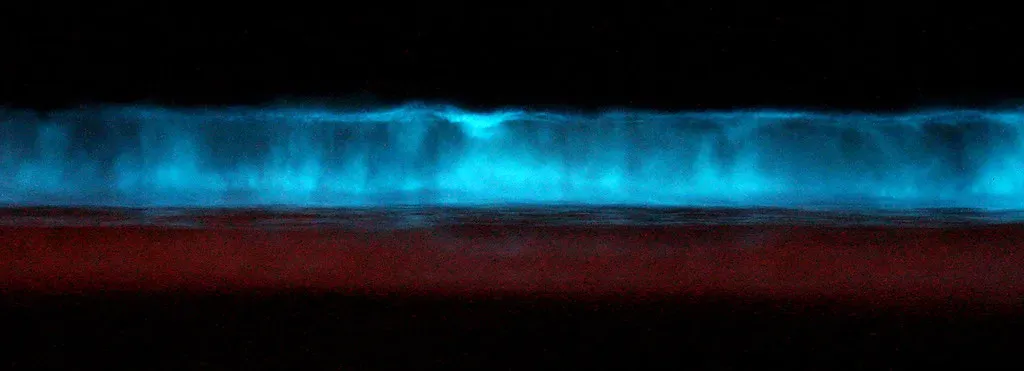
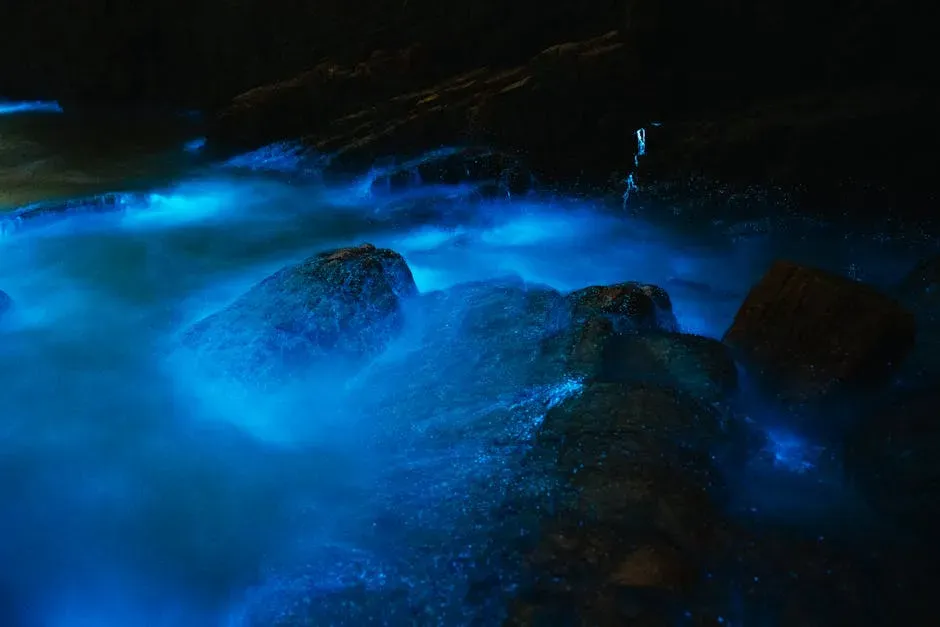
Many of us have seen videos of shorelines where each crashing wave glows electric blue, turning the surf into something that looks more like a sci-fi movie effect than a real beach. This spectacle comes from microscopic plankton that flash when disturbed, and in general we know how bioluminescence works at the cellular level. What is far less clear is why some nights and some seasons produce these jaw-dropping walls of light while others do not, even in the same location.
Researchers link the brightest displays to particular species, nutrient conditions, and calm weather, but there is no simple checklist that guarantees a glowing night. I once spent an entire week near a coast famous for bioluminescent waves and saw nothing but dark water, only for people a few weeks later to capture videos that looked unreal. That gap between what our textbooks say should happen and what actually happens in the messy real ocean is exactly where this phenomenon still feels surprisingly mysterious.
#12 The “Green Flash” On The Horizon Above The Sea
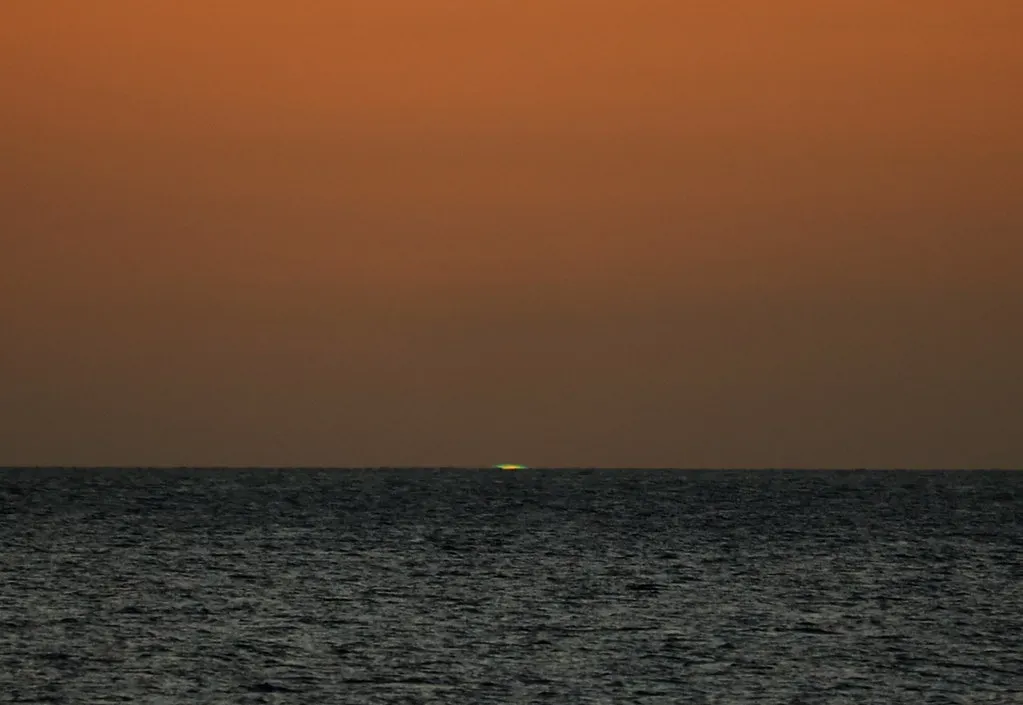
Just as the sun slips beneath the ocean horizon, some lucky watchers see a sudden, brief spark of green light – a so-called green flash. On paper, this is an atmospheric effect: layers of air with different temperatures bend and filter sunlight, briefly isolating the green part of the spectrum. Optical physics can reproduce the effect with math and diagrams, and yet the real-world event remains oddly unpredictable, almost mischievous.
Why do some sunsets from the same spot produce repeated green flashes while others never do? Small changes in temperature, humidity, turbulence, and even subtle differences in observer position all play a role, but they are difficult to measure and combine. The ocean adds its own twist through mirage-like effects over the water surface. Scientists can tell you in broad terms how it works, but if you ask them exactly when to look on a given day, you will mostly get a shrug – and that is part of why the green flash still feels like a small, personal miracle when you see it.
#13 The “Megaplume” Events From Seafloor Eruptions
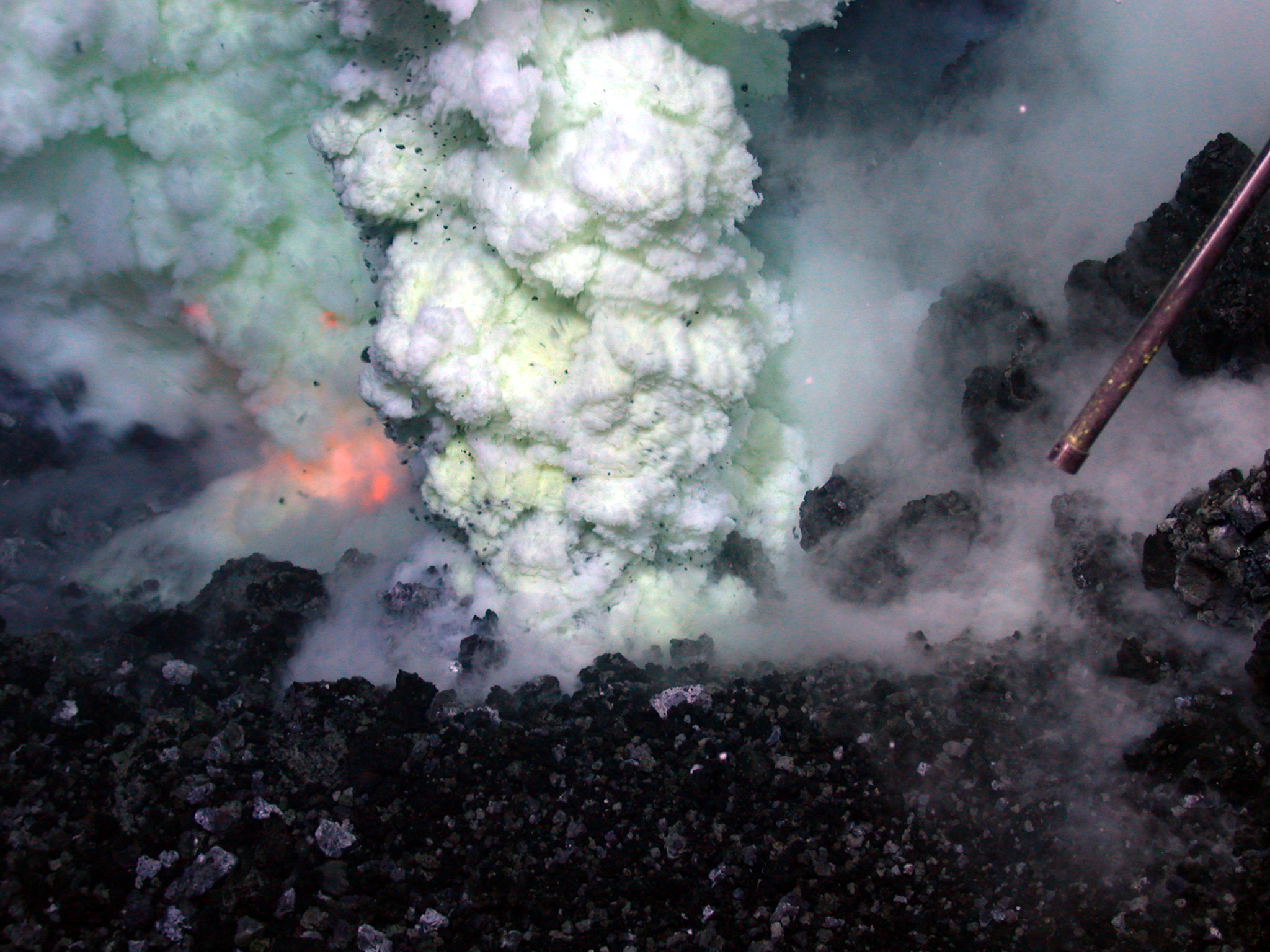
Occasionally, underwater volcanoes release colossal clouds of hot water, gas, and chemicals that rise kilometers through the ocean, forming so-called megaplumes. These are not gentle wisps; they are gigantic outbursts, sometimes larger than entire land-based eruptions when you account for the volume of fluid involved. Instruments have picked up temperature anomalies, chemical spikes, and particle layers associated with these events long after the eruption itself, like fingerprints left in the deep.
We know megaplumes can inject heat and minerals into the ocean on huge scales, potentially affecting local ecosystems and even short-term climate patterns. What we do not fully understand is their frequency, size distribution, and long-term impact because catching one in real time is incredibly rare. The deep ocean hides these titanic pulses so well that we mostly reconstruct them after the fact, which is a bit like trying to understand a fireworks show by only studying the smoke the next day.
#14 The “Shadow Biosphere” In Ocean Sediments
When scientists drill into marine sediments, especially in extreme environments like deep subseafloor basins, they sometimes find microbial communities that behave in strange, sluggish ways. These organisms may take years to divide, live on vanishingly small amounts of energy, and use biochemical pathways that are only partially mapped. Some researchers have speculated about a kind of “shadow biosphere” in these zones – forms of life that obey the basic rules but operate so differently that they challenge our standard categories.
We have not discovered truly alien life in Earth’s oceans, but we have definitely found lineages that stretch the definition of normal biology. The core mystery is how life can persist for immensely long periods in such energy-poor conditions without grinding to a full stop. If anything, these microbes might be the best hint we have that icy oceans on other worlds could harbor similarly slow, ghostlike ecosystems that would be easy to overlook with our usual tools and assumptions.
#15 The Mystery Of Missing Big Shipwrecks In Deep Water
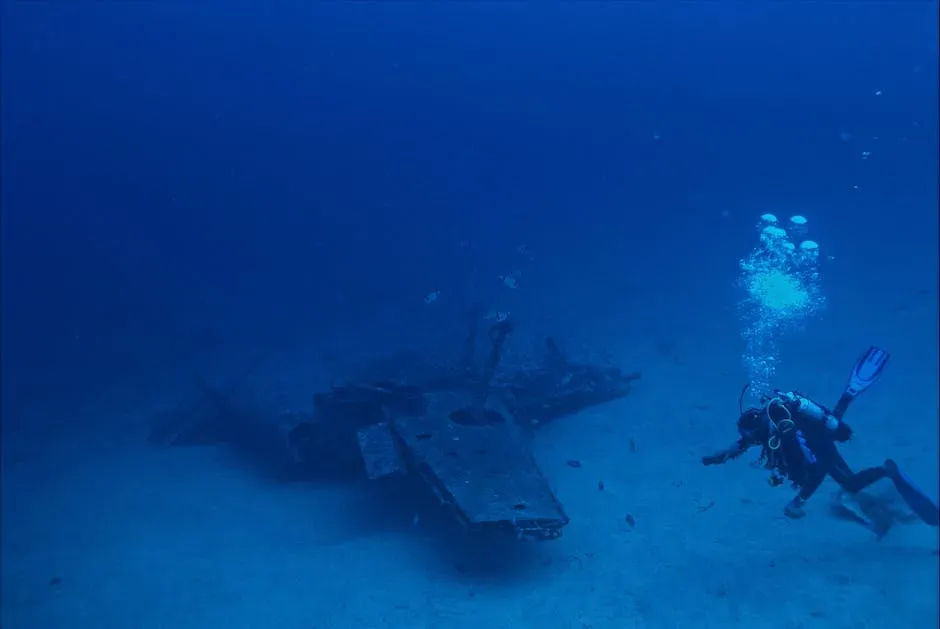
Given how many ships have gone down over the centuries, you might expect the deep seafloor to be littered with large wrecks like a metal graveyard. In reality, many historically known sinkings, especially older wooden vessels and even some more recent steel ships, have left far fewer traces in deep water than expected. When search teams do find wreck sites, they sometimes discover that massive structures have collapsed, scattered, or almost melted into the sediment in ways models did not predict.
Chemistry, currents, deep-sea organisms, and slow geologic processes all contribute to how a ship breaks down, but the pace and pattern of that decay are still not well mapped. That is partly a technical problem – there is a lot of ocean and very little exploration time – but also a scientific one. Until we understand how quickly our artifacts vanish at depth, we will always be guessing about the true archaeological record on the seafloor. In a way, the ocean seems to be actively erasing our history, and we are still not entirely sure how fast the eraser is moving.
Conclusion: The Ocean Is Not Just Unknown, It Is Actively Unknowable
What ties all these mysteries together is not that scientists are clueless; it is that the ocean keeps slipping one step beyond the reach of our neat explanations. We can frame plausible stories about the Bloop, milky seas, deep-sea vents, glowing waves, and disappearing wrecks, but almost every story ends with a quiet list of “we still do not knows.” For a planet where we have mapped the surfaces of other worlds in shocking detail, it is almost embarrassing how much of our own blue backyard remains fuzzy and half-understood.
My honest opinion is that this is a good thing. A completely explained ocean would be a smaller, duller place, just another spreadsheet filed away in a server room. Instead, we have a restless, shifting laboratory of weirdness where every expedition has a real chance of finding something that rewrites a chapter of the textbook. The mysteries listed here are not signs of failure; they are proof that the planet is still bigger than our imagination. When you look out at the sea, do you see just water – or do you picture a living archive of questions we have not even learned how to ask yet?