If you have ever looked at a clock in disbelief and thought, “How is it this late already?”, you have bumped into one of the strangest tensions in everyday life: the difference between time as physics describes it and time as you personally feel it. You live inside seconds, hours, deadlines, and birthdays, but you also live inside boredom, flow, waiting, and nostalgia. Those two worlds do not always line up neatly, and that mismatch raises a surprisingly deep question: what is more real, the objective ticking of time, or your subjective sense of it?
As you dig into this, you discover that both sides have a strong claim. On one hand, the universe seems to run on regular patterns you can measure down to tiny fractions of a second. On the other hand, your memories, decisions, relationships, and even your sense of self are shaped far more by how time feels than by what a clock says. Once you see how these layers intertwine, you start to realize that the reality you actually live in might be less about pure time, and more about your mind’s ongoing story about it.
The “clock time” you never see but constantly obey
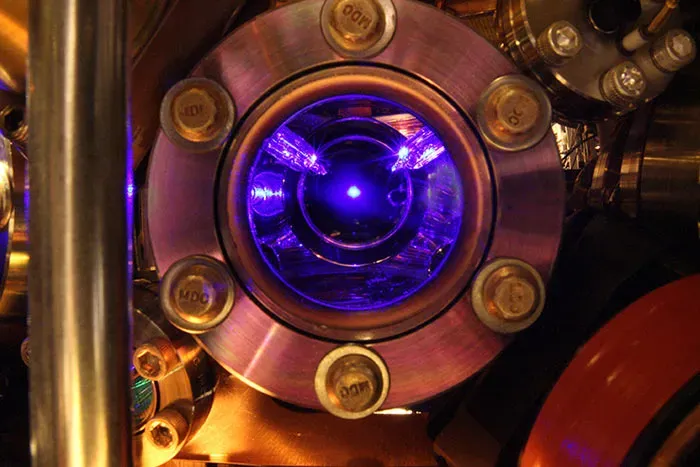
Behind every schedule, calendar alert, and microwave timer, there is an invisible standard that you rarely think about: time as physics defines it. At the most practical level, time is what lets you say one event happened before another and measure how long something took, whether it’s a lightning strike or your commute. Modern clocks do not just follow the spinning of Earth; the most precise ones use the regular vibrations of atoms to carve reality into incredibly tiny, consistent slices. You move through that grid whether you feel it or not.
This kind of time shows up in places you depend on without noticing. Your GPS only works because satellites and ground stations keep time with absurd precision and constantly sync with one another. Financial systems, power grids, and communication networks all assume that seconds pass the same way everywhere, for everyone, regardless of mood or memory. In that sense, you are living inside a giant shared agreement: we will treat this measured, standardized thing called time as real enough to organize society around it, and we will trust it even when our personal sense of time disagrees.
The wildly flexible timeline inside your head
Now step away from the clock and pay attention to how time feels from the inside. A ten-minute wait at a doctor’s office can feel endless, while a three-hour conversation with someone you love can vanish in what feels like a heartbeat. When you look back on a week packed with new experiences, it often feels full and long in memory, even if it raced by while you lived it. Your brain does not store time like a stopwatch; it builds a narrative using sights, sounds, emotions, and expectations to tell you how long something seemed to last.
You can feel this most strongly in intense moments. A sudden scare, a car braking hard in front of you, or a near fall can make everything appear to slow down, as if your mind is grabbing extra snapshots per second. Boredom does almost the opposite, leaving you painfully aware of each tick. In these moments, you are not just noticing time; you are actively constructing it from attention, emotion, and memory. You live your actual life inside that constructed timeline, not inside the cold regularity of atomic clocks.
Why time speeds up and slows down as you age

If you think your childhood summers felt longer than your adult years do, you are not imagining it. As you get older, you tend to pack your days with routines and repeated patterns: the same commute, similar kinds of tasks, a familiar set of places. Your brain, always looking to save energy, compresses these repeated experiences in memory, making a month of sameness feel, in hindsight, like it took up very little space. Meanwhile, novel events stand out, stretching your sense of time because there is more for your mind to record and organize.
This helps explain why a single year of school can feel enormous when you are young, and several years of working life can blur together into one hazy block. As a child, almost everything is new: faces, rules, skills, and even the shapes of letters and numbers. As an adult, you are often navigating variations of what you already know. If you want time to feel fuller again, you are really trying to give your brain more rich, distinct experiences to chew on, so that when you look back, the year does not collapse into a single monotonous line.
How emotions quietly bend your sense of duration

Your feelings are not just reactions to time; they are powerful tools your brain uses to warp your inner clock. When you are anxious, your attention tends to cling to every detail of your surroundings and to your own thoughts, making each moment feel crowded and long. Pain, fear, and dread can produce this effect so strongly that a few minutes feel almost unforgivable in length. On the flip side, joy, excitement, and deep engagement often scatter your awareness, so you track fewer mental “markers” and later remember the stretch as fast and light.
You can see this in simple, everyday cases. Waiting for exam results, a delayed message, or a medical update does not just take time; it eats at you in a way that makes clock time and felt time drift apart. The minutes do not change, but your attention keeps looping on the same fears or hopes, stretching them. That means when you ask what is more real, the time itself or your perception, you have to admit that emotion can carve its own timeline, one that may be more important to your well-being than any number on a screen.
The strange physics of time: relativity and beyond
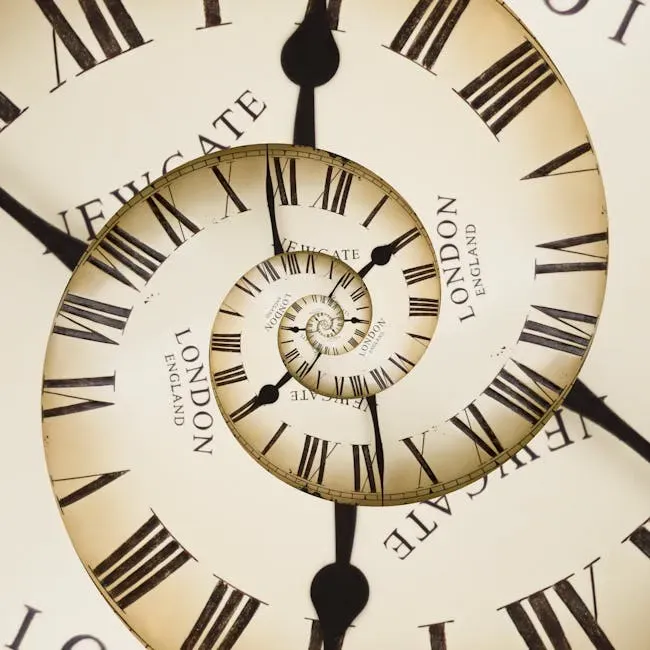
Underneath your daily routines, time behaves in ways that are far stranger than your intuition suggests. According to modern physics, time is not a universal river flowing the same way for everyone. Instead, it is woven together with space into a single fabric, and that fabric can bend. When objects move very fast or sit in strong gravitational fields, their time runs differently from the time experienced elsewhere. This is not just a theory on paper; engineers have to account for it when designing satellite systems so they remain accurate.
From your point of view on Earth, these effects are so small that you cannot feel them, but they reveal something important: even in physics, time is not a simple, rigid backdrop. Your “now” is not automatically the same as someone else’s “now” in a distant galaxy, and the order of events can look different depending on your point of view. It is tempting to imagine that deep under all of this, there is a fixed master clock, but the more physicists explore, the less that idea seems to fit. In a way, even the physical reality of time depends on perspective, just at a cosmic scale instead of a psychological one.
Why your brain needs a story of past, present, and future
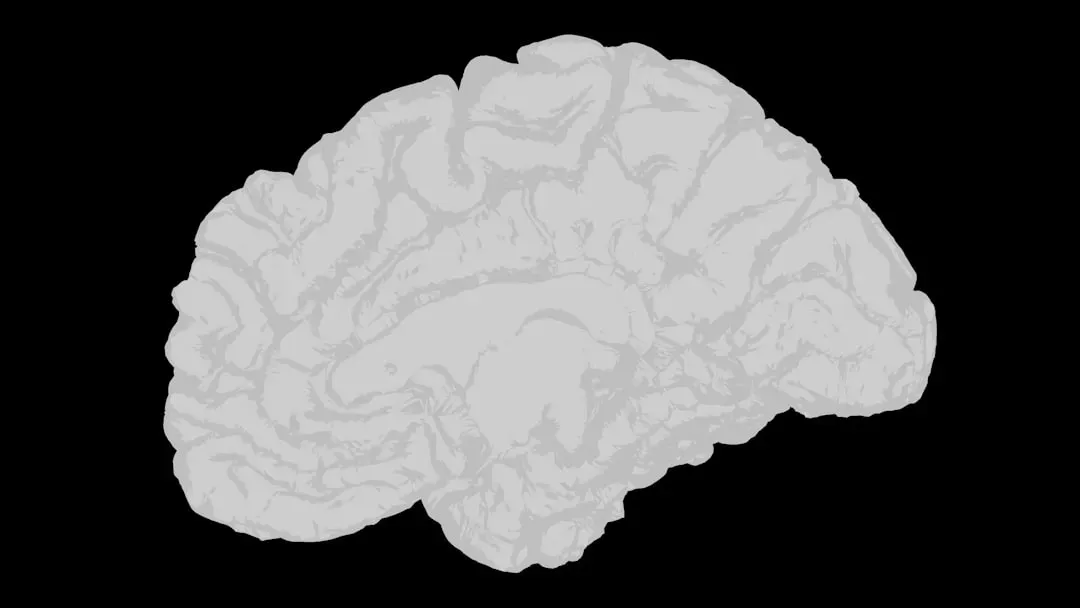
If all you had were raw sensory inputs, you would be overwhelmed by a messy stream of changing colors, sounds, and sensations. Your brain creates order by stitching these into a story with a before, a now, and an after. You build a sense of past through memory, a sense of present through attention, and a sense of future through prediction. Without this three-part structure, basic things like planning, learning from mistakes, or even recognizing yourself would fall apart. You rely on a mental timeline to feel like the same person from one day to the next.
This is not just philosophy; you can see how fragile it is when you look at memory problems or certain neurological conditions where this timeline starts to crack. When someone struggles to form new memories, their sense of moving forward in time can become shaky, like a movie that keeps freezing. When memories from different periods get shuffled or lost, it becomes harder to say who you are or where your life is going. In your own life, even without illness, you lean on this constructed story so heavily that, in a very real way, you live more in your perception of time than in bare physical moments.
How attention and multitasking distort your day

Think about the last time you tried to multitask your way through an afternoon, jumping between messages, tabs, and half-finished chores. During that chaos, time may have felt thin and jittery, as if you never really landed anywhere. Later, when you look back, you might struggle to remember what you actually did. That is not just forgetfulness; it is your attention failing to give your brain the clean “markers” it needs to build a rich sense of how long things took. Distracted time often feels shallow and slippery.
In contrast, when you drop deeply into a single task, like learning an instrument, fixing something by hand, or walking in a new neighborhood, you create a different relationship with time. You might look up and be surprised at how much clock time has passed, but when you reflect later, that stretch feels thick with detail and satisfying progress. Your perception of time depends heavily on where you point your attention and how often you fragment it. You are not just moving through time; you are constantly sculpting its texture by how you focus.
Can you “hack” your sense of time in everyday life?

Once you notice how flexible your inner clock is, it becomes natural to wonder whether you can shape it on purpose. You cannot slow down the Earth or negotiate with the seconds on a watch, but you can change how you experience them. One key lever is novelty: seeking out new routes, hobbies, and conversations tends to enrich your memory and make weeks and months feel fuller in retrospect. Routines have their place, but if every day looks identical, your brain compresses them mercilessly and the months can blur into a single gray streak.
Mindfulness practices, even simple ones like paying deliberate attention to your breathing or to the details of a walk, can also change how time feels. When you bring your full awareness to the present moment instead of constantly racing mentally into the next task, you often experience a gentle slowing, as if the edges of each moment become more visible. You can also experiment with how you use technology, reducing constant notifications and multitasking so your attention is not sliced into tiny pieces. In doing this, you are not changing time itself, but you are reclaiming how much of it you genuinely inhabit.
So what is more real: time
When you put it all together, the question of what is more real stops being a simple either-or choice. Physical time, the kind your devices and the stars obey, is real enough that ignoring it leads to missed flights, failed experiments, and broken machines. It offers a stable framework for shared life, a way to coordinate billions of people across the planet. You cannot simply wish it away because your afternoon felt too short or your meeting dragged on. In that sense, time is like the stage on which your life unfolds, whether or not you like the pacing of the play.
But the life you actually feel, remember, and care about is built from your perception of time: the slow Sundays, the rushed mornings, the long waits, the blink-and-it’s-over seasons. That inner timeline guides your choices, fuels your regrets, and shapes your ambitions far more than any official schedule. So instead of asking which is more real, a better way to see it might be this: clock time is the outer skeleton of your life, and your perception of time is its living tissue. You need both, but you experience the world through the second far more than through the first.
In the end, you are a creature stretched between these two versions of time: the cosmic ticking that does not care how you feel, and the personal rhythm that defines what your hours actually mean to you. You cannot escape either, but you can learn to notice how they interact, and even tilt your habits toward a richer experience of the finite time you have. The next time you catch yourself saying a day flew by or dragged on forever, you might pause and wonder: was it time that changed, or was it you?