

Imagine walking into a lab, putting on a headset, and a machine quietly telling you that the solid, stable “you” in your head is more like a stitched‑together story than a single, unified thing. That’s the unsettling direction neuroscience has been moving in, and a series of experiments brought that message into sharp focus. Drawing on brain imaging, cognitive psychology, and philosophy, researchers are increasingly arguing that consciousness is not one glowing spotlight in the brain, but a constantly updated construction, assembled moment by moment from scattered neural processes.
This doesn’t just sound trippy; it cuts right into how we think about free will, responsibility, and even mental health. If your sense of self is partly a useful hallucination, what does that mean for guilt, pride, or regret? The growing scientific view is not that we’re zombies, but that the brain is more of a storyteller than a camera. It edits, compresses, and glosses over gaps, creating a narrative that feels continuous and coherent even when the underlying biology is messy and fragmented.
From Descartes to MRI Scans: How We Got Here
For centuries, consciousness was mostly a philosopher’s playground. In the seventeenth century, René Descartes famously claimed that the mind was something separate from the body, a kind of thinking substance distinct from physical stuff. For a long time, even after modern medicine took off, that dualistic picture quietly lingered in how people talked about minds and brains, as if thoughts floated above neurons instead of emerging from them. You can still hear echoes of that view whenever someone says the brain is just a “receiver” for consciousness.
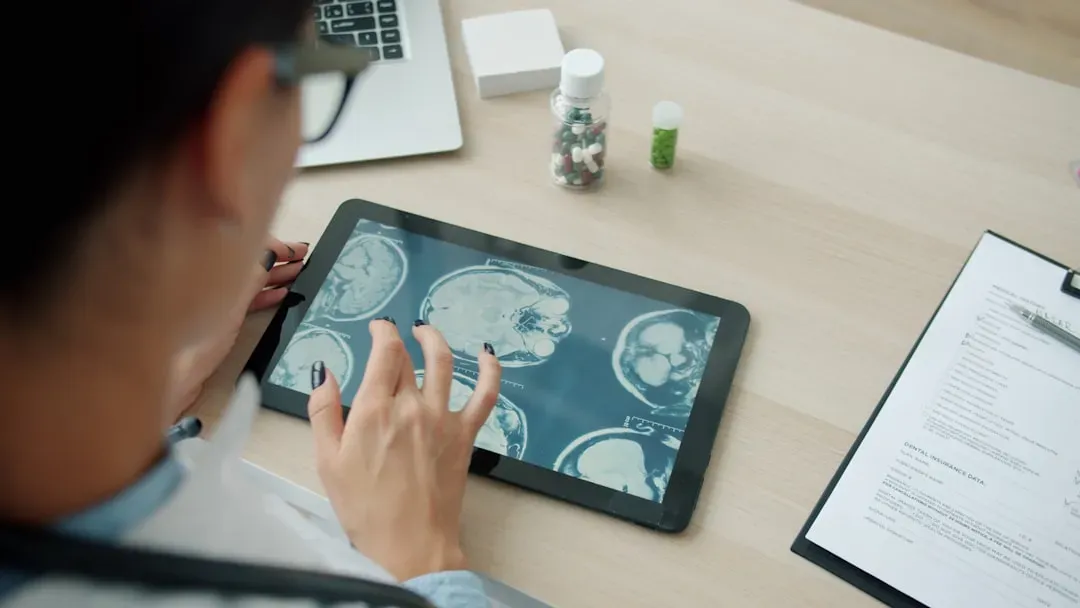
Then came the hard data. Over the last few decades, functional MRI machines and other brain‑scanning tools have mapped which regions light up when we see faces, recall memories, or feel fear. Studies showed that damage to particular areas could warp personality, erase certain kinds of memories, or change how people make decisions. By the early twenty‑first century, the mainstream scientific position was blunt: whatever consciousness is, it depends on the brain’s physical activity, and when that activity changes, so does the mind. The mystery didn’t disappear, but it stopped being purely abstract and started looking like an engineering problem.
The Brain as a Prediction Machine, Not a Passive Camera
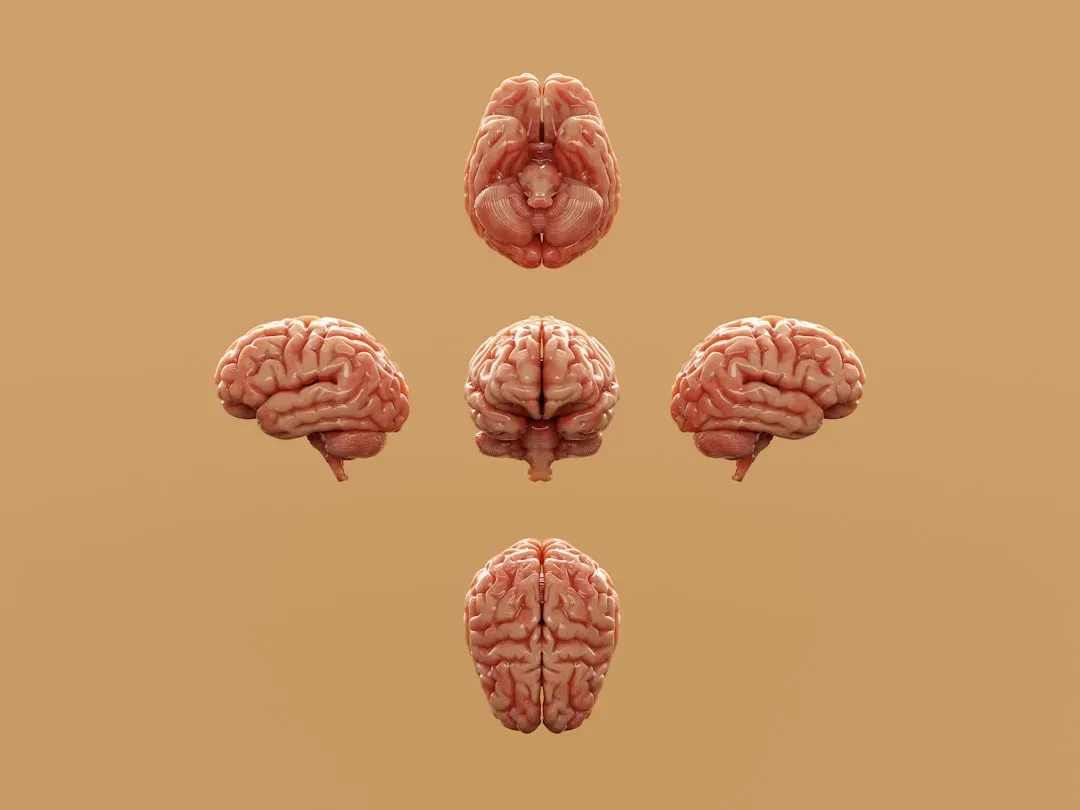
One of the most important shifts highlighted in the Popular Mechanics piece is the idea that the brain does not just sit around recording reality. Instead, it constantly guesses what’s happening and then checks those guesses against incoming signals. This view, often called predictive processing, suggests that what you experience as “the world” is partly a controlled hallucination that usually lines up well with reality because prediction errors get corrected quickly. When the match fails, we call it an illusion, a delusion, or sometimes a spiritual vision, depending on the context.
Think about how you can read a sentence with missing letters or recognize a friend from a blurry photo. Your brain is filling in gaps using expectations built from past experience. Consciousness, under this framework, is what it feels like to be a brain doing that predictive work on a grand scale – guessing about sights, sounds, your own body, and even your future actions. That makes our experience less like a live stream and more like a movie that keeps getting edited in real time, frame by frame, with the brain forever trying to stay one step ahead.
Your “Self” as a Story the Brain Keeps Updating
Many of the researchers featured in the report argue that the self isn’t a single thing you could point to in the brain. Instead, it’s more like a bundle of different models: a model of your body, a model of your memories, a model of your social role, and a model of what you’re likely to do next. These models are stitched together into a running narrative that feels like “me,” even though behind the scenes, different networks are turning on and off at different times. When any of these models hiccups – after an injury, during a seizure, or under certain drugs – people can feel like they’ve left their body or become someone else.
That’s why some scientists say the self is real in the same way a nation or a corporation is real: it depends on a story that enough parts of the system agree on. The story has power, but it’s not a simple physical object you can pull out of a hat or a brain scan. To me, this makes everyday experiences like remembering childhood or planning a career feel very different. It’s not that they’re fake, but they’re more like chapters being written on the fly than a fixed book sitting on a shelf somewhere in your head.
Consciousness on the Edge: Psychedelics, Anesthesia, and Coma

One of the most striking lines of evidence comes from situations where consciousness fades, fractures, or explodes into something utterly unfamiliar. Under general anesthesia, patterns of brain activity that normally synchronize across large networks begin to break down; the bridge between different regions weakens, and subjective experience disappears. In deep coma, this breakdown is even more extreme, though subtle signs of organized activity sometimes linger and can hint at a faint, trapped awareness that is hard to detect from the outside.
Psychedelics like psilocybin and LSD, which have been heavily studied again since the 2010s, seem to almost do the opposite: they temporarily scramble the usual boundaries between brain networks, creating novel patterns of communication. Many users describe a dissolving sense of self, intense emotional insights, or the feeling of being connected to everything. Researchers see this as powerful evidence that changing how different regions talk to each other can reshape the very structure of consciousness. When the wiring diagram shifts, the world inside your head changes, sometimes in ways that linger long after the drug wears off.
Measuring Awareness: From Brain Waves to Consciousness Scores
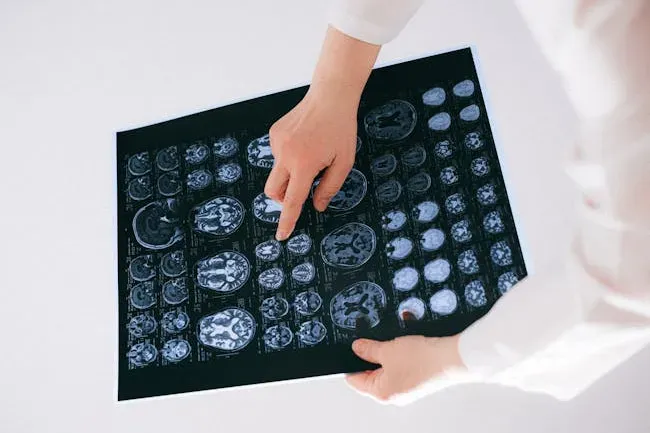
Because we only have direct access to our own inner life, scientists have had to get creative about measuring consciousness in others. One approach uses patterns of electrical activity in the brain – looking at how complex and integrated the signals are across different regions. The more varied yet coordinated the pattern, the higher the level of awareness is thought to be. In some clinical settings, this has led to scores or indices that help doctors distinguish between patients who are minimally conscious and those who are in a vegetative state.
These tools are still blunt, and no serious researcher claims they can read thoughts or prove someone’s exact subjective experience. But they’ve already led to some sobering discoveries, like cases where patients thought to be entirely unresponsive showed signs of hidden awareness when their brains were scanned in specific ways. That forces uncomfortable ethical questions: if we can’t easily tell who is conscious, how cautious should we be about end‑of‑life decisions, or even about how we talk in a hospital room?
Can Machines Ever Be Conscious, or Just Really Good at Faking It?
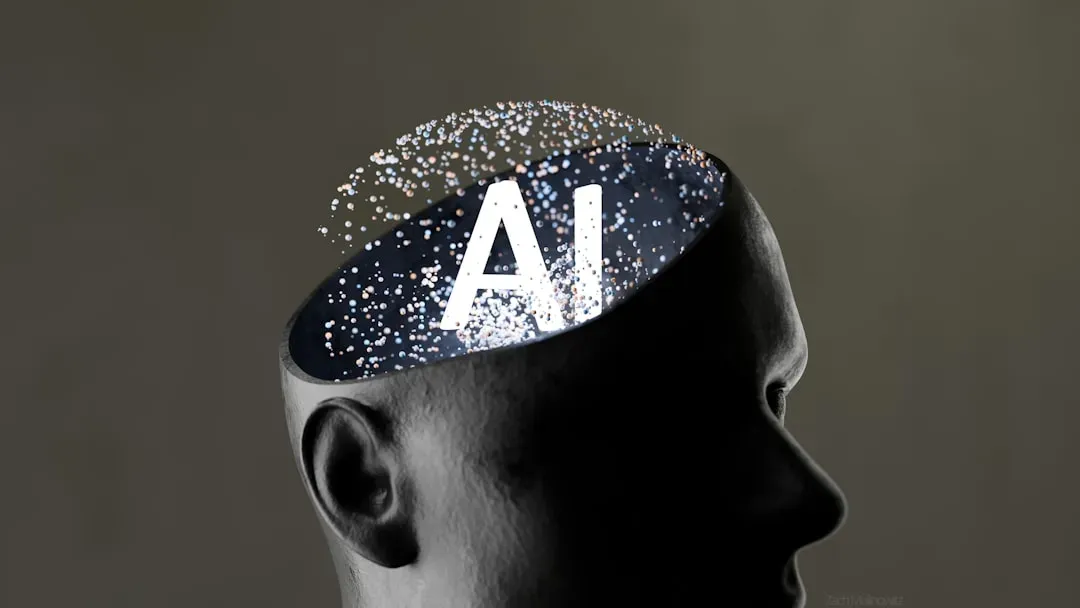
The Popular Mechanics piece also touched on a question that feels less hypothetical each year: if consciousness is a pattern of information processing in biological brains, could other systems, like advanced artificial intelligence, ever have it too? Some scientists argue that if you reproduce the right kind of complex, integrated information flow, it shouldn’t matter whether it runs on neurons or silicon. By that logic, a future machine with a brain‑like architecture could have genuine experiences rather than just mimicking them. Others are more skeptical and think biology may have special properties we still do not understand.
Right now, even the most impressive AI systems behave more like prediction engines and pattern matchers than beings with inner lives. They can imitate emotions, simulate conversation, and pass tests that once seemed out of reach, but there’s no solid evidence that anything “feels like” something from their point of view. Personally, I think the danger is less that we’ll suddenly wake up a conscious machine and more that we’ll start treating sophisticated tools as if they had feelings they do not possess, or worse, that we’ll ignore consciousness in humans and animals while obsessing over it in gadgets.
How This Science Could Reshape Medicine and Mental Health
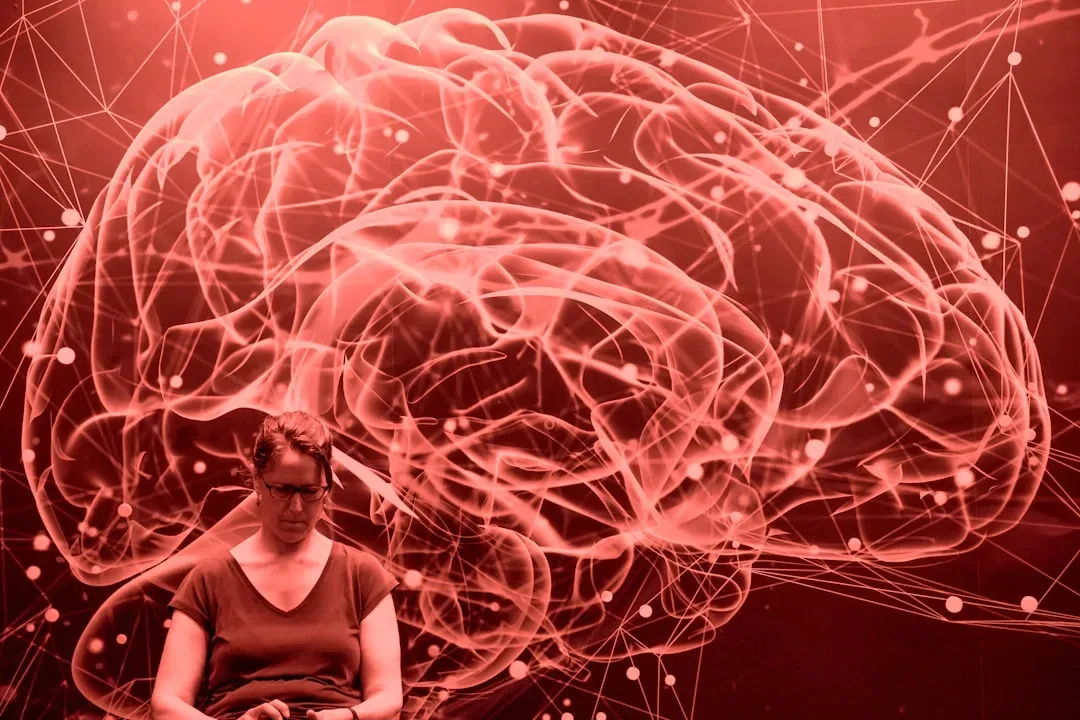
Understanding consciousness as constructed and layered is not just a philosophical exercise; it has very practical consequences. In psychiatry, for example, disorders like depression, anxiety, or dissociation can be seen as problems in how the brain predicts the world and the self. If the brain’s model of the future is too negative, or its model of the body is too distorted, the resulting conscious experience can be unbearable. New treatments, including psychedelic‑assisted therapy and targeted brain stimulation, are being tested precisely because they seem to loosen rigid patterns and allow the brain to rebuild its internal models.
In neurology and intensive care medicine, improved measures of awareness could change how we care for people with severe brain injuries. If we can detect faint signs of consciousness, we might adjust pain management, communication attempts, and family counseling in ways that respect a patient’s inner life more fully. On the flip side, more precise tools could one day show that certain brain states truly lack any experience at all, clarifying some of the harshest moral decisions families and doctors face. The science does not remove the emotion, but it can at least ground those emotions in clearer facts.
What This Means for Free Will, Responsibility, and Meaning

If the self is a constructed story and consciousness is a fragile, emergent property of prediction and communication in the brain, where does that leave ideas like free will or moral responsibility? One hard‑nosed view says we should drop the romantic notion of a ghost in the machine and accept that choices are the outcome of neural processes we did not choose. Another view tries to rescue a softer kind of freedom: even if everything is physically caused, our conscious deliberation, our ability to imagine alternatives and act on reasons, still matters in a very real way. It is the brain thinking about itself and its options.
Personally, I think this research pushes us toward humility rather than nihilism. If we are, in some sense, stories our brains are telling, then we can still care deeply about how those stories unfold, how kind or cruel they are, how they intertwine with other people’s stories. Knowing that perception is fallible and the self is flexible might make us more forgiving – of our own past mistakes and of others’ failures – while still holding on to the idea that our choices shape the next chapter. To me, that feels less like losing the soul and more like finally seeing how delicate and improbable it always was.
Conclusion: Living Honestly with a Manufactured “Me”

Stepping back from all the brain scans and theories, the picture that emerges is uncomfortable but strangely empowering. Consciousness is not a magic light bulb switching on inside the skull; it is a process, a negotiation, a constantly revised best guess about what is out there and who we are in relation to it. The Popular Mechanics coverage of this field in 2025 captured a moment when scientists stopped pretending they had neat answers and instead leaned into the complexity, admitting that our most intimate feeling – the sense of being a self in a world – is more precarious and more constructed than we ever imagined.
I think that’s not a reason to despair; it’s a reason to pay closer attention. If your sense of self is a story, then the habits you build, the people you surround yourself with, and the ideas you entertain are all co‑authors. You are not completely in control, but you are not a passive passenger either. You’re more like the editor of a messy, ongoing draft, trying to make the next page a little clearer, a little kinder, a little more honest than the last. Knowing what we now know about consciousness, what kind of story do you want your brain to be telling tomorrow?