You live your whole life next to oceans, rivers, and lakes, and yet you barely see more than a shimmering blue surface. Beneath that calm skin of water, the world shifts into something closer to science fiction than anything you experience on land. When you look down from a boat, you’re staring into a realm where sunlight fades, pressure crushes, and life has twisted itself into bizarre, brilliant shapes just to survive.
As you journey deeper in your imagination, you move from playful dolphins and reef fish into a midnight world lit only by living lanterns. Down there, teeth are too long, eyes are too big (or missing entirely), and bodies look like glass, balloons, or floating ghosts. Once you start to understand how these creatures really live, you stop thinking of them as monsters and start seeing them as the ultimate survivors on Earth.
The Midnight Zone: Where Sunlight Dies and Strangeness Begins
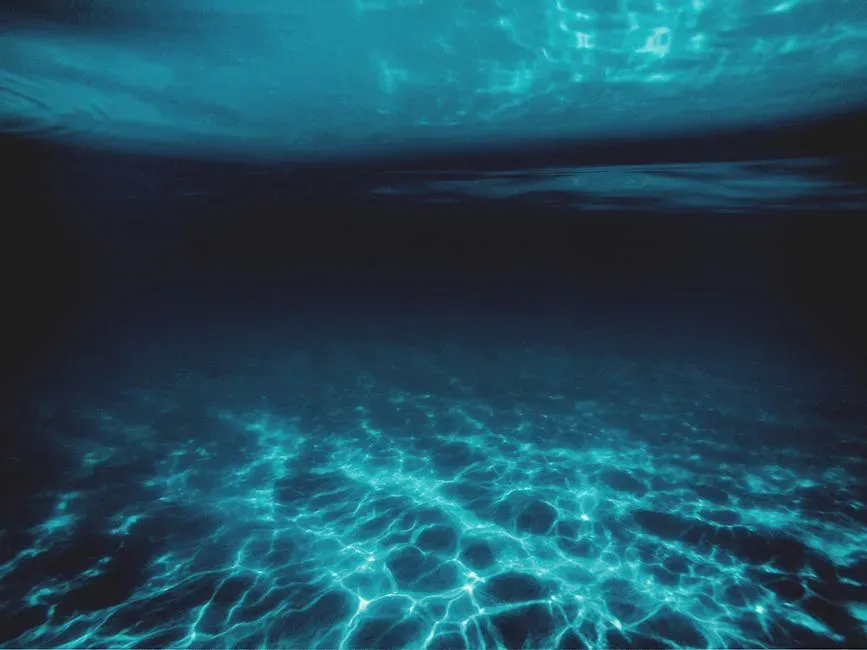
You can think of the ocean in layers, like floors of a building, and the first truly alien floor is the midnight zone. Once you sink past the point where sunlight can reach, roughly a few hundred meters down, colors disappear and everything shifts to deep blues and then total darkness. If you were dropped there without protection, the pressure would crush you instantly, but for deep-sea creatures, this crushing force is just normal background life.
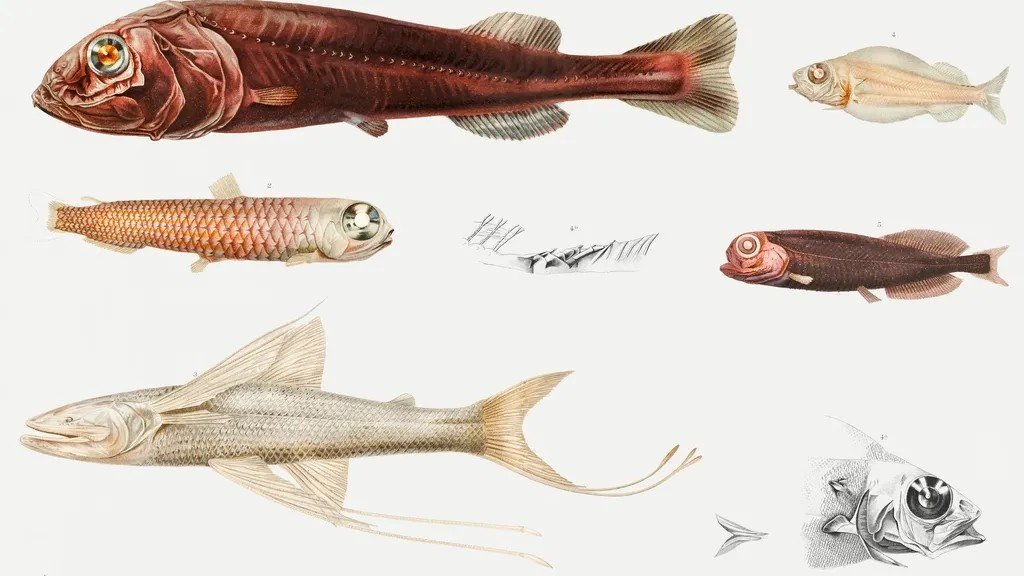
In this eternal night, you rely on more than just your eyes. Many animals here have huge, sensitive eyes to catch the faintest glimmer of light, while others get rid of eyes almost entirely because they’re useless. Food is scarce, so you see slow movements, big mouths, and bodies designed to survive on tiny scraps that fall from above. When you imagine this zone, you’re not picturing a busy coral reef but a quiet, shadowy world where every encounter might be a rare chance to eat – or be eaten.
Anglerfish: Living Lanterns with Nightmarish Smiles
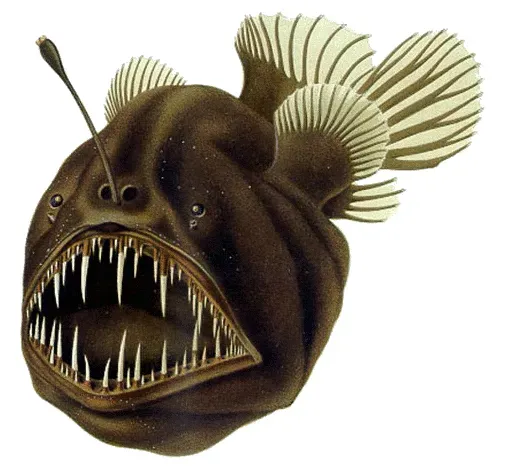
If any deep-sea creature deserves a starring role in your mental horror movie, it’s the anglerfish. You recognize it instantly: a lumpy, dark body, an oversized head filled with needle-like teeth, and that eerie glowing lure dangling in front of its face. That light isn’t some magic trick; it’s created by bacteria that live inside a special organ at the tip of the anglerfish’s “fishing rod,” turning chemistry into cold, ghostly light.
You can imagine how this plays out in the darkness: a small fish sees a light where there should be none, drifts closer to investigate, and ends up disappearing into the anglerfish’s huge mouth. Many deep-sea anglerfish females are much larger than the males, and the males can be so small that they spend their lives fused to a female, acting almost like a living, permanent mating partner. Once you understand that reality is stranger than any monster story, the anglerfish stops being just creepy and becomes a marvel of how far evolution will go to make survival possible.
Gulper Eels and Pelican Eels: Jaws That Shouldn’t Be Possible
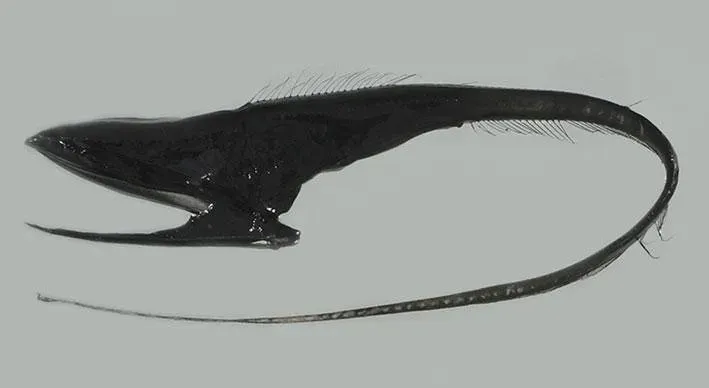
You’re used to animals having mouths that match their bodies – until you meet gulper eels and pelican eels. Their bodies look long and slender, almost delicate, but their mouths are enormous, opening like stretchy sacks that seem far too big for their frames. This odd design is not a mistake; it’s a solution to a harsh problem: you never know when you will find your next meal, so you have to be ready to swallow something much bigger than you are used to seeing.
When you picture these eels, you can imagine a living fishing net, gliding through the dark and suddenly opening wide to scoop up whatever happens to cross its path. Their stomachs can expand to handle these oversized catches, so they can feast once and then go a long time without eating again. In your daily life, you might rely on regular mealtimes, but in the deep ocean, you survive by being flexible – sometimes literally.
Vampire Squid: A Creature of Cloaks and Glowing Tricks
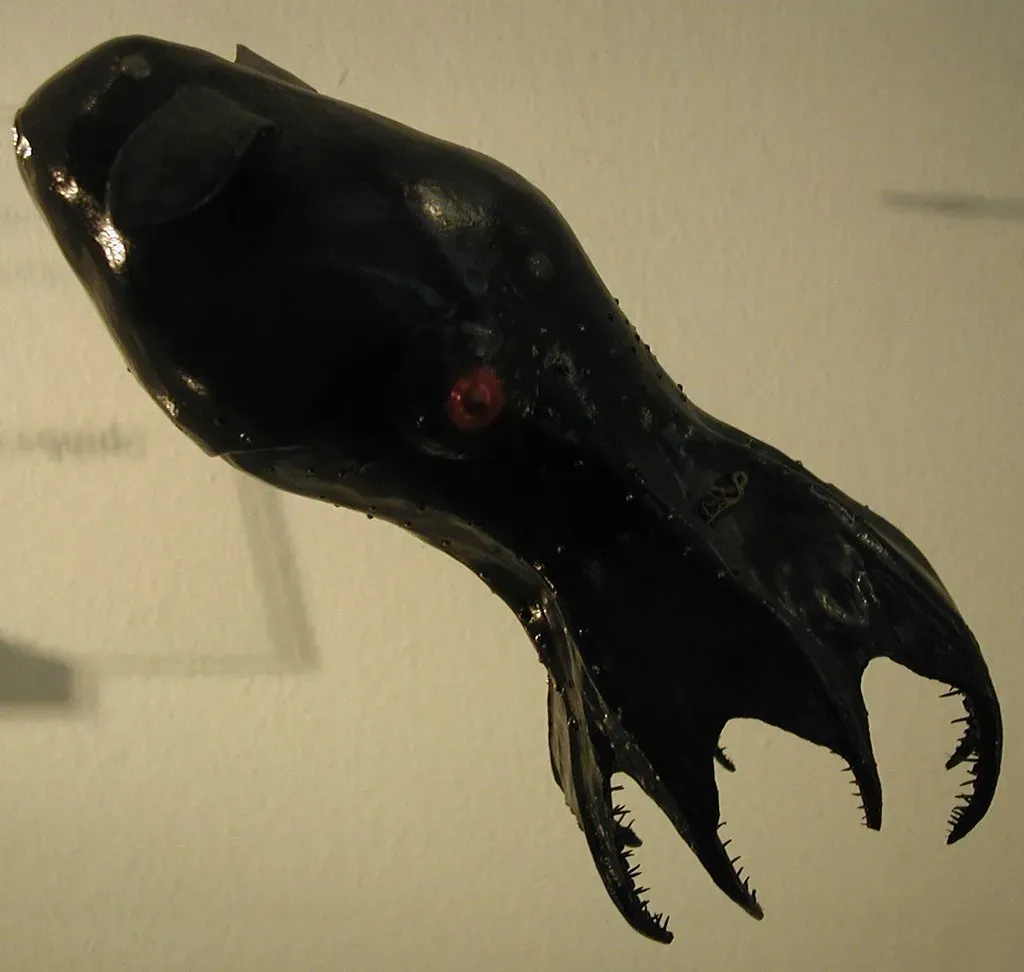
With a name like “vampire squid,” you might expect a blood-sucking terror, but what you actually get is a small, delicate animal that looks like it’s wearing a flowing cape. Its dark, reddish body and webbing between its arms create that dramatic, cloaked shape when it pulls everything together. Instead of chasing prey like a classic predator, it tends to feed on drifting bits of organic material, almost like a tiny vacuum cleaner in the deep.
Where you really see its strangeness is in the light show it can put on. The vampire squid can produce glowing displays to startle predators or confuse would-be attackers in the pitch-black water. When threatened, it sometimes turns its “cloak” inside out, showing off spiky-looking structures that make it appear bigger and more dangerous than it really is. You might use a costume or strong body language to protect yourself in a confrontation; this squid does the same thing, just with bioluminescence and a built-in cape.
Giant Squid and Colossal Squid: Legends That Turned Out to Be Real
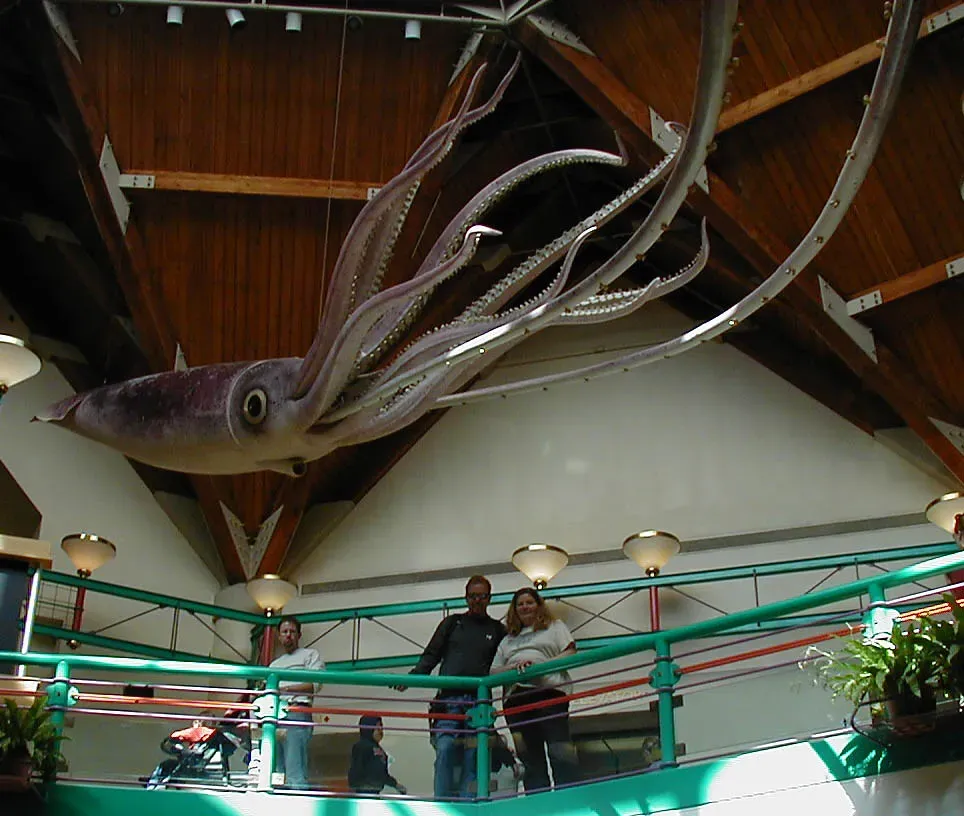
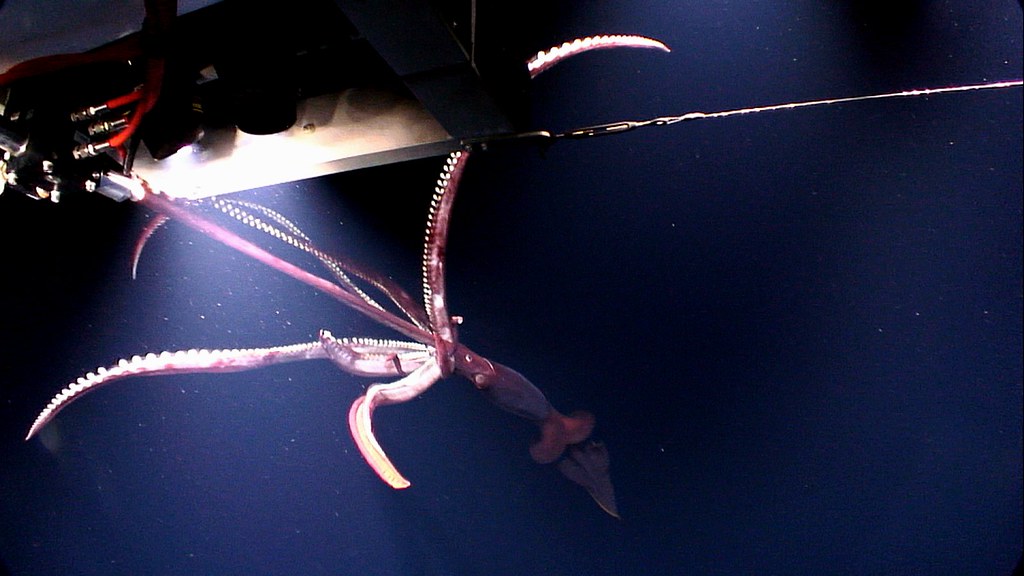
If you grew up hearing stories about sea monsters, you were probably hearing distant echoes of giant squids and their even bulkier relatives, colossal squids. For a long time, people only knew them from washed-up carcasses and strange scars on whale skin, which made them feel more like myths than real animals. Modern cameras and deep-sea expeditions have finally captured them alive in their natural habitat, and you now know they are not just sailor stories but enormous predators living in the dark.
You can imagine these squids as long-armed hunters with eyes some of the largest in the animal kingdom, helping them detect faint movements and shapes in the deep. Their tentacles are lined with suckers and, in the case of colossal squids, sharp hooks that can latch onto struggling prey. When you picture a sperm whale diving, you can almost see a silent battle unfolding far below the waves, giant squid arms wrapping and thrashing. These creatures remind you that even the most unbelievable legends sometimes grow from something very real living far out of sight.
Barreleye Fish: The Fish with a Transparent Head
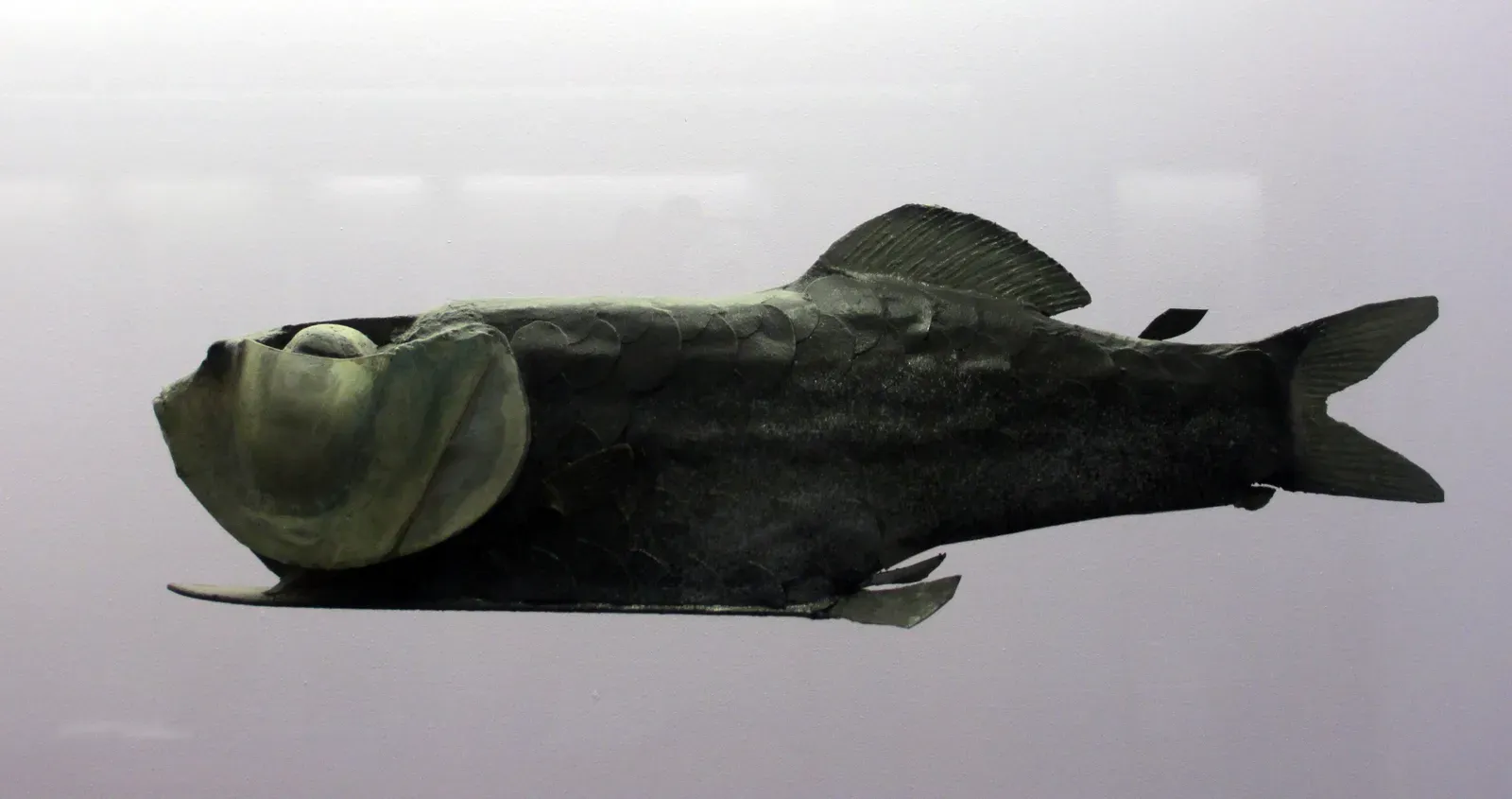
If you think you’ve seen weird, the barreleye fish raises the stakes with a completely see-through head. When you look at it, you’re literally seeing right into its skull area, with its tubular greenish eyes pointing upward inside that clear dome. This bizarre design lets the fish stare through its own forehead, tracking the faint outlines of prey silhouetted above it in the darkness.
Imagine drifting in deep water where you can’t afford to miss even a single potential meal. Instead of constantly moving your whole body, you keep your body still and roll your eyes inside your own transparent shield, scanning for food falling down. That dome likely helps protect these sensitive eyes from stinging tentacles, such as those from jellyfish it might steal food from. To you, it looks like a creature from a science-fiction movie, but for the barreleye, the glassy head is just a clever way to survive in a world with almost no light.
Comb Jellies and Siphonophores: Living Light Shows in the Dark
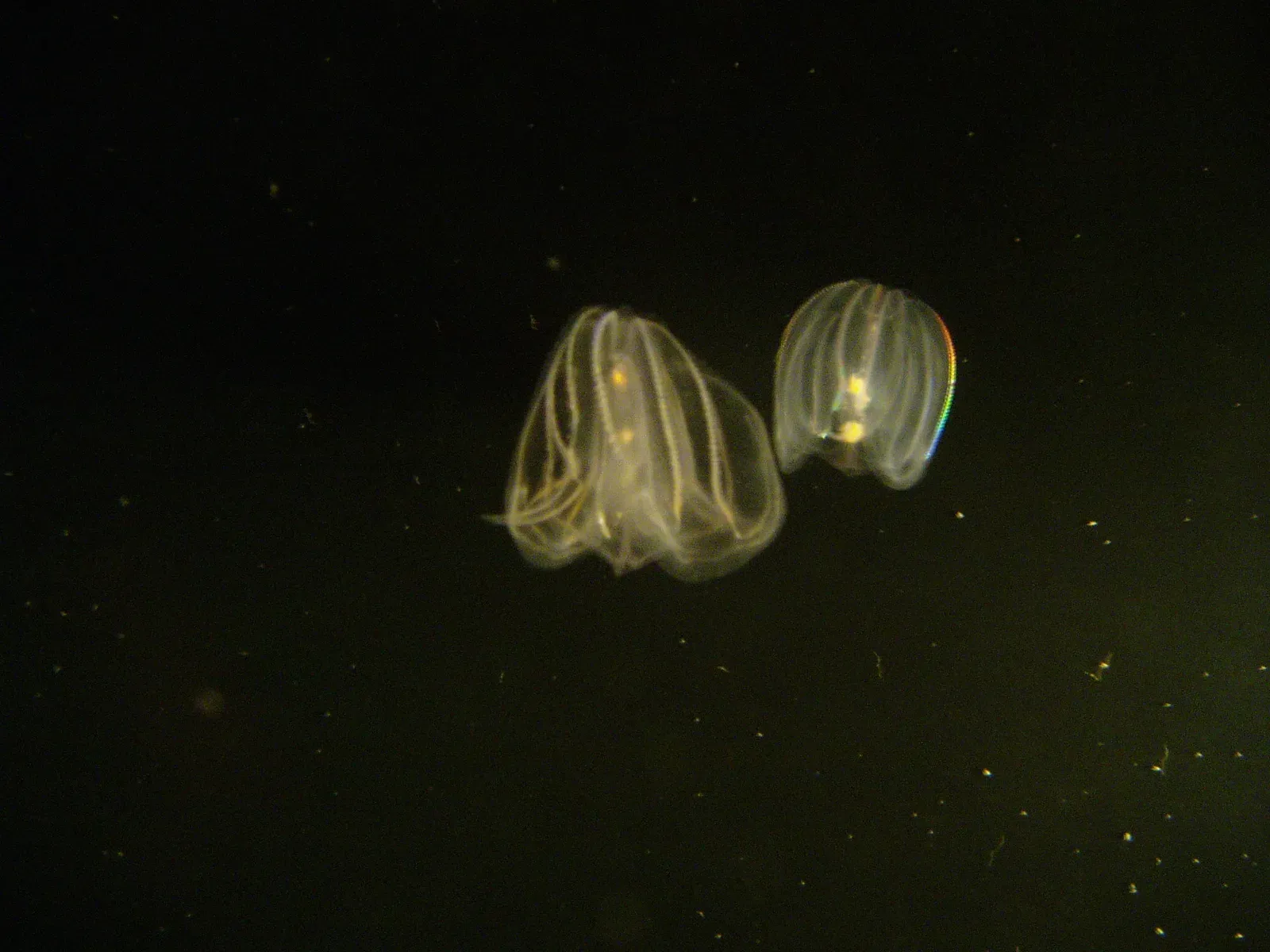
When you picture jellies, you might imagine soft, bell-shaped blobs pulsing near the surface, but in the deep ocean, their relatives become truly otherworldly. Comb jellies use rows of tiny beating hairs to swim, and when light hits them, those rows shimmer with rainbow colors, like a living prism drifting through black water. Many of them also produce their own glow, turning the darkness around them into a quiet, moving light show.
Siphonophores, on the other hand, take strangeness to a new level by being colonies of many tiny animals acting together as one. You can think of them like floating cities, where each “citizen” has a specialized job: some sting prey, others digest, others help with movement. Certain siphonophores can stretch longer than a blue whale, even though they look fragile and delicate. When you realize that some of the longest animals on Earth are nearly invisible cords of light drifting in the deep, your sense of what an “animal” is starts to bend.
Deep-Sea Isopods and Amphipods: Giant “Bugs” of the Abyss
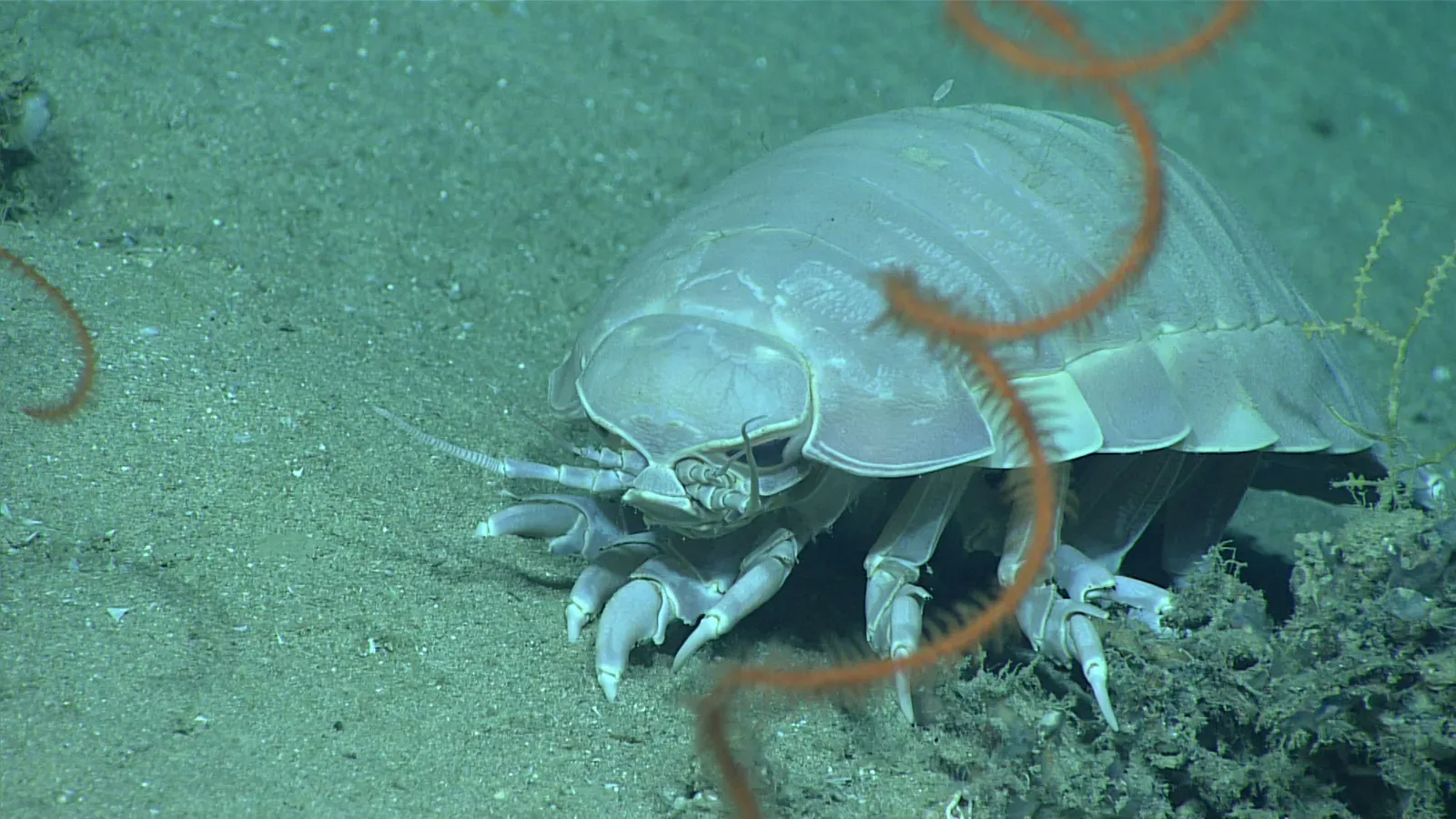
If you have ever seen a pill bug or woodlouse on land, you already have a mental picture of deep-sea isopods – just imagine them supersized. These crustaceans can grow to the length of a housecat, with armored plates and many legs, roaming the seafloor like slow, armored cleanup crews. They often feed on carcasses that sink from above, turning the deep ocean floor into a kind of quiet recycling center.
Amphipods, their smaller cousins, can also reach impressive sizes in the deep, especially compared to relatives living in shallow waters. You can picture them swarming around a fallen fish or whale, tearing off tiny pieces and cleaning the bones. The increased size of these “sea bugs” may be linked to cold temperatures and high pressure shaping their growth over time. When you first see them, they might trigger your instinctive bug-aversion, but once you understand their role, you start to see them as the deep ocean’s unsung janitors.
Why Deep-Sea Creatures Matter to You on Land
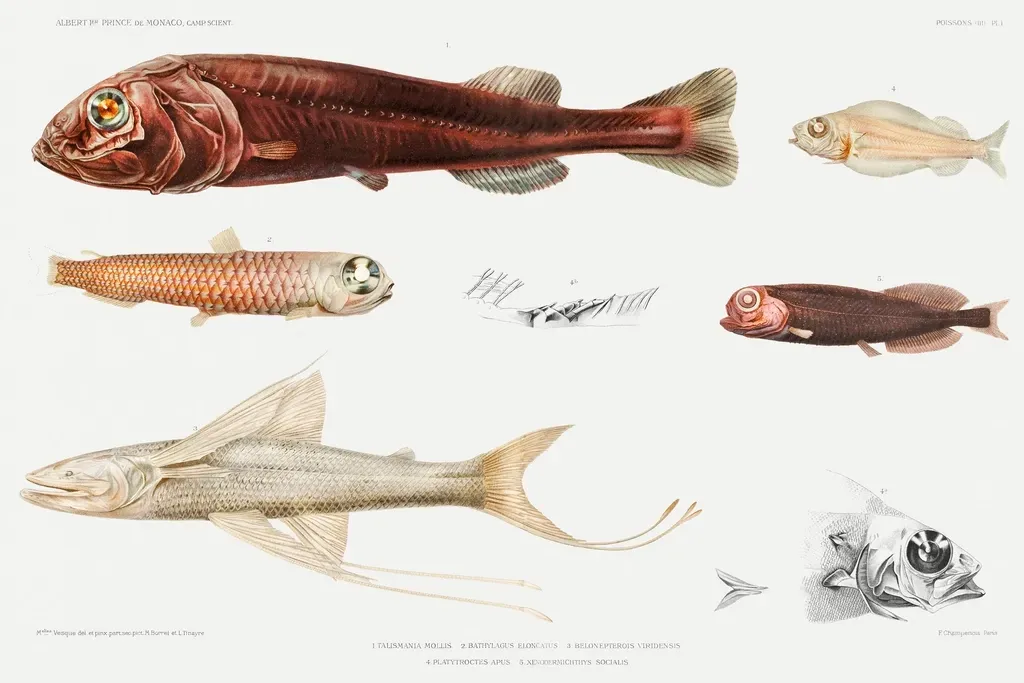
It might be tempting to treat these creatures like distant curiosities, but their lives are tied to your own in surprising ways. The deep ocean plays a huge role in regulating the planet’s climate, absorbing heat and carbon, and many of these animals help cycle nutrients through vast, hidden food webs. When a fish dies near the surface and sinks, it becomes part of what some scientists call a “rain of marine snow,” feeding deep communities that, in turn, influence how carbon is stored in the ocean for long periods.
On top of that, the strange adaptations you see – like bioluminescence, pressure-resistant proteins, and unique chemical pathways – have already inspired scientific and medical research. You might one day benefit from materials or medicines shaped by understanding how these creatures survive crushing pressure and total darkness. At the same time, deep-sea mining, overfishing, and climate change threaten habitats you still barely understand. When you think about protecting the ocean, you are not just saving pretty coral reefs; you are defending an entire hidden world that quietly supports your own.
In the end, the deep ocean’s strangest creatures are not just props for spooky videos or background images in documentaries; they are neighbors you rarely see, living in an extreme part of your shared planet. When you let your imagination follow a beam of light down past the sunlit waves into that endless dark, you begin to feel how small and how connected you really are. The next time you stand on a shore and stare at the horizon, you might find yourself wondering not just what lies beyond it, but what lies far, far below. If you could take a submarine down there for a single day, which of these bizarre beings would you hope to meet first?