You are living in a moment that future generations might look back on the way you look at the first moon landing or the invention of the internet. Huge scientific shifts are quietly unfolding in labs and research centers right now, and most of them are not science fiction anymore. They are messy, unfinished, sometimes overhyped, but very real.
What makes this moment wild is that these breakthroughs are not just about cooler gadgets or faster downloads. They are about your body, your brain, your lifespan, your work, and even your idea of what it means to be human. As you move through these seven discoveries, you might feel a mix of excitement and unease – and that’s exactly the right reaction.
1. Gene Editing That Lets You Rewrite Your Biological Story
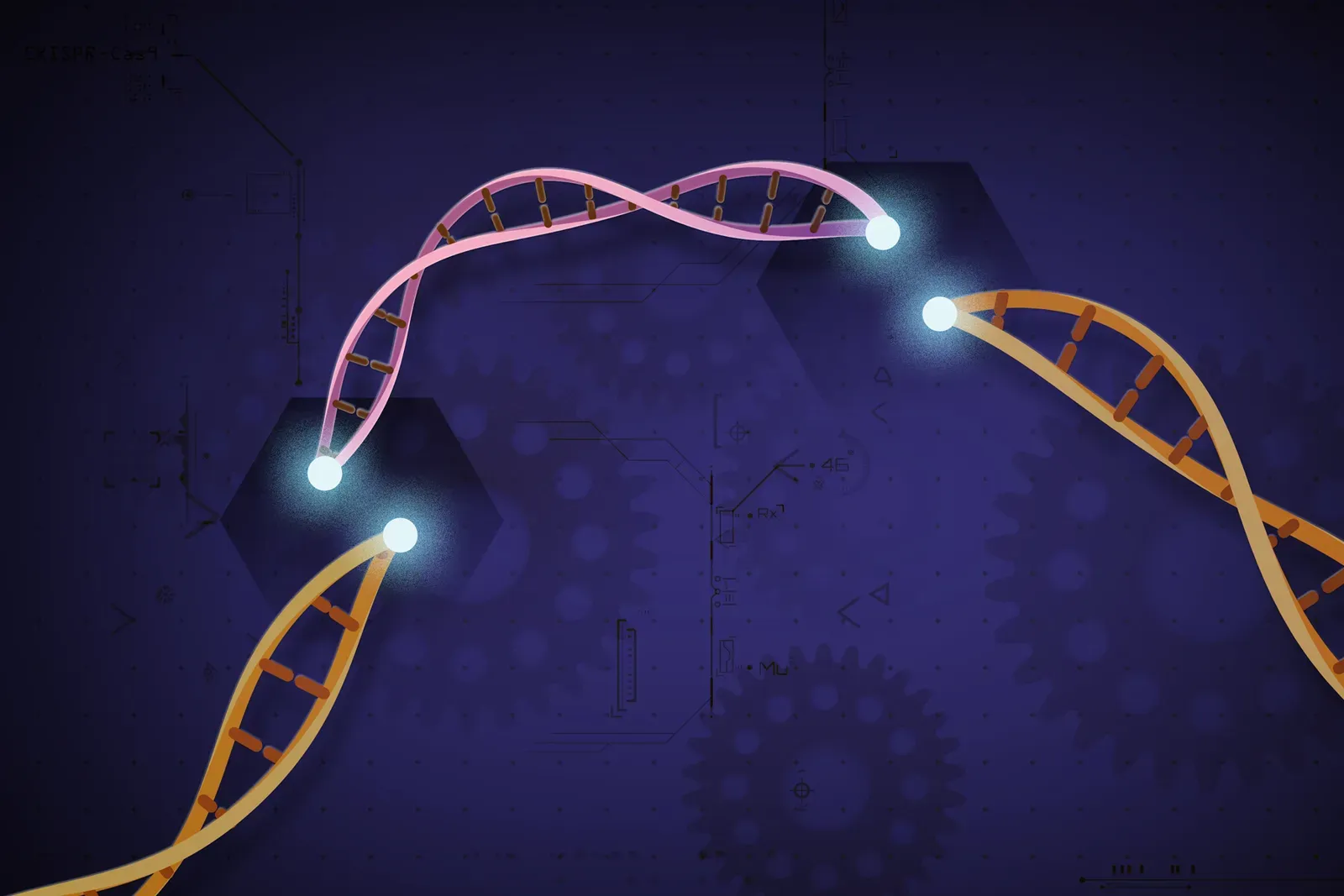
Imagine being able to treat a deadly inherited disease not with a lifelong drug, but with a one-time edit to your DNA. That is what modern gene-editing tools, especially CRISPR-based techniques, are beginning to make possible. In recent years, you have already seen the first real patients treated for conditions like sickle cell disease with approaches that directly target the genetic error at its root, not just the symptoms. You are no longer in the “maybe someday” phase; you are in the early “this is actually happening for some people” phase.
For you, this could mean a future where having a high genetic risk for something like heart disease or certain cancers is not a life sentence but a solvable problem. At the same time, you have to face the uncomfortable flip side: if you can fix genes, you can also tweak them for non-medical reasons. You are walking into a century where parents might be able to choose traits, where inequality could be built at the genetic level, and where you have to decide what counts as therapy and what counts as enhancement. You are not just curing diseases – you are negotiating where human nature ends and engineering begins.
2. Regenerative Medicine That Helps You Grow Yourself Back

You have probably heard jokes about “just growing a new organ,” but that is inching closer to reality than you might think. In labs, scientists are already using stem cells and tissue engineering to grow organ-like structures, called organoids, that mimic parts of the brain, liver, or kidneys. You are also seeing early but real progress in techniques like 3D bioprinting, where living cells are printed layer by layer to form tissues you can actually transplant. It is clumsy and limited right now, but it is past the point of being a pure fantasy.
For you, this opens a stunning possibility: a world where waiting lists for donor organs shrink because you can use your own cells to build replacements, reducing rejection and dependence on strangers’ tragedies. It also forces you to rethink what it means to age. If you can replace worn-out tissues, patch heart damage after a heart attack, or restore function after a spinal injury, then aging becomes less of a one-way decline and more of a maintenance project. You might never be “immortal,” but you could live a lot longer with far less suffering – if society figures out who gets access and who gets left behind.
3. Brain–Computer Interfaces That Blur the Line Between Mind and Machine
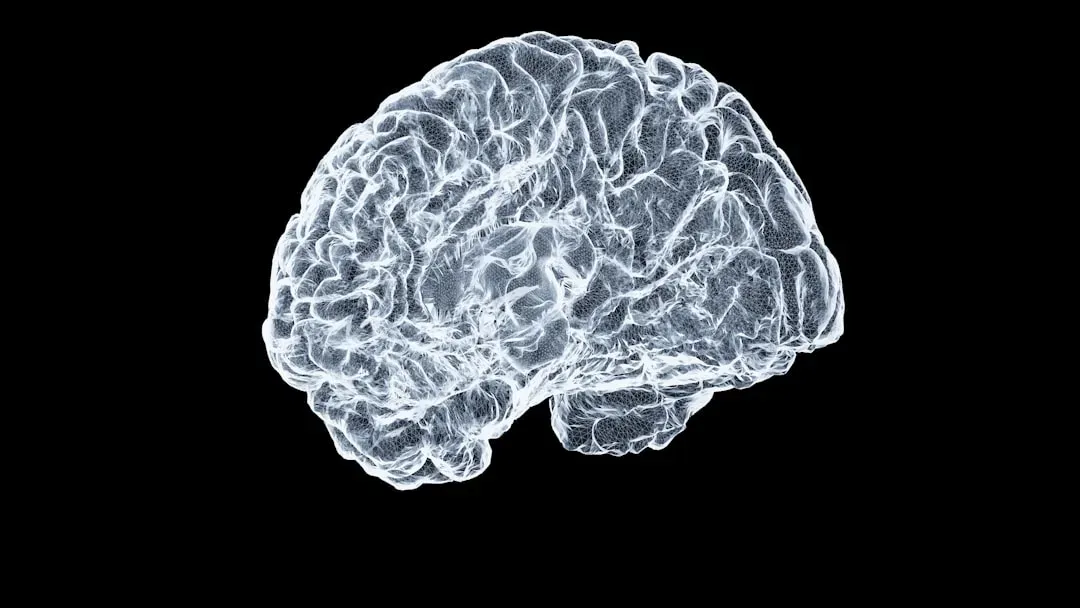
You already live with technology glued to your hand, but brain–computer interfaces (BCIs) go much further: they plug tech directly into your nervous system. In the last few years, researchers have shown that people who are paralyzed can move a cursor, type messages, or even control robotic arms with their thoughts thanks to implanted or non-invasive electrodes. You are watching the earliest examples of direct mind-to-machine communication, not in a movie, but in clinical trials and real patients.
For you, this could first mean powerful new medical tools, like restoring movement after spinal cord injuries or giving a voice back to people who cannot speak. But once you can reliably read and write signals from the brain, a more unsettling door opens. You might one day be able to boost memory, stream information into your senses, or share vivid experiences in ways that make today’s social media feel like cave paintings. At the same time, you will have to confront terrifying questions about mental privacy, hacking the human mind, and who controls the software that literally touches your thoughts. You are not just upgrading your devices – you are deciding how much of yourself you are willing to merge with them.
4. Artificial Intelligence That Acts Less Like a Tool and More Like a Partner
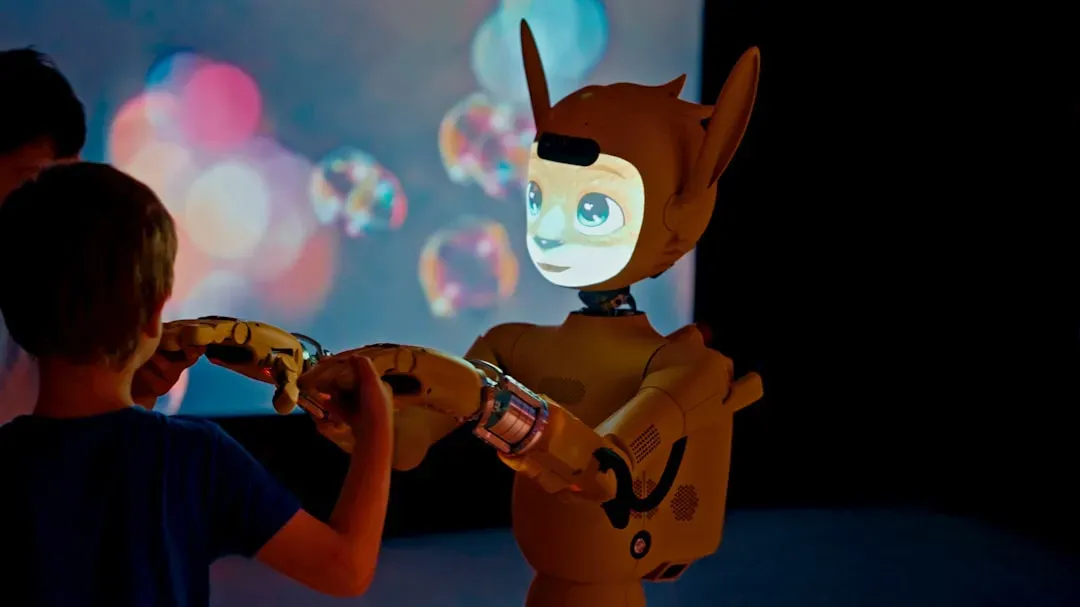
You are already surrounded by AI, from recommendation feeds to language models and image generators, but the key shift is how these systems are starting to feel less like tools and more like collaborators. AI can now write, code, design, diagnose, model new molecules, and help plan complex systems at a level that used to require teams of experts. You are stepping into an era where, for many kinds of cognitive work, you will have a digital co-worker – or competitor – sitting beside you.
For you, this cuts both ways. On the one hand, AI can radically speed up discovery in fields like medicine, climate modeling, and materials science, meaning you could see new drugs, cleaner technologies, and smarter infrastructure arrive far faster. On the other hand, you have to grapple with the fact that a lot of jobs you thought were safe because they were “creative” or “intellectual” are now in the blast radius of automation. You will be pushed to rethink what skills are uniquely human, how you define value in your work, and how you want to regulate systems that are powerful, sometimes opaque, and built by companies that do not always have your long-term interests at heart.
5. Quantum Technologies That Rewrite What Is Computable and Secure
If classical computers are like incredibly fast librarians that flip through books one by one, quantum computers are like bizarre libraries where pages exist in many states at once until you look. You are seeing prototypes that use quantum bits, or qubits, to tackle certain kinds of problems dramatically faster than traditional machines could ever manage. While many claims are overhyped and the hardware is still fragile, you are moving from “theory and tiny demos” to systems that companies and labs can actually experiment with on real-world problems.
For you, this could eventually transform fields that depend on heavy computation, such as discovering new materials, optimizing complex logistics, or simulating molecular interactions for drug design. At the same time, you have to face a quieter but critical consequence: once large-scale quantum computers exist, many of the encryption methods that protect your online banking, medical records, and private messages could be broken. That means you live in a transition period where scientists are racing to invent and deploy quantum-safe cryptography before older systems become vulnerable. You are watching the foundations of digital trust being renegotiated while most people barely know it is happening.
6. Climate Engineering and Planet-Scale Interventions

You already know the climate is changing, but one of the most radical emerging ideas is that humans might not just reduce emissions; you might actively tweak the planet’s systems to counter some of the damage. Under the broad term “climate engineering” or “geoengineering,” researchers are exploring approaches like injecting particles into the upper atmosphere to reflect sunlight, brightening clouds over oceans, or pulling large amounts of carbon dioxide directly out of the air. These ideas used to be fringe; now they are being modeled, debated, and in a few cases, tentatively tested in very small experiments.
For you, this raises a disturbing question: if the climate crisis gets worse, would you accept deliberate, large-scale interventions in Earth’s systems, knowing they might have unpredictable side effects and uneven impacts across regions? You are essentially entertaining the idea of a planetary thermostat that powerful actors could adjust. That forces you to confront issues of global governance, consent, and justice on a scale humanity has never had to manage. You are not just living on Earth anymore – you are starting to treat it like a system you can engineer, whether you are ready for that responsibility or not.
7. The Hunt for Life Beyond Earth and a New Cosmic Perspective
You have probably grown up with the question of whether you are alone in the universe lurking in the background like a quiet hum. What is new now is how close you might be to getting a real, evidence-based answer. With powerful space telescopes and next-generation observatories, scientists are now detecting thousands of exoplanets and beginning to analyze their atmospheres for signs that could hint at biological activity. You are also watching ongoing missions explore Mars, icy moons, and other worlds in your own solar system, searching for traces of past or present life.
For you, even finding simple microbial life somewhere else would be a psychological earthquake. It would tell you that life is not a miraculous fluke tied to one small planet, but something that can emerge under the right conditions in more than one place. That realization would ripple through your philosophy, religion, sense of uniqueness, and even how you think about your responsibilities as a technological species. You are not just charting distant worlds; you are quietly preparing yourself for the possibility that “human” is only one chapter in a much larger story the universe is telling.
Conclusion: Standing on the Edge of a Very Strange Future
When you zoom out and look at these discoveries side by side – editing your genes, regrowing your organs, merging your brain with machines, partnering with AI, harnessing quantum weirdness, engineering the climate, and searching for alien life – you start to see a pattern. You are poking at every boundary you once treated as fixed: your body, your mind, your planet, even your place in the cosmos. The future that emerges from this will not be clean or comfortable; it will be uneven, unfair at times, and full of messy trade-offs.
But you are not a passive spectator in this story. You vote, you choose what to support, you decide which technologies to adopt, and you help shape the norms that either restrain or unleash these powers. The real question is not whether these breakthroughs will move forward – they already are – but how consciously you will choose the kind of world they build. As you look ahead, ask yourself: which of these discoveries excites you the most, and which one quietly scares you more than you want to admit?