
You probably like to think of reality as something solid, logical, and mostly understandable. Then you run into a good paradox, and suddenly the floor drops out from under you. A paradox is not just a fancy riddle; it is a situation where your best reasoning leads you straight into a contradiction, while every step on the way seemed perfectly sensible. That is why even top scientists and philosophers still lose sleep over some of these puzzles.
As you explore these ten mind-bending paradoxes, you will see the same pattern repeat: your everyday intuitions collide with the strange rules of logic, time, infinity, or quantum physics. Some of these paradoxes have partial resolutions, others are still debated, and a few may never fully go away because they expose limits in how you think. Read them slowly, let yourself get confused, and notice how your brain tries to wriggle back to comfort. That mental stretch is exactly where the fun lives.
1. The Grandfather Paradox: When Time Travel Eats Its Own Tail
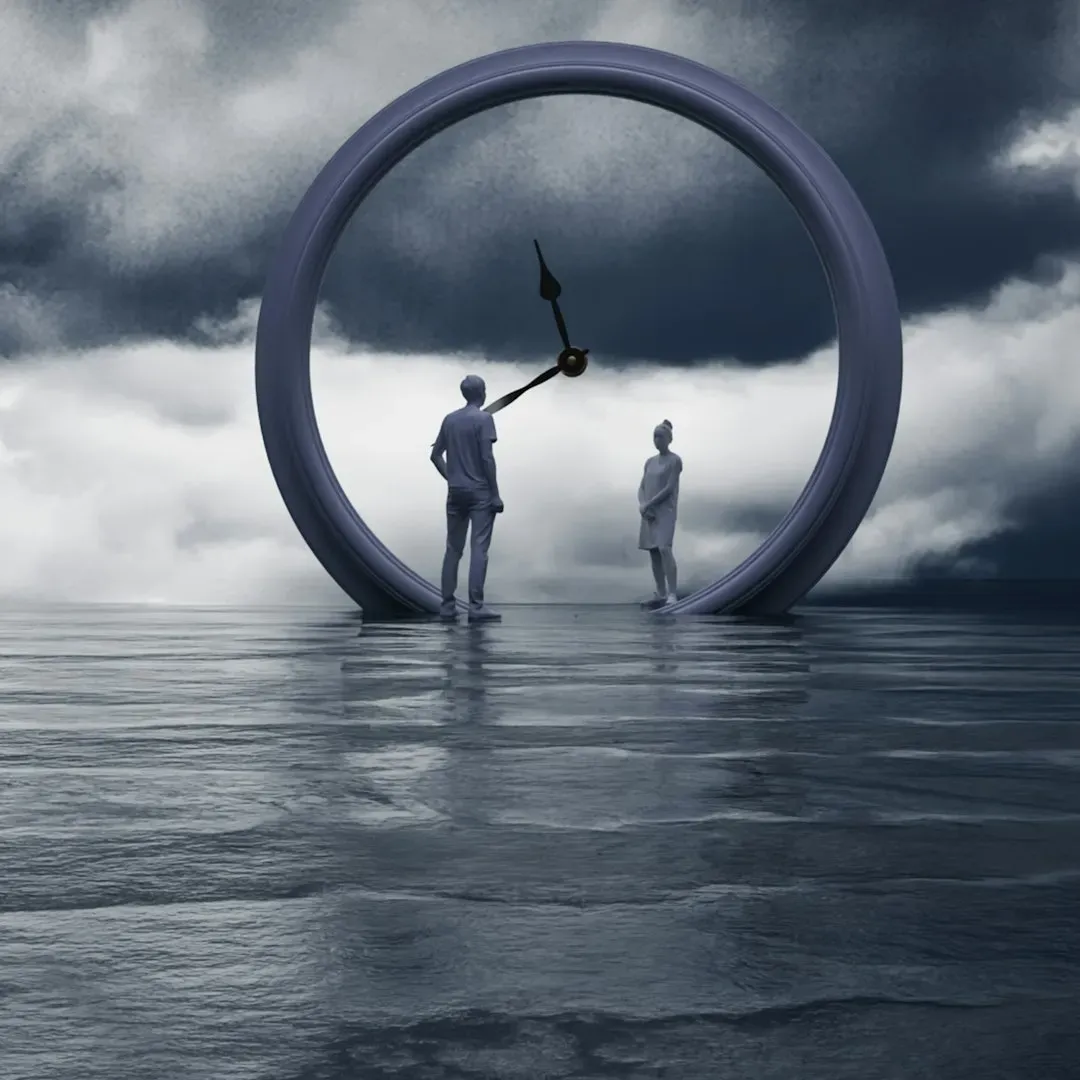
Imagine you build a time machine, go back several decades, and prevent your own grandparent from ever having children. If you succeed, then you are never born, and if you are never born, you never travel back, which means your grandparent actually did have children, which means you are born after all. You are caught in a logical loop where your very existence undermines the event that created it. On the surface, you are just following cause and effect, but the moment you allow backward time travel, causality starts folding in on itself.
Physicists have tried to tame this paradox in a few ways. One approach suggests that if time travel is possible, the universe never allows you to change the past in a way that creates a contradiction; something always goes wrong with your plan, no matter what you try. Another idea is that by interfering with the past, you actually branch off a new timeline or parallel universe where your action is consistent, while your original history remains intact. When you think about it, this paradox is less about your grandparent and more about whether the future can genuinely “rewrite” the past, or only grow from it.
2. Schrödinger’s Cat: Alive, Dead, and Waiting on You
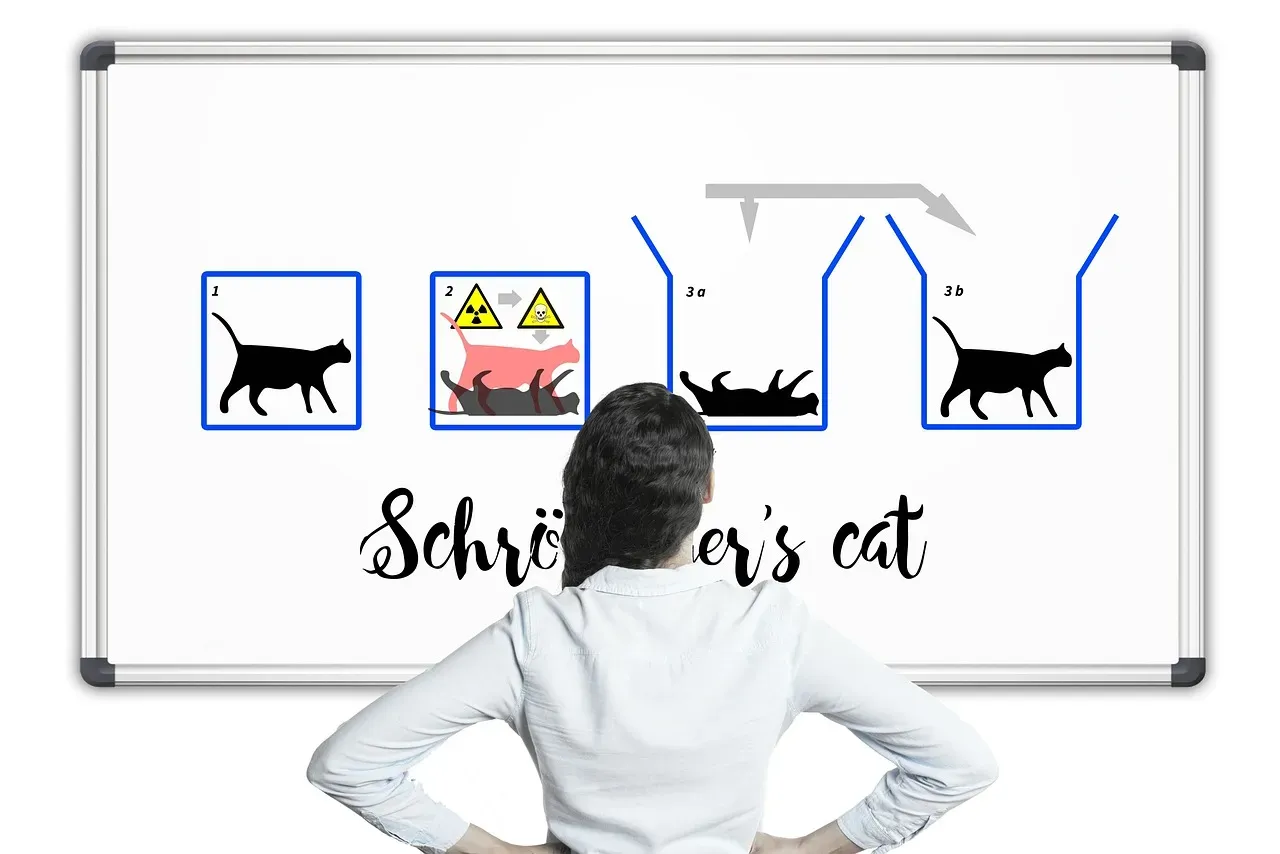
Picture a sealed box containing a cat, a tiny amount of radioactive material, and a device that will kill the cat if a single atom decays within an hour. In quantum mechanics, that atom is described by a wave that represents multiple possibilities at once. Until you check, it is treated as both decayed and not decayed. When you scale that up to the cat, the math suggests the cat is hanging in a spooky limbo of being both alive and dead at the same time, at least according to the quantum description.
This paradox is really about what it means to make a measurement and what role you play as an observer. One line of thinking says that when you open the box, your observation forces the system to “choose” one outcome, collapsing the quantum blur into a single reality. Another view says there is no single choice at all; both outcomes unfold in separate branches of reality, and you only ever experience one of them. When you sit with this for a moment, you realize the unsettling implication: on the smallest scales, the world might not be a set of definite states, but a cloud of maybes that only sharpen when you interact with them.
3. The Fermi Paradox: Where Is Everybody?

Look up at the night sky and remember that your galaxy alone has hundreds of billions of stars, many of them with planets. Given the vastness of the universe and the age of the cosmos, you would expect intelligent life to have had plenty of time to emerge, grow, and spread. If even a tiny fraction of civilizations reached advanced technology, the galaxy should be buzzing with detectable activity. Yet when you listen with radio telescopes and scan the stars, you are met with a strange and stubborn silence.
The Fermi paradox lives in that gap between expectation and observation. You are left juggling uncomfortable possibilities: maybe intelligent life is incredibly rare, maybe advanced civilizations destroy themselves, maybe you are just not looking in the right way, or maybe truly advanced beings have no interest in announcing themselves. Some researchers suggest that life hides for safety, others propose that you are in an early, quiet phase of the universe. Whatever explanation you lean toward, the paradox forces you to question your assumptions about progress, survival, and your place in a possibly empty or eerily crowded cosmos.
4. The Twin Paradox: When Going Faster Makes You Younger

Suppose you and your twin start the same age. You stay on Earth, while your twin boards a spaceship that travels close to the speed of light, then turns around and comes back. According to Einstein’s theory of special relativity, from your point of view, your twin’s clock runs slower during the high-speed journey, so your twin should come back younger than you. But from your twin’s point of view on the ship, it seems like you are the one moving, so your clock should be the slower one. You end up with a head-scratcher: who actually ages less?
The resolution involves subtle details of acceleration and reference frames, but the gut-level paradox remains powerful. You are used to time being a single shared river everyone moves through together; relativity tells you it is more like a stretchy fabric that warps differently for each traveler. Experiments with fast-moving particles and precise atomic clocks have confirmed the effect: motion and gravity really do change the rate at which time passes. When you think about the twin paradox, you are not just imagining a sci-fi scenario, you are brushing up against the strange fact that your “now” is not as universal as it feels.
5. The Ship of Theseus: Are You Still You If Everything Changes?

Imagine you own a wooden ship and, over many years, you replace each plank, rope, and beam as they wear out. Eventually, every piece of the ship has been swapped. At that point, are you still looking at the same ship or a completely new one? To push it further, picture someone secretly collecting the old planks and rebuilding a ship from them. Which one, if either, is the original? You bump into a paradox where identity seems to slip through your fingers as soon as you try to pin it to physical parts.
This puzzle does not just apply to ships; it points straight at you. Your body’s cells are constantly being replaced, your thoughts shift over time, and your memories can change or fade. Yet you usually feel like the same person you were years ago. The Ship of Theseus forces you to ask whether identity is about continuous structure, historical connection, function, or something deeper and more abstract. When you think about your own life through this lens, you might find yourself wondering how much you can change and still honestly say, “I’m still me.”
6. The Sorites Paradox: When “A Little More” Breaks Your Logic
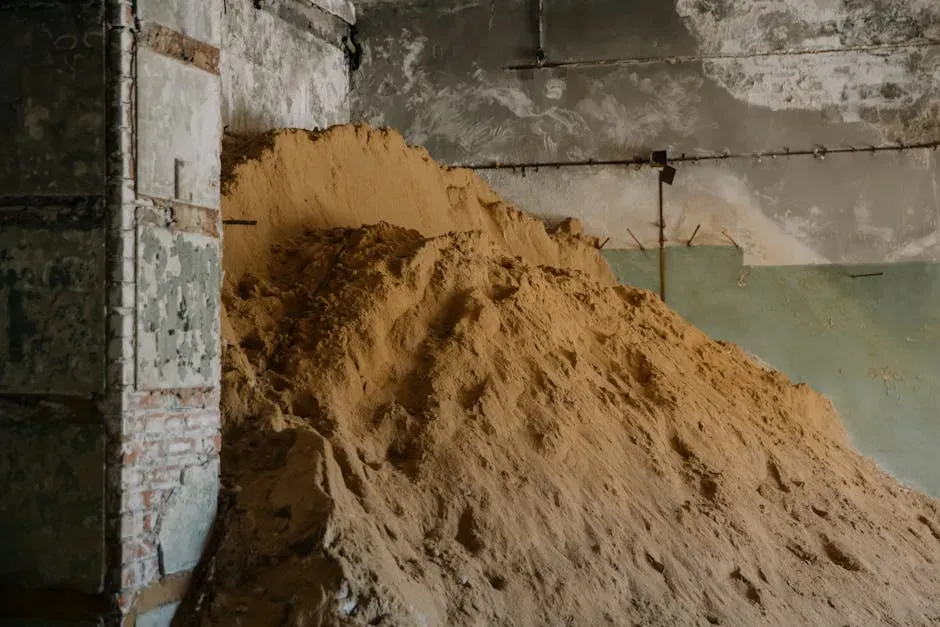
Picture a single grain of sand; you would not call that a heap. If you add one grain, it is still not a heap. Add another, and another, and so on. At every step, adding one grain does not seem like enough to suddenly create a heap out of nowhere. But eventually, you clearly do have a heap. This leads you into a paradox: if one grain never makes the difference between heap and not-heap, how do you ever cross the line? Your neat ideas about clear categories start to wobble.
You run into this same issue anytime you talk about vague concepts like tall, rich, old, or healthy. There is no exact point where a short person becomes tall, or where someone crosses into being old, yet you use these words all the time as if they were sharp labels. The Sorites paradox nudges you to see how much of your language rests on fuzzy boundaries and context. Instead of demanding a perfect cutoff, you may have to get comfortable with shades of gray and accept that some questions, like “Exactly how many grains make a heap?”, simply do not have a single correct answer.
7. Zeno’s Paradoxes: How Motion Happens If You Never Arrive

Imagine you are walking toward a door. Before you reach the door, you have to walk halfway there. Before you finish that half, you must walk half of that distance, and so on, slicing the journey into endlessly smaller halves. It seems like you have to complete an infinite number of steps to reach the door, which feels impossible in a finite time. When you look at it this way, simple motion starts to look like a logical impossibility, even though you prove it wrong every time you get up from a chair.
Mathematics eventually answered this paradox with the concept of converging infinite series: you can add up an infinite number of shrinking steps and still get a finite total distance and time. But if you let yourself really sink into the paradox, you see that it is not just about numbers on a page. You are being asked to reconcile your continuous experience of motion with a description of reality that chops everything into pieces. It also hints at deeper questions about whether space and time are truly continuous or made of tiny, discrete chunks that your senses smooth over.
8. The Banach–Tarski Paradox: Splitting a Ball Into More Than It Was
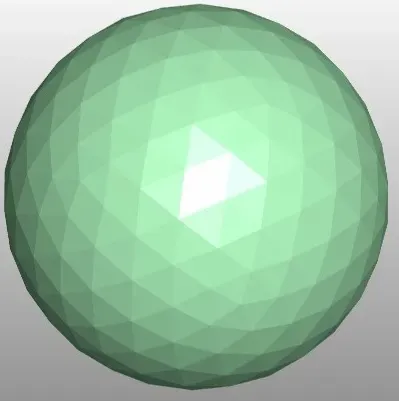
Take a solid sphere in three-dimensional space. Now imagine you can cut it into a handful of perfectly precise pieces and, by rotating and moving those pieces without stretching them, reassemble them into two spheres exactly the same size as the original. On the face of it, you have just doubled the volume from nowhere. This is the Banach–Tarski paradox, and it flatly ignores your usual sense that volume and matter should be conserved by simple rearrangement.
The key trick is that the pieces you are imagining are not ordinary chunks that you could ever hold; they are bizarre, infinitely scrambled sets of points that rely on deep properties of infinity and choice in mathematics. So you should not expect to ever do this with a real physical ball. Still, the paradox shows you how far pure math can drift from your physical intuitions while remaining logically consistent. It leaves you with a nagging question: when you use mathematics to describe the world, how do you decide which mathematical constructions are physically meaningful and which are just strange, abstract games?
9. The Boltzmann Brain Problem: Are You the Fluke in the Void?
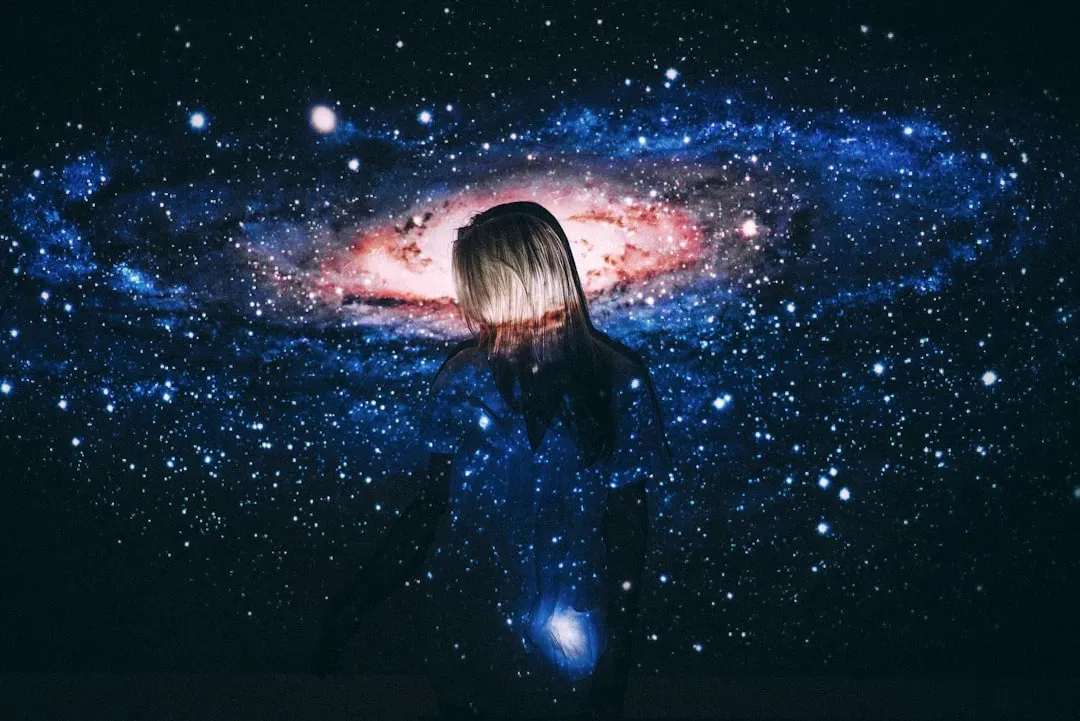
In some cosmological models, the universe can last such a staggeringly long time that random fluctuations become important. Given enough time, simple chance could arrange particles into complex, temporary structures, including a functioning brain complete with false memories. That hypothetical mind, called a Boltzmann brain, would briefly pop into existence, think it has a long personal history, and then vanish. Statistically, in certain scenarios, such isolated brains could end up being far more common than full, long-lived civilizations like yours.
This sets up a deeply unsettling paradox about observation and probability. If Boltzmann brains are overwhelmingly more likely observers, then when you look around and think about your memories, you should expect to be one of them. But your experience of a stable, orderly universe with consistent history does not match what a random fluctuation would probably see. To avoid that conflict, many scientists argue that good cosmological theories should be built so that Boltzmann brains are extremely rare. In a strange way, your very confidence that you are not a fleeting fluctuation helps guide how you judge theories about the entire cosmos.
10. The Simulation Argument: If Simulations Are Easy, Are You in One?
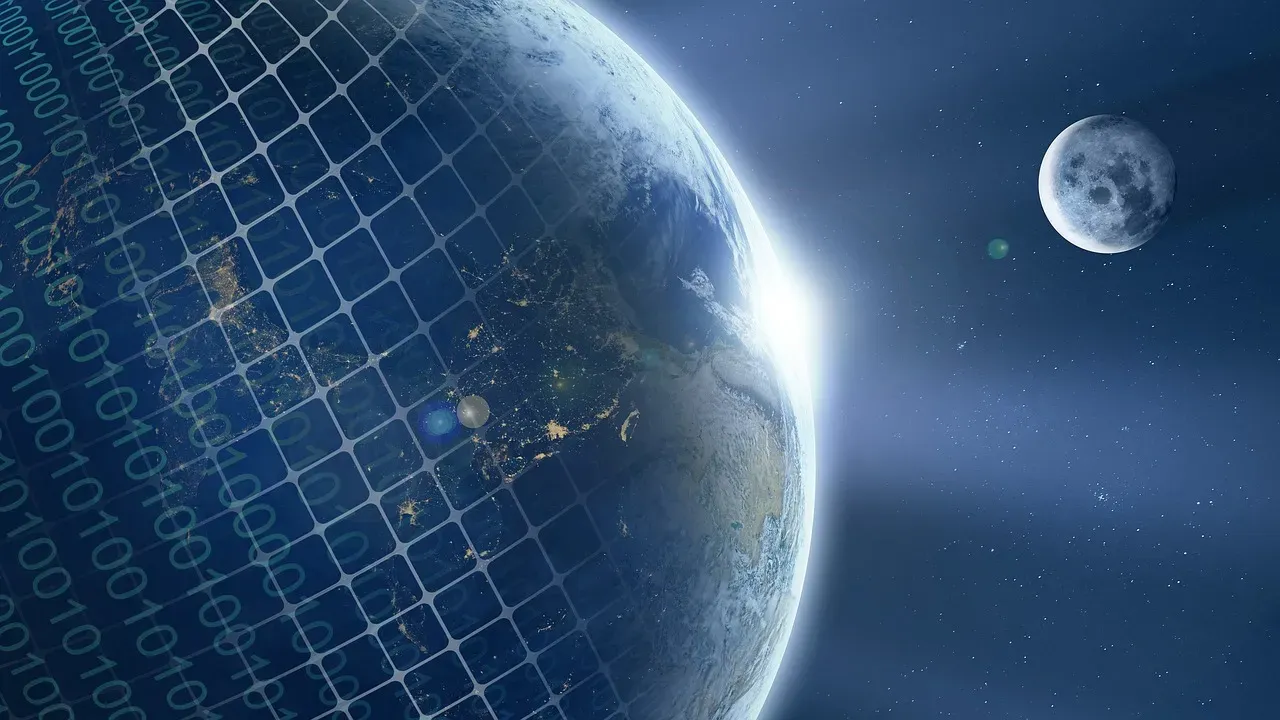
Think about how quickly your technology has advanced from simple, pixelated games to immersive virtual worlds. If civilizations survive long enough and gain enough computing power, they might be able to run vast numbers of detailed simulations of conscious beings living in convincingly realistic worlds. If that happens, simulated minds could vastly outnumber biological ones. From a simple numbers perspective, that would mean a random conscious observer is more likely to be simulated than original, even if the simulation itself feels perfectly real from the inside.
This argument does not prove you are in a simulation, but it presses you into a corner: either civilizations always fail before reaching that stage, or they reach it but almost never run such simulations, or you are probably inside one. It also raises subtle questions about what would even count as evidence for or against your world being simulated, since any test you design could itself be part of the script. When you let this sink in, everyday life starts to look different: the laws of physics begin to resemble software rules, and your own sense of self becomes something that might be running on an unimaginably large cosmic computer.
When you step back from these ten paradoxes, you can feel how they tug at the edges of what you normally take for granted. Time, identity, motion, infinity, reality itself – each one turns out to be more fragile and slippery than you like to admit. You may never fully “solve” these puzzles, but wrestling with them sharpens your thinking and stretches your imagination in ways that ordinary facts rarely do.
In the end, paradoxes act like mirrors that show you the hidden assumptions behind your most basic beliefs. They expose where your mental shortcuts fail and where your favorite theories still have gaps. The next time you catch yourself feeling sure you understand how the world works, try revisiting one of these mind-boggling problems and see how quickly that certainty softens – then ask yourself, which of these paradoxes changes the way you look at reality the most?