If you have ever stared at the night sky and felt that strange whisper in the back of your mind asking whether all of this is truly real, you are not alone. The idea that you might be living in a highly advanced simulation sounds like something pulled straight from a sci‑fi movie, but it has quietly worked its way into serious philosophical debates and even mainstream scientific conversations. You are not just playing with a wild thought experiment; you are stepping into a question that some respected physicists, philosophers, and technologists actually take seriously enough to argue about.
At the same time, you need to be careful with it. The simulation idea is fascinating, but it sits at the edge of what you can meaningfully test with current tools and knowledge. That means you should treat it less like a revealed truth and more like an intriguing possibility that forces you to look at reality, consciousness, and technology in a new way. As you explore it, you are really exploring your assumptions about what “real” even means.
Why the Simulation Hypothesis Captures Your Imagination
One reason this theory grabs you so strongly is that it taps straight into a feeling you already know: that sense that the world might have hidden rules running underneath everything. You see patterns in nature, in human behavior, and in technology, and your brain naturally starts to wonder if there is some deeper operating system behind it all. When someone suggests that reality itself could be a kind of programmed environment, it clicks into that instinct like a key sliding into a lock.
It also gives you a narrative that feels eerily familiar from games and virtual worlds you already use. You have watched digital characters move through stunningly realistic environments, reacting to physics engines, lighting models, and AI behaviors that were barely possible a couple of decades ago. You can imagine, without too much strain, a future version of that technology so breathtakingly advanced that the characters inside would have no way to know they were in a simulation. The unsettling part is realizing that, from your point of view, there is no obvious way to rule out that you are one of those characters.
The Core Logic: How the Simulation Argument Actually Works
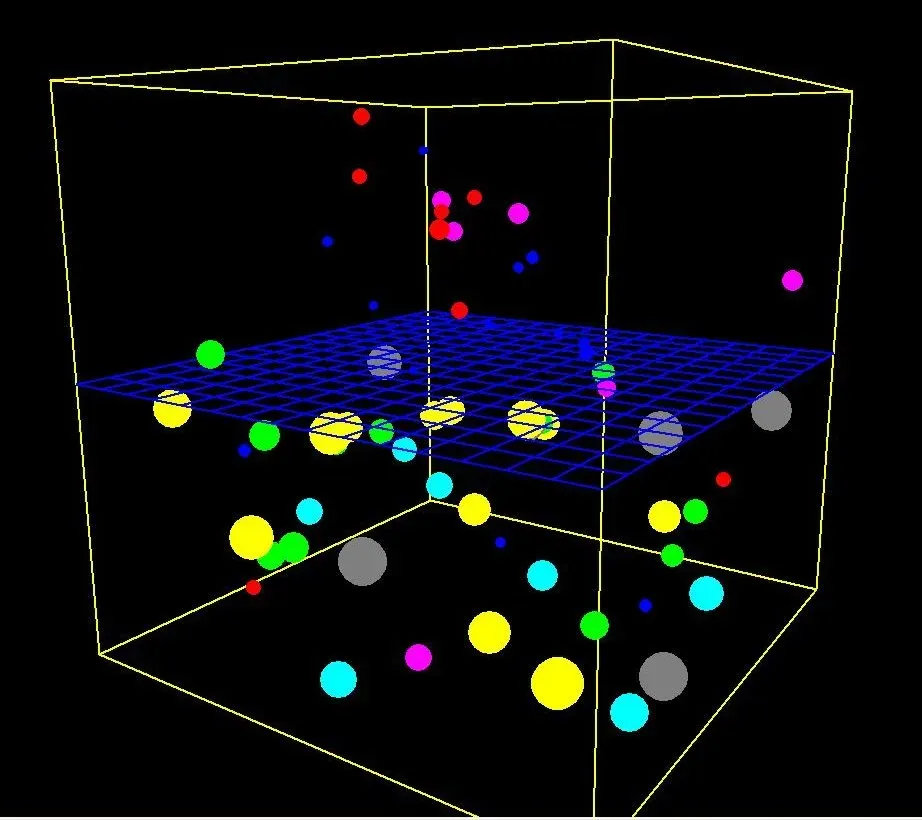
When you strip the idea down, the most discussed version is not just someone saying “maybe we’re in a simulation because it sounds cool.” It is a structured argument that starts with your assumptions about where technology could go. If you accept that civilizations like yours might someday have incredible computing power and a desire to run detailed simulations of their own history or of conscious beings, then you have to confront a strange implication: simulated minds might eventually outnumber biological minds by an enormous margin.
From there, the reasoning turns on probability rather than on proof. If a future civilization can run countless simulations containing beings like you, then, as a purely statistical matter, most beings who think they are real, physical humans would actually be living inside simulations. That means that if advanced civilizations exist and they do run such simulations, it becomes more likely that you are simulated than not. The catch is that this argument is only as strong as its assumptions, and those assumptions are exactly where you need to stay skeptical and clear‑headed.
What Modern Computing and Virtual Worlds Tell You
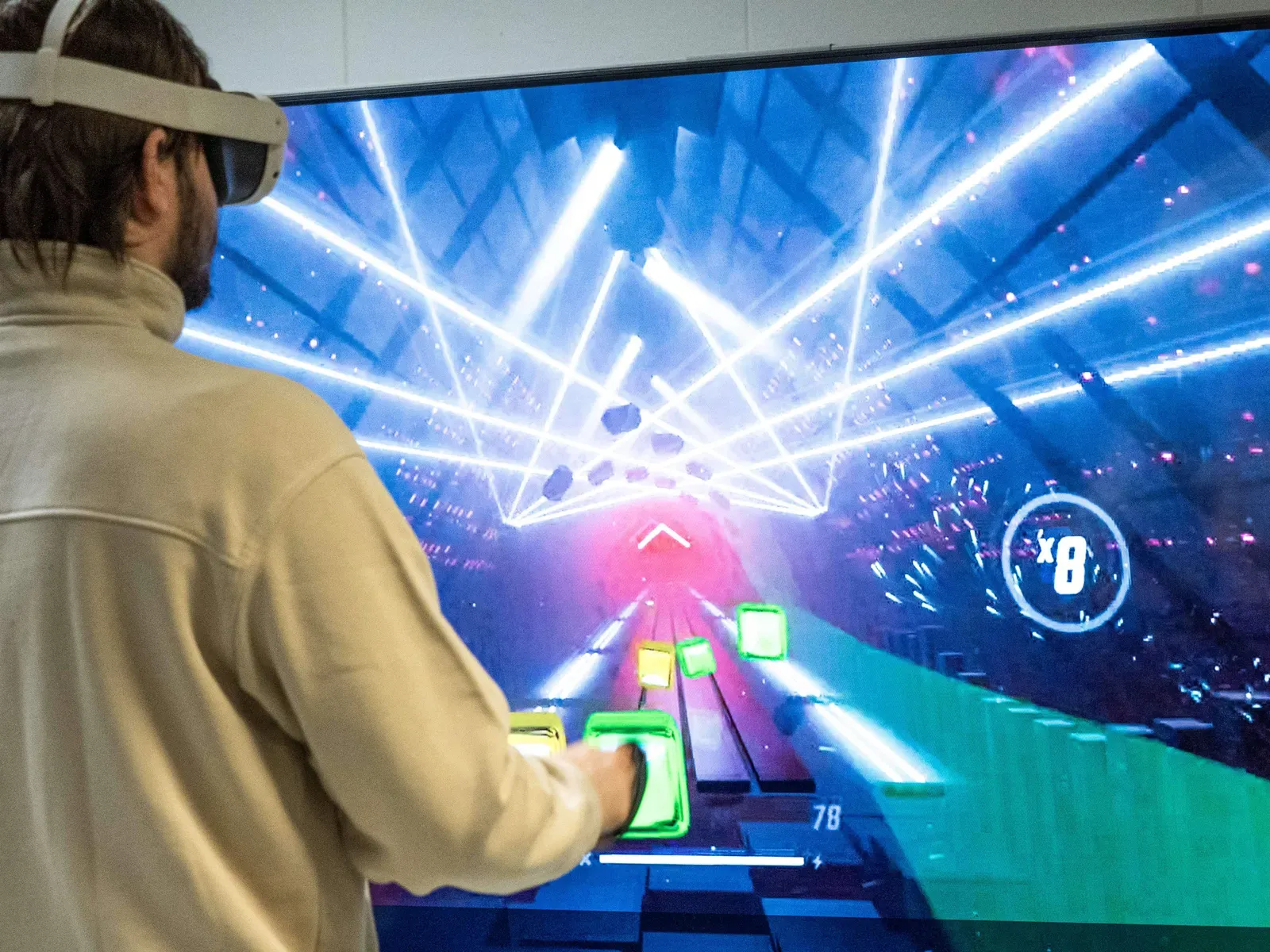
To get a feel for why people take this idea seriously, you only need to look at how fast your own technology has changed in a relatively tiny slice of history. A few decades ago, the idea of millions of people wandering around persistent digital worlds together in real time would have sounded completely unrealistic. Today, you casually jump into online games, social VR platforms, and simulations that model everything from weather patterns to city traffic, often without thinking twice about what that actually represents in terms of computational power.
If you project that trend forward, even modestly, you can picture simulations that are not only visually hyper‑realistic but also populated with AI agents that feel emotionally and intellectually convincing. You already see early versions of that in advanced language models, lifelike graphics, and physics engines that mimic real‑world behavior with surprising accuracy. From your current vantage point, a fully immersive, indistinguishable‑from‑reality simulation is not guaranteed, but it is no longer pure fantasy either; it is something you can at least imagine as a distant, yet plausible, technological milestone.
The Physics Angle: Are There Glitches in the Cosmic Code?
Another reason the simulation idea refuses to die is that some features of your universe look suspiciously like the kind of constraints you would expect in a designed system. For example, when you learn that energy, matter, and even information seem to come in discrete chunks at very small scales, it is hard not to compare that to pixels on a screen or bits in a computer. You encounter maximum speeds, minimum lengths, and hard limits built into the structure of reality, and it can feel like you are bumping into the technical specs of an underlying engine.
Some researchers have even suggested looking for subtle patterns in things like high‑energy cosmic rays, quantum behavior, or the distribution of physical constants that might hint at an artificial structure. So far, you do not have clear, widely accepted evidence that screams “this is coded,” and most working physicists still treat these ideas as speculative rather than established. Still, the fact that your best physical theories already describe reality using information‑like concepts and mathematical rules is what keeps the door open in your mind. You already talk about the universe in terms of fields, equations, and information; thinking of it as running on some deeper substrate is not as big a leap as it first seems.
Consciousness in a Simulation: Would You Still Be “You”?

If you take the simulation idea seriously for a moment, a more intimate question hits you: if you are simulated, are you still real? From your own perspective, the answer would feel like an obvious yes. Your pain would hurt, your joy would feel genuine, and your relationships would matter, no matter what kind of underlying hardware was running your experiences. Just like a character in a novel can move you deeply even though they only exist in ink and paper, your mind could be implemented in a different medium and still feel completely authentic from the inside.
This pushes you to rethink what you mean by consciousness in the first place. If consciousness depends on patterns of information processing rather than on a particular kind of physical stuff, then in theory it could be realized in biological neurons, in silicon, or in some future substrate you have not invented yet. In that case, being simulated would not automatically make your life fake; it would just mean that your brain’s processes are being emulated by some advanced system. That thought can be strangely comforting: even in a simulation, your emotions would be real to you, and your choices could still have meaning within the rules of that world.
The Skeptic’s View: Why You Should Doubt the Hype

As captivating as the simulation theory is, you do yourself a favor by listening carefully to the criticisms. A major pushback is that much of the argument leans on speculation about future civilizations and technologies that you have no direct evidence for. You are stacking a tower of “if this, then maybe that,” and then treating the top of that tower like a solid platform. When you step back, you see that you do not currently have any test that can definitively tell you whether you are in a simulation or not, which makes the whole question feel more like philosophy than science.
There is also a risk of letting the idea eat up more of your mental space than it deserves. If you start using “we’re in a simulation” as an all‑purpose explanation, you can end up ignoring more grounded, testable answers to questions about physics, psychology, or society. Some skeptics would tell you that until you have a clear way to gather evidence for or against the hypothesis, it should stay in the category of interesting thought experiment rather than everyday worldview. That does not mean you have to dismiss it, but it does suggest you should hold it lightly, the way you might hold a vivid metaphor rather than a proven fact.
How This Theory Changes the Way You Live Today

Even if you never find out whether you are actually in a simulation, the idea itself can reshape how you move through your life. It can make you more aware of the patterns you fall into, almost as if you are watching your own character from the outside. You might start noticing how often you run familiar “scripts” in your relationships, work, or habits, and that awareness can give you a little more freedom to change them, the way a game player might decide to explore a new path instead of grinding the same level again and again.
The theory can also sharpen your sense of responsibility rather than dull it. If you are in a simulation, you still have experiences that feel real and actions that affect other conscious beings, simulated or not. That means your choices still matter deeply inside this environment, much like how your behavior in an online world can still hurt or help real people sitting behind their screens. Instead of treating the simulation idea as an excuse to retreat from meaning, you can use it as a reminder that meaning is something you build from the inside out, regardless of what lies beneath the surface of reality.
Where Science Might Go Next With This Question
Looking ahead, you can expect this topic to keep showing up at the crossroads of physics, computer science, and philosophy. As your tools for probing the universe get more precise and your simulations of complex systems get more sophisticated, you may find new ways to frame the question, even if you still cannot fully answer it. You might see researchers proposing clever experiments to test for subtle constraints or patterns that would be more natural in a simulated universe than in a purely “base‑level” one, even if those tests end up refining your theories rather than confirming a hidden programmer.
On the computing side, you may watch your own simulations grow in depth and realism, which will push you to confront ethical and philosophical questions long before you can simulate an entire universe. If you someday create digital beings that convincingly act and perhaps even claim to feel, you will have to decide how you treat them and what responsibilities you owe them. In a quiet way, that will mirror the very question you are asking now about your own status. As your technology advances, the line between simulated and real will likely blur in practice, forcing you to focus less on what something is “made of” and more on what kind of experience and consciousness it seems to host.
In the end, the simulation hypothesis is less about proving that you are trapped in some cosmic software and more about nudging you to interrogate your assumptions about reality. Whether or not there is a programmer behind the curtain, you are still the one deciding how seriously to take your own life, your values, and your relationships. You can treat this theory as a mental lens that sometimes sharpens your view and sometimes distorts it, knowing that you can always set it down when it stops being helpful. If this really is a simulation, what kind of player do you want to be while you are here?