Every moment you are awake, your brain is quietly translating the world into an inner language you never hear, but constantly feel. You call it awareness, intuition, a gut feeling, or just a sense of being here, yet beneath that simple sense of “I am” lies a storm of electrical whispers, chemical signatures, and subtle patterns that science is only beginning to decode.
When you start to look at consciousness as a kind of secret code your brain is running in the background, everyday experiences suddenly feel mysterious again. The way you recognize a friend’s face in a crowd, remember a childhood smell, or talk to yourself silently before a big decision – these are all pieces of that hidden language. New research does not have all the answers yet, but it is giving you clearer clues about how your brain stitches reality, memory, and self into a single, seamless feeling: you.
The Brain as a Prediction Machine: How You “Guess” Reality
You might feel like you simply open your eyes and see the world as it is, but your brain is actually guessing most of it a split second before the information even arrives. Instead of being a passive camera, your brain works more like a prediction machine, constantly forecasting what will happen next and then updating those predictions when they are wrong. That is why you can catch a ball, finish someone’s sentence, or walk through a familiar room in the dark without crashing into everything.
In this view, consciousness is not just you watching the world, it is you experiencing your own predictions about the world. When those predictions line up with what your senses receive, everything feels smooth and ordinary. When they clash – like when you miss a step on the stairs you thought was there – you feel a sudden jolt of awareness. That shock is your brain saying, in its hidden language, that its model of reality just failed and needs to be rewritten.
Neural Signatures of Awareness: What Changes When You “Wake Up” Inside
You know the difference between being on autopilot and suddenly being sharply aware, like when a car swerves in front of you or you hear your name across a noisy room. Under the surface, scientists are finding that this shift into conscious awareness is tied to changes in how different brain regions talk to each other, rather than just one special “consciousness spot” turning on. When you become aware of something, distant areas of your brain start syncing their activity in distinctive patterns, almost like a network lighting up.
Instead of being a simple on-off switch, awareness seems to come from this flexible, high-level coordination. When communication across the brain is rich and integrated, you experience something vividly. When that communication breaks down – from sleep, anesthesia, or certain brain injuries – your internal movie dims or disappears, even if some parts of the brain are still working. You can think of conscious experience as what it feels like from the inside when your brain’s communication network reaches a certain level of complexity and coherence.
The “Global Workspace”: Your Inner Stage for Thoughts and Feelings
If you imagine your mind as a bustling theater, only a small fraction of what is happening backstage ever makes it onto the main stage where you can see it. One influential idea suggests that consciousness is basically the moment a piece of information makes it onto that inner stage and gets “broadcast” across your brain. When something reaches this global workspace – like a sudden pain, a memory, or an idea – it becomes available to different systems at once: attention, language, planning, and self-reflection.
You experience this every time something pops into your mind and instantly influences how you think, speak, and act. Before that moment, the same information might have been processed unconsciously in specialized circuits, but you did not feel it as part of your awareness. The hidden language here is the pattern of signals that tell the brain, “This matters – share it with everyone.” Consciousness, in this picture, is what it feels like to have something promoted from backstage processing to center stage priority.
The Default Mode Network: Why Your Mind Wanders When Nothing Is Happening

Have you noticed that when you are not doing anything in particular, your mind does not go blank – it drifts. You recall old conversations, imagine future scenarios, rehearse what you will say, or even revisit embarrassing moments you wish you could erase. Neuroscientists have found that when your mind wanders like this, a set of brain regions tends to fire together, often called the default mode network.
You can think of this network as your brain’s “background narrator,” constantly stitching together your past, present, and possible future into a personal story. This hidden language of self-talk shapes how you see yourself – what you regret, what you hope for, what you fear – and it can both help and hurt. When it is balanced, it supports creativity, planning, and self-understanding. When it becomes overactive or stuck on negative loops, it can feed anxiety and depression, making you feel trapped inside your own inner monologue.
Consciousness and the Body: How Your Brain Builds a Feeling of “Me”
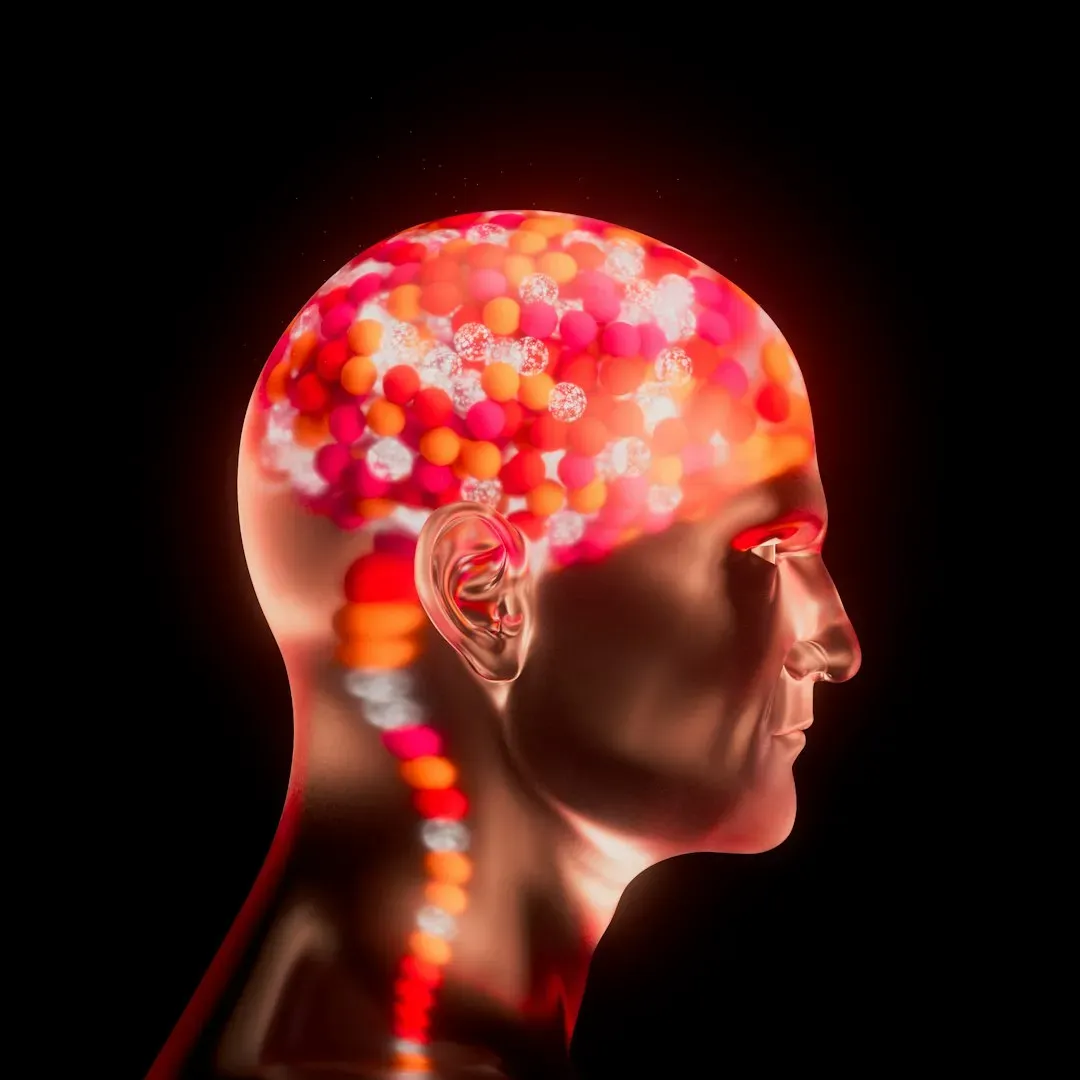
It is easy to assume your thoughts and your body are separate, but your sense of self is deeply rooted in physical signals coming from within you. Your brain is constantly tracking your heartbeat, breathing, gut activity, posture, and more, even when you are not paying attention. These subtle signals help create a steady sense that you are a single, living body moving through the world, rather than just a floating mind with ideas.
When your brain’s model of your body gets disturbed – through certain illnesses, injuries, or even clever illusions – your sense of self can wobble in surprising ways. You might feel detached from your body, misjudge where your limbs are, or experience a strange sense that your body is not quite yours. That tells you something important: a big part of the hidden language of consciousness is the brain constantly telling itself a story about your body, blending raw internal sensations with expectations and memories to maintain the feeling of “me-ness.”
Altered States: What Dreams, Psychedelics, and Meditation Reveal

Some of the most striking clues about consciousness show up when your ordinary state of mind is disrupted. When you dream, for example, your brain builds entire worlds with their own logic, emotions, and characters, yet often feels convinced they are real until you wake up. Under psychedelics or in deep meditative states, people commonly report a softened sense of self, a stronger sense of connection, or vivid changes in how time and space feel.
These shifts suggest that your usual conscious experience is only one possible configuration of the brain’s hidden language. By tweaking brain chemistry or patterns of attention, you change how different networks coordinate, which in turn changes what you feel like from the inside. You might think of normal waking consciousness as the default “settings” your brain uses to stay functional and safe, while altered states reveal how flexible and dynamic that inner code can really be.
Attention and Working Memory: The Spotlight and Scratchpad of the Mind
If consciousness is like an inner stage, then attention is the spotlight that decides what gets illuminated right now. You do not experience every detail around you; instead, your brain chooses a tiny fraction to highlight. When you focus on a task, a face, or a sound, you are effectively telling your brain, “Give this priority access to the workspace.” That is why a buzzing phone can pull your awareness away, even when you are trying to ignore it – the spotlight is constantly at risk of being hijacked.
Working memory acts like a mental scratchpad, holding a few pieces of information in that spotlight so you can use them for reasoning, language, or decision-making. You feel it when you rehearse a phone number in your head, juggle ideas in a conversation, or mentally compare two choices. The hidden language here is the brain dynamically coding and recoding those few active items, while everything else stays in the dark. Your moment-to-moment conscious life largely rides on what your spotlight and scratchpad are locking onto.
The Hard Problem: Why Experience Exists at All
Even with all these scientific advances, one question still sits like a puzzle that refuses to snap into place: why does any of this processing feel like something from the inside? You can describe brain waves, networks, and signals in great detail, but that does not yet fully explain why you experience the color red, the taste of coffee, or the ache of heartbreak as rich, subjective feelings rather than just blind data handling. This gap between brain activity and lived experience is often called the hard problem of consciousness.
Different theories try to bridge this gap in different ways, but none has settled the debate. Some suggest consciousness emerges when information in the brain reaches a certain level of integration or complexity. Others argue that subjective experience might be a more fundamental feature of reality than we currently assume. For now, you live with a strange dual awareness: you are a biological system running electrical and chemical patterns, and at the very same time, you are the one who feels, wonders, and asks what all of this means.
What This Means for You: Navigating Your Own Mind With More Insight
Knowing that your brain is constantly predicting, editing, and narrating your reality gives you a new kind of freedom. When you realize your thoughts are not pure truth but the output of a hidden code shaped by your past, your body, and your habits, you gain a bit of distance from them. You can notice when your internal narrator is stuck on a fearful storyline or when your prediction machine is assuming the worst, and gently question those patterns instead of blindly trusting them.
At the same time, understanding the brain’s hidden language can make everyday life feel more magical, not less. Every laugh, memory, and moment of awe is the result of countless neurons coordinating in intricate patterns you never consciously see. You do not have to solve the hard problem to appreciate that your awareness is fragile, rare, and deeply complex. When you pay closer attention to how your mind moves – from daydreams to decisions – you are already participating in the most direct experiment in consciousness you will ever have: your own.
In the end, the brain’s hidden language is not just a scientific puzzle, it is the quiet script behind everything you care about. You may never read that script line by line, but you can learn to feel its rhythms, question its assumptions, and even rewrite parts of it over time. As research moves forward, you are not just a spectator watching scientists decode consciousness – you are living proof that this mysterious code exists at all. With that in mind, what will you pay closer attention to the next time you catch yourself thinking, “I am here, and I am aware”?