
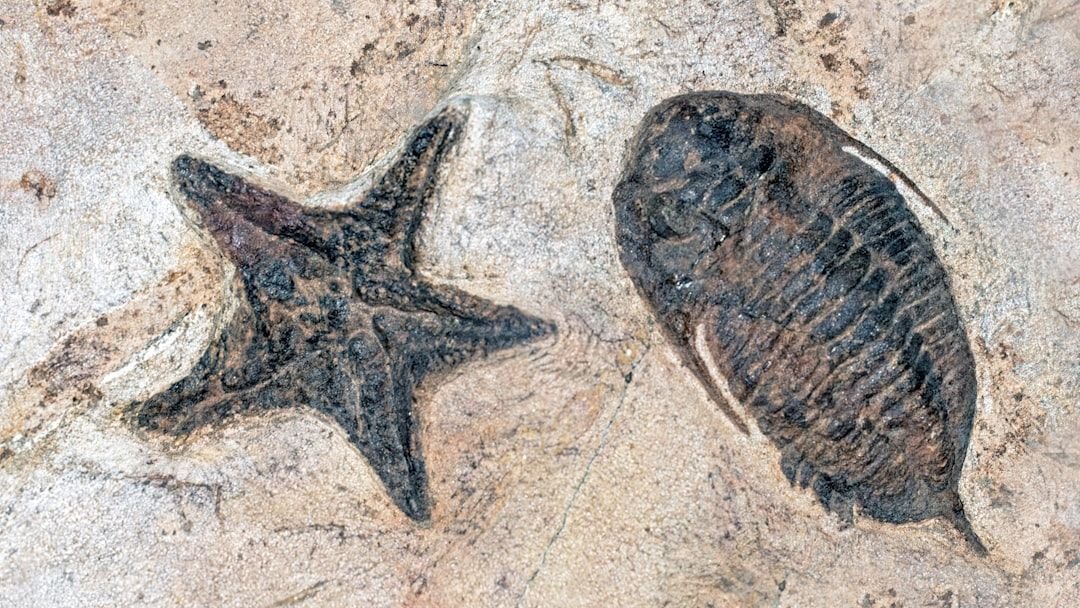
A Rare Window into Pre-Cambrian Life (Image Credits: Unsplash)
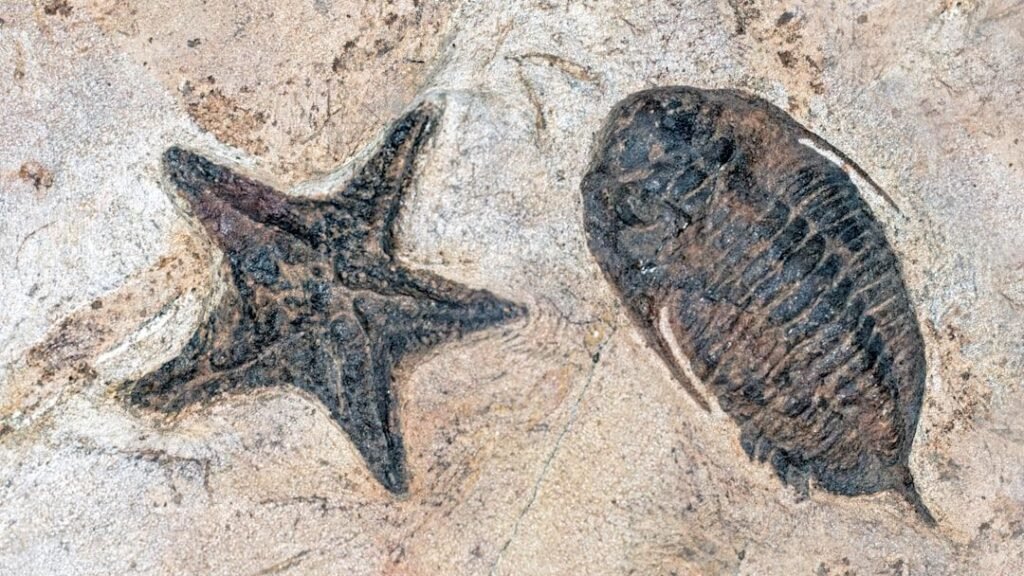
Southwest China – Paleontologists uncovered roughly 700 fossils from the Ediacaran period, dating between 539 and 554 million years ago. These specimens, known as the Jiangchuan Biota, include early forms of bilaterians and deuterostomes – ancestors to modern invertebrates and vertebrates alike.[1]
The discovery challenges the traditional narrative of the Cambrian Explosion, a supposed burst of diverse life around 540 million years ago. Instead, evidence points to a more extended evolutionary buildup hidden by incomplete fossil records.[1]
A Rare Window into Pre-Cambrian Life
Researchers from Yunnan University identified the site through meticulous fieldwork. The fossils appeared as carbonaceous compressions, a preservation style uncommon for this era. This method captured fine details of soft-bodied organisms that typically decay without trace.[1]
The collection spans the transition from the Ediacaran to the Cambrian period, bridging the Precambrian supereon and the Phanerozoic eon. Lead author Gaorong Li, formerly at Yunnan University and now at Oxford University, detailed the findings in the journal Science. Such assemblages remain scarce, highlighting the exceptional nature of this find.[1]
Variety Among the Ancient Remains
The biota features worm-like bilaterians, marked by bilateral symmetry that divides their bodies into mirror halves. Deuterostomes stand out, with holdfasts anchoring them to the seafloor and feeding tubes for nourishment. These traits link directly to vertebrate lineages, including humans.[1]
Other specimens resemble modern starfish or ambulacrarians, such as acorn worms. Some forms proved entirely new to science, while familiar ones previously appeared only in Cambrian strata. The diversity underscores a thriving ecosystem long before the era of shelled creatures.[1]
Shifting the Evolutionary Timeline
| Previous Understanding | New Insights from Jiangchuan Biota |
|---|---|
| Bilaterians and deuterostomes emerged abruptly in early Cambrian | These groups existed in late Ediacaran, millions of years earlier[1] |
| Cambrian Explosion as sudden diversification event | Gradual buildup, obscured by preservation biases[1] |
| Few complex animals before 540 million years ago | Complex forms like ambulacrarians present by 554 million years ago[1] |
This table illustrates key contrasts drawn from the study. Complex animals evolved far earlier than fossil evidence once suggested. The Cambrian event now appears less explosive and more like the culmination of prior developments.[1]
Life’s journey from microbial mats four billion years ago gains new depth. The biota fills a critical gap in animal diversification.[1]
Voices from the Research Team
Gaorong Li emphasized the breakthrough in a press statement. “Our discovery closes a major gap in the earliest phases of animal diversification,” he said. “For the first time, we demonstrate that many complex animals, normally only found in the Cambrian, were present in the Ediacaran period, meaning that they evolved much earlier than previously demonstrated by fossil evidence.”[1]
Co-author Frankie Dunn of the University of Oxford highlighted a specific highlight. “The presence of…ambulacrarians [acorn worms] in the Ediacaran period is really exciting,” she noted. “The discovery of ambulacrarian fossils in the Jiangchuan Biota also means that the chordates – [animals with a backbone] – must also have existed at this time.”[1]
Unanswered Questions Ahead
Why do similar fossils elude other Ediacaran sites? The unique carbonaceous preservation likely played a role, favoring this location. Broader scarcity suggests such creatures existed widely but rarely fossilized.[1]
Future excavations may uncover parallels elsewhere. Reexamination of existing collections could reveal overlooked evidence. These findings invite a fresh look at the prelude to life’s great diversification.[1]
Ultimately, the Jiangchuan Biota reminds scientists that the fossil record tells an incomplete story. Each new trove like this one refines our grasp of evolution’s patient march.