A Breakthrough in Measuring Alien Chemistry (Image Credits: Pexels)
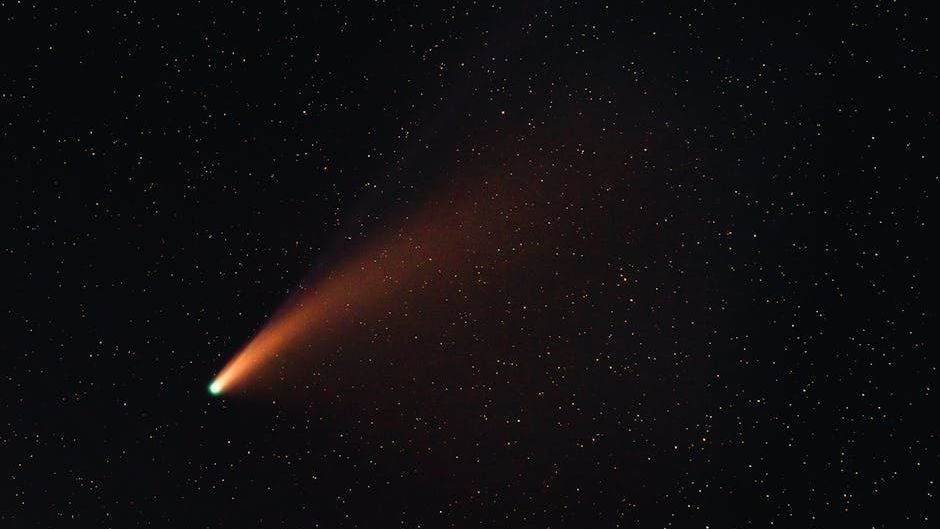
Astronomers have uncovered a striking difference in the water composition of the third confirmed interstellar comet, 3I/ATLAS, through precise observations conducted last year. The findings, released this week, show that this visitor from beyond our solar system holds far more semi-heavy water than any comet born here. Such a disparity offers a rare glimpse into the conditions of a distant star system, reshaping our understanding of how planetesimals form across the galaxy.[1][2]
A Breakthrough in Measuring Alien Chemistry
Researchers targeted 3I/ATLAS with the Atacama Large Millimeter/submillimeter Array (ALMA) near its perihelion passage in late October 2025. This setup allowed detection of deuterated water, or HDO, alongside ordinary H2O in the comet’s gaseous outflow. The ratio of HDO to H2O emerged as exceptionally elevated, marking the first such measurement for an extrasolar comet.[2]
The data revealed levels more than 30 times higher than those in comets from our own solar system. Compared to Earth’s oceans, the proportion exceeded 40 times. These numbers stem from direct spectral analysis, providing concrete evidence of chemical processes unique to 3I/ATLAS’s origin.[1][3]
What the Deuterium Excess Reveals
Deuterium enrichment in water typically arises in cold environments where heavier isotopes concentrate during ice formation. In our solar system’s comets, ratios remain modest, reflecting the protoplanetary disk’s temperature around 4.6 billion years ago. 3I/ATLAS, however, points to a birthplace chilled to extremes, possibly in a dense molecular cloud far from its host star.[4]
Luis E. Salazar Manzano, lead author on the study, noted the implications: “The ratio was 30 times that of any comet in our solar system, and 40 times the value found in the water in our oceans.” He added that the parent cloud likely featured very different conditions from those that birthed our local comets. This contrast underscores the diversity of early stellar nurseries across the Milky Way.[2]
Context of 3I/ATLAS’s Journey
Discovered on July 1, 2025, by the ATLAS survey, 3I/ATLAS followed the paths of 1I/’Oumuamua and 2I/Borisov as the third interstellar object confirmed. It hurtled through the inner solar system on a hyperbolic trajectory, reaching perihelion at about 1.4 AU from the Sun. Observatories worldwide tracked its activity, from water vapor outbursts to organic molecules, but the ALMA results stand out for their precision on isotopic ratios.[5][6]
Unlike bound comets, 3I/ATLAS will exit our system permanently, carrying its chemical archive back to the void. Earlier studies noted high methanol content and water production rates equivalent to dozens of Olympic-sized pools daily, yet the deuterium signal provides the clearest tie to its formative era.[7]
What matters now: This measurement establishes a baseline for future interstellar visitors, enabling comparisons that probe galactic chemical evolution.
Pathways to Galactic History
The elevated deuterium suggests 3I/ATLAS coalesced in a low-temperature regime, perhaps amid cosmic rays or ultraviolet radiation that favored isotopic fractionation. Such settings differ markedly from the warmer disk of our Sun, hinting at varied pathways for planetesimal assembly. Scientists anticipate these insights will inform models of exoplanet formation and water delivery in alien systems.[8]
Further analysis of archival data may refine the exact ratio and link it to specific stellar populations. As telescopes like ALMA grow in capability, encounters with more rogue objects promise to fill gaps in our cosmic neighborhood’s story. For now, 3I/ATLAS stands as a frozen messenger from a colder epoch, reminding us of the galaxy’s untamed variety.
These revelations arrive at a pivotal moment, with missions like ESA’s Juice probing comet-like bodies up close. Yet no probe will chase 3I/ATLAS; its deuterium legacy endures through spectra alone. The finding quietly expands our view of water’s role in the universe, one isotope at a time.[9]