
You grow up with a simple timeline in your head: humans crawled out of Africa, got smarter, built farms, then cities, then Wi‑Fi. Easy. But once you start digging into real archaeology, that clean story begins to wobble. Some discoveries are so strange, so out of place, that you’re forced to ask whether you understood human history at all.
In this article, you’ll walk through six discoveries that have made archaeologists rewrite textbooks, redraw timelines, and in some cases admit they simply do not know what was going on. As you follow along, you may find that your idea of “ancient” is way too recent, your sense of “primitive” is wildly unfair, and your picture of human evolution is much messier – and much more interesting – than you were ever taught.
Göbekli Tepe: Stone Circles Older Than Cities
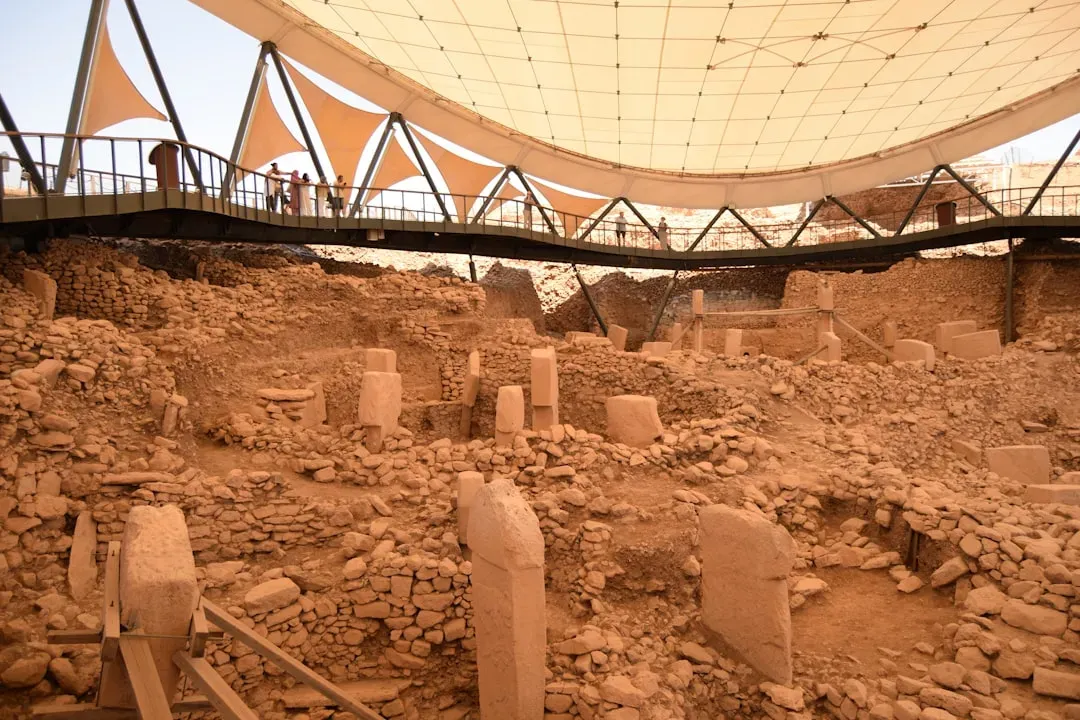
Imagine you’re a small-band hunter-gatherer roughly eleven and a half thousand years ago in what is now southeastern Turkey. You don’t grow crops, you don’t live in permanent houses, and yet you and your neighbors somehow carve towering stone pillars, arrange them in vast circles, and decorate them with intricate animals and symbols. That is exactly what Göbekli Tepe is: a monumental site dating back to around the tenth millennium BCE, long before the first known cities or widespread farming. You were taught that big temples come after agriculture and settled life; Göbekli Tepe flips that logic on its head.
When you look at the site, you’re seeing massive T‑shaped limestone pillars, some weighing many tons, deliberately buried and rebuilt over several phases. The people who did this had no metal tools, no draft animals, no wheels, yet they organized labor, quarried, shaped, and transported stones, and laid them out with surprisingly precise planning. Some researchers now argue that large ritual centers like this may have pulled scattered groups together, and that the social pressure of such gatherings helped drive the invention of agriculture rather than the other way around. In other words, you might need a shared sacred place before you bother to invent fields.
Jebel Irhoud: The “Oldest Modern Humans” Where You Didn’t Expect Them
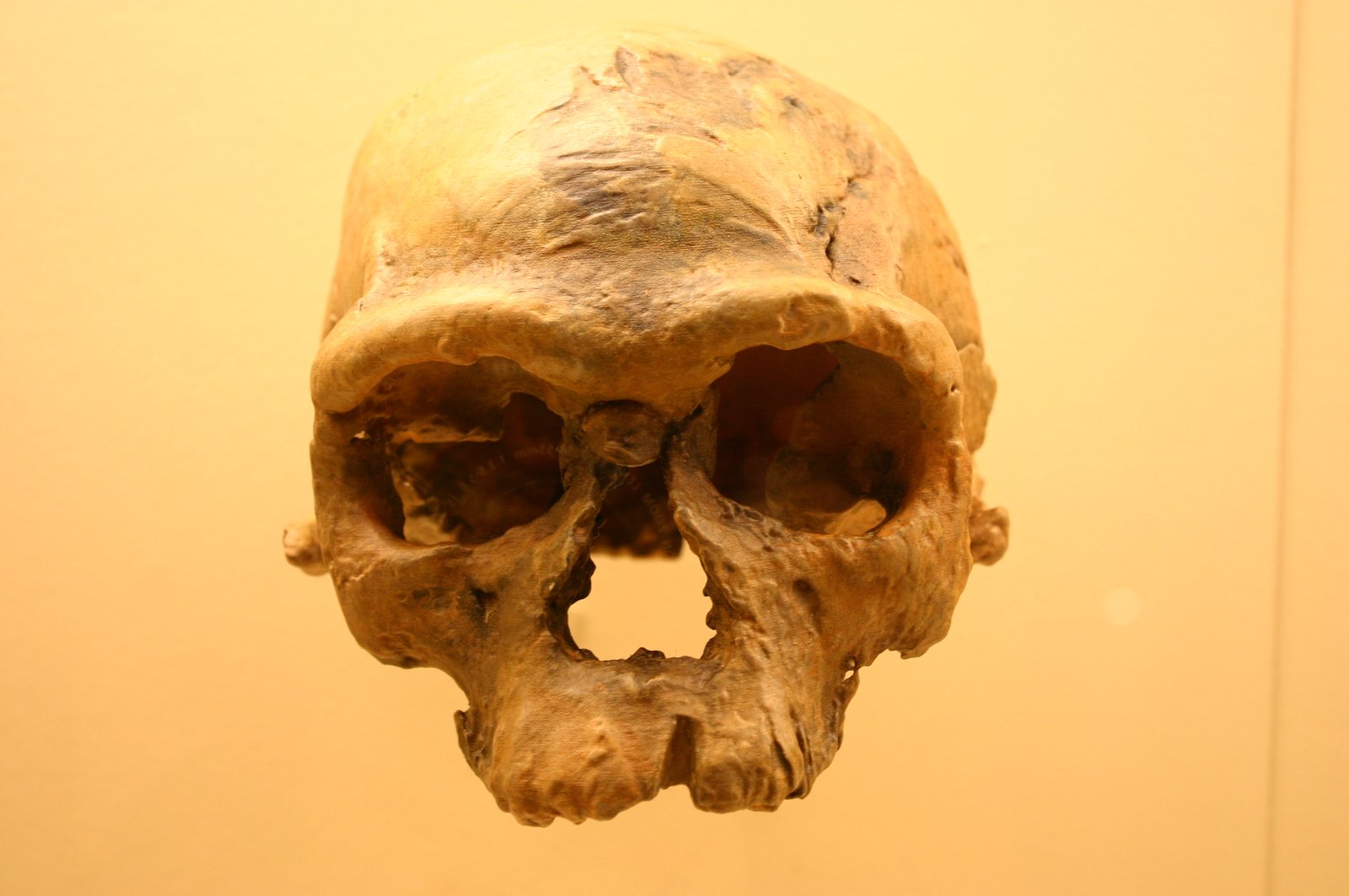
If you were told that your species, Homo sapiens, appeared around two hundred thousand years ago in East Africa, you probably nodded and moved on. Then fossils from Jebel Irhoud in Morocco crashed that neat origin story. Remains from this site – skulls, jawbones, and tools – have been dated to roughly about three hundred thousand years ago, and they’re clearly close to modern humans in anatomy. Suddenly, your species looks significantly older than you were led to believe, and its roots look far more spread out across Africa than one tidy “cradle” would suggest.
When you picture these early people, you’re not looking at cartoon cave dwellers. Their faces look surprisingly modern, though their skulls still hold more elongated braincases than yours. They used sophisticated stone tools associated with the Middle Stone Age and hunted animals like gazelle. What this means for you is that human evolution is less of a straight ascent and more of a web of populations scattered across Africa, interacting, moving, changing. Instead of a single birthplace, you’re probably dealing with a continent‑wide process, with Jebel Irhoud as one of the oldest, clearest signposts of “us.”
Denisova Cave: A New Kind of Human from a Tiny Bone

Picture a remote cave in the Altai Mountains of Siberia. Archaeologists dig there expecting Neanderthals or modern humans. Instead, a tiny finger bone and a tooth, barely more than crumbs of bone, reveal something astonishing when scientists sequence their DNA: a previously unknown group of humans now called Denisovans. You live in a time when one fragment of bone can expose an entire branch of the human family tree that nobody knew existed, even though this group interbred with the ancestors of many people alive today.
What really scrambles your sense of history is that Denisova Cave has yielded remains and genetic traces of Neanderthals, Denisovans, and early Homo sapiens, sometimes overlapping in time. At one point, a child with a Neanderthal mother and Denisovan father lived there – a literal first‑generation hybrid. If you carry ancestry from places like parts of Melanesia or parts of Asia, you may have a small amount of Denisovan DNA in your genome right now, shaping traits like your immune system or high‑altitude adaptation. Instead of a simple replacement story – modern humans sweeping aside everyone else – you have a tangle of relationships, interbreeding, and shared genes that forces you to think of “us” and “them” in a much more blurred way.
Çatalhöyük: A Proto‑City That Breaks the Rules
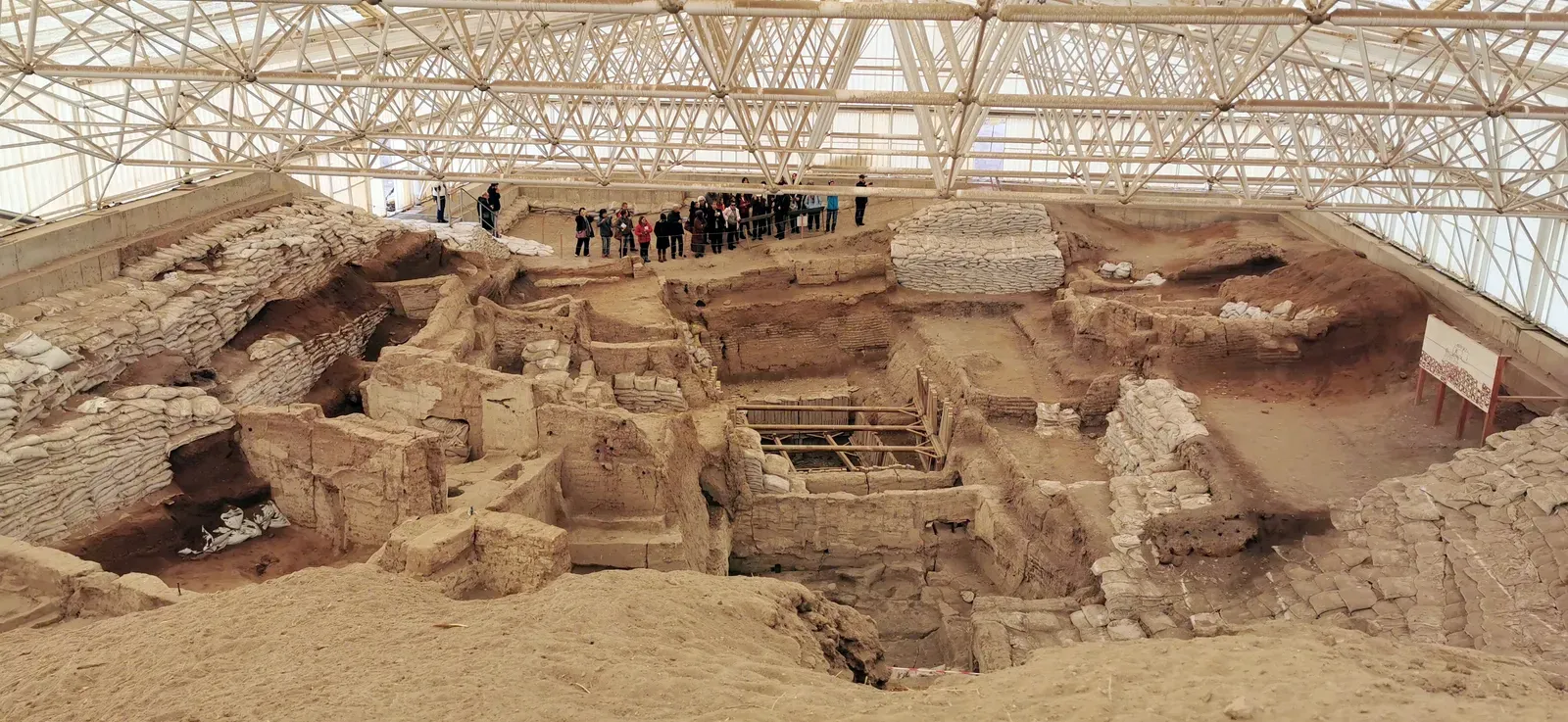
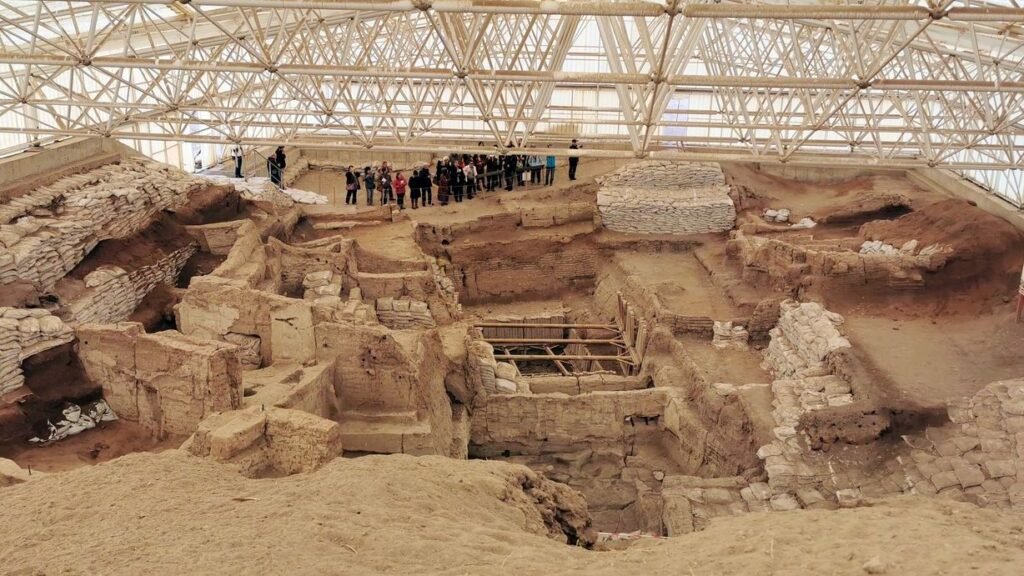
When you imagine the first cities, you probably think of big temples, grand palaces, rigid rulers, and clear streets. Now step into Çatalhöyük in central Anatolia, a dense settlement that flourished roughly nine thousand years ago, long before classical cities like Uruk or Memphis. You would see a sprawling cluster of mudbrick houses packed so tightly that people seem to have walked on the roofs and climbed down through openings to enter their homes. There are no obvious streets, no towering monuments, and no clear signs of a king, yet thousands of people lived together for centuries.
For you, Çatalhöyük is unsettling because it suggests that complex, large communities do not automatically equal formal states or rigid hierarchies. People there buried their dead under house floors, painted walls with striking images, and shared courtyards and spaces that blur the line between public and private. It pushes you to ask whether your assumption – that urban life must mean strong central authority – is really universal. Maybe humans experimented with many different models of large‑scale living, some more cooperative and horizontally organized than the textbook image of kings and crowns.
The Antikythera Mechanism: Ancient “Computer” from a Shipwreck
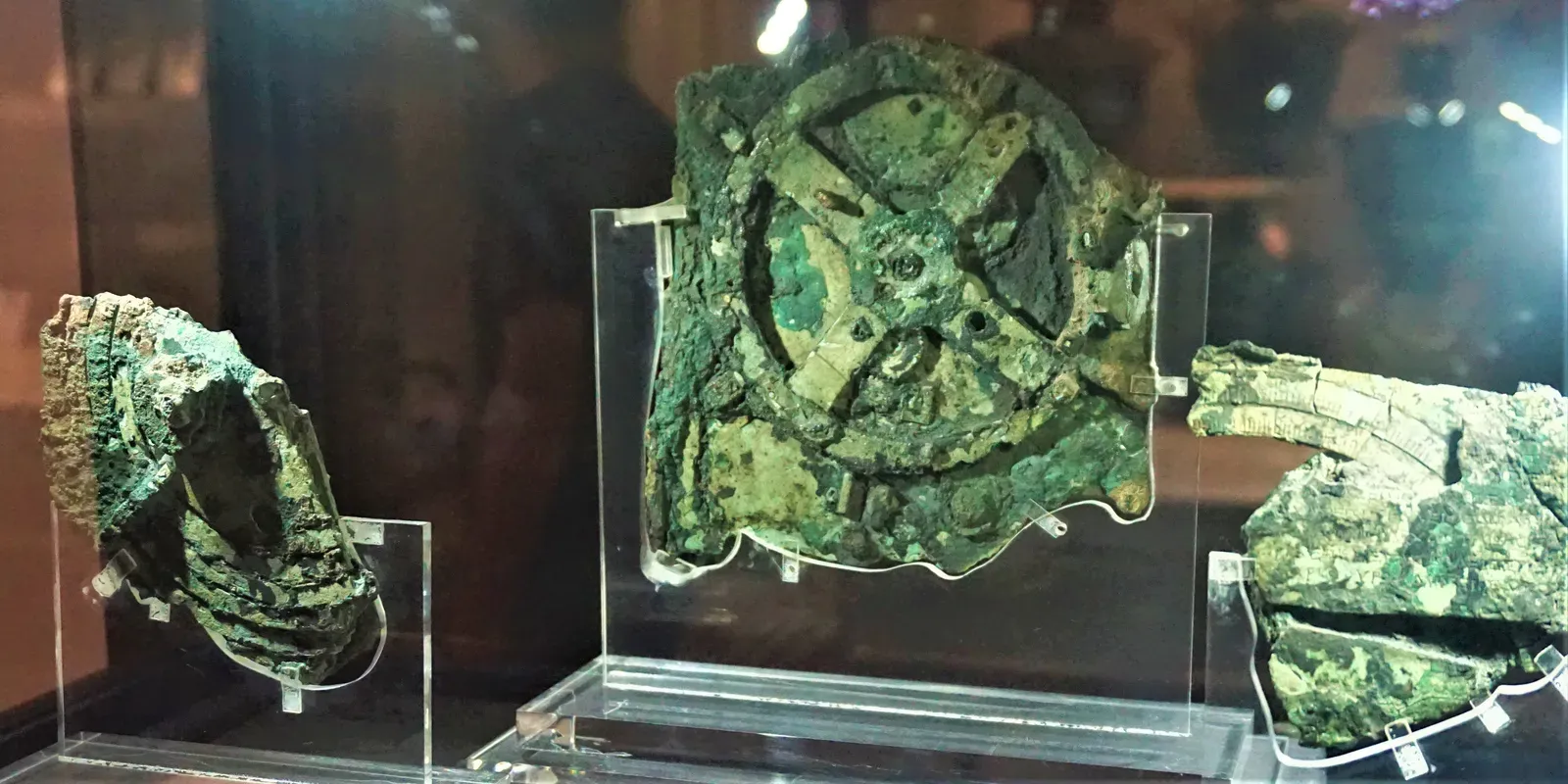
Now jump forward in time to a Roman‑era shipwreck off the coast of the Greek island of Antikythera, discovered in the early twentieth century. Divers hauling up statues and bronze fragments bring to the surface a corroded hunk of gears that looks, at first glance, like a lump of metal trash. When you peer inside with modern imaging, though, you find a stunningly complex system of interlocking gears that models the motions of the sun, moon, and possibly some planets. This device, built over two thousand years ago, is often described as the earliest known analogue computer.
For you, the Antikythera Mechanism is puzzling not just because it exists, but because nothing else like it has survived from that period. The gearwork is so sophisticated that historians long underestimated Greek mechanical skill until this device forced a reevaluation. It could predict eclipses and track cycles with a precision that feels more like a Renaissance clockwork masterpiece than something from the Hellenistic age. When you hold this in mind, you realize that technological peaks can appear, flourish in small circles, and then vanish, leaving later generations thinking they were the first to be clever. Your timeline of “progress” is less of a steady climb and more of a series of surprising spikes.
Monte Verde: People in the Americas Earlier Than Expected
If you grew up hearing that the first people in the Americas walked across a land bridge from Siberia around thirteen thousand years ago and then spread south, you are not alone. That “Clovis‑first” story dominated for decades. Then you meet Monte Verde, a site in southern Chile where remains of human occupation – tent‑like structures, wooden planks, tools, plant remains – have been dated to roughly about fourteen and a half thousand years ago, and some evidence suggests even older layers. That means people had reached the far south of South America earlier than the standard story allowed.
Once you accept Monte Verde, you have to rethink everything about how and when humans entered the Americas. To get that far south by that time, people likely arrived earlier along different routes, perhaps moving along a Pacific coastal corridor while ice sheets still blocked the interior. Instead of a single wave of pioneers marching down an empty continent, you’re probably looking at multiple migrations, sea‑edge travel, and a much longer human presence than the old model admitted. That realization changes how you see Indigenous histories: they stretch back deeper in time, with more complexity and resilience than many schoolbooks ever recognized.
Conclusion: Living with a Messier, More Interesting Past
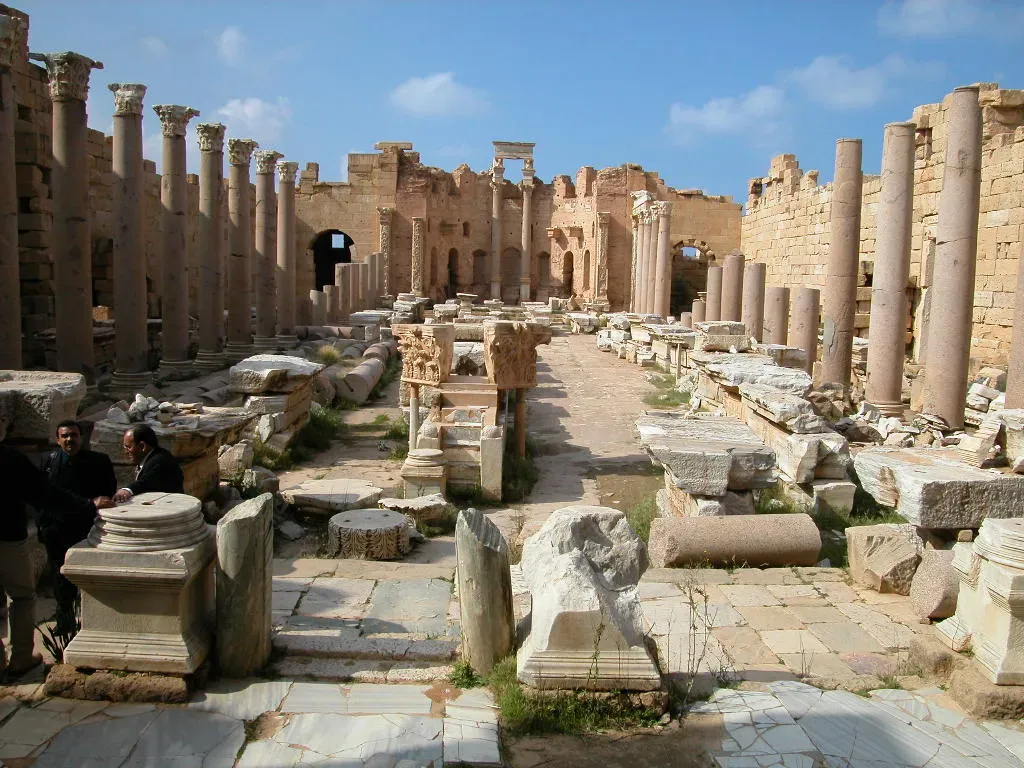
When you line up Göbekli Tepe, Jebel Irhoud, Denisova Cave, Çatalhöyük, the Antikythera Mechanism, and Monte Verde, a pattern starts to emerge: your old picture of human history as a clean staircase of progress does not survive contact with the evidence. Instead, you see deep time stretching farther than you thought, technologies appearing earlier and more suddenly than you expected, and different kinds of humans overlapping, interbreeding, and experimenting with ways of living. The story is not ruined by this messiness; it becomes richer, like a tapestry with more threads than you initially noticed.
For you personally, this has a quiet but powerful effect: it invites you to hold your knowledge lightly. The next time you hear someone say “we know for sure” about the distant past, you might remember a tiny finger bone from Siberia or a buried stone circle in Turkey and smile. Archaeology keeps surprising you because your species has been creative, adaptable, and strange for a very long time. With every new find, your origin story gets more complicated – and more human. So when the next discovery forces another rewrite, will it really be a shock, or will you be secretly waiting for it?