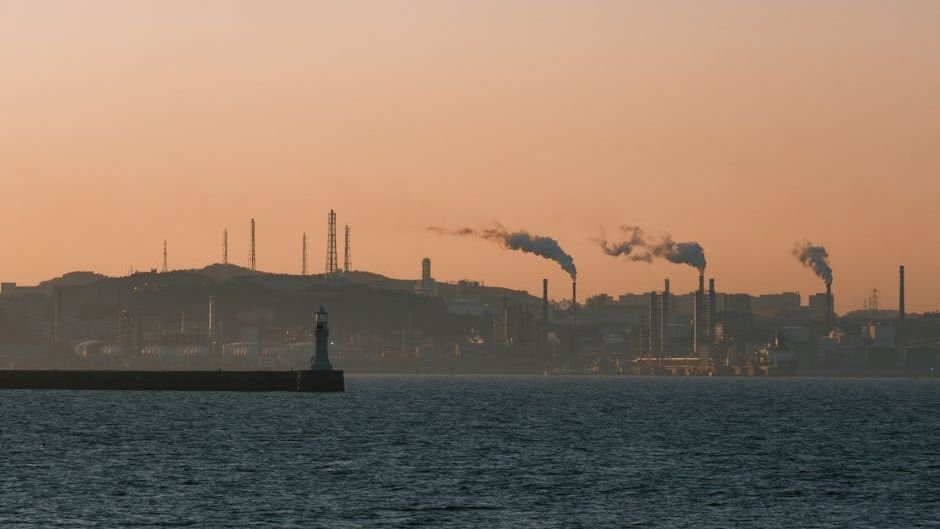
Unveiling the Invisible Presence (Image Credits: Pexels)
Oklahoma – Researchers from the University of Colorado Boulder identified medium-chain chlorinated paraffins, or MCCPs, in the atmosphere above an agricultural area here for the first time in North America during 2025.[1]
The team made the discovery while investigating aerosol formation, a process tied to air pollution. These compounds, often likened to the notorious PFAS family of “forever chemicals,” persist in the environment and raise questions about potential health effects.[1]
Unveiling the Invisible Presence
Lead author Daniel Katz and co-author Ellie Browne employed advanced nitrate ion chemical ionization mass spectrometry to pinpoint trace levels of MCCPs during their fieldwork. The instrument allowed detection of these elusive particles amid complex air samples. Previously, such chlorinated paraffins had appeared in atmospheric studies across Asia and even Antarctica, but never in the Western Hemisphere.[1]
The findings appeared in the journal ACS Environmental Au, marking a significant milestone in tracking these understudied pollutants. Katz noted in a statement that the detection highlights gaps in current monitoring efforts. Though present in small amounts, their persistence demands attention from environmental scientists.[1]
Pathways from Products to Farmlands
MCCPs commonly appear in everyday items such as textiles, PVC plastics, and metalworking fluids. These uses lead to their accumulation in wastewater, which treatment plants process into biosolids used as fertilizer on fields. When farmers spread these materials, volatile compounds can evaporate into the air, a mechanism researchers suspect played a role here.[1]
Daniel Katz explained, “When sewage sludges are spread across the fields, those toxic compounds could be released into the air. We can’t show directly that that’s happening, but we think it’s a reasonable way that they could be winding up in the air.” Similar releases have occurred with related chemicals from sludge fertilizers. Regulations phasing out shorter-chain versions prompted wider use of MCCPs as substitutes, a pattern echoing past chemical shifts.[1]
Health Concerns Mirroring PFAS
Studies link MCCPs to liver and kidney damage, thyroid disruption, and neurological effects in animal models. Like PFAS, these chlorinated paraffins resist breakdown, lingering in ecosystems and potentially bioaccumulating in food chains. The Stockholm Convention targeted them for global phaseout in 2025, underscoring international worries.[1]
Ellie Browne observed, “We always have these unintended consequences of regulation, where you regulate something, and then there’s still a need for the products that those were in. So they get replaced by something.” Atmospheric exposure adds a new dimension, as inhalation risks remain poorly understood compared to ingestion or skin contact.[1]
Key Parallels: MCCPs vs. PFAS
- Both persist indefinitely in the environment.
- Used in consumer products and industrial applications.
- Linked to organ toxicity and endocrine disruption.
- Regulations on predecessors spurred their rise.
Frontiers of Knowledge and Next Steps
While the detection confirms MCCPs’ aerial presence, scientists emphasize uncertainties. Katz stated, “We identified them, but we still don’t know exactly what they do when they are in the atmosphere, and they need to be investigated further.” Questions persist about transformation processes, long-range transport, and human exposure levels.[1]
Broader monitoring and toxicological studies will clarify risks. Agencies must evaluate data to inform safeguards, much like ongoing PFAS battles. Katz urged, “I think it’s important that we continue to have governmental agencies that are capable of evaluating the science and regulating these chemicals as necessary for public health and safety.” This finding signals the need for vigilant surveillance in agricultural zones nationwide.[1]
As research advances, the focus sharpens on preventing another cycle of regrettable substitutions.