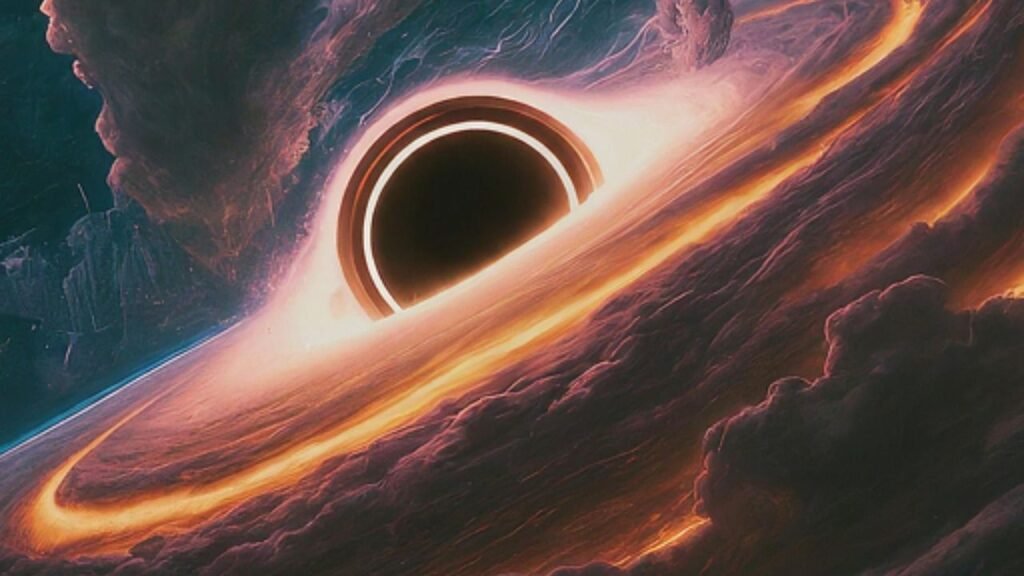
You live on a tiny rock, circling a fairly ordinary star, in a galaxy that’s just one among perhaps trillions. Yet when you look up, you’re staring into a cosmic puzzle box that even the smartest people on Earth still can’t solve. For all the talk about satellites, space telescopes, and supercomputers, there are some questions about the universe that remain stubbornly, almost tauntingly, unanswered.
In this article, you’re going to walk straight into nine of those mysteries. You’ll see where scientists have good clues, where they’re completely stumped, and where new telescopes and experiments might finally crack things open. You will not get neat, tidy endings here – just the thrill (and slight terror) of realizing how much you still don’t know about the universe you’re sitting in right now.
1. Dark Matter: The Invisible Stuff Holding Your Galaxy Together
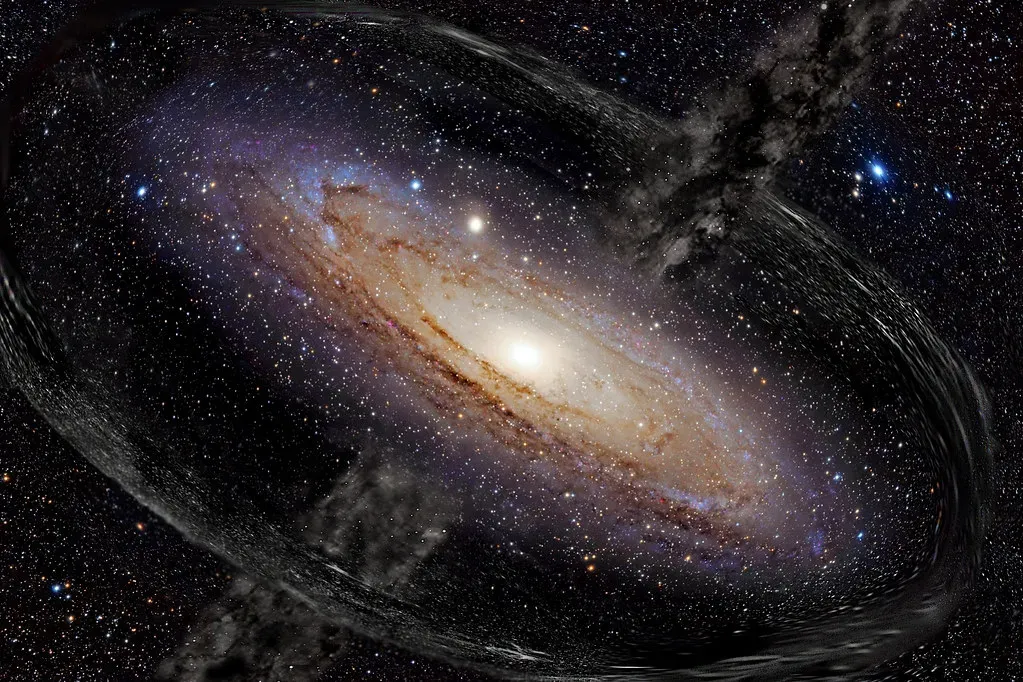
If you could suddenly see all the mass that actually exists in the universe, you’d get a shock: the stars, planets, gas, and dust you’re used to are just a small fraction of what’s really out there. When astronomers measure how fast stars orbit in galaxies, they find that those stars are moving too quickly to be held in place by visible matter alone. Something unseen – something that doesn’t emit light – is providing extra gravity, like a ghost skeleton holding the galaxy together. Without this hidden mass, your own Milky Way would fling itself apart over cosmic timescales.
Scientists call this mysterious stuff dark matter, and they estimate it makes up roughly about five times more mass than all the “normal” matter you can see. You can’t touch it, see it, or smell it; it only makes itself known through gravity. Physicists have tried to catch dark matter particles in underground detectors, looked for signs of them in particle accelerators, and hunted their fingerprints in the early universe. So far, every clever trap has come up empty. You might be passing through clouds of dark matter right now without the slightest clue – it’s like living in an ocean when you can only see the foam on the waves.
2. Dark Energy: Why the Universe Is Speeding Up Instead of Slowing Down
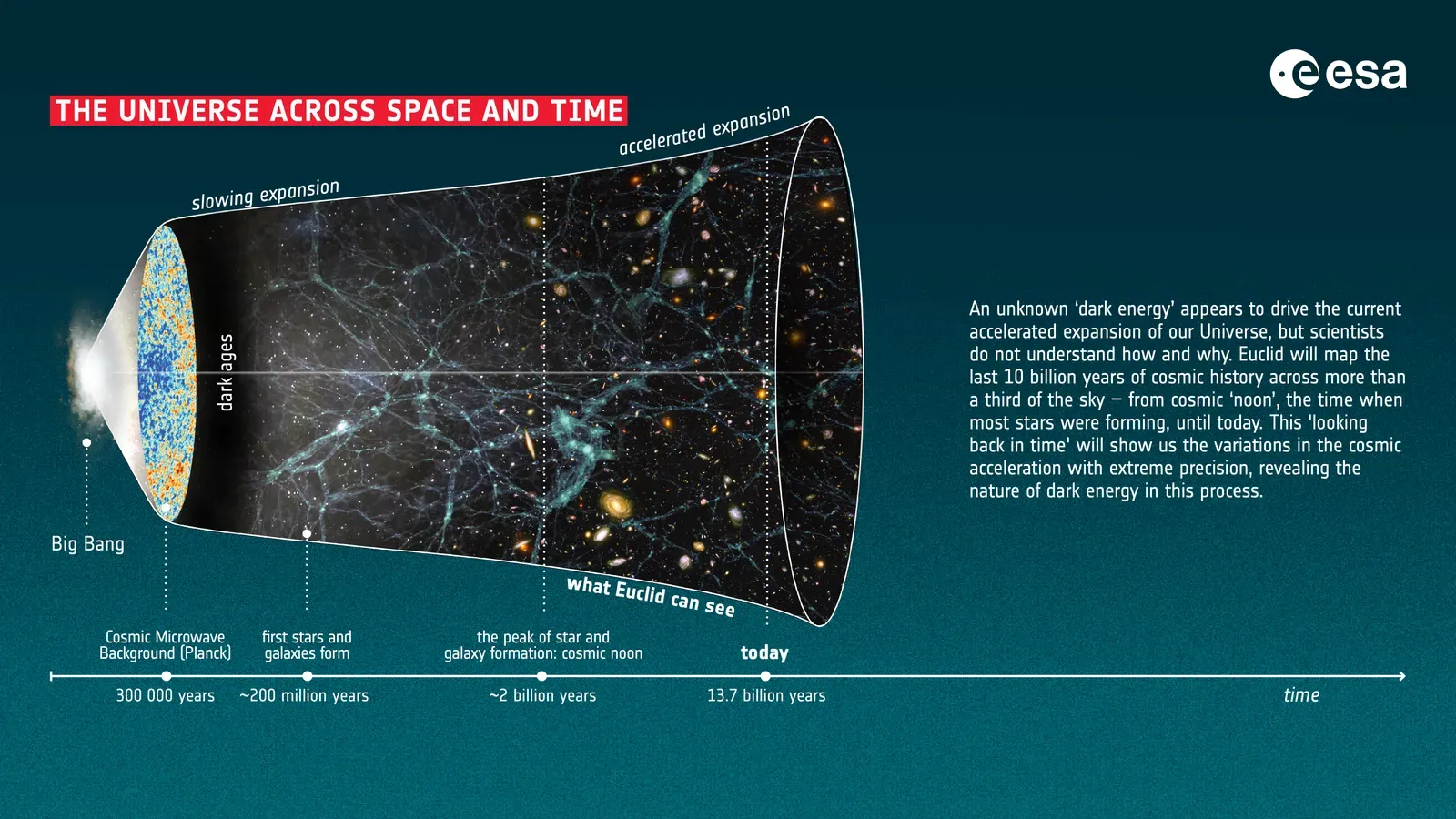
Common sense tells you that if you throw something into the air, gravity slows it down. For a long time, astronomers thought the expansion of the universe would behave the same way: it should be expanding, but that expansion should gradually slow as gravity from all the galaxies pulls things back. When you look at distant exploding stars used as cosmic mile-markers, though, you find the opposite. The universe is not just expanding; the expansion is speeding up, as if some invisible hand is gently pressing on the accelerator.
To explain this, scientists introduced the idea of dark energy, a mysterious form of energy built into the fabric of space itself. It seems to push galaxies apart, dominating the universe on the largest scales and making up the majority of the total cosmic energy budget. Yet you have no direct way to experiment with it in a lab, and no good everyday analogy captures what it really is. You’re left with a bizarre picture: the long-term fate of everything you know – galaxies, stars, even future life – may be controlled by something you can only infer from how fast distant galaxies are racing away from you.
3. Black Holes: What Really Happens Beyond the Event Horizon
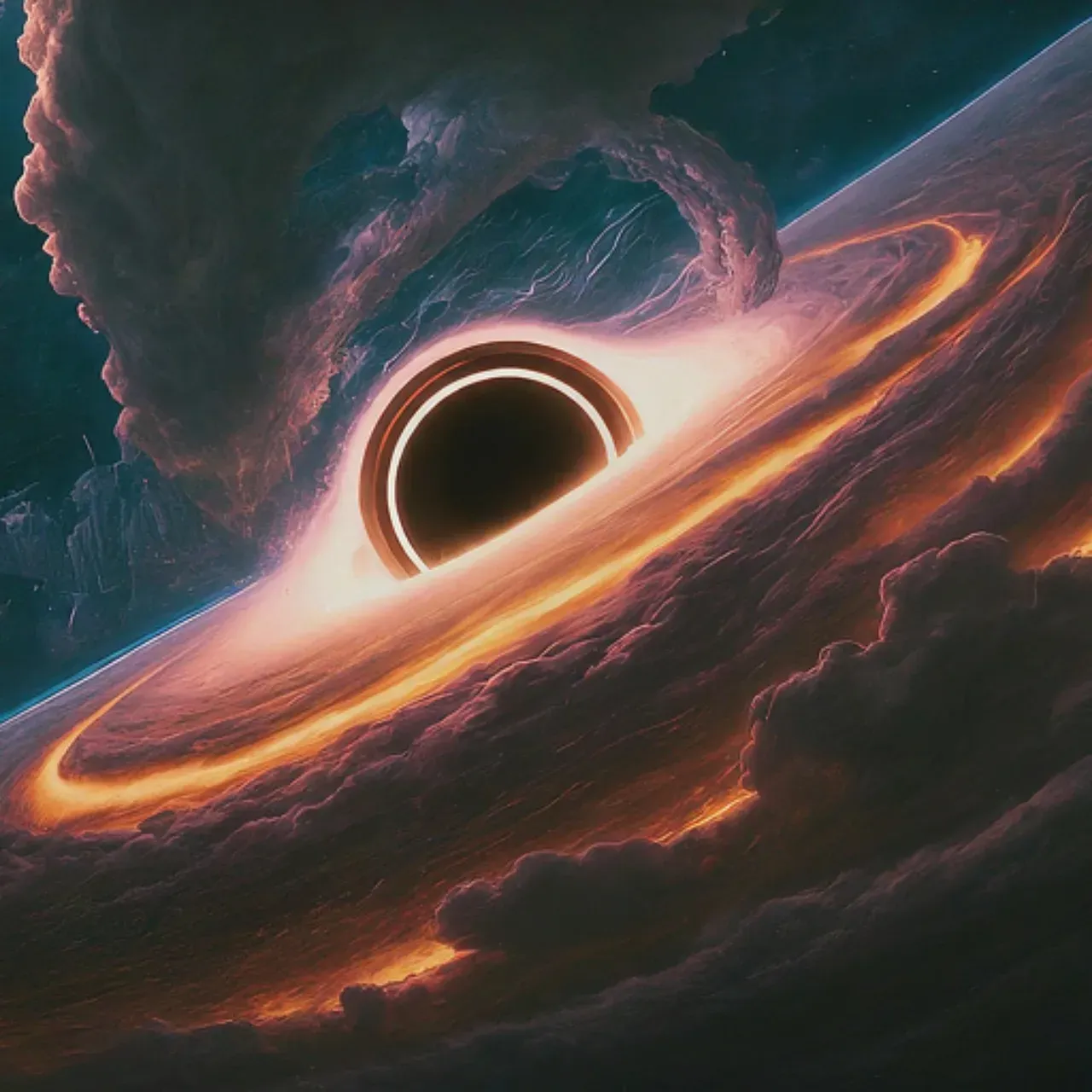
Black holes might be the most dramatic objects you can imagine: regions of space where gravity is so intense that not even light can escape. You can describe how matter falls in, how space-time curves around them, and even capture images of their shadows against glowing gas. Yet when you ask what actually happens to information inside a black hole, you slam straight into one of the biggest unsolved problems in physics. According to quantum theory, information can’t be destroyed, but general relativity seems to let it vanish behind the event horizon forever.
This clash is known as the black hole information paradox, and it forces you to admit that your current understanding of reality is incomplete. Some researchers argue that information is somehow encoded on the event horizon; others suggest new physics might appear near the boundary, or that space-time itself might have to be fundamentally rethought. You’re stuck with a tantalizing situation: nature has built extreme laboratories in the centers of galaxies and in the deaths of massive stars, yet you can only observe their edges. What happens inside remains one of the darkest secrets the universe keeps from you.
4. Fast Radio Bursts: Cosmic Radio Blips That Come Out of Nowhere
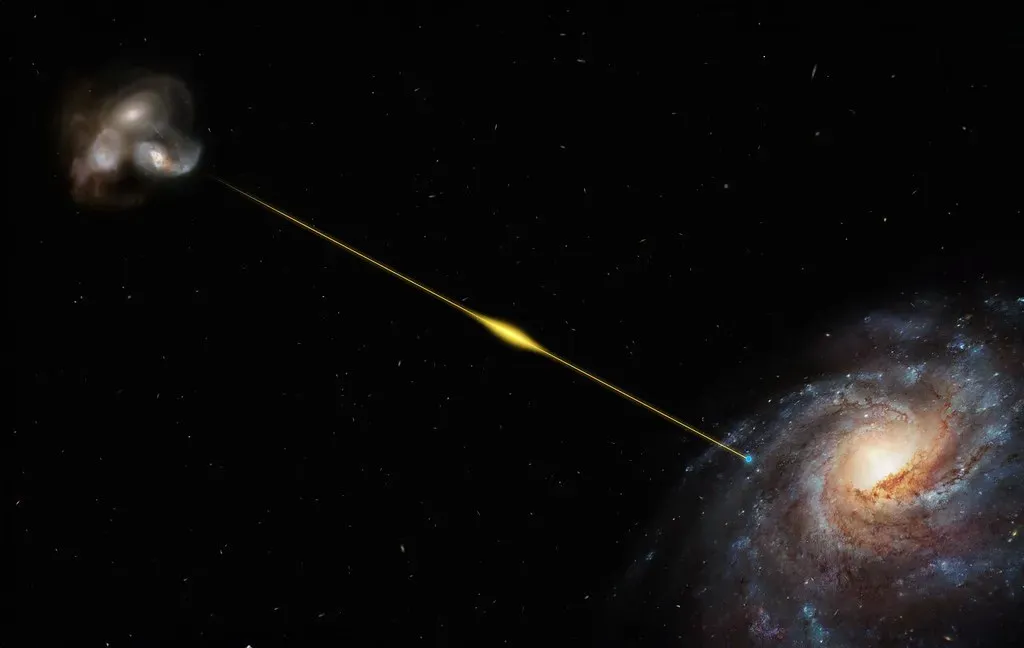
Imagine pointing a radio telescope at the sky and, without warning, catching a millisecond-long flash of radio waves from billions of light-years away. That’s what astronomers call a fast radio burst, and you still don’t know for sure what’s causing them. Some of these bursts repeat, while others go off once and never again, like a cosmic camera flash. Each one carries an enormous amount of energy, despite lasting for a time so short you could easily blink and miss it.
Over the past few years, more telescopes dedicated to scanning the sky have turned up hundreds of these strange signals. You see hints that some of them may be linked to highly magnetized neutron stars, but that explanation might not cover every case. For you, they’re a reminder that even in an age of big data, the universe can still surprise you with phenomena that appear from nowhere and disappear before you can fully react. It’s like trying to understand a thunderstorm if you’d only seen a single lightning strike through a keyhole.
5. The Matter–Antimatter Imbalance: Why You Exist at All
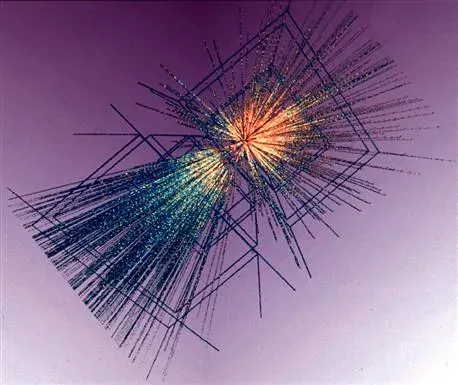
According to your best theories, the Big Bang should have created equal amounts of matter and antimatter. For every proton, there should have been an antiproton, and when the two meet, they annihilate in a burst of energy. If the universe had been perfectly balanced, everything should have wiped itself out, leaving behind only light and no atoms, planets, or people. Yet when you look around, you see a universe dominated by matter, with antimatter extremely rare in comparison. That tiny imbalance is the only reason you can sit here wondering about it.
Experiments in particle physics have found subtle differences in the behavior of matter and antimatter, but those differences don’t seem large enough to explain the huge preference for matter that you observe. Somewhere in the early universe, something tipped the scales – some process you still don’t fully understand let matter win. To get closer to an answer, physicists carefully measure rare decays of particles, search for violations of expected symmetries, and push for more powerful accelerators. At a deep level, this is not just an academic problem; it’s a question about why there is something instead of almost nothing, and why you are made of one kind of stuff rather than its mirror twin.
6. The Hubble Tension: Why the Universe Has Two Different Expansion Rates
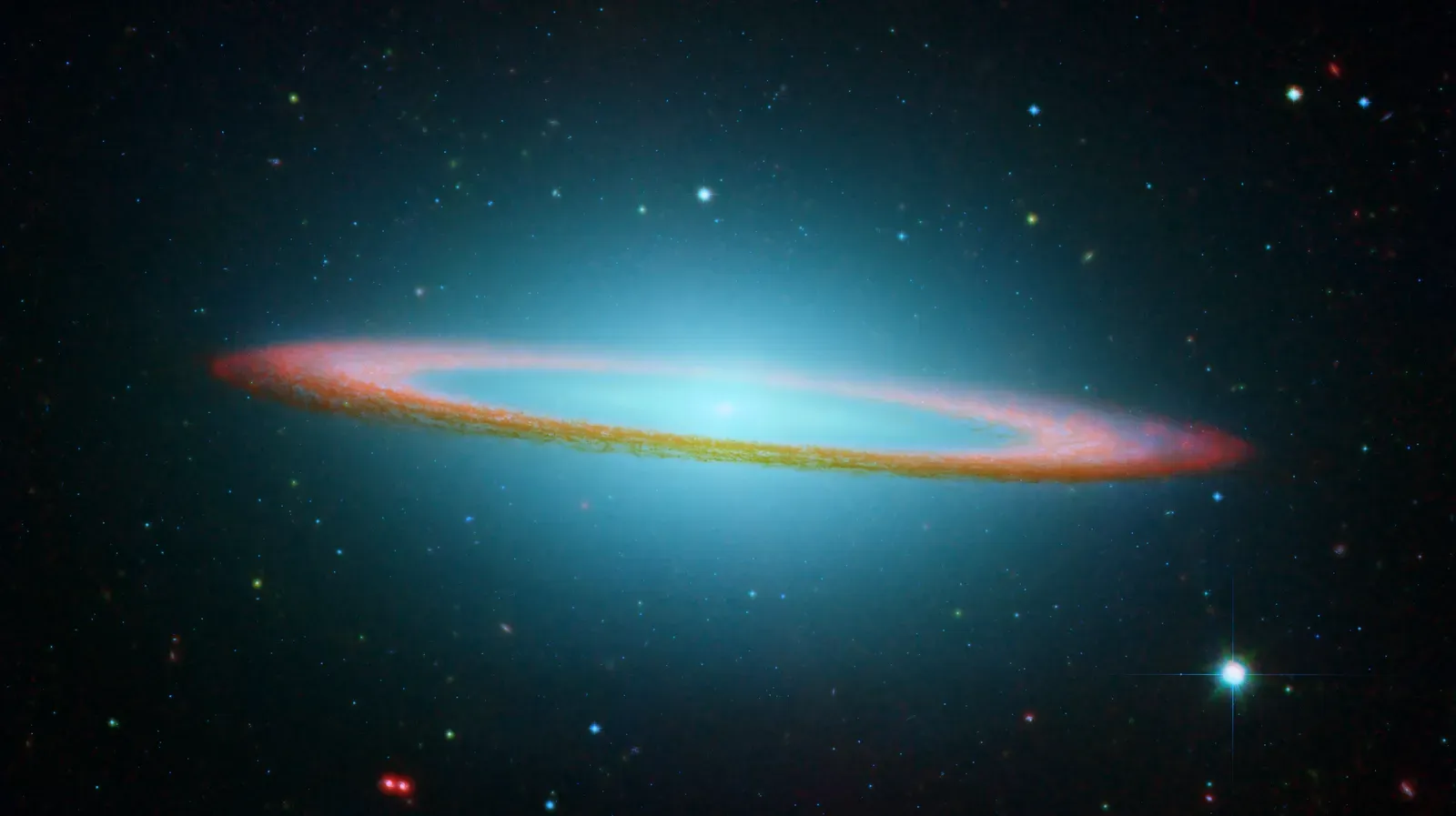
You might assume that by now, scientists would know exactly how fast the universe is expanding. The reality is more awkward: you currently have two highly precise, highly trusted methods of measuring the expansion rate – and they stubbornly disagree. When you use the cosmic microwave background, the faint afterglow of the Big Bang, you get one value for the expansion rate. When you measure distances and motions of relatively nearby stars and galaxies, you get a noticeably higher value.
This mismatch is called the Hubble tension, and it refuses to go away as measurements become more accurate. You can tweak the details of the early universe, propose new types of particles, or adjust dark energy models to try to bring the numbers together, but no single explanation has convinced everyone. For you, this tension might seem like a dry numerical issue, but it cuts right to the heart of your cosmological model. If your best tools give different answers to a basic question like “How fast is space expanding right now?”, it suggests there may be some hidden ingredient in the universe that you haven’t accounted for yet.
7. The Origin of Supermassive Black Holes: How They Got So Big So Fast
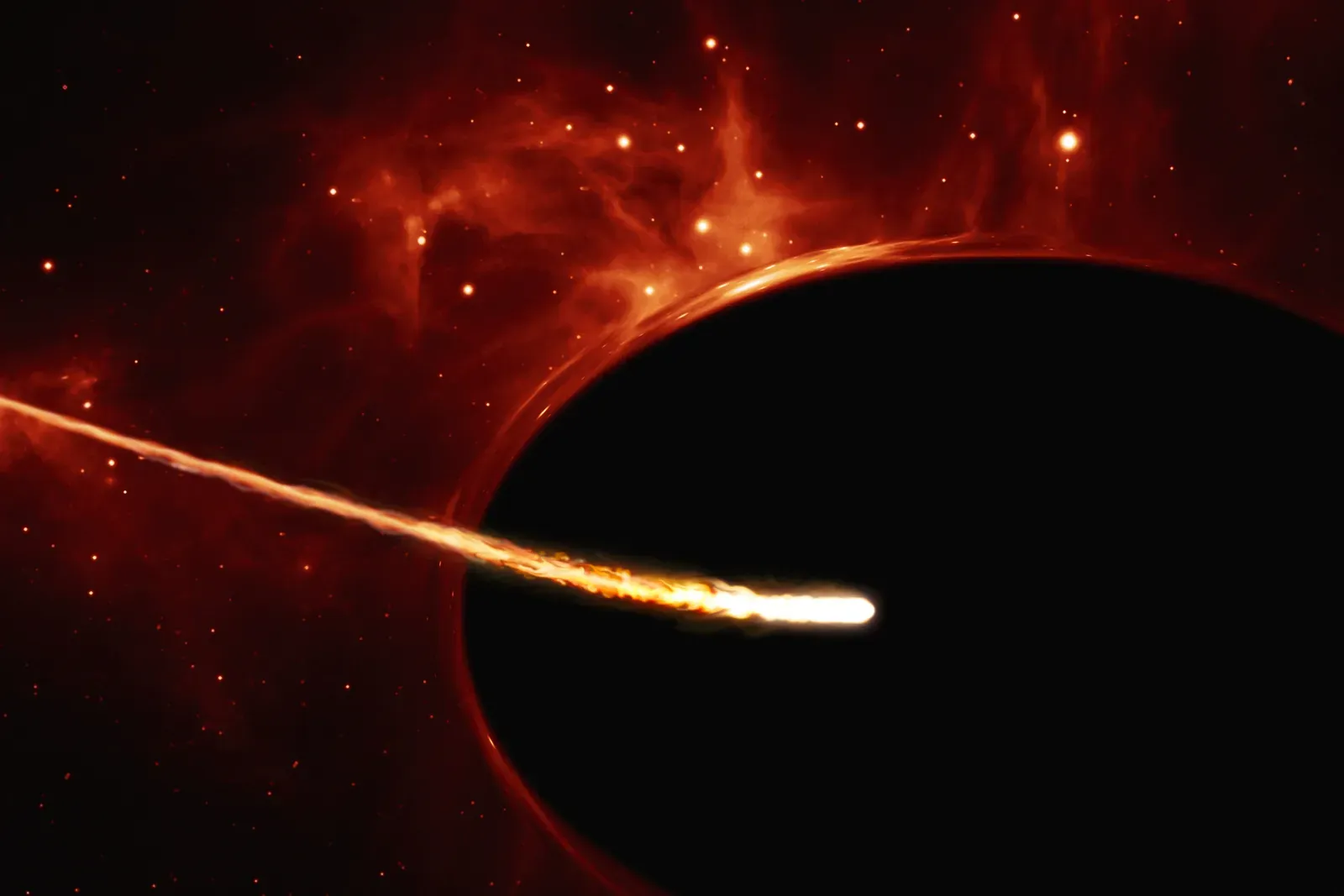
When you look at the centers of galaxies, including your own, you almost always find supermassive black holes weighing millions or even billions of times more than the Sun. What’s truly puzzling is that you can see some of these giants already fully grown in the very early universe, only a few hundred million years after the Big Bang. That does not leave much time for them to form if they start from the collapse of a single massive star and then slowly grow by swallowing gas and stars. It’s as if you met a toddler who somehow already stands three meters tall.
To explain this, researchers have proposed scenarios where huge clouds of gas collapse directly into big black hole “seeds,” or where dense clusters of stars rapidly merge and fall in. Observations from powerful telescopes are starting to reveal these ancient monsters in more detail, but the exact path from small seed to giant black hole is still unclear. You are watching the universe’s version of an unsolved origin story. Until you know how these behemoths formed so quickly, you do not fully understand how galaxies themselves grew and evolved around them.
8. The Nature of the Big Bang: What, If Anything, Came Before
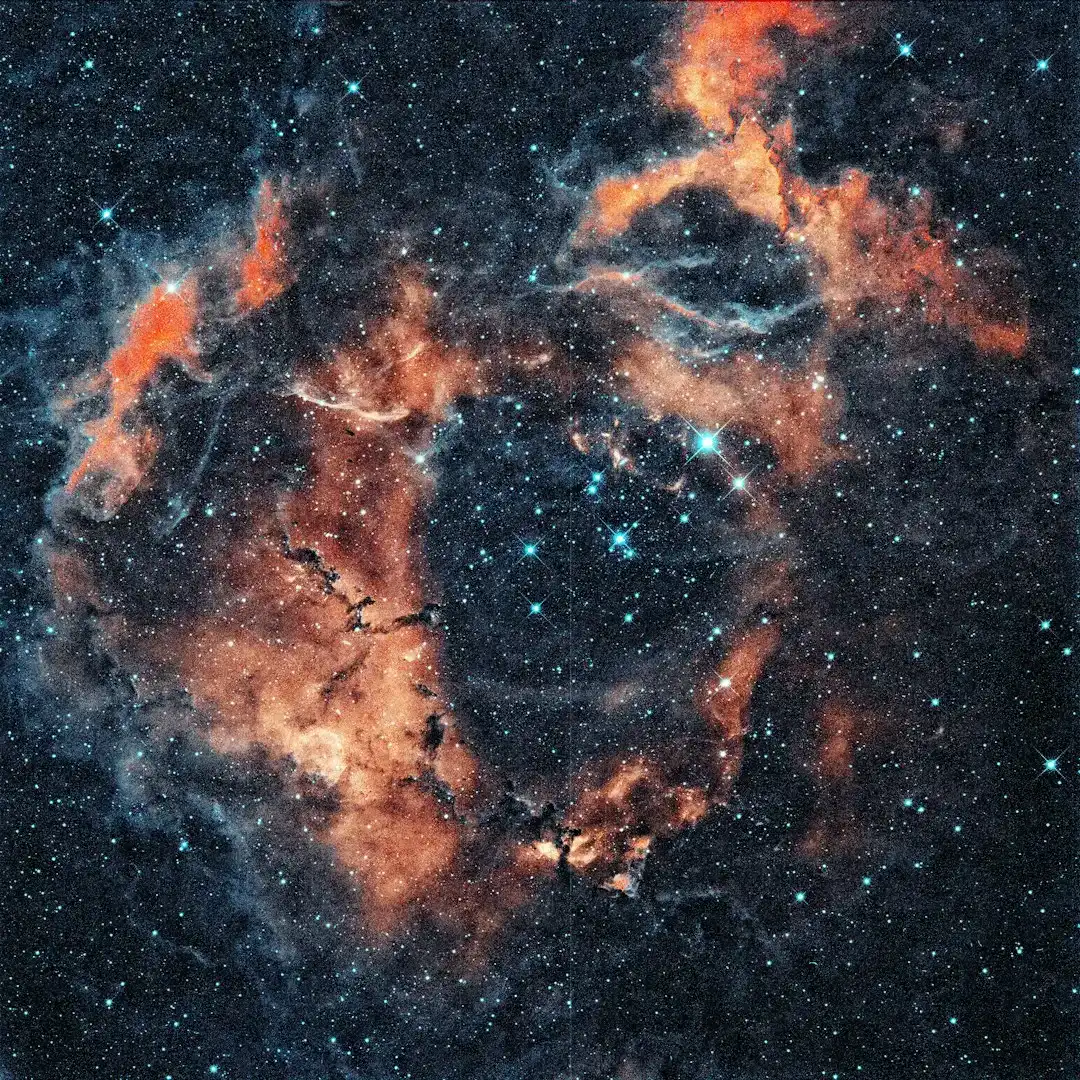
When you hear “Big Bang,” it’s easy to picture an explosion at a point in space, but that image is misleading. The Big Bang is more like the rapid expansion of space itself from an extremely hot, dense state. You can trace the universe back to a tiny fraction of a second after that beginning with impressive confidence, using the cosmic microwave background and the distribution of galaxies as your guide. But when you push closer to time zero, your equations break down and your understanding of space and time themselves starts to crumble.
Was there something before the Big Bang – another universe, a cosmic bounce, an eternal inflating multiverse? Or does the question “before” simply stop making sense once you get to the birth of time? Right now, you do not have data that can clearly distinguish between these possibilities. Theories of quantum gravity and cosmic inflation offer imaginative frameworks, but you’re still guessing at the details. For you, this is one of the most unsettling mysteries: the universe you live in has a history, but its very first chapter is written in a language you do not yet know how to read.
9. The Possibility of Life Beyond Earth: How Common Are You, Really?
Of all the space mysteries you wonder about, this one is probably the most personal: are you alone? You now know that planets are common – almost every star you look at seems to have at least one, and many have several. Among the countless planets in your galaxy, there should be vast numbers that are roughly Earth-sized and sit in zones where liquid water could exist. On paper, the odds that life might arise elsewhere look encouraging, yet so far, you have not found a single confirmed sign of life beyond your own world.
Telescopes are starting to analyze the atmospheres of distant planets, looking for chemical fingerprints that might hint at biology, while probes explore icy moons in your own solar system that may hide subsurface oceans. You also listen for potential artificial signals with radio telescopes, a quiet, patient eavesdropping on the cosmic conversation. The silence so far is not proof of loneliness; it could simply mean you are listening with primitive tools, at the wrong times, or in the wrong places. But until you find even a microbe elsewhere, you have to live with the eerie possibility that conscious beings like you might be rare, or at least very widely scattered in space and time.
Conclusion: Living with Questions as Big as the Cosmos
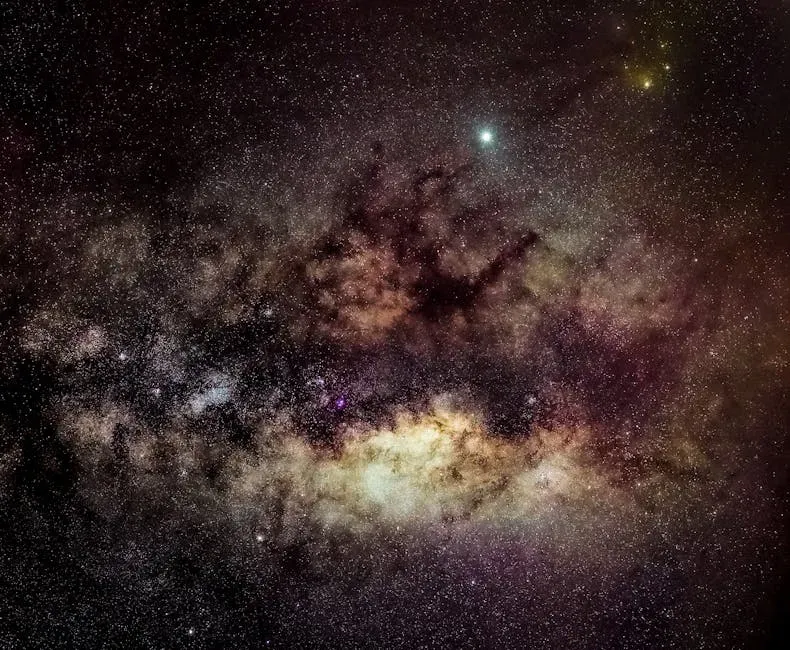
When you step back and look at these nine mysteries together, a pattern jumps out: the more powerful your tools become, the stranger the universe appears. You went into the cosmos expecting to find a neatly ordered clockwork, but instead you keep running into invisible matter, runaway expansion, paradoxes, and puzzles that turn your best theories inside out. Far from shrinking the unknown, every new telescope and detector seems to carve open fresh layers of cosmic ignorance. In a way, you are like someone exploring a vast cave with a better and better flashlight, only to discover that each chamber opens into three more.
Yet there’s something deeply human in choosing to face these questions anyway. You decode faint signals from galaxies billions of light-years away, argue over expansion rates to a few percent, and build detectors a kilometer underground just to maybe catch a single dark matter particle. You will probably not see all of these mysteries solved in your lifetime, but you are part of the only known species that even realizes the questions exist. That might be the most astonishing fact of all: in a universe filled with darkness and silence, you get to ask, to wonder, and to keep pushing the boundary between what you know and what you don’t. Which of these cosmic riddles would you most want to see answered first?