

If you think quantum physics only lives in giant labs, particle colliders, and brain-melting equations on chalkboards, you’re in for a surprise. You’re surrounded by quantum tech right now: in your pocket, on your desk, even at the grocery store checkout. You use it dozens of times a day without ever seeing the weird world of electrons, photons, and probability hiding underneath.
Once you start to notice it, it changes how you look at everyday life. Your phone stops being just a gadget and starts feeling like a tiny, tamed piece of the quantum universe that you carry around. In this article, you’ll walk through ten very normal objects and see the very not-normal quantum tricks that make them work. By the end, you might catch yourself quietly smiling every time you tap a screen or swipe a card, knowing what’s really going on underneath.
1. Your Smartphone’s Processor

Every time you unlock your phone, scroll social media, or stream a video, you’re leaning heavily on quantum physics. The tiny transistors inside your phone’s processor are based on quantum mechanics: they exploit how electrons behave in materials at microscopic scales. The very idea of a transistor as a switch that can be reliably turned on and off comes from understanding how electrons move through semiconductors, which only makes sense when you use quantum rules instead of everyday intuition.
Those transistors are now unimaginably small, with features only a handful of atoms wide, where quantum effects like tunneling start to become a big headache and a useful tool at the same time. Engineers have to design around electrons doing strange things, like slipping through barriers they “shouldn’t” cross according to classical physics. So when you complain that your phone is lagging, you’re actually complaining about the limits of controlling quantum behavior at insane scales measured in billionths of a meter.
2. LED Light Bulbs In Your Home
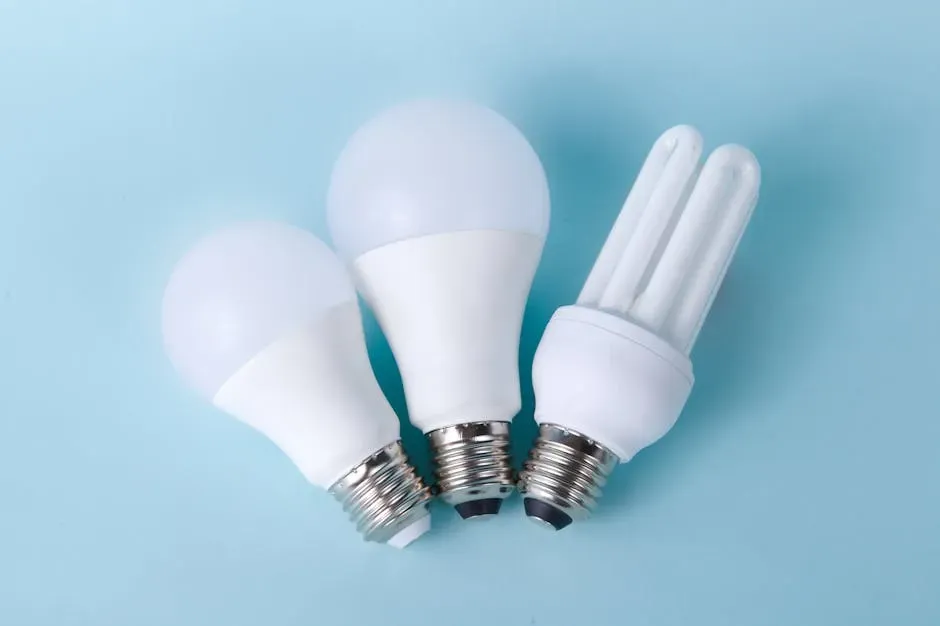
When you flip on an LED light, you’re triggering a carefully engineered quantum event. Inside the LED, electrons jump between different energy levels in a semiconductor material. When an electron drops from a higher energy state to a lower one, it releases a packet of light called a photon. The color of the light you see – warm, cool, blue, or red – is set by the energy difference between those levels, which is a purely quantum property of the material.
You’re basically running a controlled light factory based on “quantum jumps” every time you switch on a lamp. Unlike old-school incandescent bulbs that just heat a wire until it glows, LEDs are precise and efficient because and only because engineers understand band gaps, electron states, and photon emission on the quantum scale. That’s why your LED bulbs waste far less energy as heat and last much longer, even though they look so simple from the outside.
3. Laser Printers And Barcode Scanners

If you’ve ever printed a document at work or watched a cashier scan a barcode at lightning speed, you’ve witnessed quantum physics in action through lasers. A laser works by creating a special situation called “stimulated emission,” where atoms or molecules, prepared in a higher energy state, are nudged to release photons that are all in step with each other. This process is rooted in quantum ideas about discrete energy levels and how light interacts with matter.
Because of that quantum-driven process, the light from a laser is highly coherent and focused, which is why it can draw fine patterns on a printer drum or read the tiny lines of a barcode with extreme precision. When the red dot from a scanner flashes across your items, what you’re really seeing is a synchronized army of photons produced and controlled by quantum rules. You’re not just “scanning something”; you’re using a piece of physics so strange it took decades to even predict it properly.
4. GPS Navigation In Your Car Or Phone

When you follow that soothing navigation voice telling you when to turn, your route depends indirectly on quantum physics. The satellites that enable GPS rely on incredibly accurate clocks, and those clocks are built on quantum transitions inside atoms. In an atomic clock, you’re counting how often atoms flip between two specific energy levels, and those switching frequencies are defined by quantum mechanics with extraordinary precision.
If those clocks drifted even a tiny bit, your location would be off by many meters or even kilometers. On top of that, the timing signals have to be corrected for both special and general relativity, but that precision only matters because the underlying quantum-based clock is so stable. So when your map shows you exactly which side of the street you’re on, you’re benefitting from a marriage of quantum physics and relativity humming quietly above your head.
5. MRI Machines In Hospitals

If you’ve ever had an MRI scan, you’ve personally experienced a medical machine built directly from quantum ideas. MRI – Magnetic Resonance Imaging – relies on the fact that atomic nuclei, especially in hydrogen atoms in your body’s water and fat, act like tiny quantum magnets with a property called spin. In a strong magnetic field, those spins line up and then can be nudged with radio waves to flip between different energy states, creating detectable signals.
What the machine does is listen to those signals as the spins relax back to their preferred alignment, and that data gets turned into stunningly detailed images of your soft tissues. None of this makes sense without the quantum notion that particles have discrete spin states and respond in predictable ways to magnetic fields. So when a doctor reads an MRI image of your brain or knee, they’re reading a direct translation of quantum spin behavior happening inside your body.
6. The Flash Memory In USB Sticks And SSDs
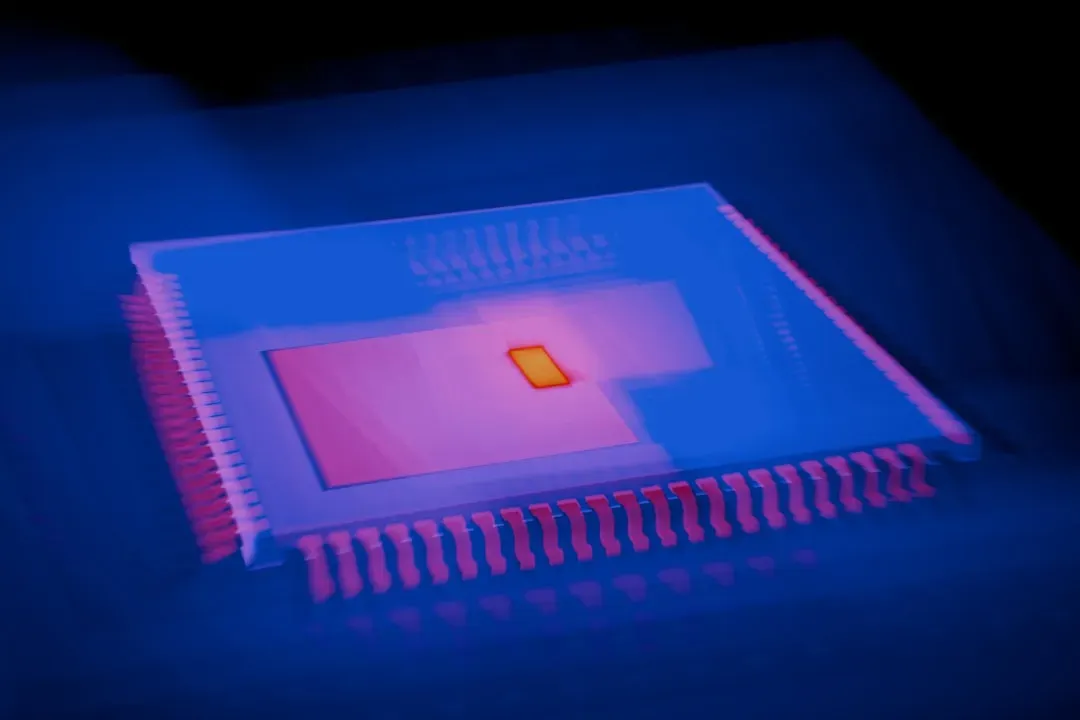
When you plug in a USB stick or save a file to a solid-state drive, you’re storing information using quantum tunneling. In flash memory, each tiny cell holds a bit by trapping electrons in a floating gate. To write or erase data, the device uses high electric fields to encourage electrons to tunnel through an insulating barrier that would be impossible to cross according to classical physics. Quantum tunneling says those electrons have a small but controllable chance to appear on the other side.
This controlled tunneling lets your device flip bits between stored and erased states without moving any mechanical parts. The fact that you can keep thousands of photos on a chip thinner than your fingernail comes from being able to manipulate electrons in potential wells and barriers described by quantum mechanics. Every time you drag a file into a folder, you’re orchestrating a microscopic game of “jump the wall” that only works because particles do not follow everyday rules.
7. Solar Panels On Rooftops

If you’ve ever admired a row of solar panels soaking up the sun, you’ve been looking at a field of quantum devices at work. Solar cells generate electricity when photons from sunlight hit a semiconductor and knock electrons into a higher energy band, freeing them to move. That separation between the lower and higher energy bands, known as the band gap, is a quantum property of the material and determines which wavelengths of light are most useful.
By choosing and layering different materials, engineers tune those quantum properties to squeeze more electricity out of the sunlight that hits the panel. You might just see a dark glass rectangle, but underneath, it’s a finely tuned quantum system shuffling electrons into motion when the right photons arrive. Each watt of power you pull from that system is a direct payoff from understanding electrons as quantum objects living in bands, not as tiny marbles.
8. Contactless Credit Cards And Transit Passes

When you tap your card to pay or tap your transit pass at a station gate, you’re using a system that depends on quantum physics inside its chips and radio circuits. The microchips in these cards are made from semiconductor materials where charge carriers behave according to quantum band structures. Just like in your phone’s processor, electrons move in ways predicted by quantum mechanics, allowing reliable logic operations and secure storage of cryptographic keys.
On top of that, the radio-frequency communication between your card and the reader involves carefully designed oscillators, resonant circuits, and antennas, all of which are optimized using an understanding of how electrons and photons behave in materials at tiny scales. That smooth “tap and go” feeling hides a complex dance of quantum-based hardware verifying your identity and completing secure encrypted exchanges. You’re effectively carrying a tiny, slightly less glamorous cousin of the quantum-driven chips in your phone and computer right in your wallet.
9. Digital Cameras And Phone Cameras

Every time you take a photo, you’re turning light into digital data with a quantum sensor. In a camera’s image sensor, whether it’s CCD or CMOS, each pixel is designed to catch incoming photons. When a photon hits the semiconductor material, it can create an electron–hole pair if its energy is high enough to cross the band gap. That process is fundamentally quantum: it depends on discrete energy levels and the particle-like behavior of light.
The camera counts how many of those quantum events happen in each pixel during the exposure, and that count becomes the brightness value you see in the final image. The reason you can shoot stunning night photos or crisp daylight shots is because engineers have learned to control noise, sensitivity, and efficiency at the level of individual photons and electrons. So the next time you snap a selfie, you’re basically running a tiny quantum experiment on millions of pixels at once.
10. Your Computer’s Display Screen

Whether you’re staring at a laptop, a TV, or a phone screen, the colors you see are the result of quantum effects in materials. In many modern screens, especially OLED and QLED designs, light is produced by materials where electrons and holes recombine and emit photons of specific energies. Those energies, and thus the colors, are determined by quantum confinement and the structure of molecules or tiny crystals called quantum dots.
Quantum dots, in particular, are engineered so that their size dictates the color they emit when excited: smaller dots produce higher-energy, bluer light, while larger dots shine redder. That size–color relationship comes straight out of quantum mechanics, not everyday wave behavior. When you marvel at a vivid sunset on your screen or a brightly colored animation, you’re really looking at a carefully tuned quantum palette, with each pixel’s glow set by the rules of the microscopic world.
Conclusion: Living In A Quietly Quantum World

Once you start to see it, you realize you’re living in a world quietly built on quantum foundations. The everyday objects you rely on – your phone, your lights, your payments, your photos, even your medical scans – only work because someone learned how to turn strange microscopic behaviors into reliable technology. You might not be writing down equations or running lab experiments, but you’re using the results of that work nearly every waking hour.
The wild part is that this is just the beginning; new quantum technologies, from ultra-secure communication to more specialized quantum computers, are slowly making their way toward everyday life as well. The next time you tap a card, flip on a lamp, or snap a picture, you can smile a little, knowing you’ve just partnered with the quantum world without even noticing. Now that you see how much of your day runs on invisible quantum rules, what everyday object will you look at differently first?