A Boom in Radioligand Therapies Drives Urgent Needs (Image Credits: Pexels)
Advanced radiotherapies are reshaping cancer care by delivering radiation directly to tumors, sparing healthy tissue. Yet this progress has triggered a surge in demand for specific radioactive isotopes, outpacing current production methods. Researchers and companies now look to nuclear waste streams – long viewed as a liability – as a potential treasure trove to refine these essential atoms for life-saving drugs.
A Boom in Radioligand Therapies Drives Urgent Needs
Novartis’s Lutathera and Pluvicto, both using lutetium-177, racked up $2.8 billion in sales in 2025 by treating neuroendocrine tumors and prostate cancer.[1] These beta-emitting drugs attach radioactive atoms to molecules that seek out cancer cells, minimizing side effects compared to traditional chemotherapy. The global radiopharmaceutical market is projected to expand sixfold to $39 billion by 2032, fueled by such targeted approaches.[1]
Experts anticipate even greater reliance on alpha emitters, which pack a more potent punch with fewer atoms needed per dose. These therapies promise to treat hundreds of thousands more patients annually, but supply constraints loom large. Production must ramp up dramatically to match clinical trial successes and pending approvals expected around 2030.[1]
Critical Isotopes at the Heart of the Surge
Lutetium-177 leads the pack as a beta emitter effective against solid tumors, but its limitations in penetrating dense cancers spur interest in alternatives. Actinium-225 stands out for targeted alpha therapy, emitting high-energy alpha particles over a mere 2-10 cell diameters to destroy tumors precisely.[2][3] Lead-212 and astatine-211 offer complementary profiles with shorter half-lives suited to rapid treatments.
- Lutetium-177: Half-life suits outpatient use; treats prostate and neuroendocrine cancers.
- Actinium-225: 10-day half-life; decays into multiple alpha emitters for cascading damage.
- Lead-212: 10-hour half-life from thorium-228 decay; minimizes patient exposure time.
- Astatine-211: 7-hour half-life ideal for brain tumors; single alpha emission.
Current global output of actinium-225 falls below 0.1 milligrams yearly, necessitating a 1,000-fold increase for broad adoption.[1]
Repurposing Nuclear Waste as a Medical Resource
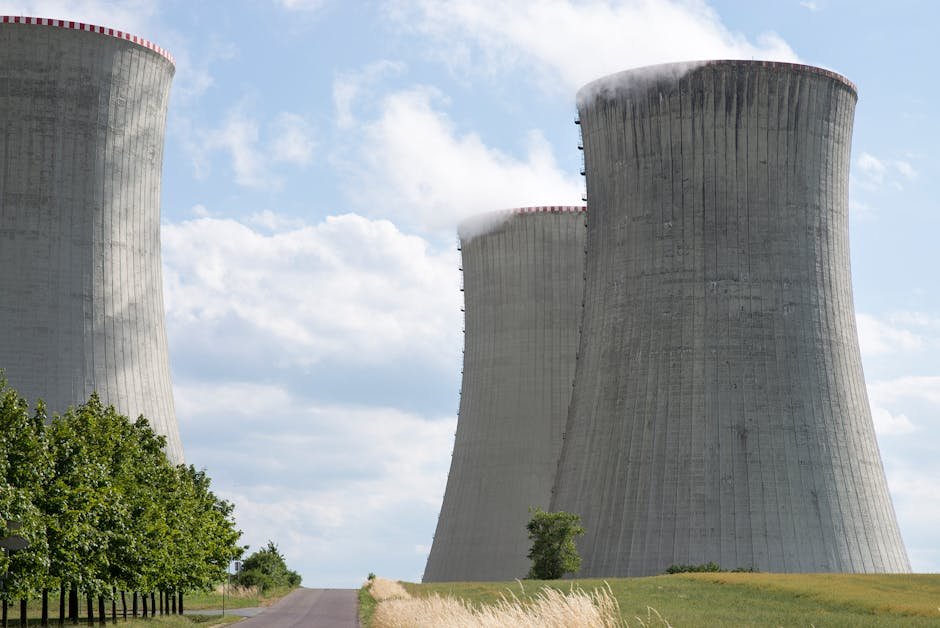
Nuclear facilities generate waste containing trace isotopes ideal for medicine, accumulated from decades of fuel processing and weapons programs. In the U.S., uranium-233 leftovers from Cold War efforts decay into thorium-229, the “cow” that yields actinium-225 through a process dubbed “milking.”[3][2] Operators dissolve waste in nitric acid, isolate thorium via ion-exchange columns, and harvest the daughter isotope.
Across the Atlantic, the UK’s Sellafield site processes uranium-232 waste into thorium-228, which decays to lead-212. The National Nuclear Laboratory’s “Poppy” system extracts it chemically, with pilot plants poised for thousands of patient doses yearly.[1][4] Such methods transform hazardous byproducts into assets, supported by funding like UK Research and Innovation grants.
Companies Spearheading the Extraction Efforts
TerraPower Isotopes, in partnership with Isotek, processes Oak Ridge National Laboratory waste to ship actinium-225 since late 2024, eyeing capacity for hundreds of thousands of doses annually.[1][5] “That year is going to be really important to the industry,” noted TerraPower’s Scott Claunch of 2030 milestones.[1]
| Company/Project | Isotope | Source |
|---|---|---|
| TerraPower/Isotek | Actinium-225 | U.S. DOE uranium-233 waste |
| UKNNL | Lead-212 | Sellafield reprocessed uranium |
| PanTera | Actinium-225 | Radium-226 via electron beams |
| Orano Med | Lead-212 | French nuclear waste |
PanTera plans a Belgian factory operational by 2029, using electron accelerators on radium-226 for scalable output.[1] These initiatives complement reactor-based production and accelerator alternatives.
Overcoming Production and Safety Challenges
Short half-lives demand just-in-time manufacturing and swift transport, complicating logistics. High radioactivity requires shielded hot cells and stringent protocols, while recoil from alpha decay risks detaching isotopes from targeting molecules.[2] Uranium-233 stocks may deplete, pushing alternatives like proton irradiation of thorium-232.
Regulatory hurdles and costs persist, yet momentum builds with over 40 clinical trials for actinium-225 alone. Big pharma’s billions in investment signal confidence, as leaders like PanTera’s Sven Van den Berghe observe: “We’re really seeing big pharma invest billions in it.”[1]
Key Takeaways
- Radiopharmaceutical demand will multiply with alpha therapies like actinium-225.
- Nuclear waste offers a sustainable source via chemical extraction and decay chains.
- Companies like TerraPower and UKNNL target commercial scale by late 2020s.
This fusion of nuclear legacy and medical innovation could redefine cancer care, making potent therapies accessible. As supplies grow, patients stand to benefit from fewer side effects and higher success rates. What role do you see for recycled isotopes in future medicine? Share your thoughts in the comments.