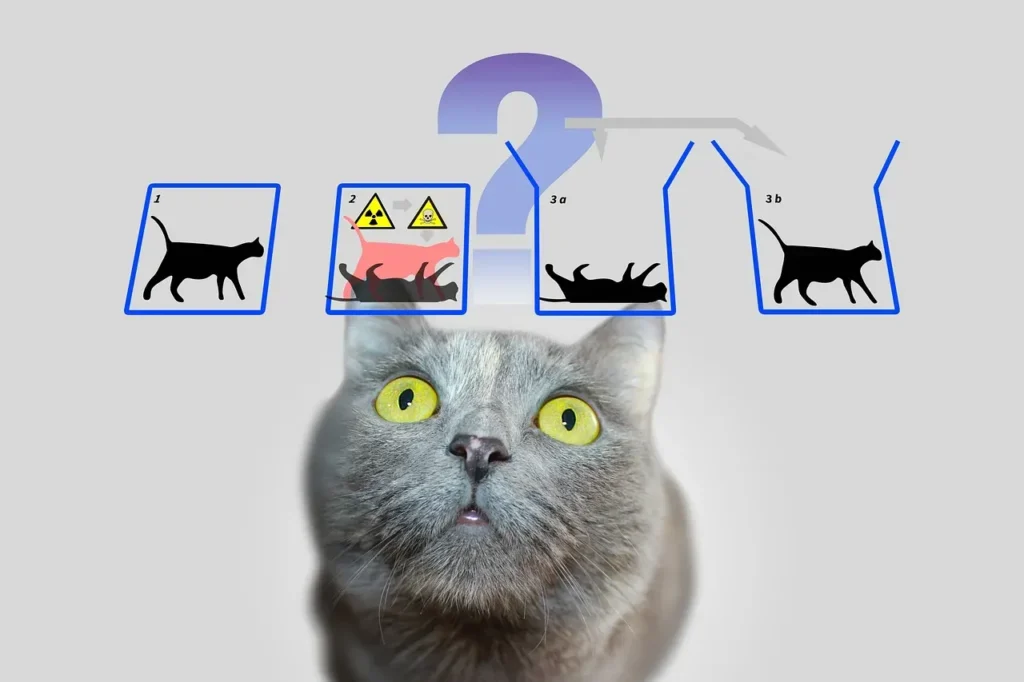

If you grew up thinking of reality as a kind of cosmic stage, with solid objects moving around in a predictable, clockwork universe, quantum mechanics is here to gently (or not so gently) blow that up for you. The deeper you look into the quantum world, the more you realize that your everyday intuitions about space, time, and matter are, at best, rough approximations. They work fine for throwing a baseball or driving a car, but they fall apart completely when you zoom down to the level of atoms and particles.
The wild part is that quantum mechanics isn’t just some abstract, ivory-tower theory. It is one of the most accurate and experimentally tested frameworks in all of science, and it sits quietly underneath the technologies you use every day – from GPS and smartphones to lasers and MRI machines. As you start to explore its core ideas, you’re forced to rethink what “real” even means, and how much the universe cares about your common sense. Spoiler: not much.
You Discover That Particles Are Also Waves
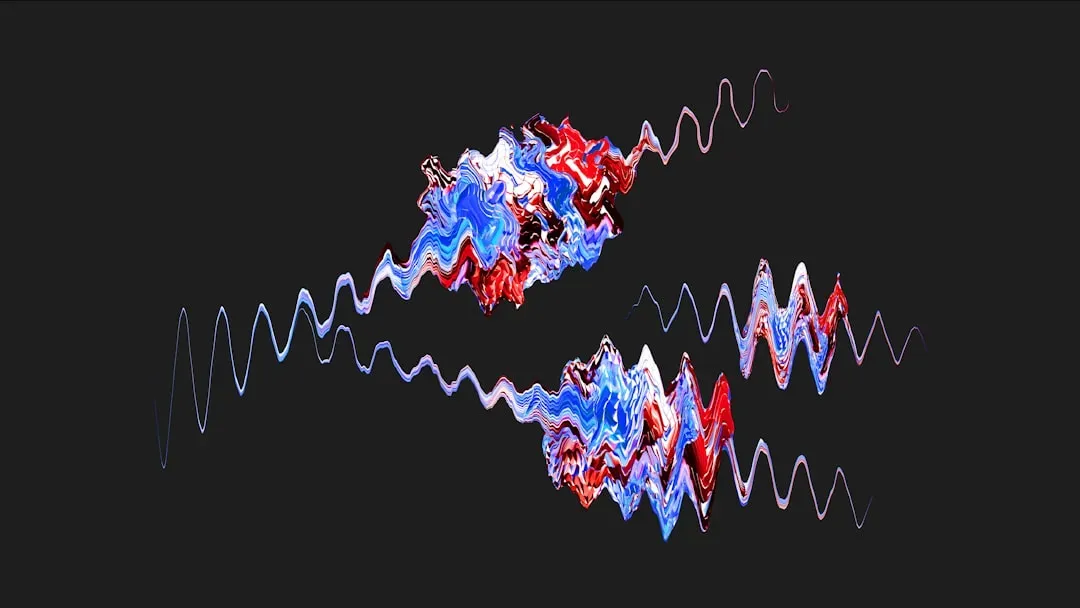
One of the first shocks quantum mechanics gives you is the idea that what you call a “particle” is not simply a tiny billiard ball. Instead, it behaves like a spread-out wave and a localized particle at the same time. When you pass electrons or photons through a double slit, they produce interference patterns like ripples on a pond, even if you send them one at a time. You’re left with the unsettling realization that, until you measure them, these particles are not sitting in one specific place but are better described as waves of possibility.
This wave-particle duality forces you to drop the comforting picture of a universe made of tiny, solid beads snapping around on definite paths. Instead, you start thinking in terms of probability clouds and wave functions, where what exists is more like a smeared-out potential for different outcomes. In your everyday life, you might treat objects as firmly where you see them, but at the quantum level, that certainty is an illusion emerging from a deeper, fuzzier layer of reality that doesn’t care about your desire for clarity.
You Realize Reality Can Be “Undecided” Until You Measure It
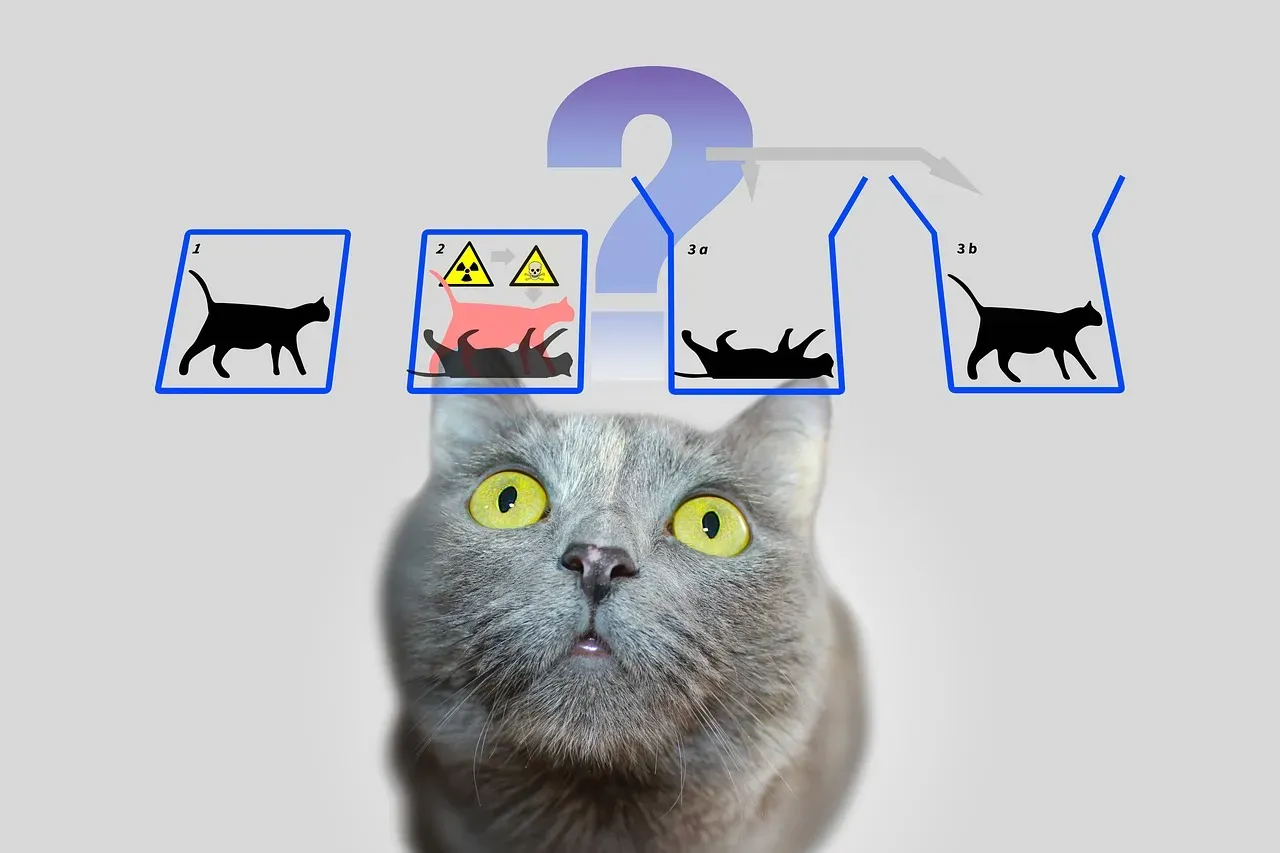
Another way quantum mechanics challenges you is through the idea of superposition: a system can be in multiple possible states at once until you look. The classic example is a quantum bit, or qubit, which can be in a blend of “0” and “1” at the same time rather than one or the other. When you measure it, you force it to “choose,” and you only ever see a definite 0 or 1. Before that moment, the math says you have to treat it as if it genuinely occupies all those options simultaneously.
This is not just some philosophical trick; it is the core of how quantum devices work. In quantum computers, for example, you deliberately keep qubits in superpositions so they can explore many possible solutions in parallel. When you finally read them out, you collapse that cloud of possibility into a single answer. The weird consequence is that reality, at least at this scale, is not always in a single, sharply defined state. You are confronted with a world where “what is” and “what could be” are far more entangled than your intuition ever prepared you for.
You See That Distant Things Can Be Deeply Linked
Perhaps the most emotionally jarring quantum idea you run into is entanglement, where two or more particles become so strongly correlated that measuring one instantly tells you something about the other, no matter how far apart they are. If you measure the spin or polarization of one entangled partner, you immediately know what you will get for the other when you measure it, even if it is light-years away. It feels like nature is smuggling a hidden connection through empty space, ignoring your expectations about distance and separation.
Experiments have repeatedly shown that these correlations are stronger than any explanation based on simple hidden information preloaded into the particles. That forces you to accept that the universe is, in some sense, more holistic than your everyday experience suggests. Instead of imagining reality as a collection of completely independent objects, you start to see it more like a vast web, where parts that once interacted can remain mysteriously linked. This shift in perspective is not just poetic; it is what underpins quantum cryptography and the long-term dream of a global quantum internet.
You Learn That “Empty Space” Is Not Really Empty
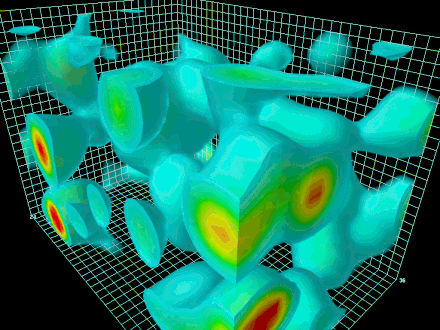
Quantum mechanics also changes how you think about vacuum and nothingness. In classical thinking, empty space is just that: a quiet, featureless backdrop with no matter or energy. But in quantum field theory, which blends quantum mechanics with special relativity, even the vacuum seethes with activity. Fields fluctuate constantly, creating short-lived particle–antiparticle pairs that pop in and out of existence too quickly for you to see directly but with effects you can measure, such as tiny shifts in atomic energy levels.
This restless quantum vacuum shows up in real phenomena like the Casimir effect, where two uncharged metal plates in a vacuum experience a tiny force pulling them together. It also appears in high-energy physics and cosmology, where vacuum energy plays a role in how you understand dark energy and the expansion of the universe. When you really let that sink in, your picture of “nothing” has to be upgraded: you are living in a universe where even the quietest, emptiest regions are buzzing with invisible quantum activity that subtly shapes what you call reality.
You Rethink What Information And Causality Mean
As you dive deeper into modern quantum theory, you start to see that information itself might be more fundamental than particles and forces. In quantum information science, you treat the state of a system as a kind of information resource that can be stored, processed, and transmitted. Quantum computing, quantum encryption, and teleportation protocols all rest on the idea that you can manipulate this quantum information in ways that are impossible in a classical world. You begin to ask whether the universe is less like a machine made of stuff and more like a vast information processor.
At the same time, quantum mechanics forces you to be precise about causality and what it means for one event to influence another. Entanglement correlations, for instance, do not let you send signals faster than light, even though measurement outcomes are tightly linked. That means you have to separate the idea of correlation from the idea of communication and accept that some patterns in nature do not fit your familiar cause-and-effect narrative. You end up with a subtler picture of reality where information, context, and measurement play starring roles, and where the old, straightforward story of “A causes B” is sometimes too simple to capture what is really going on.
You Accept That Your Perspective Shapes What You Observe
Finally, quantum mechanics confronts you with an uncomfortable but liberating insight: the act of measuring is not a neutral glance at a preexisting reality. When you choose what to measure and how to measure it, you help determine what outcome becomes real for you. Different experimental setups can reveal mutually incompatible properties, and you cannot, even in principle, access a complete set of classical-style facts about a quantum system all at once. Your role as an observer becomes part of the story rather than an external footnote.
This does not mean you can will anything you like into existence, but it does mean that your questions and tools carve reality into particular shapes. You discover that there is no single, God’s-eye description that gives you all the details at once; instead, you get a patchwork of perspectives, each tied to specific measurements. That realization nudges you away from the idea of a rigid, observer-independent world and toward a more nuanced, relational view, where what is real has to be described in terms of interactions, contexts, and the limitations built into your own methods of inquiry.
When you put all of this together, you see why quantum mechanics is not just another theory to memorize but a lens that permanently reshapes how you think about existence. You are invited to live with ambiguity, to trade in neat pictures for richer but stranger ones, and to accept that the universe is under no obligation to match your intuitions. Maybe that is the real gift here: a humbling reminder that reality is deeper, subtler, and more interconnected than your everyday senses suggest. Knowing that, how will you look at the world around you the next time you call it “ordinary”?