
If you think of the universe as a giant stage where stars, planets, and galaxies perform predictable routines, you’re in for a shock. Modern physics has quietly torn up the script, replaced the scenery, and then suggested the stage itself might be an illusion. As you look closer, the familiar picture of a calm, orderly cosmos gives way to something far stranger, where space can bend, time can stretch, and reality depends on who’s looking.
In this article, you’ll walk through ten of the wildest, most thought-provoking ideas scientists have seriously considered about the universe. Some of them are backed by solid math and experiments; others are more speculative but still rooted in real physics. You will not get definite answers to every “how” and “why,” but you will feel the ground under your common sense shift a little. And once you’ve seen reality through these lenses, it’s hard to go back to thinking of the universe as just “empty space and some stars.”
1. You Live in a Cosmic Illusion: The Holographic Universe
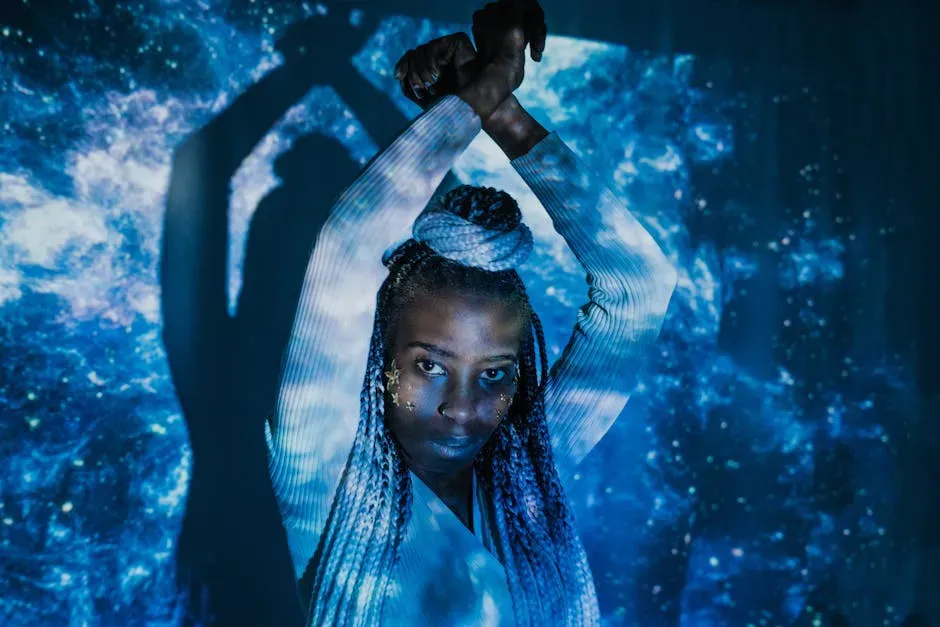
Imagine discovering that everything you see and touch, from your hands to distant galaxies, is a kind of three-dimensional projection. The holographic universe idea suggests that the true, fundamental description of reality might live on a distant, lower-dimensional “surface,” while what you experience as 3D space is like a vivid cosmic hologram. You are used to thinking of space as the main stage, but this theory flips it and says the “real” information could be stored on a boundary of the universe, a bit like data encoded on a screen.
Physicists arrived at this mind-bending view while trying to understand black holes and how information behaves near their event horizons. When they realized that the amount of information inside a region of space seems to scale with its surface area rather than its volume, that hinted you might be living in a world where the deepest description is two-dimensional information. For you, this does not change the feel of a chair or the taste of coffee, but it does mean that at the most fundamental level, reality might be less like a solid room and more like an insanely detailed cosmic hard drive projecting an experience into your mind.
2. Time May Be an Illusion: The Block Universe
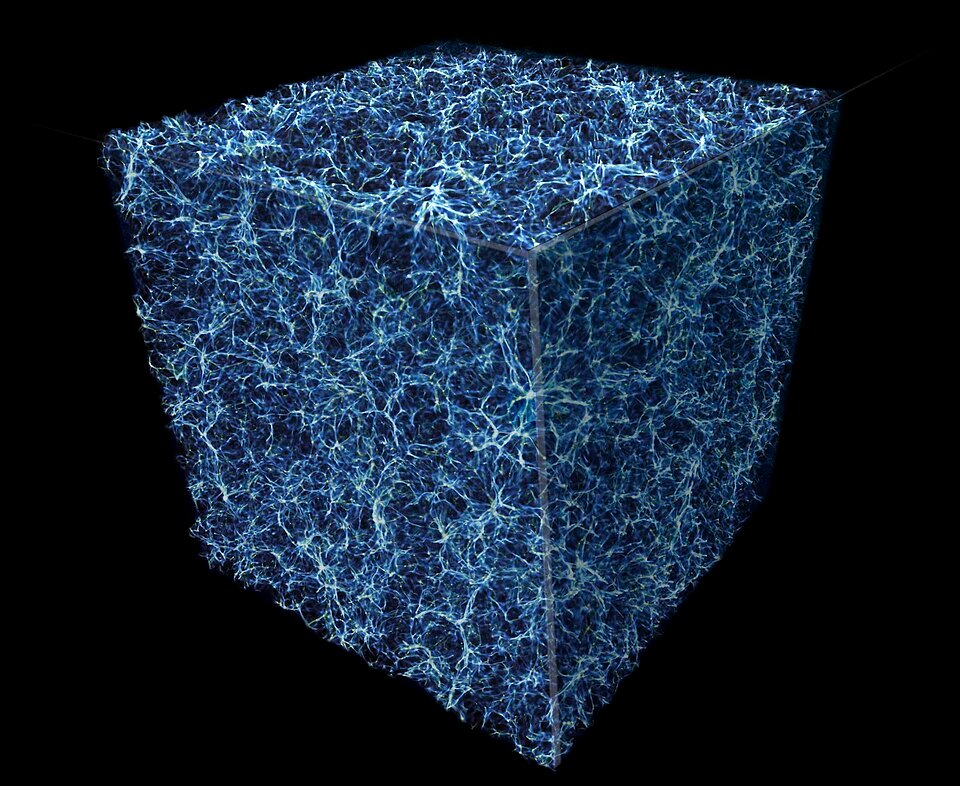
You probably feel that time flows: yesterday is gone, today is here, and tomorrow hasn’t happened yet. But in the “block universe” view, past, present, and future all coexist at once in a four-dimensional structure. You can picture the universe as a giant spacetime loaf, where each slice is a moment in time, and you are just sliding your consciousness along one path through it. In this picture, events in your future are already “there” in spacetime, just as fixed as events in your past.
This idea comes from taking Einstein’s relativity seriously, where different observers disagree about what counts as “now.” If there’s no unique, universal present moment, then carving reality into “already happened” and “not yet” starts to look like a mental habit rather than a cosmic law. For you, this means the feeling of flow might be a feature of your brain’s storytelling rather than of the universe itself. You still make choices and live them out, but on a deeper level, your entire life might already be woven into the fabric of spacetime.
3. There May Be Endless Copies of You: The Many-Worlds Interpretation
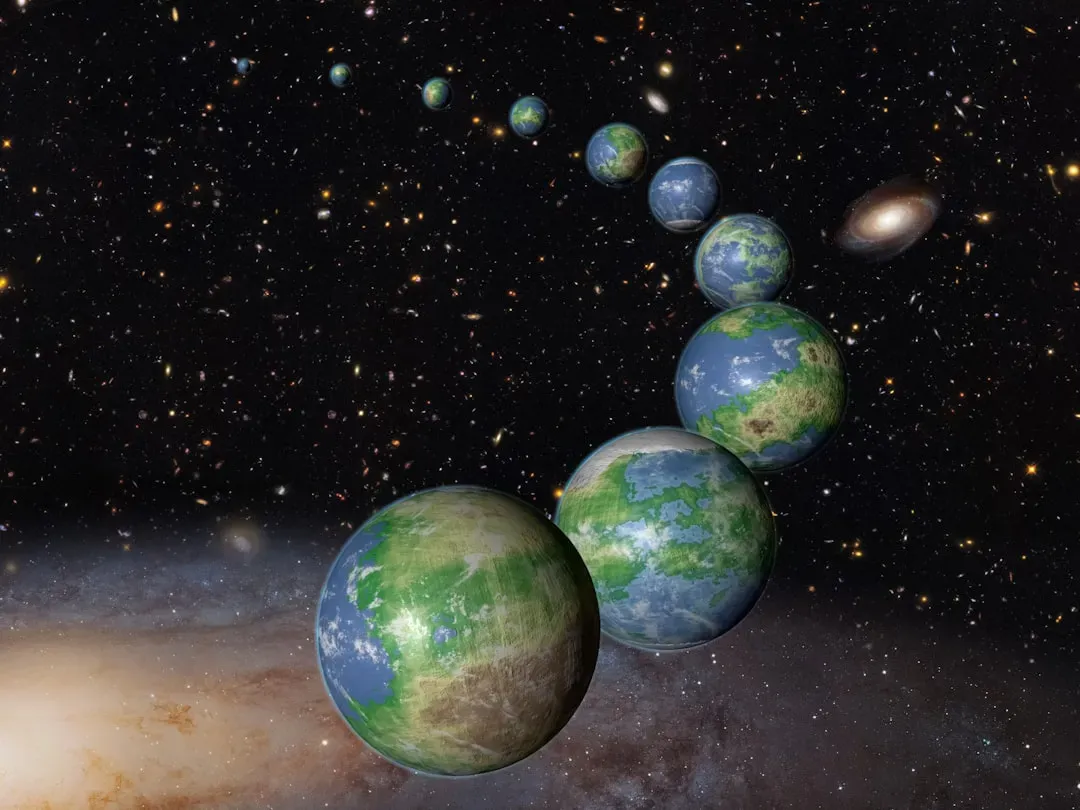
Every time you choose between tea and coffee, you feel like you pick one and abandon the other. But in the many-worlds interpretation of quantum mechanics, reality might quietly split, creating branches where both outcomes happen. In one branch, you drink tea; in another, you reach for coffee. You do not feel the split because each version of you only experiences one path, but the full quantum description contains all of them. Your life becomes one strand in a vast, branching cosmic tree.
This theory rises from trying to make sense of quantum experiments where particles seem to exist in multiple states at once until you observe them. Instead of saying the wave of possibilities “collapses” into one outcome, many-worlds says the wave never collapses; it just branches into different, equally real realities. For you, this means every risk taken, every avoided accident, every roll of the dice might exist in some other branch where things went differently. It challenges your sense of uniqueness and forces you to ask what it really means for something to “actually” happen.
4. Reality Might Depend on Being Observed: The Quantum Measurement Problem
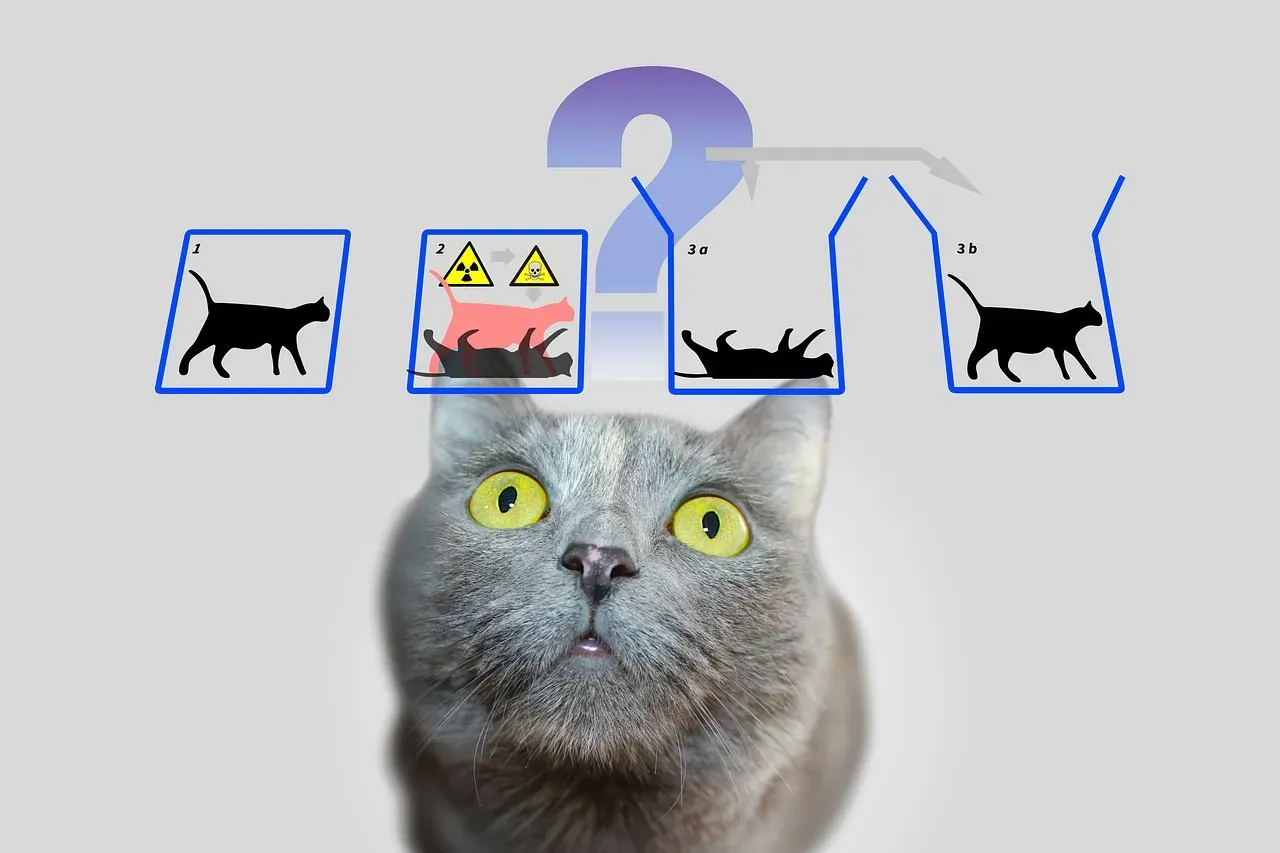
You are used to thinking that objects have definite properties whether or not you look at them. A ball is either here or there, spinning this way or that. Quantum mechanics throws a wrench into that comfort: tiny particles seem to live in fuzzy clouds of possibilities, described by a “wave function,” until a measurement forces them into a specific state. The unsettling part is that the theory is crystal clear about how the wave evolves, but maddeningly vague about what exactly counts as a measurement.
When you hear that a particle behaves like a wave until you observe it, it can sound as if your mind is somehow shaping reality, even though most physicists do not literally mean that your thoughts control particles. Still, the fact remains: your classical, everyday world with solid chairs and definite locations emerges from a quantum realm that does not obey your intuitions. You are left with a deep puzzle: does reality “decide” only when it interacts with a measuring device, with an environment, or with a conscious observer like you? No one completely agrees, and that uncertainty lives right at the heart of modern physics.
5. Space Might Be Made of Tiny “Atoms” of Geometry: Quantum Gravity Ideas
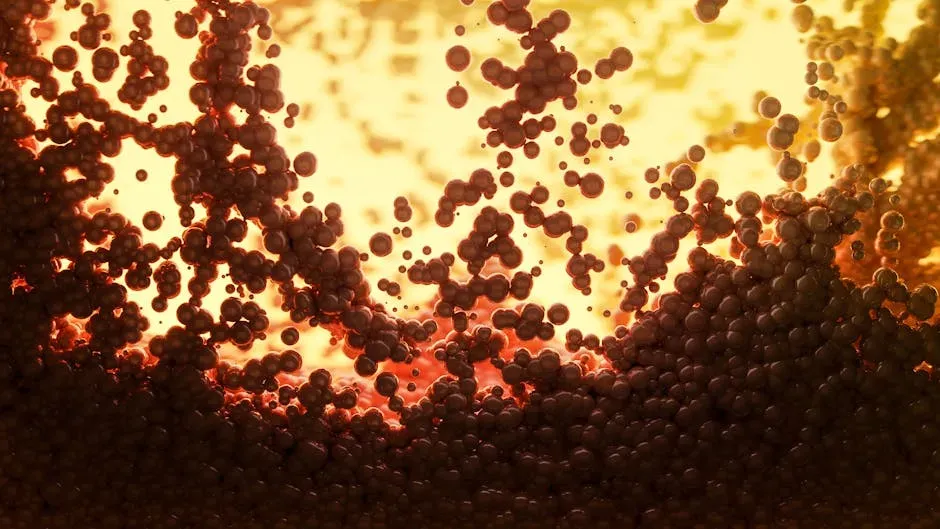
You probably imagine space as smooth and continuous, something you can divide endlessly into smaller and smaller pieces. But when you zoom way down toward the so-called Planck scale, some physicists think that picture breaks down. Space might be built from tiny, discrete building blocks of geometry, a bit like pixels on a screen that look smooth from far away. If that’s true, then your everyday sense of “here” and “there” is riding on top of a granular, almost digital structure of spacetime.
The hunt for a theory of quantum gravity, which would merge quantum mechanics with Einstein’s relativity, has produced candidates like loop quantum gravity and string theory that hint at this discreteness. For you, this means that emptiness is not truly empty but could be full of microscopic loops, strings, or quanta of space flickering in and out of existence. The universe you move through might not be a boundless, flawless canvas but a stitched-together fabric whose threads are unimaginably small and constantly vibrating with quantum activity.
6. Dark Matter and Dark Energy: Most of the Universe Is Invisible to You
When you look at the night sky, you see stars, galaxies, and glowing gas, and it is tempting to think that is most of what exists. In reality, the stuff you can see makes up only a tiny fraction of the total cosmic budget. Astronomers have found that galaxies rotate too fast and large-scale structures hold together too strongly to be explained by visible matter alone. To make sense of this, you are forced to consider an unseen substance called dark matter that appears to outweigh normal matter by several times.
On top of that, distant supernovae and the cosmic expansion tell you that the universe’s growth is actually speeding up, as if some mysterious “dark energy” is pushing space apart. You cannot touch dark matter or bottle dark energy in a lab, at least not yet, but the gravitational and expansion evidence for them is hard to ignore. For you, the unsettling takeaway is that the familiar atoms making up your body, Earth, and stars are just the visible frosting on a cake mostly made of ingredients you still do not understand at all.
7. The Simulation Hypothesis: You Might Be in a Cosmic Computer Program
You have probably wondered at least once whether life feels a bit too much like a video game. The simulation hypothesis takes that suspicion seriously: it suggests that advanced civilizations might someday run incredibly detailed simulations of entire universes, complete with conscious beings like you who do not realize they are inside a program. If such simulations ever become possible and common, then statistically, you could be far more likely to be inside one of them than in the “base” physical universe.
Supporters point to the rapid growth of computing power and how your own technology already simulates weather, galaxies, and virtual worlds. If you can imagine future beings with planet-sized computers, you can imagine them modeling entire histories and branching timelines. For you, this theory does not change how gravity pulls or how coffee tastes, but it does shake your sense of what “real” means. If you are in a simulation, then the deepest laws of your universe might be lines of code, and glitches or odd coincidences could be more like software artifacts than cosmic miracles.
8. The Anthropic Principle: The Universe Looks “Just Right” Because You’re Here
When you look at the laws of nature, you find an odd pattern: many of the fundamental constants seem to sit in narrow ranges that allow stars, planets, chemistry, and life as you know it to exist. If gravity were much weaker or stronger, or if the strengths of forces were slightly different, you might not get complex structures at all. The anthropic principle says you should not be too surprised by this “just right” feeling, because you can only find yourself in a universe whose conditions permit your existence in the first place.
On its mild side, this principle is almost a reminder of selection bias: you observe a universe that supports observers because, otherwise, you would not be here to observe it. On its bolder side, it often pairs with multiverse ideas, suggesting there could be many universes with different settings, and you simply inhabit one of the rare life-friendly ones. For you, this can feel both humbling and strangely comforting. You are not necessarily the goal of the universe, but your existence might be a natural outcome of vast cosmic variety and the relentless filtering effect of what can actually host observers like you.
9. The Multiverse: Your Universe Might Be Just One Bubble Among Many
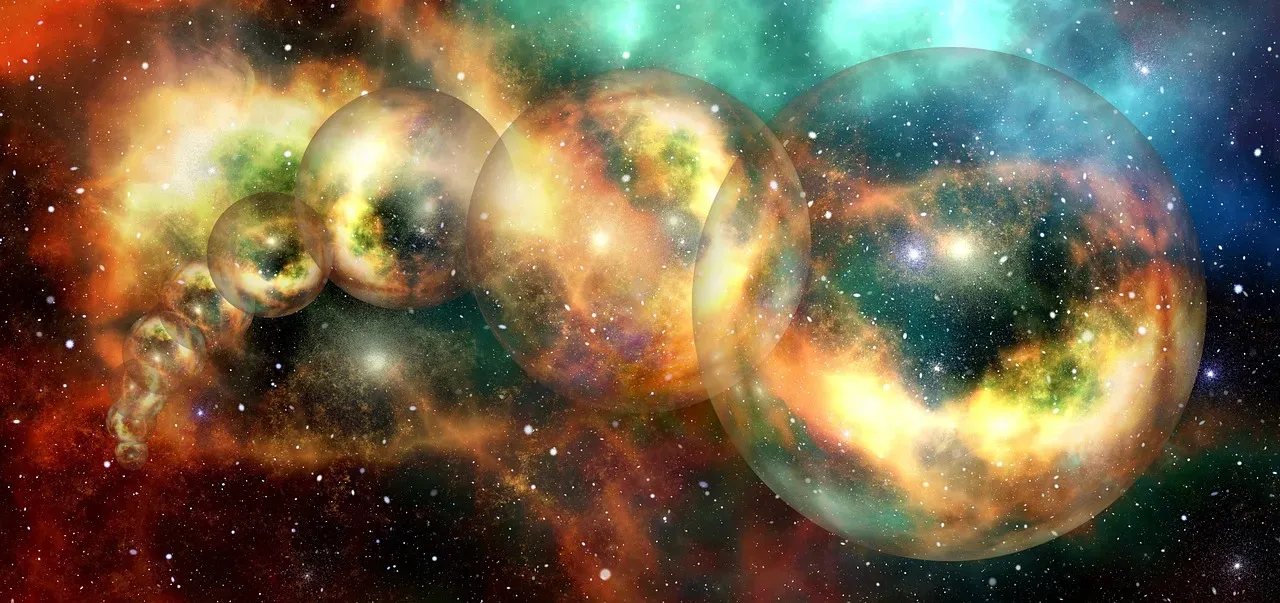
It’s easy to slip into thinking of “the universe” as everything there is, full stop. But several lines of theoretical thinking suggest you might live in just one region of a much larger cosmic landscape. Inflationary cosmology, for example, allows for the idea that space could keep expanding and spawning new “bubble universes,” each with its own properties. You are then a resident of one bubble, floating in an enormous multiverse sea you can never directly reach.
Other versions of the multiverse idea come from string theory’s many possible solutions or from the quantum many-worlds branching you saw earlier. Together, they paint a picture where your universe is not unique but one of countless realities with different laws, constants, or histories. For you, this rewrites the idea of specialness: your cosmos is still vast and awe-inspiring, but it may be one tile in an unimaginably big mosaic. You might never see the neighboring tiles, but their possible existence changes how you think about chance, fine-tuning, and what “everything” really means.
10. Emergent Reality: Space, Time, and Even Physics May Arise From Deeper Rules
You tend to treat space, time, and particles as the basic ingredients of the universe, but some modern ideas suggest they might not be fundamental at all. Instead, they could emerge from deeper structures, like patterns in information or networks of relationships. In some approaches, space can be reconstructed from how bits of information are entangled; in others, time could be a kind of bookkeeping device for changes in those underlying structures. You can think of it like a fluid: water feels smooth and continuous to you, but you know it is really made of molecules interacting in complex ways.
If this emergent view is right, then what you call “laws of physics” could be more like effective rules that appear at large scales, not eternal commandments written into the core of reality. For you, that means your intuitions, shaped by everyday experience, might sit several levels away from whatever is really going on. The universe you live in might be less like a machine built from solid gears and more like a pattern forming in waves on the surface of a deep, unseen ocean of information.
Conclusion: Living with a Strange Universe
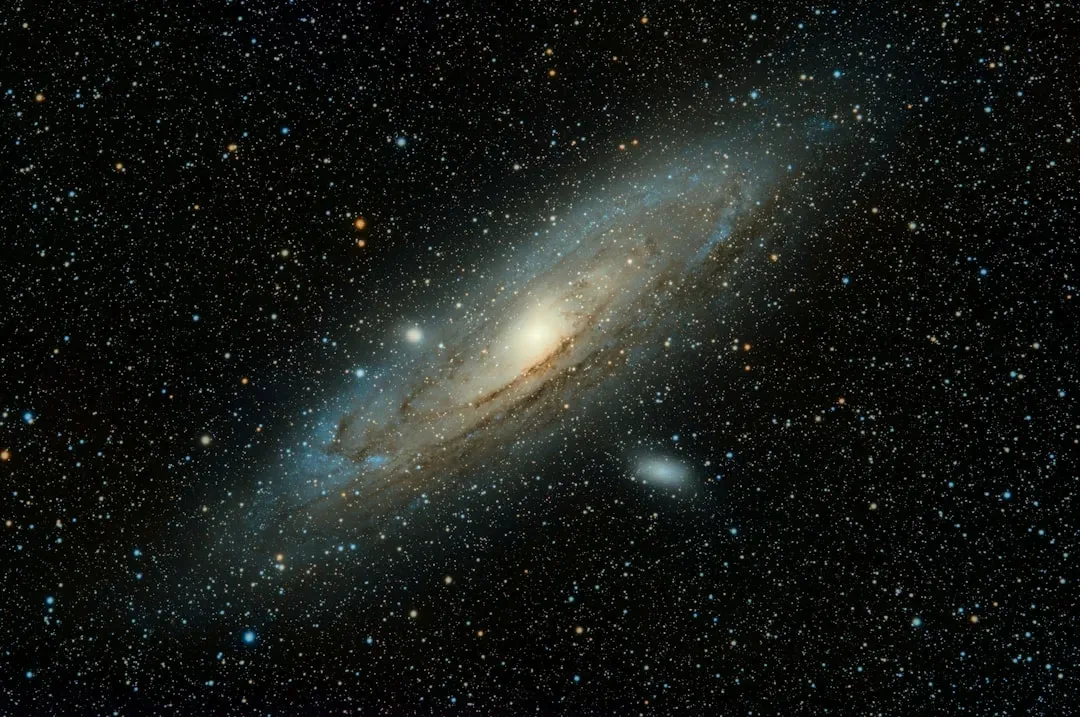
Once you let these theories sink in, your familiar picture of the universe feels a lot less solid. You are faced with a cosmos that might be holographic, block-like in time, branching into many worlds, or even running on some hyper-advanced cosmic computer. At the same time, you see that your everyday reality still works: you wake up, make choices, feel emotions, and navigate a world that behaves reliably enough to build bridges and send probes to other planets.
You do not need to pick one theory and swear loyalty to it, but you can let them stretch your imagination and your sense of possibility. When you look up at the night sky now, you are not just seeing stars; you are staring into a mystery where space might be discrete, time might not flow, and your universe might be one of many. The real challenge for you is not just understanding the math but deciding what kind of meaning you draw from such a bizarre, beautiful reality. So, knowing all this, how “normal” does your universe still feel to you?