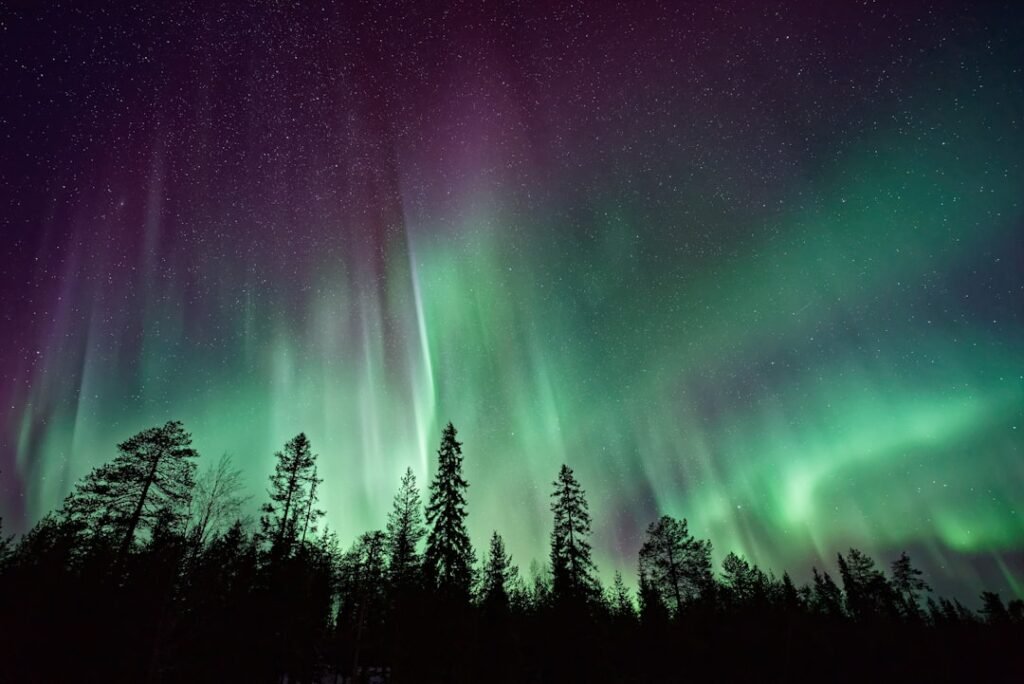

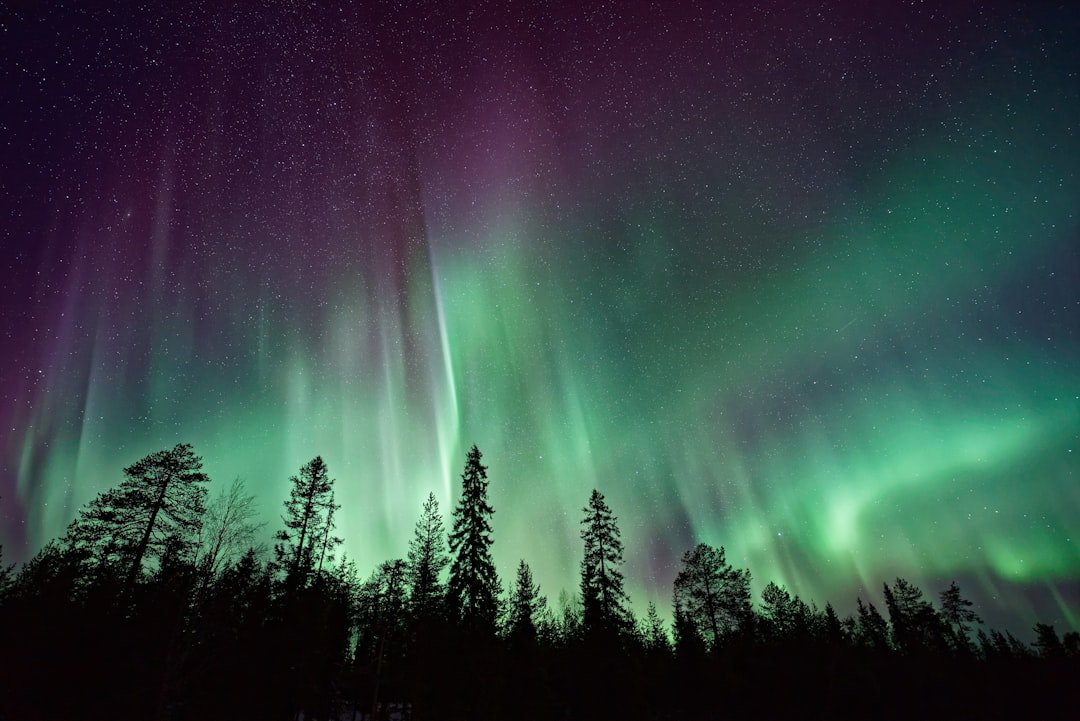
G2 Storm Builds Swiftly to Moderate Intensity (Image Credits: Unsplash)
Vibrant auroras lit up night skies across higher latitudes on April 18, 2026, courtesy of a moderate G2 geomagnetic storm.[1] Fast solar winds from the sun surged to near 700 kilometers per second, intensifying the event and creating ideal conditions for the light displays. This activity stemmed from a massive coronal hole rotating into view, a phenomenon tracked closely by space weather experts. Forecasters anticipate lingering G1 to G2 storms through April 19, extending opportunities for weekend viewing.[1]
G2 Storm Builds Swiftly to Moderate Intensity
The geomagnetic disturbance escalated rapidly on April 18. It started as a G1 minor storm at 7:41 UTC before reaching G2 levels by 8:25 UTC, with the planetary Kp index climbing to 5 through 6.[1] Such progression highlighted the potency of incoming solar wind streams interacting with Earth’s protective magnetic shield.
A southward orientation of the interplanetary magnetic field Bz component amplified the effects, funneling charged particles into the upper atmosphere. This setup reliably produces auroras by exciting atmospheric gases. Observers noted the storm’s influence waning slightly by late April 19 but persisting at unsettled to active levels.[1]
Coronal Hole Drives High-Speed Solar Wind
A vast coronal hole dominated the sun’s northeast quadrant, serving as the primary engine behind the storm. These open magnetic field regions expel solar wind at accelerated rates, with streams arriving at Earth after several days.[1] The feature had emerged earlier in the week and achieved a geoeffective position by April 18.
Solar wind speeds rose to moderate-high velocities beginning April 17 at 21 UTC, peaking near 700 km/s and combining with a co-rotating interaction region for added punch. This influx compressed Earth’s magnetosphere, sparking the observed geomagnetic response. Conditions supported ongoing activity into April 19 before easing toward quiet by April 20.[1]
Sunspot regions contributed minimally, as flare output remained low with just seven events in the prior 24 hours – the strongest a C1.6 from Active Region 4416.
Solar Activity Snapshot: Flares and Sunspots
Earth-facing solar disk featured three notable active regions on April 19. AR4419, the largest in the northeast with a complex beta-gamma configuration, led flare production alongside AR4416 in the northwest.[1] Simpler alpha and beta regions filled out the rest.
No Earth-directed coronal mass ejections appeared in coronagraph views over the period. Flare forecasts called for a 75 percent chance of C-class events, 25 percent M-class, and 5 percent X-class, centered on AR4419. This relatively calm profile kept the spotlight on solar wind rather than explosive eruptions.
Weekend Aurora Forecast and Viewing Tips
G1 to G2 geomagnetic storms hold potential through April 19, with NOAA models depicting a dynamic auroral oval best positioned from midnight to 4 a.m. EST.[1] Higher latitudes stand to benefit most from clear, dark conditions.
Skywatchers can maximize chances by following these steps:
- Monitor real-time Kp index and aurora ovals via NOAA’s Space Weather Prediction Center.[1]
- Travel to remote locations free of light pollution.
- Check weather apps for cloud-free nights.
- Equip cameras for long exposures to capture faint glows.
- Share photos with online astronomy groups.
- G2 storm peaked April 18 at Kp 5-6, powered by coronal hole winds up to 700 km/s.[1]
- Low flare risk persists; no incoming CMEs.
- Auroras likely at high latitudes through April 19.
- Solar maximum trends promise more events ahead.
This G2 storm delivered a vivid reminder of the sun’s reach into our daily skies, blending raw power with ethereal beauty. As activity quiets post-weekend, enthusiasts await the next surge. Have you chased auroras lately? Tell us in the comments.