A Field Trip Yields Hidden Treasure (Image Credits: Flickr)
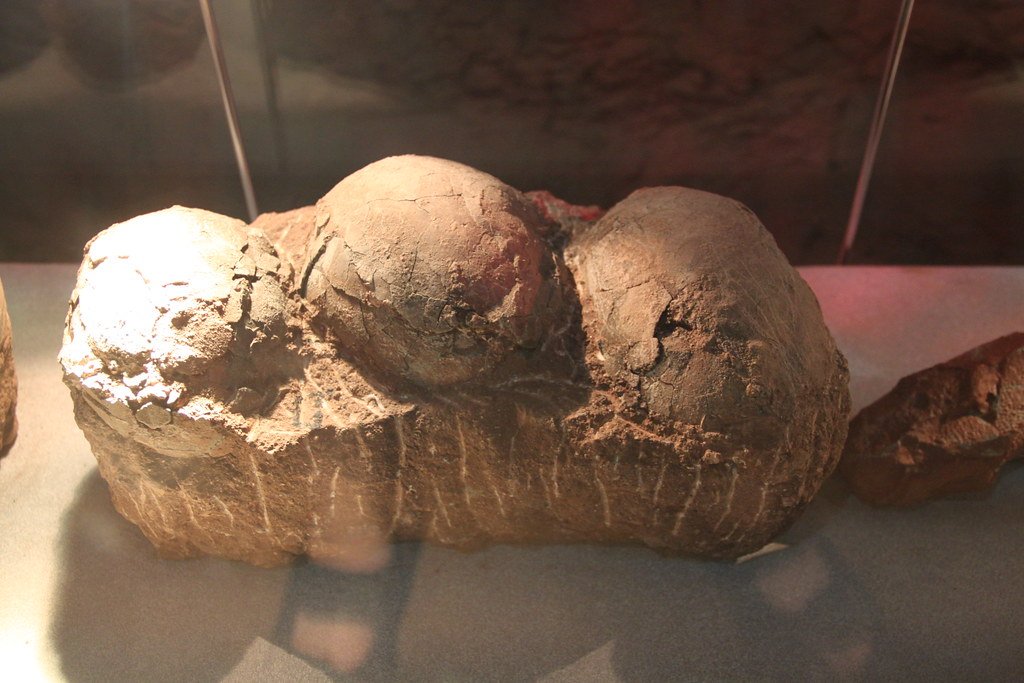
South Africa – Paleontologists announced a groundbreaking discovery this week: a fossilized embryo of Lystrosaurus, a distant forebear of mammals, preserved inside what appears to be its egg. The 250-million-year-old specimen, unearthed from a rock nodule, offers the first direct proof that these ancient synapsids reproduced by laying eggs rather than live birth. Researchers used cutting-edge scanning technology to reveal the tiny skeleton without damaging it, reshaping views on early mammalian evolution.[1]
A Field Trip Yields Hidden Treasure
In 2008, a team led by Jennifer Botha of the University of the Witwatersrand embarked on a field excursion in South Africa. Preparator John Nyaphuli spotted a small rock nodule marked by faint bone flecks. Initial preparation exposed a curled-up skeleton, hinting at an embryo, though technology at the time could not confirm it fully.
Botha recalled the moment years later. “This fossil was discovered during a field excursion I led in 2008, nearly 17 years ago,” she stated. “My preparator and exceptional fossil finder, John Nyaphuli, identified a small nodule that at first revealed only tiny flecks of bone. As he carefully prepared the specimen, it became clear that it was a perfectly curled-up Lystrosaurus hatchling. I suspected even then that it had died within the egg, but at the time, we simply didn’t have the technology to confirm it.”[1]
Synchrotron Scans Unlock the Secret
The fragile fossil demanded non-invasive methods. Scientists turned to synchrotron X-ray computed tomography at The European Synchrotron in France. This produced detailed 3D images of the internal bones, capturing features too delicate for traditional extraction.
Vincent Fernandez, involved in the scanning, emphasized its importance. “Understanding reproduction in mammal ancestors has been a long-lasting enigma and this fossil provides a key piece to this puzzle,” he said. “It was essential that we scanned the fossil just right to capture the level of detail needed to resolve such tiny, delicate bones.”[1]
Lead author Julien Benoit of the University of the Witwatersrand led the analysis. The scans revealed an embryo about 1.4 inches long, in its final development stage but not yet viable outside the egg. The nodule suggested an egg roughly 3 inches long and 2 inches wide.[1]
Distinct Markers of an Unhatched Life
Several traits confirmed the embryo’s fate. Its posture curled tightly, limbs remained weak, and the pelvic structure indicated dependence on yolk nutrition. Most tellingly, the lower jaw’s two halves had not fused, preventing feeding.
Benoit reacted with excitement to this detail. “When I saw the incomplete mandibular symphysis, I was genuinely excited,” he noted. “The mandible, the lower jaw, is made up of two halves that must fuse before the animal can feed. The fact that this fusion had not yet occurred shows that the individual would have been incapable of feeding itself.”[1]
- Cranial length: 1.4 inches (35.5 mm)
- Estimated egg dimensions: 3 inches long, 2 inches wide
- Adult Lystrosaurus size: 2 to 8 feet long, averaging 3 feet
- Key embryonic signs: Unfused mandible, curled posture, underdeveloped limbs
- Preservation: Encased in a rock nodule from Late Permian or Early Triassic
Survival Strategy in a Deadly Era
Lystrosaurus thrived amid the Permian-Triassic mass extinction around 252 million years ago, the “Great Dying” that wiped out over 90 percent of species. Fossils appear across ancient Pangea, from Antarctica to China. Large eggs likely aided survival by resisting drought better than smaller ones or live young.
These synapsids, pig-like herbivores with beaked mouths and tusks, laid sizable eggs rich in yolk. Juveniles hatched relatively mature, ready to move and feed soon after. Unlike most mammals today, they produced no milk; modern egg-layers like the platypus and echidna represent a lingering trait from this lineage.
The findings appeared in PLOS One on April 9, 2026, confirming egg-laying in non-mammalian synapsids and tracing reproductive evolution.[1]
Key Takeaways
- First direct fossil evidence of egg-laying in mammal ancestors.
- Large, yolk-rich eggs supported survival through mass extinction.
- Links ancient synapsids to modern monotremes like platypus.
This embryo rewrites a chapter in evolutionary history, proving mammal roots in egg-laying reptiles. It highlights how reproductive adaptations fueled dominance after catastrophe. How might such traits influence today’s biodiversity? Share your thoughts in the comments.