Ancient Craters Show Strongest Ice Signals (Image Credits: Flickr)
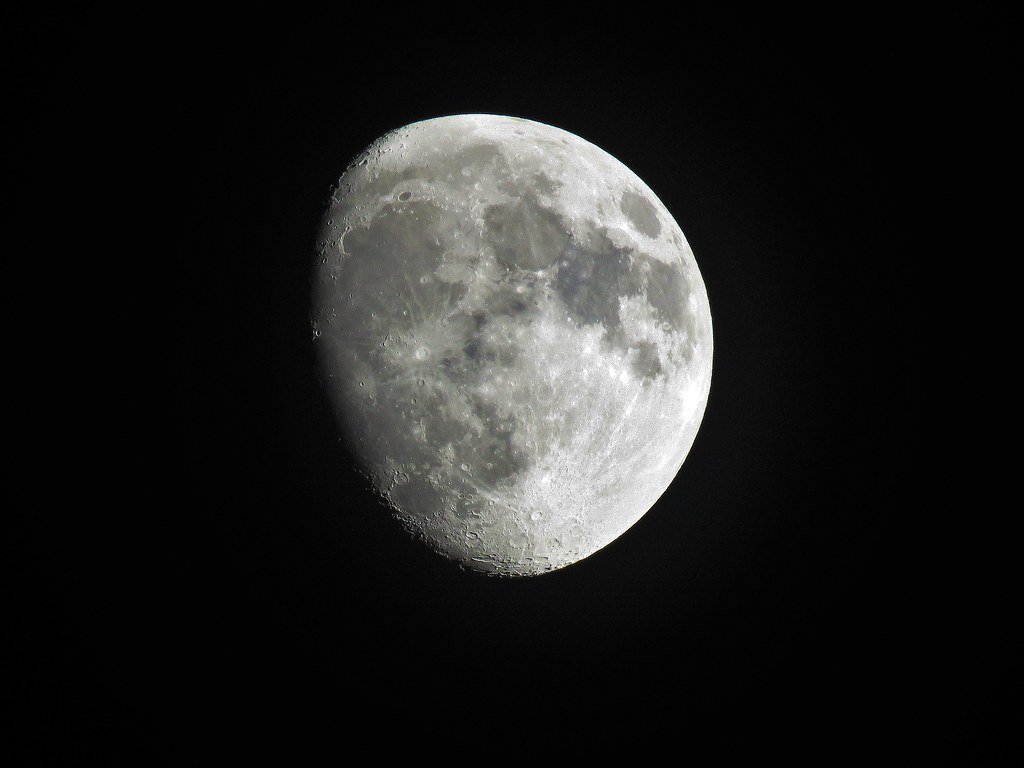
Moon’s south pole – Scientists recently identified the craters most promising for water ice reserves, those that have lingered in perpetual darkness the longest.[1][2] These ancient sites near the lunar south pole offer potential lifelines for upcoming human missions. The findings refine exploration strategies at a time when NASA prepares to return astronauts to the lunar surface.
Ancient Craters Show Strongest Ice Signals
Researchers discovered a clear pattern: the moon’s oldest and darkest craters contain the strongest evidence of water ice.[1] Data from NASA’s Lunar Reconnaissance Orbiter revealed higher ice signatures in regions shadowed for billions of years. Paul Hayne, a planetary scientist at the University of Colorado Boulder’s Laboratory for Atmospheric and Space Physics, noted, “It looks like the moon’s oldest craters also have the most ice.”[1][2]
Haworth Crater stands out as a prime example. This feature has remained in shadow for more than three billion years, making it a top candidate for substantial deposits.[1] Simulations accounting for the moon’s evolving tilt confirmed such craters as persistent “cold traps.” Ice appears patchy rather than uniform, concentrated in specific pockets within these long-shaded areas.
Unraveling the Science Behind the Discovery
The international team, led by Oded Aharonson of Israel’s Weizmann Institute of Science, analyzed temperature data from the Diviner instrument aboard the Lunar Reconnaissance Orbiter.[1] They combined this with Lyman Alpha Mapping Project observations, which detected ice through ultraviolet reflections. Computer models simulated billions of years of lunar history, tracing how shifting shadows preserved volatiles.
Norbert Schörghofer and colleagues ruled out sudden delivery events, like massive comet strikes. Instead, accumulation proceeded gradually over 3 to 3.5 billion years.[2] Possible sources include solar wind hydrogen bonding with surface oxygen, ancient volcanic outgassing, or micrometeorite deliveries. Hayne explained, “Through the solar wind, a constant stream of hydrogen bombards the moon, and some of that hydrogen can be converted to water on the lunar surface.”[1]
Strategic Value for Artemis and Beyond
Water ice in these craters could transform lunar exploration. Astronauts might extract it for drinking, hygiene, or oxygen production. More critically, electrolysis could yield hydrogen and oxygen for rocket propellant, reducing Earth supply needs.[3]
NASA’s Artemis program targets the south pole precisely for such resources. Hayne emphasized, “Water on the moon would be a goldmine for astronauts.”[1] Prior missions like Chandrayaan-1 and LCROSS confirmed ice presence, but this study narrows high-potential sites. Upcoming tools, such as the Lunar Compact Infrared Imaging System set for 2027 deployment, will map deposits in greater detail.
Historical Detections Pave the Way
Evidence of lunar water built over decades. NASA’s Clementine mission in 1994 first hinted at polar ice via radar echoes.[3] Lunar Prospector followed in 1998, mapping elevated hydrogen levels in shadowed zones. The 2009 LCROSS impact ejected material revealing water vapor.
- Clementine (1994): Suggested ice in permanently shadowed regions.
- Lunar Prospector (1998): Confirmed hydrogen enrichments at poles.
- Chandrayaan-1 (2009): Mapped hydrated minerals and ice in craters like Shackleton.
- LRO/LAMP (ongoing): Provided ultraviolet data linking ice to oldest shadows.
- SOFIA (2020-2023): Detected water molecules even in sunlit areas.
These efforts established the south pole’s resource potential, though quantities remain uncertain – possibly low concentrations or subsurface layers.[4]
Challenges and Next Steps Ahead
While promising, recent ShadowCam images from the Korea Pathfinder Lunar Orbiter indicated sparse surface ice, suggesting deposits may lie buried or scattered.[4] Researchers like Shuai Li from the University of Hawaiʻi noted small bright spots consistent with over 10% ice, but no widespread high concentrations. Sample returns or in-situ analysis will clarify forms and accessibility.
Aharonson described the quest: “Finding water beyond Earth in liquid and usable form is one of the most important challenges in astronomy.”[2] Robotic precursors, including NASA’s VIPER rover, will scout ahead of crewed landings.
Key Takeaways
- Oldest craters like Haworth, shadowed over 3 billion years, show strongest ice signals.
- Ice built gradually from solar wind, volcanism, and impacts, not single events.
- Resources could fuel Artemis bases, but subsurface mining may prove necessary.
This research sharpens the focus on lunar water, turning shadowed relics into strategic assets. Future missions stand to tap these reserves, enabling sustainable presence on the moon. What do you think about the prospects for lunar ice mining? Tell us in the comments.