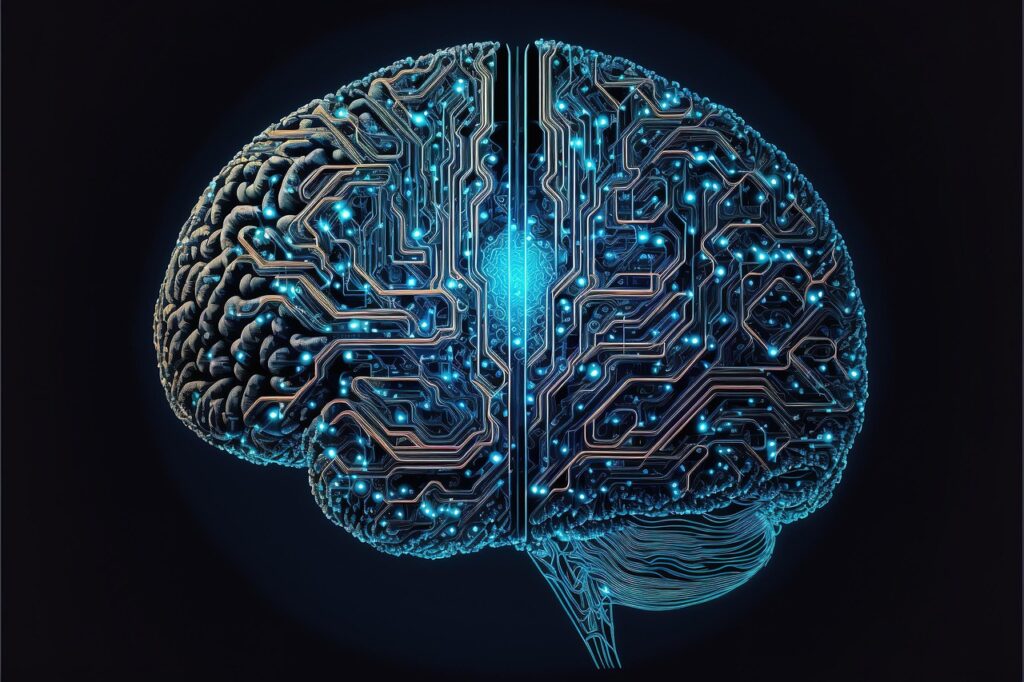

If you’ve ever walked into a room for the first time and had the unnerving sense that you’ve been there before, you know how strangely powerful deja vu can be. Your heart jumps a little, time seems to slow down, and for a few seconds you’re caught between “this is happening now” and “this already happened.” It’s such a small, fleeting moment, yet it can feel deeper and more mysterious than some of the biggest events in your life.
For something so common, deja vu is surprisingly hard to pin down. Scientists have been trying to explain it for more than a century, and they still don’t fully agree on what’s going on in the brain. But the good news is: we know a lot more than we used to. Modern brain imaging, memory research, and cognitive psychology have turned deja vu from a spooky party topic into a fascinating scientific puzzle with some very real clues.
That Uncanny Feeling: What Deja Vu Actually Is
Deja vu is usually described as the eerie sensation that a present moment feels strangely familiar, even though you know, logically, that it’s new. It’s that weird mix of “I’ve been here before” and “I know I haven’t,” like your brain is arguing with itself in real time. The experience is brief, often lasting just a few seconds, but during that window the feeling can be shockingly intense and convincing.
Researchers generally classify deja vu as a kind of memory illusion, not a supernatural message or a glitch in the universe. It sits in the same broad family as optical illusions: your brain is doing what it normally does, but the end result is misleading. You’re not seeing the future or recalling a hidden past life; you’re feeling a mistaken sense of familiarity that’s produced by normal, though slightly misfiring, memory systems.
How Common Is Deja Vu, Really?
Even though it feels unusual, deja vu is not rare at all. Surveys in many countries suggest that the majority of people experience it at least once in their lives, often starting in adolescence or early adulthood. Younger adults tend to report it more frequently than older adults, which hints that it might be connected to how memory and attention change across the lifespan. It’s not just a Western or modern phenomenon either; descriptions of deja-vu-like experiences show up across different cultures and periods of history.
Interestingly, people who travel more, read more fiction, or watch more media tend to report more deja vu. One explanation is simple: the more varied the things you see and do, the more chances your brain has to create near-overlaps between past and present. That overlap does not need to be perfect to trigger a feeling of familiarity. Even a rough match in layout, atmosphere, or emotional tone can be enough to spark that familiar shiver.
The Memory System Behind the Magic
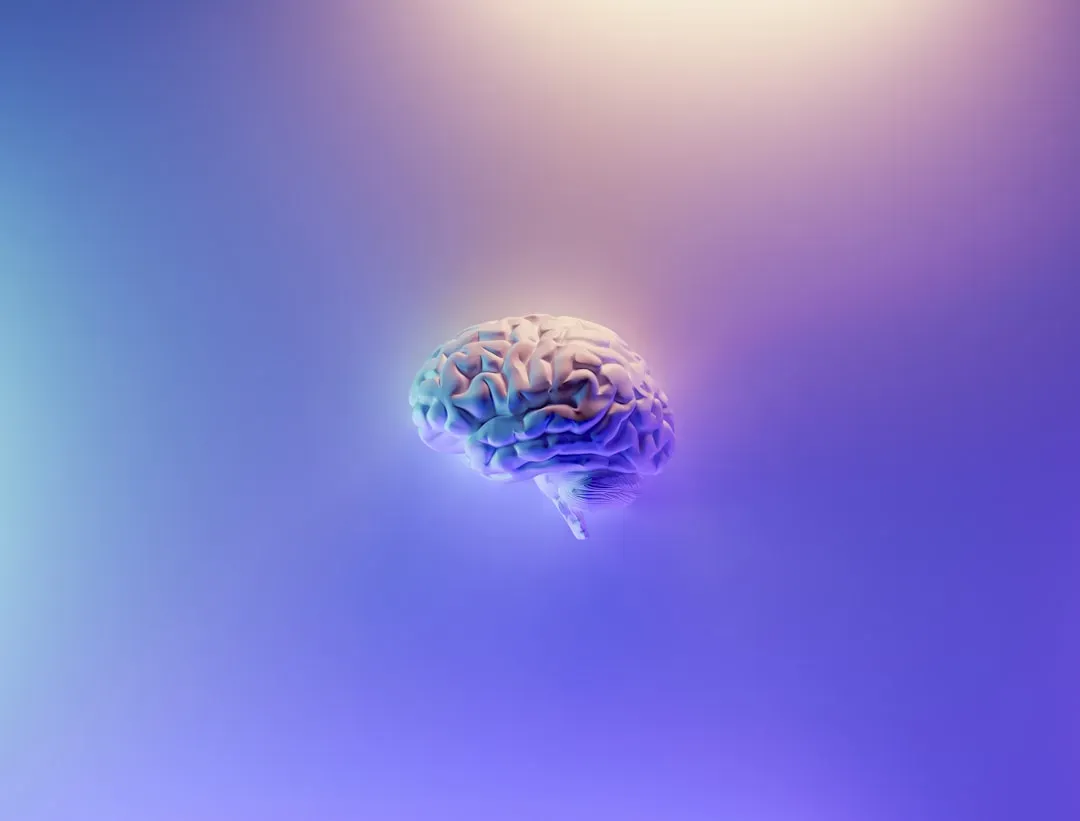
To understand deja vu, you have to understand how memory normally works. Your brain is not a video recorder; it doesn’t store perfect copies of your experiences and replay them on demand. Instead, it saves patterns, relationships, and key details, then reconstructs the scene when you recall it. This reconstruction is usually good enough to feel accurate, but it’s also why memory is vulnerable to distortions and illusions.
Scientists often talk about two related but separate processes: familiarity and recollection. Familiarity is that gut-level sense that something seems known. Recollection is the ability to pull up specific details and context, like when and where you saw something. Deja vu seems to occur when the familiarity signal briefly fires on its own, strongly and out of place, without the matching recollection. You feel the “this is familiar” part, but you can’t find a memory to attach it to.
The Brain Areas Most Involved in Deja Vu

Modern brain imaging and clinical studies point again and again to one region as central to deja vu: the temporal lobes, especially structures deep inside them like the hippocampus and surrounding cortex. These areas play a key role in forming, organizing, and retrieving episodic memories, the kind of memories tied to specific events in your life. When people with certain types of temporal lobe epilepsy have seizures, they sometimes report intense, repeated deja vu as part of their symptoms.
This has led researchers to propose that deja vu in healthy people might be a much milder version of the same kind of misfiring. Instead of a full-blown seizure, there may be a tiny, brief disruption in how the temporal lobes process familiarity signals. Brain scans are not yet precise enough to catch everyday deja vu in the act on command, but studies of people with epilepsy have provided some of the strongest clues that the temporal lobes are where this particular magic trick happens.
Double-Processing: When the Brain Trips Over Itself
One influential idea is that deja vu happens when the brain processes the same information twice, with a tiny delay between the two passes. Imagine getting two nearly identical emails seconds apart; the second one will feel oddly familiar because you just saw the first. In the brain, something similar might occur if a scene is routed through slightly different pathways, and the second pathway gets tagged as “I’ve seen this before,” even though both are happening now.
This kind of double-processing could be triggered by small distractions, micro-delays in perception, or a momentary glitch in attention. You look up, glance around, briefly zone out, then look again, and the second look feels like a memory of the first instead of a continuation. While this explanation does not cover every aspect of deja vu, it matches the fact that the experience is usually very short, abrupt, and tightly tied to a specific scene or moment.
Familiarity Without Recall: A Memory Mismatch

Another leading theory focuses less on timing and more on partial matches. Your brain is constantly comparing what you’re seeing now with everything you’ve seen before, searching for patterns. If enough features of the current situation resemble a past experience – a similar hallway, lighting, arrangement of furniture, or even a similar emotional vibe – your familiarity system may light up. But if the match is only approximate, your recollection system might come up empty.
The result is a kind of memory mismatch: your brain strongly signals “this fits something” while also failing to retrieve an actual memory. That conflict is exactly what deja vu feels like from the inside. You’re convinced you’ve been there before, yet you can’t pinpoint when or how. Experiments that show people rearranged or partially altered scenes have found hints of this effect: when a situation is similar but not identical to something they have seen before, people more often report a strong but confusing sense of familiarity.
Dreams, Imagination, and the Illusion of Past Experience

Some people are convinced their deja vu moments come from dreams: they feel like they already “dreamed this exact scene,” and now it is playing out in real life. Direct proof is hard to get, but it is very plausible that dreams and imagination feed into the same memory systems that create familiarity. If you once imagined or dreamed something that loosely resembles your current situation, your brain might treat that old mental picture like any other past experience.
Because dream memories are usually fuzzy and poorly anchored in time, they are perfect ingredients for deja vu. You might not consciously remember the dream at all, but bits of it could still be stored as patterns. When life later stumbles into a similar configuration, that background pattern triggers a ghostly sense that “this has happened before.” It is not that your dreams are predicting the future; more likely, your brain is just very good at recycling its own material in ways you only notice when things line up a little too well.
Why Deja Vu Feels So Emotionally Intense

One of the most striking things about deja vu is how strong it feels, despite being so short and so trivial on the surface. You’re just standing in a store, climbing some stairs, or listening to a random sentence – and suddenly it feels like the universe is nudging you. That intensity comes from the collision of two powerful signals: a strong sense of familiarity and an equally strong awareness that something does not add up. Your brain is wired to pay serious attention to conflicts like that.
There is also a hint of existential tension in deja vu. For a brief moment, your normal sense of time – past is past, present is present – wobbles. It can stir up questions you do not usually ask: Why does my mind feel bigger than this moment? How many of my “memories” are actually illusions like this? Even if those questions fade quickly, the emotional residue can linger, which is why some deja vu moments stick with people for years even though nothing important actually happened.
Deja Vu and Mental Health: What We Know So Far

In healthy people, occasional deja vu is considered normal and not a sign of illness. In fact, many researchers see it as a side effect of an otherwise efficient memory system that sometimes misfires at the edges. However, extremely frequent or prolonged deja vu can show up in certain medical conditions, especially some forms of temporal lobe epilepsy, where people may feel endless cycles of “already seen” that they know are not real but cannot shake off.
There have also been rare reports of people with anxiety or depersonalization experiencing more frequent or distressing deja-vu-like states, though the research here is thinner and more mixed. The key difference is impact: if deja vu is brief, occasional, and mildly curious, it is just part of being human. If it becomes constant, disturbing, or tied to confusion about what is real, that might point to deeper neurological or psychological issues that deserve professional attention rather than mystical explanations.
Why We Keep Reaching for Mystical Explanations

Even with all the scientific theories, many people still lean toward supernatural explanations for deja vu – past lives, alternate realities, glitches in the matrix. On some level, that makes sense. When everyday experience suddenly feels like it is bending, it is tempting to reach for ideas that bend reality too. Science can feel dry compared to the emotional punch of “I knew this would happen” or “I’ve lived this life before.” The human brain loves a story, especially one that makes us feel special or chosen.
But the real science of deja vu is not cold or boring once you sit with it. It shows how powerful and strange ordinary memory really is, and how much work your brain is doing in the background just to keep your sense of reality glued together. That brief crack in the system is not proof that we’re in a simulation, but it is proof that the way we experience time, memory, and self is more fragile and constructed than it feels. In a way, the scientific explanation is its own kind of wonder: your sense of “now” is a masterpiece of constant, fallible brainwork.
Living With the Mystery: What Deja Vu Teaches Us

Even if scientists eventually agree on a single best explanation, deja vu will probably never lose its ability to unsettle and fascinate us. It’s a reminder that the mind you rely on every day is not as transparent as it seems. The same mechanisms that let you recognize a friend in a crowd or remember your way home can sometimes generate convincing illusions. Instead of proving that reality is broken, deja vu shows that the brain’s shortcut system is powerful enough to trick even itself.
On a more personal level, deja vu can be a quiet invitation to pay attention. When it happens, you’re suddenly hyperaware of the texture of the moment – the light, the sounds, the layout, your own feelings. You’re jolted out of autopilot. Maybe that is its strangest gift: it turns an ordinary instant into something unforgettable, even when nothing objectively important is happening. The science may explain the mechanics, but the experience itself still asks a simple, haunting question: how much of what feels real is just your brain’s best guess at the world – what would you have guessed?