
Every now and then, an ancient object turns up that feels like it shouldn’t exist. It sits in a glass case, quietly mocking our neat timeline of human progress, as if to say, “You’re missing part of the story.” These are the artifacts that make even seasoned archaeologists pause, raise an eyebrow, and admit that the past may have been far more inventive than we usually give it credit for.
Most of them are not the wild “alien tech” people love to imagine. In reality, they point to something more grounded and, honestly, more impressive: humans, just like us, working out advanced ideas with clay, metal, stone, and an obsessive curiosity. If anything, these finds don’t prove lost super-civilizations; they show how much creativity can fit into the gaps of history we haven’t fully pieced together yet.
The Antikythera Mechanism: A Bronze Computer From Another Age
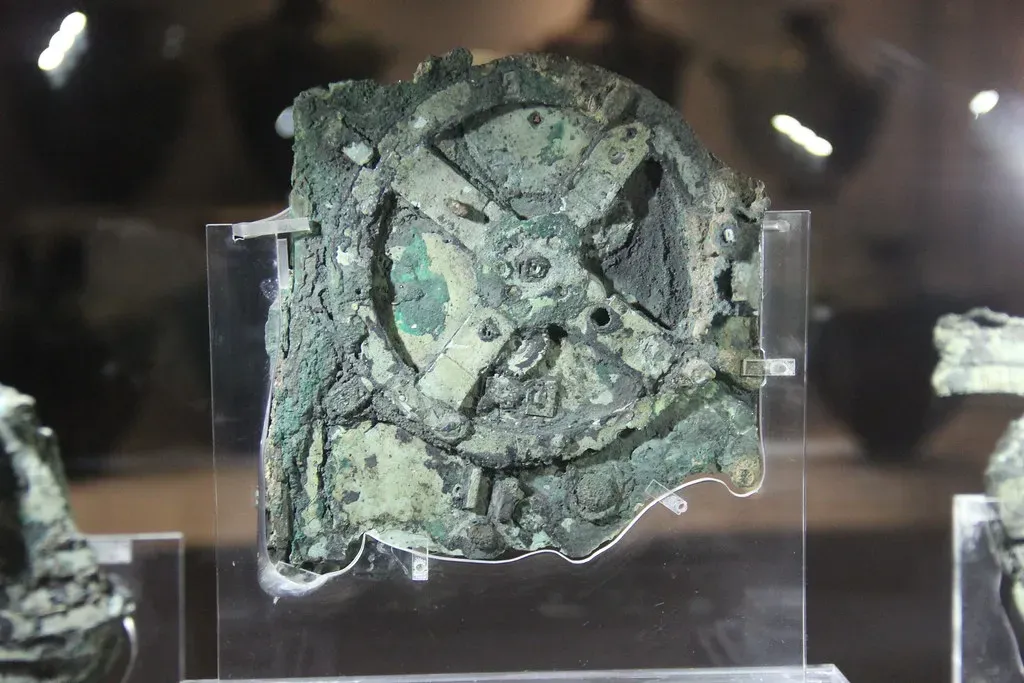
The Antikythera Mechanism looks like a lump of corroded metal at first glance, but inside that mangled shell is a staggering level of precision. Discovered in a Roman-era shipwreck off the Greek island of Antikythera in the early twentieth century, it turned out to be a complex gear-driven device that could predict lunar and solar eclipses, model the motions of the Sun and Moon, and track ancient games calendars. Researchers using modern imaging have identified dozens of intricately cut bronze gears, some with teeth finer than those in early modern clocks.
What makes it so unsettling, in the best way, is that this level of mechanical sophistication seemed to appear and then vanish for more than a thousand years. It suggests a tradition of high-level craftsmanship and mathematical understanding that we’ve only glimpsed through this one survivor. To me, it feels like finding a fully functional smartwatch buried in a medieval ruin: not magic, not impossible, but clearly part of a larger story we barely know. The mechanism doesn’t prove a forgotten high-tech civilization, but it absolutely proves that ancient engineers were skating much closer to “modern” complexity than most of us were taught in school.
Roman Concrete: A Building Material That Refuses To Die
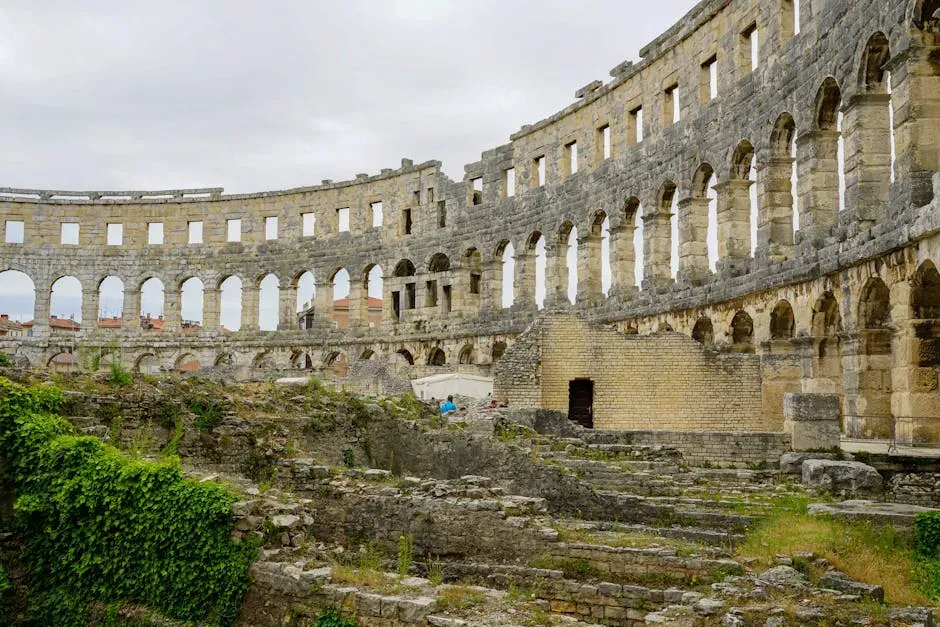
Walk around the ruins of Rome and you’ll notice something odd: a lot of those structures are still stubbornly standing, even after earthquakes, wars, and nearly two millennia of weather. One big reason is Roman concrete, a material that modern engineers have been studying with something close to envy. Unlike many modern concretes that crack and crumble within a century if not maintained, ancient Roman mixes often get stronger over time, especially in marine environments.
Analyses of Roman marine concrete have revealed a clever use of volcanic ash and lime, creating a mineral structure that slowly heals micro-cracks as seawater interacts with it. Recently, researchers have also proposed that those strange white “clasts” you see in the material are not just impurities; they might be part of a deliberate self-healing design. This is not some sci‑fi technology from a lost world; it’s careful, experimental materials science from people who paid attention to what worked. The forgotten part here isn’t magic – it’s knowledge we abandoned and are now scrambling to reverse engineer.
Damascus Steel Blades: Metallurgy On The Edge Of Myth

For centuries, Damascus steel swords were the stuff of legend: blades said to be both incredibly sharp and unusually tough, with a distinctive flowing pattern on the metal. These weapons, produced in parts of the Middle East and South Asia, impressed European observers who simply could not match the quality with their own steel technologies at the time. The mystery deepened when the original production methods were seemingly lost, and later attempts produced only partial imitations.
Modern metallurgical studies show that these blades owed their properties to specific types of high-carbon “wootz” steel and carefully controlled forging cycles. In some historical samples, researchers have even found microstructures that hint at almost nano-scale patterns in the metal. There is no need to drag in science fiction; the reality is already incredible. What we see in Damascus steel is a sophisticated, empirical understanding of heat, carbon, and alloying – developed without microscopes, digital modeling, or chemistry textbooks. The forgotten technology here is less the metal itself and more the craft tradition that encoded all this subtle know-how into the hands and memories of smiths.
Ancient Batteries? The Puzzling Baghdad Jar
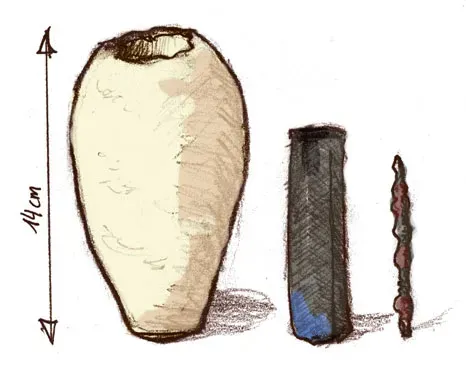
The so‑called Baghdad Battery is one of those artifacts that ignites imaginations instantly: a small ceramic jar, a copper cylinder, and an iron rod, found near modern Baghdad and dating to around two thousand years ago. Some researchers have suggested that, filled with an acidic liquid like vinegar or wine, it could produce a small electric current, roughly like a very weak battery. Experiments with replicas have shown that this setup can generate low voltages, enough to tingle but not exactly power a city.
The trouble is, there’s no clear evidence for what it was actually used for. It might have been a storage vessel, a ritual object, or something more mundane that coincidentally resembles a battery. On the other hand, if it was used to create small currents, it could have been for electroplating, medical experiments, or even just a curious temple trick. The honest answer is: we do not know. What the Baghdad jar really hints at is not sure proof of lost electrical engineering, but the possibility that ancient tinkerers were playing with phenomena we did not expect them to understand at all.
Greek Fire: A Weapon Whose Secret Formula Vanished
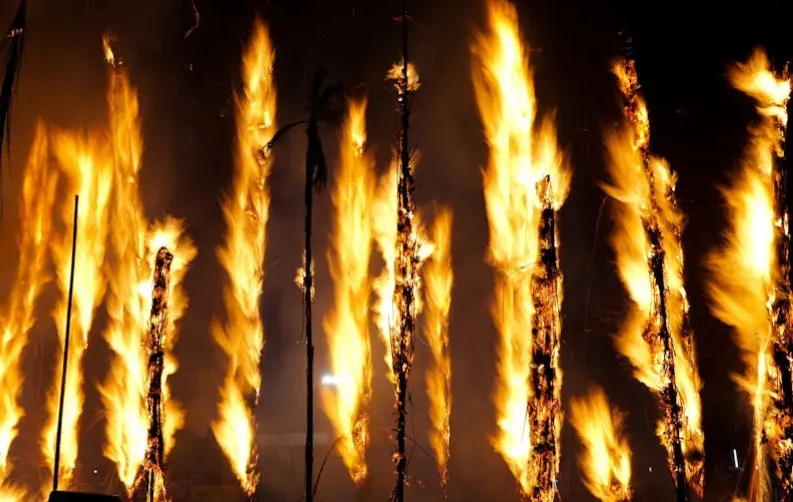
In medieval chronicles, Greek Fire shows up like something out of a dark fantasy novel: a flaming substance unleashed by the Byzantine navy that would continue burning even on water. It was deployed through siphons mounted on ships or thrown in containers, and enemy fleets were said to panic at the sight of it. Historically, it helped the Byzantine Empire survive multiple sieges when it was otherwise on the brink of collapse.
The really fascinating part is that its exact composition and delivery system remain unknown. We have clues and plausible recipes – petroleum derivatives, resins, maybe quicklime or sulfur – but no full reconstruction that everyone agrees on. The ingredients themselves are not especially exotic; the innovation lies in how they were combined, pressurized, ignited, and projected. Greek Fire is a reminder that “technology” can be a closely guarded, fragile secret. Once the chain of transmission broke – through political chaos, conquest, or simple loss of expertise – the recipe died with the people who held it.
Stone Astronomical Observatories: Megaliths As Sky Machines

Standing stones and circular earthworks might not look like “technology” in the modern sense, but many of them functioned like carefully tuned observational instruments. Sites such as Stonehenge in England, Nabta Playa in Egypt, and numerous smaller stone circles show alignments with solstices, equinoxes, and significant lunar positions. When you see sunrise threading perfectly through a gap in massive stones on the longest day of the year, it’s hard to call that coincidence.
These alignments required math, patient observation over generations, and a deep cultural commitment to tracking the sky. Imagine building a gigantic, immovable calendar with no cranes, no CAD software, and no GPS – just sightlines, trial and error, and a lot of human labor. Are these “forgotten technologies” in the gadget sense? Maybe not. But they reveal systematic, data‑driven thinking and environmental engineering that we’re only just beginning to appreciate. The stone is simple; the knowledge embedded in its placement is anything but.
I remember standing at a modest stone circle in a windswept field once, not a famous one, and realizing someone had planned that layout with the same careful intention we put into designing a lab experiment. It completely changed how I saw those piles of rock – less as ruins, more as frozen equations in landscape form.
The Nazca Lines: Geoglyphs That Require An Aerial Imagination
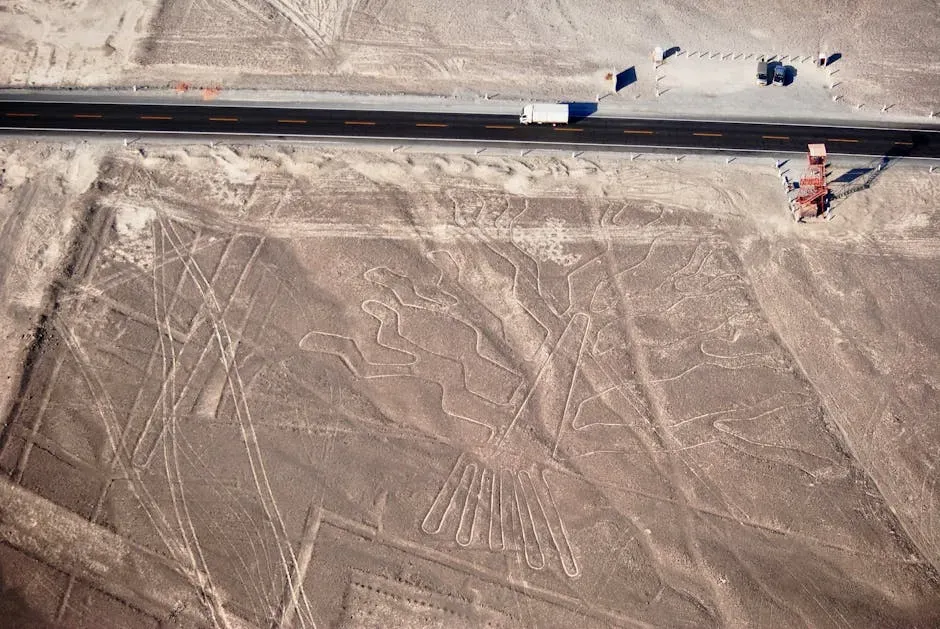
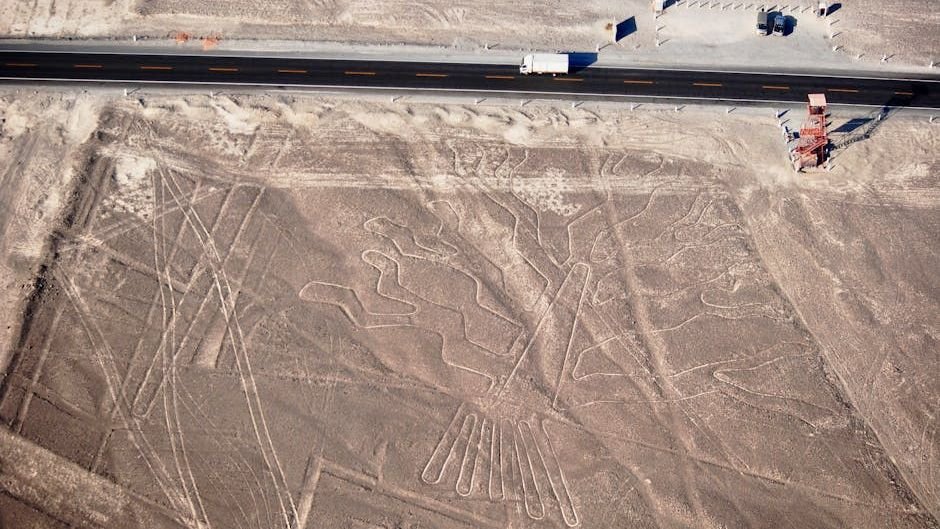
Etched into the desert of southern Peru, the Nazca Lines stretch across the ground as straight paths, geometric shapes, and enormous figures of animals and plants. From the ground, many of them are hard to grasp; from above, they snap into focus. They were created by removing dark surface stones to reveal lighter soil underneath, and the dry climate has helped them survive for more than a millennium. Yet their exact purpose is still debated: ritual pathways, offerings to deities, astronomical markers, or a complex mixture of meanings.
Technologically, the lines remind us that you do not need powered flight to think on a grand, almost aerial scale. Simple surveying techniques, ropes, stakes, and coordinated labor can create remarkably straight lines over long distances. Some patterns may align with celestial events, though the evidence is mixed and often overstated. What they really show is an ability to conceive of landscape as a canvas measured in kilometers instead of meters. The “forgotten technology” here is not some advanced machine, but an entire way of designing for a viewpoint nobody at the time could physically reach.
Roman and Persian Water Systems: Hidden Infrastructures Of Ingenuity
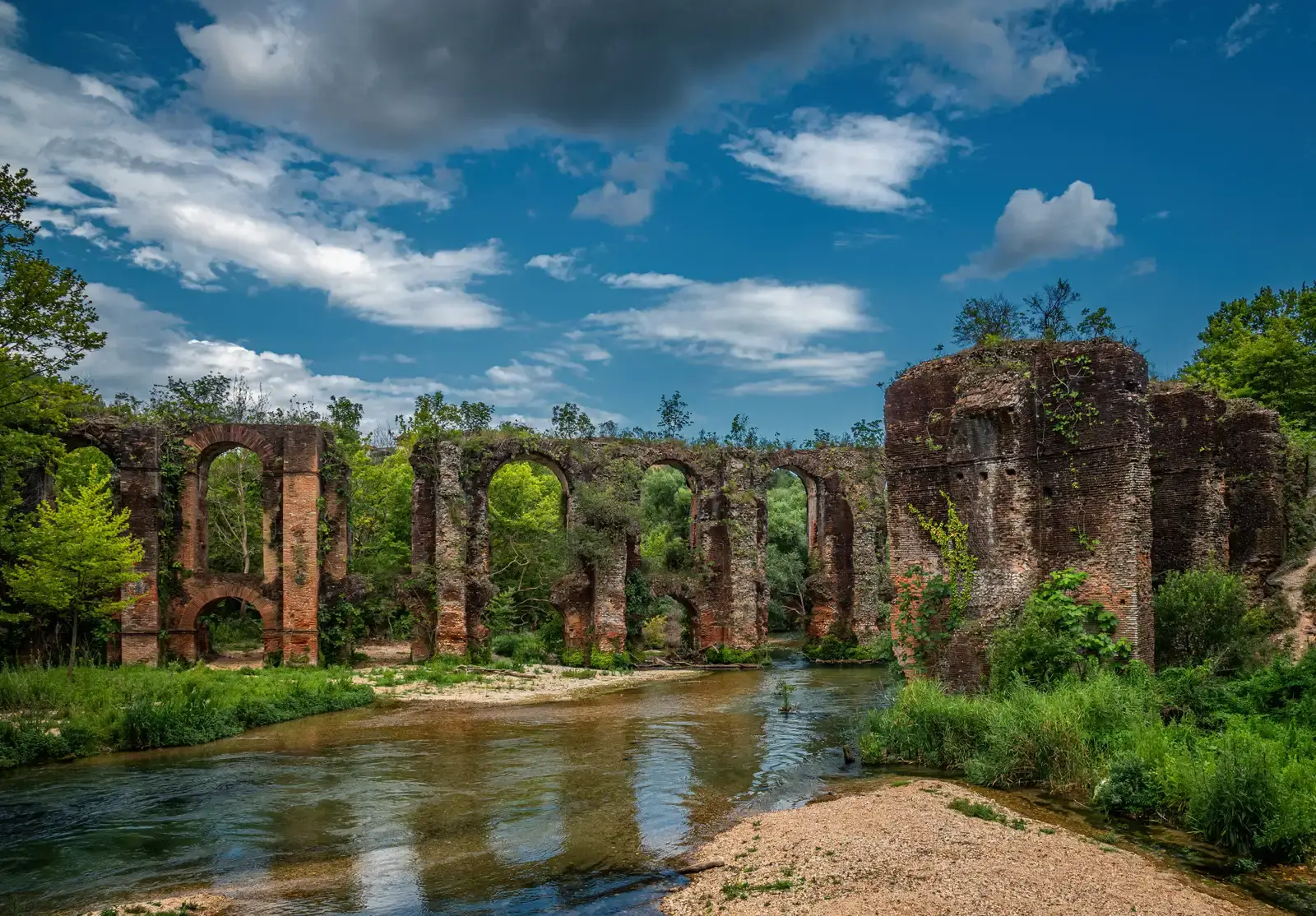
When people picture impressive ancient technology, they usually imagine pyramids or massive statues, not pipes and tunnels. But in terms of everyday impact, few things were more transformative than water engineering. Roman aqueducts carried clean water across valleys with minimal slope; underground qanat systems in Persia and surrounding regions transported groundwater over long distances, using a chain of carefully spaced vertical shafts. These systems often worked passively, powered only by gravity and clever surveying.
What amazes me is how many of these solutions were both low-tech in materials and high‑tech in planning. Qanats, for example, could stretch for many kilometers while maintaining a subtle gradient, all calculated without modern instruments. Some of them are still functioning, quietly supporting agriculture and settlements in arid regions. When we talk about forgotten technologies, we should include these infrastructures that were so effective they almost disappeared into the background, like the operating system of a city that nobody notices until it fails.
Prehistoric Metal and Alloy Work: The Surprising Leap To Complex Materials
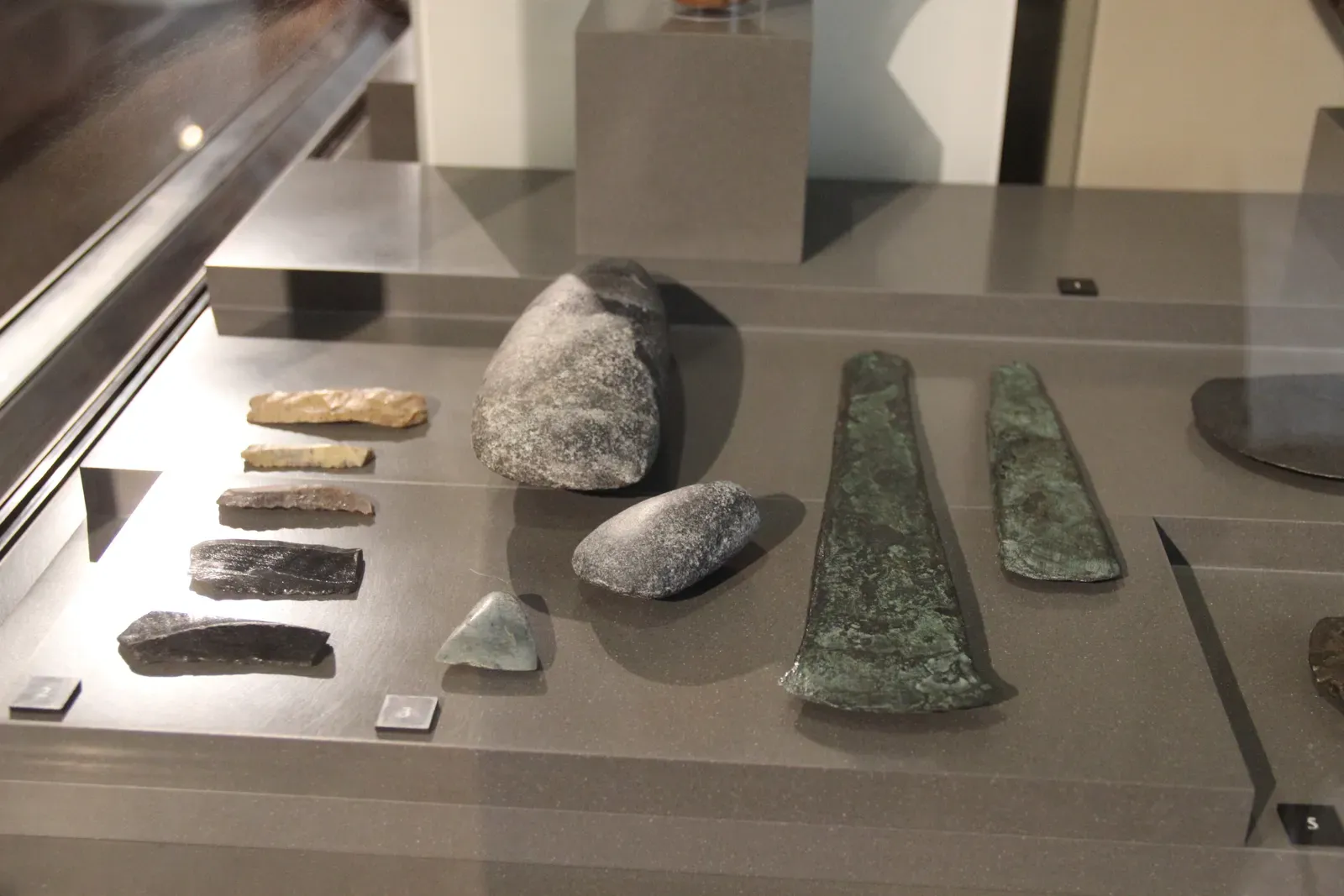
The shift from stone tools to metal is often presented as a simple, linear story: copper, then bronze, then iron, then steel. The real picture is a lot messier, and in some ways, more impressive. Early metalworkers had to discover not just how to melt and cast metal, but how mixing small amounts of different elements radically changed its properties. Bronze, an alloy of copper and tin or other metals, was not an obvious next step; it required experimentation with ores and smelting conditions that must have involved a lot of trial, error, and probably some dangerous fumes.
In various parts of the world, we see surprisingly early evidence of advanced alloying, surface hardening, and even color manipulation in metals used for tools, ornaments, and ritual objects. No one had a periodic table pinned on the workshop wall, yet artisans were intuitively exploring material science principles we still teach in engineering courses today. The “forgotten” part is the mental framework behind their choices, the rules of thumb and tacit knowledge that allowed a village furnace to produce something both beautiful and functionally superior. When you hold a finely cast ancient bronze, you are holding a physical record of those invisible experiments.
Ancient Navigation Tools And Techniques: Finding The Way Without Screens
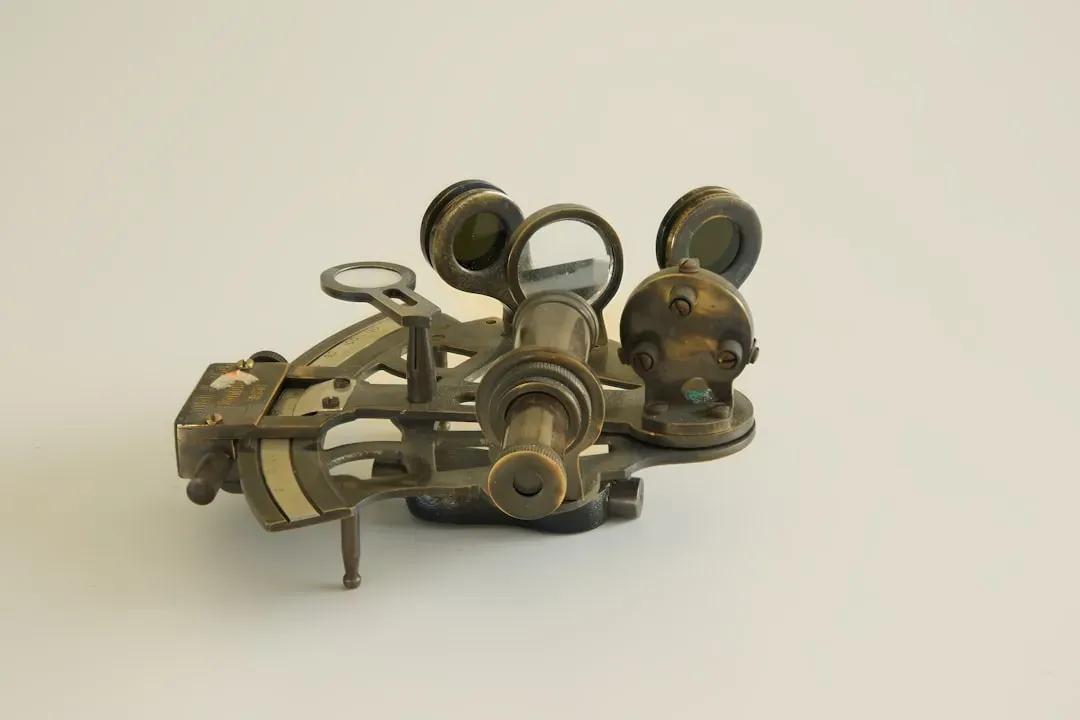
Before GPS, radar, or even magnetic compasses in many regions, sailors and travelers managed to cross oceans and deserts with a level of confidence that seems almost reckless today. Polynesian navigators read swells, stars, bird patterns, and even the color of reflected light on clouds to guide their canoes across thousands of kilometers of open ocean. In the Mediterranean and beyond, mariners combined rudimentary instruments like early astrolabes with careful star charts and dead reckoning to map their routes.
Some physical artifacts survive – carved star compasses, simple sighting tools, and later, advanced astrolabes and cross-staffs – but the real technology was cognitive. It lived in memory, song, and carefully taught mental models of the world. When those knowledge chains were disrupted by colonization, war, or cultural shifts, whole systems of wayfinding nearly vanished. To me, that might be the most haunting example of “forgotten technology”: the idea that you can erase a world‑spanning navigation system not by burning libraries, but by breaking the mentorship between one generation and the next.
Conclusion: What They Really Tell Us
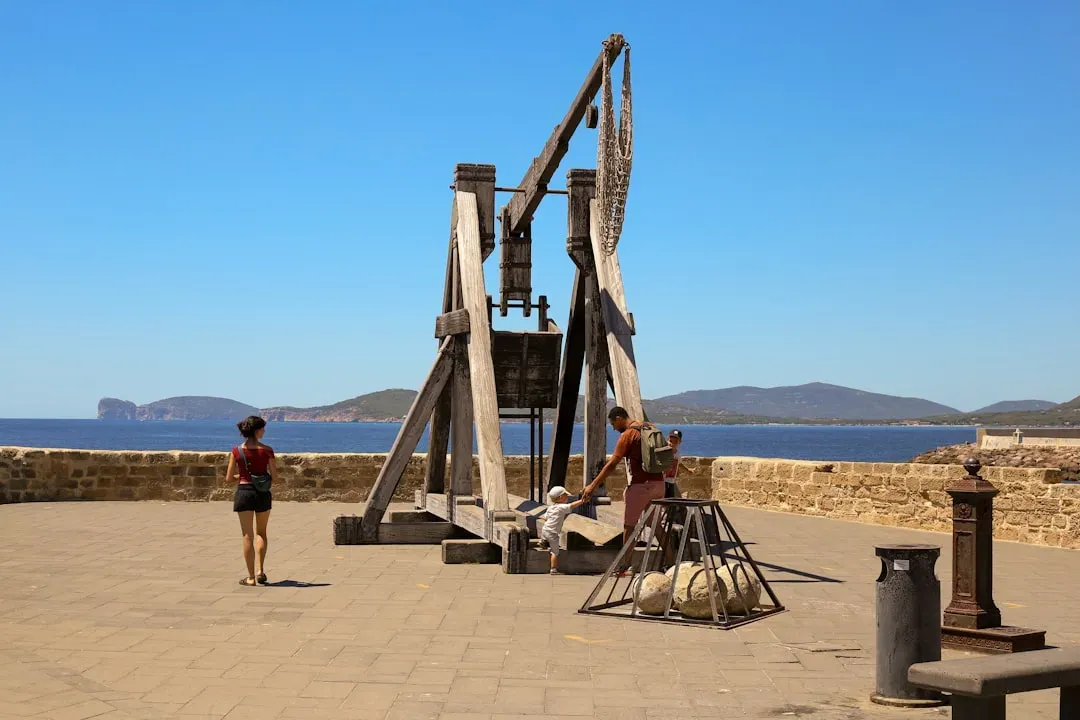
When you put all these artifacts and systems side by side – the Antikythera Mechanism, Roman concrete, Damascus steel, mysterious jars, flaming weapons, stone circles, geoglyphs, waterworks, alloys, and navigation tricks – a pattern starts to emerge. The past was not a long, flat road of ignorance leading up to us as the final destination. It was a patchwork of spikes in creativity, local breakthroughs, and fragile chains of expertise that could flare up, shine brilliantly, and then fade away. Some things were truly ahead of their time; others just do not fit our neat categories of “primitive” and “advanced.”
To me, the most humbling part is realizing how much of our own world relies on equally fragile knowledge networks. If a few key skills, supply chains, or documents vanished, how many of our “obvious” technologies would become tomorrow’s baffling relics in a museum case? Maybe the real lesson in these ancient hints is not that there was a single lost civilization, but that human ingenuity is always capable of more than we expect – for a while, until history forgets. Looking ahead, the question almost turns back on us: which of our everyday technologies will seem impossibly advanced and oddly out of place to someone digging through our ruins a thousand years from now?