
Space has never been short of humbling moments. You look up on a clear night and the sky seems simple enough – a scattering of stars, the odd planet, maybe a satellite tracing a quiet arc across the dark. Then science peers closer, and the whole picture unravels into something far stranger than anyone expected.
For all the telescopes, particle detectors, and supercomputer simulations we’ve built, some of what’s out there still refuses to be explained. Not tentatively unexplained, not almost figured out – but genuinely, stubbornly mysterious. The phenomena listed here aren’t fringe curiosities or outdated puzzles. They’re active scientific problems sitting at the center of astrophysics, cosmology, and fundamental physics in 2026.
1. Fast Radio Bursts: The Cosmic Flash Bombs Nobody Can Fully Explain
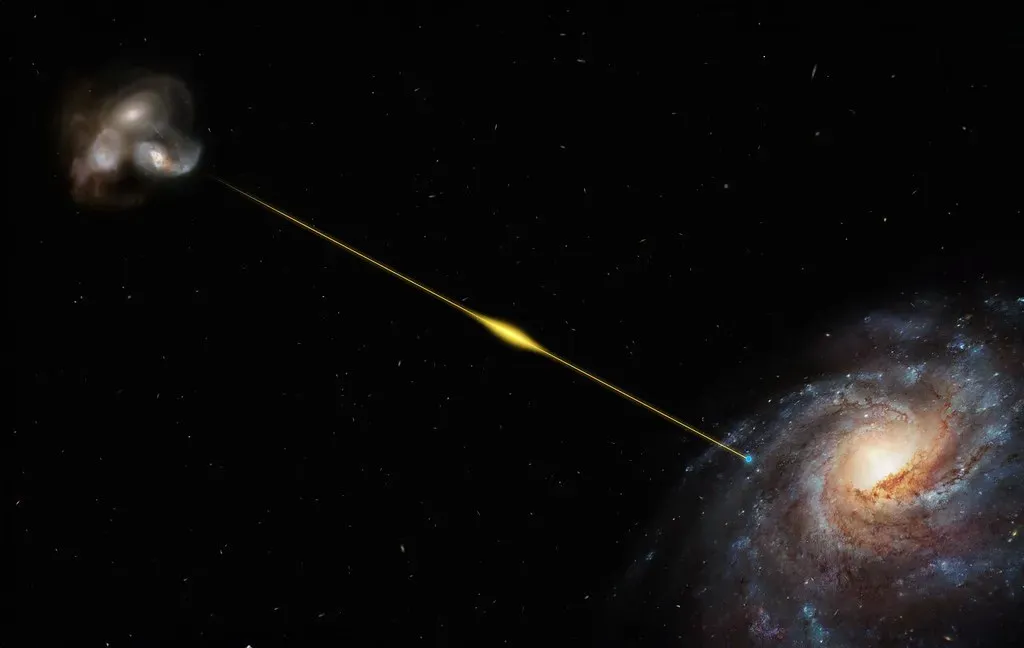
You’re looking at one of the most energetic and bewildering phenomena in the known universe. These millisecond blasts of radio energy pack more punch than our Sun produces in several days, yet they vanish almost as quickly as they appear. First discovered in 2007, hundreds of these extragalactic signals have been detected, with some repeating in mysterious patterns while others fire just once.
Scientists have linked some bursts to highly magnetized neutron stars called magnetars, but this explanation doesn’t cover all cases. The sheer diversity of these cosmic flash bombs – from their varying host environments to their different repetition patterns – suggests multiple unknown mechanisms at work. Then in 2025, the mystery deepened even further. A recent burst known as FRB 20240209A was traced to an ancient, dead elliptical galaxy. Because magnetars only form in young, active star-forming regions, finding one inside a dead galaxy completely breaks the current astrophysical rules, leaving astronomers back to scratching their heads over these fast radio burst anomalies.
2. Tabby’s Star: The Star That Dims in Ways Science Can’t Explain
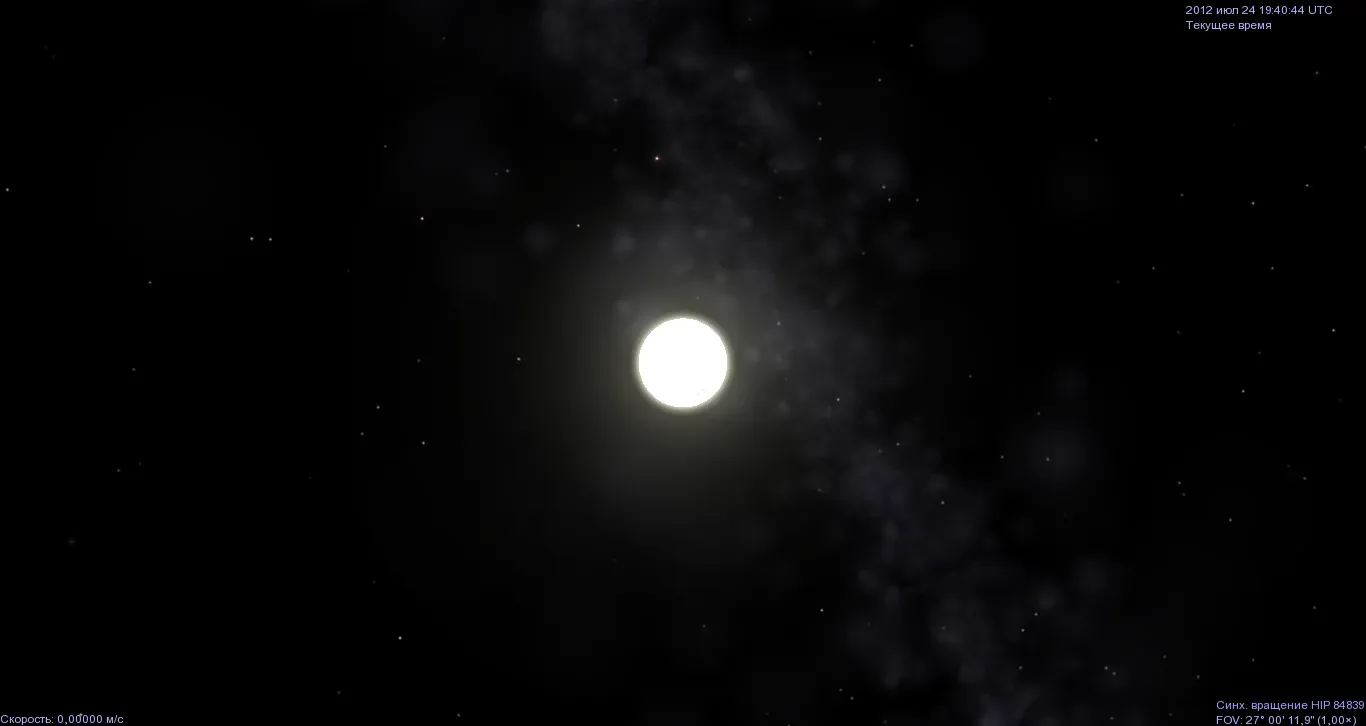
Located 1,470 light-years away in the constellation Cygnus, this F-type star exhibits the most bizarre behavior astronomers have ever recorded. Unlike typical planetary transits that block less than one percent of starlight, Tabby’s Star dims by up to 22% in completely unpredictable patterns. The erratic brightness drops lack any consistent timing, and some evidence suggests the star has been gradually dimming over the past century.
Most stars dim slightly when a planet passes in front of them. Tabby’s Star, however, dims sporadically and drastically, sometimes by as much as 22%. There’s no pattern to it. While the alien theory is the least likely, science still hasn’t found a natural explanation. While scientists favor explanations involving circumstellar dust from colliding asteroids or disrupted moons, no single theory fully accounts for these dramatic, irregular light variations.
3. The Wow! Signal: 72 Seconds That Still Have No Answer
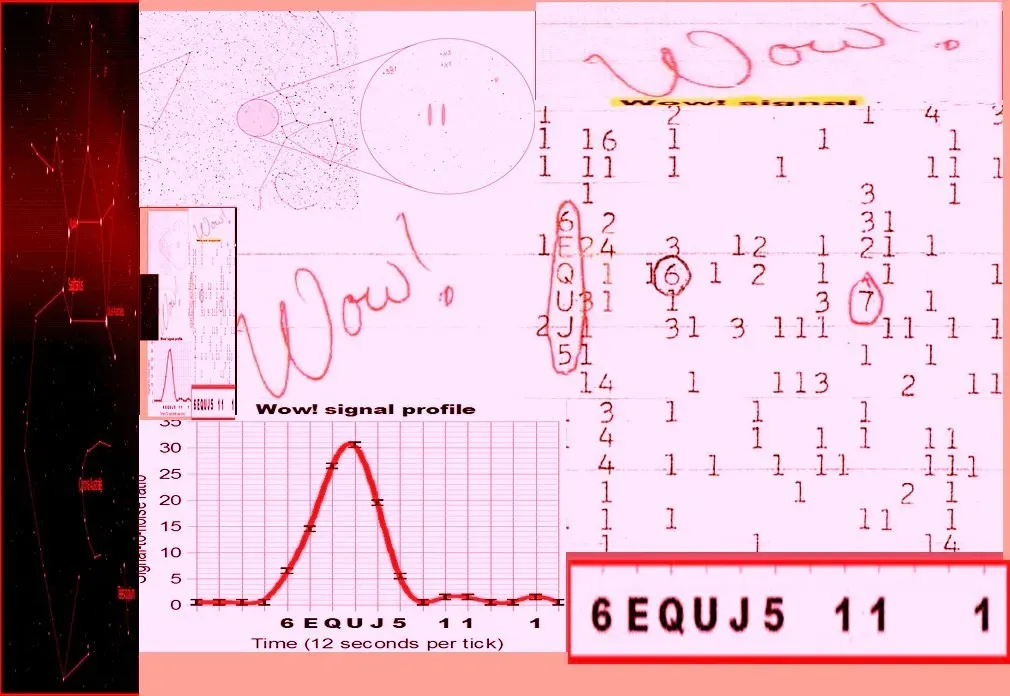
On August 15, 1977, astronomer Jerry Ehman detected an unusual radio signal while working at Ohio State University’s Big Ear radio telescope. The signal’s intensity and characteristics were so remarkable that Ehman circled the data printout and wrote “Wow!” next to it, giving the phenomenon its iconic name. The signal lasted 72 seconds and had a frequency close to 1420 MHz, which is significant because it’s associated with hydrogen – a frequency often considered a likely channel for extraterrestrial communication.
Despite numerous attempts, scientists have been unable to detect the signal again, and this lack of repetition has fueled debate about its origin and significance. Despite decades of searching, the signal has never been detected again and remains a mystery. Some researchers still point to cometary origins as a natural explanation, though none of those proposals have achieved wide scientific acceptance. The Wow! Signal remains one of the most haunting single data points in the history of astronomy.
4. Dark Matter: The Invisible Force Holding Everything Together
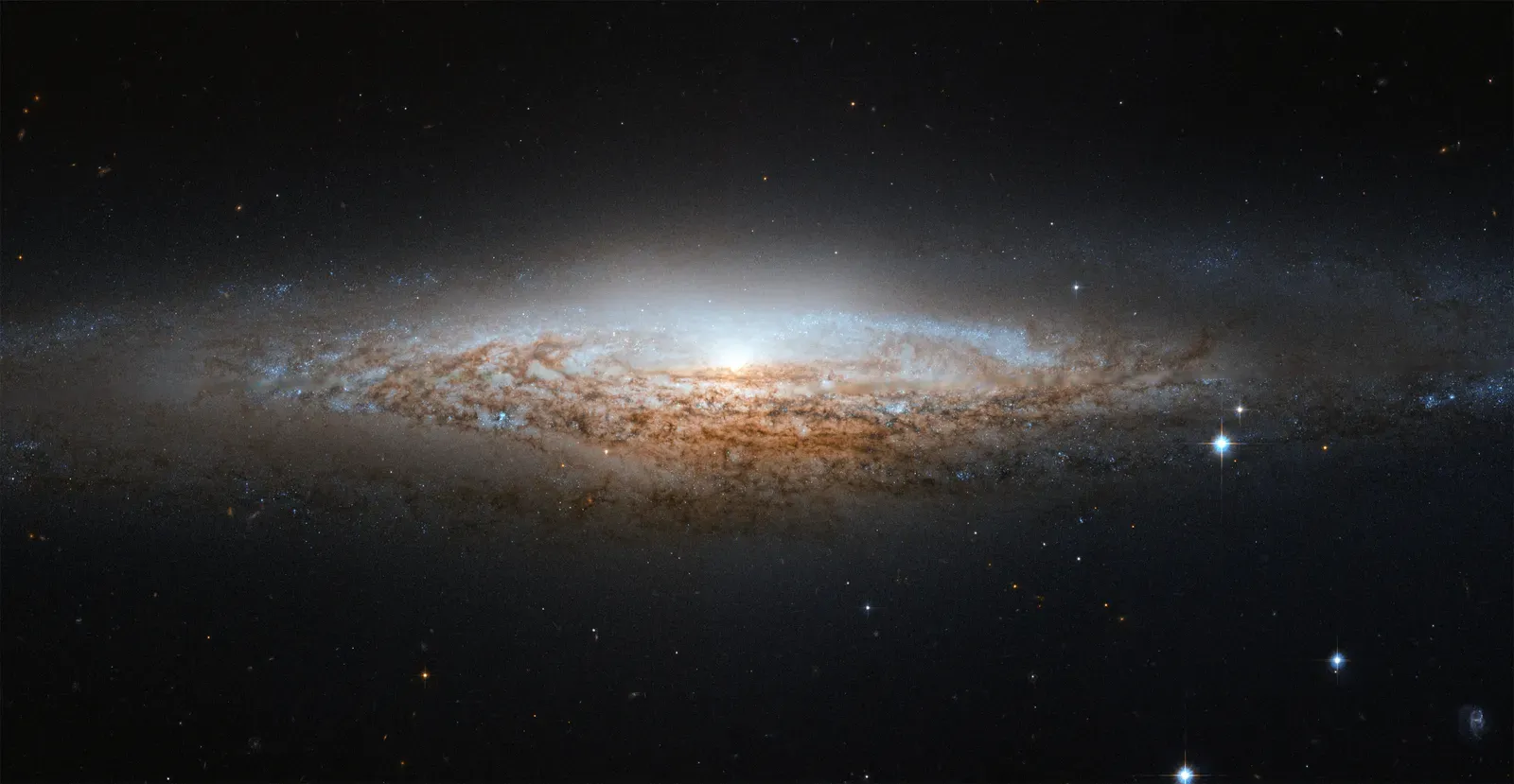
This invisible substance makes up roughly a quarter of the universe’s total mass-energy, yet it refuses to interact with light in any detectable way. Galaxies would literally fall apart without dark matter’s gravitational scaffolding holding them together, as stars in outer regions would spin off into space. Vera Rubin, an astronomer at the Carnegie Institution of Washington, studied the speeds of stars at various locations in galaxies and observed that there was virtually no difference in the velocities of stars at the center of a galaxy compared to those farther out – results that seemed to go against basic Newtonian physics.
Despite building increasingly sensitive detectors and running countless experiments, scientists haven’t directly caught a single dark matter particle. Whether it consists of exotic particles beyond our current understanding or requires completely rewriting the laws of gravity remains one of physics’ greatest puzzles. As dark matter neither emits light nor interacts with the electromagnetic field, there is no way to observe it directly, and various theories suggest it may contain elements that haven’t been discovered yet, such as weakly interacting massive particles.
5. The Fermi Bubbles: Our Galaxy’s Enormous Mystery Structures
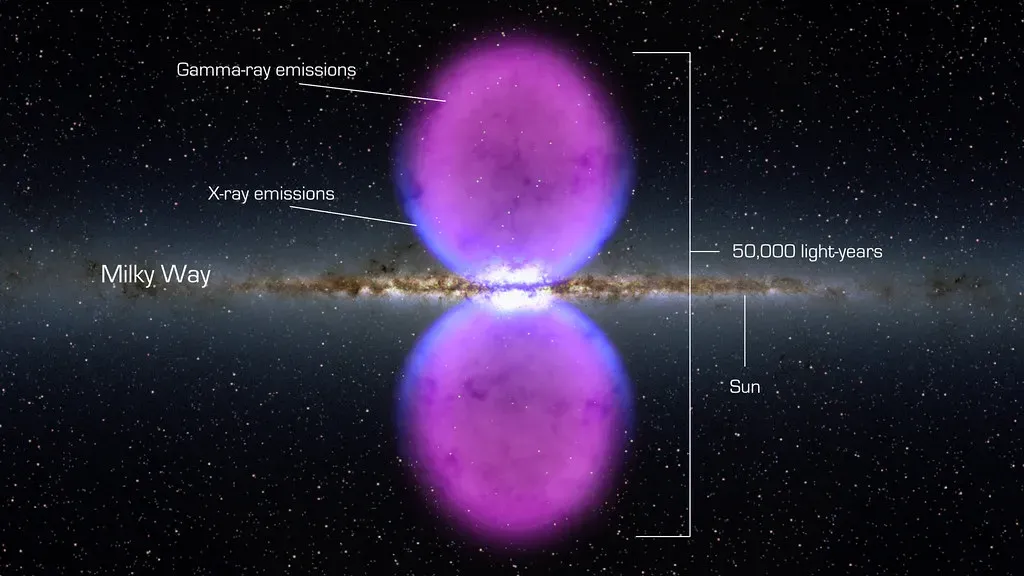
The Fermi Bubbles were discovered in 2010 and are named for NASA’s Fermi gamma-ray space telescope that spotted them. These colossal formations were a complete surprise, and their causes continue to provoke heated debate. The Fermi bubbles contain gamma rays and extend some 50,000 light-years, or about half the diameter of the Milky Way. That’s an almost incomprehensible scale for a structure that was completely hidden from us until relatively recently.
One theory posits that the bubbles appeared when the supermassive black hole at the center of the Milky Way consumed thousands of suns’ worth of matter and then ejected a bright beam of particles and radiation, while the other argues that the culprit was outflowing material driven by an intense period of star formation. There are even hybrid schemes combining elements of both processes. More recently, astronomers discovered something even stranger inside them. Eleven fast-moving clouds of cold, neutral hydrogen gas – akin to “ice cubes” – were found surviving deep inside the Fermi Bubbles, and these cold clouds reside more than 13,000 light-years above the Galactic center in a region where frigid materials like this were never expected to be discovered.
6. ‘Oumuamua: The Interstellar Object That Broke the Rules
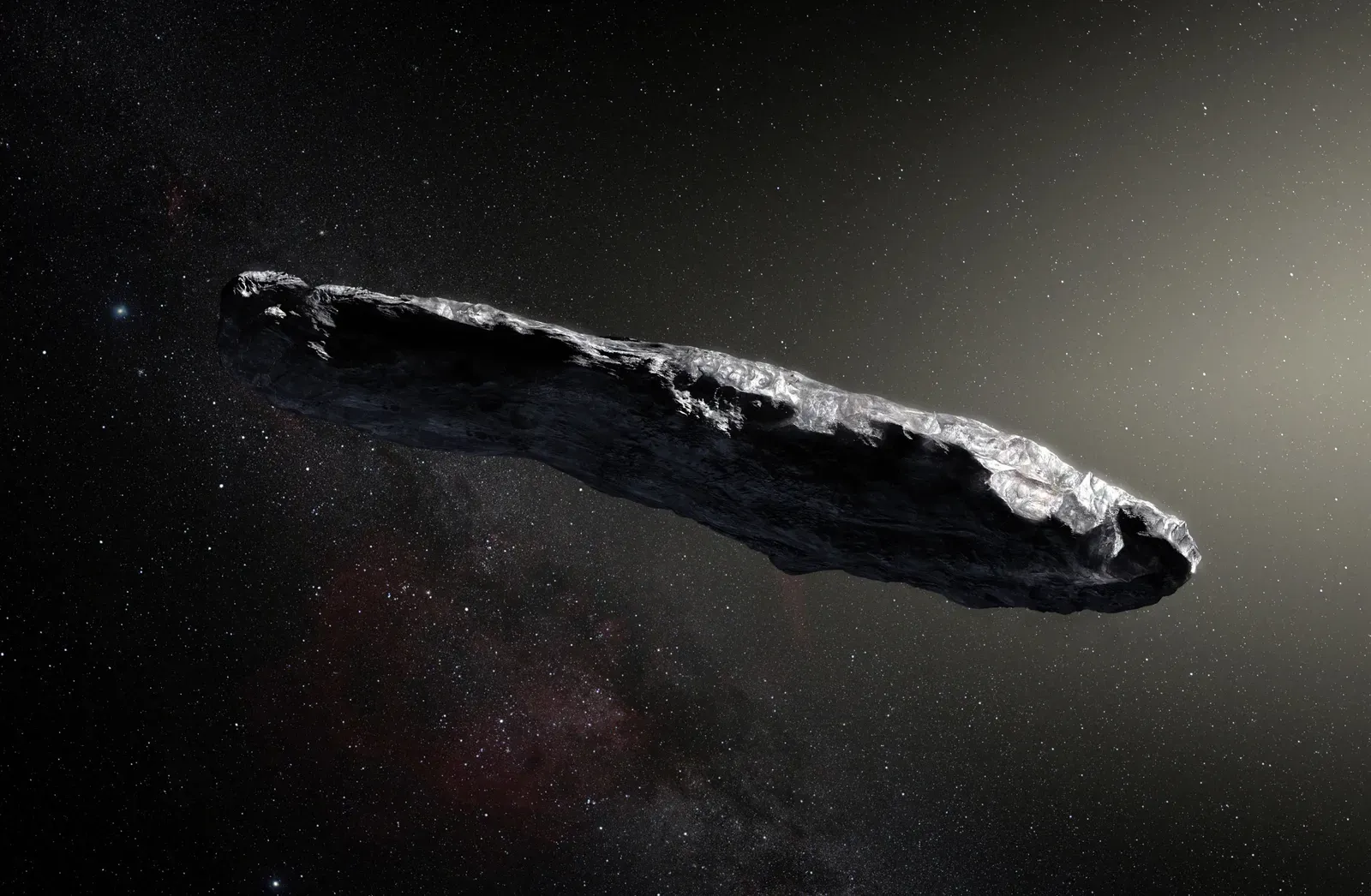
ʻOumuamua is the first known object of interstellar origin to have entered the Solar System on an unbound and hyperbolic trajectory. Various physical observations showed that it has an unusually elongated shape and a tumbling rotation state, and that the physical properties of its surface resemble those of cometary nuclei, even though it showed no evidence of cometary activity. One thing that puzzled scientists was that it underwent non-gravitational acceleration as it passed through the Solar System, meaning that the acceleration it underwent could not be explained only by gravitational forces acting upon it.
While this led some researchers to speculate that ‘Oumuamua could be an alien spaceship or probe producing its own thrust, a lot more likely explanations have been proposed. Outgassing could explain its acceleration, but no coma was observed, and its shape is unusual for a comet. A 2023 hypothesis proposed that hydrogen trapped inside the body and released by solar warming could account for the anomalous thrust, but even that explanation remains contested. Its planetary system of origin and age are still unknown.
7. The Great Attractor: Something Enormous Is Pulling Our Galaxy
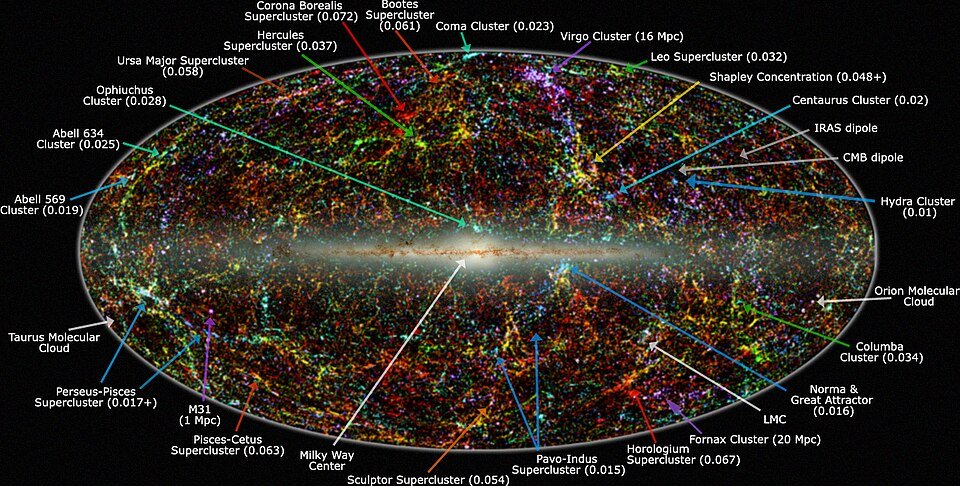
Deep in space, an immense gravitational anomaly is pulling entire galaxies toward it at incredible speeds. Known as the Great Attractor, this unseen force remains a cosmic enigma, as its exact nature and origin are still unknown. Scientists suspect it could be a supermassive cluster of galaxies – or something even stranger. Right now, our Milky Way galaxy is hurtling through the universe at around 600 kilometers per second. Something incredibly heavy is actively reeling us in – and for decades, we couldn’t see what was pulling us because the Milky Way’s own thick band of stars blocked our view.
What makes the Great Attractor particularly unsettling is that we’re moving toward it whether we like it or not, and we still can’t properly observe what it is. The dust and gas of our own galaxy’s disk sits directly in the line of sight, creating a zone of avoidance for optical telescopes. While radio and infrared observations have offered glimpses of what lies beyond that veil, the true nature and mass of the Great Attractor remains deeply unresolved. It’s one of the few cosmic mysteries where the answer is literally hidden behind where we live.
8. Saturn’s Hexagonal Storm: A Perfect Shape That Has No Business Existing
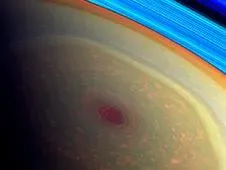
At Saturn’s north pole, a bizarre six-sided storm has been spinning for decades and no one knows why. This perfectly geometric weather pattern defies known atmospheric dynamics and appears eerily artificial. The storm is enormous, capable of swallowing Earth whole, and has baffled scientists since it was first spotted by the Voyager mission. Unlike any weather pattern seen on Earth, this massive, perfectly geometric storm is a complete mystery – and scientists can’t explain why it formed or why it has remained stable for so long.
Nature occasionally produces striking shapes, but a persistent six-sided atmospheric vortex on a gas giant is genuinely without parallel in our solar system. Lab experiments using rotating fluid have managed to produce similar polygonal patterns under specific conditions, which suggests fluid dynamics could be the underlying mechanism. Yet replicating the precise conditions of Saturn’s atmosphere at that scale, and explaining why the hexagon has remained so geometrically stable across decades of observation, is a problem that still hasn’t been cleanly solved. The planet appears to follow rules of geometry that atmospheric science is still catching up to.
9. Odd Radio Circles: Giant Rings That Shouldn’t Exist
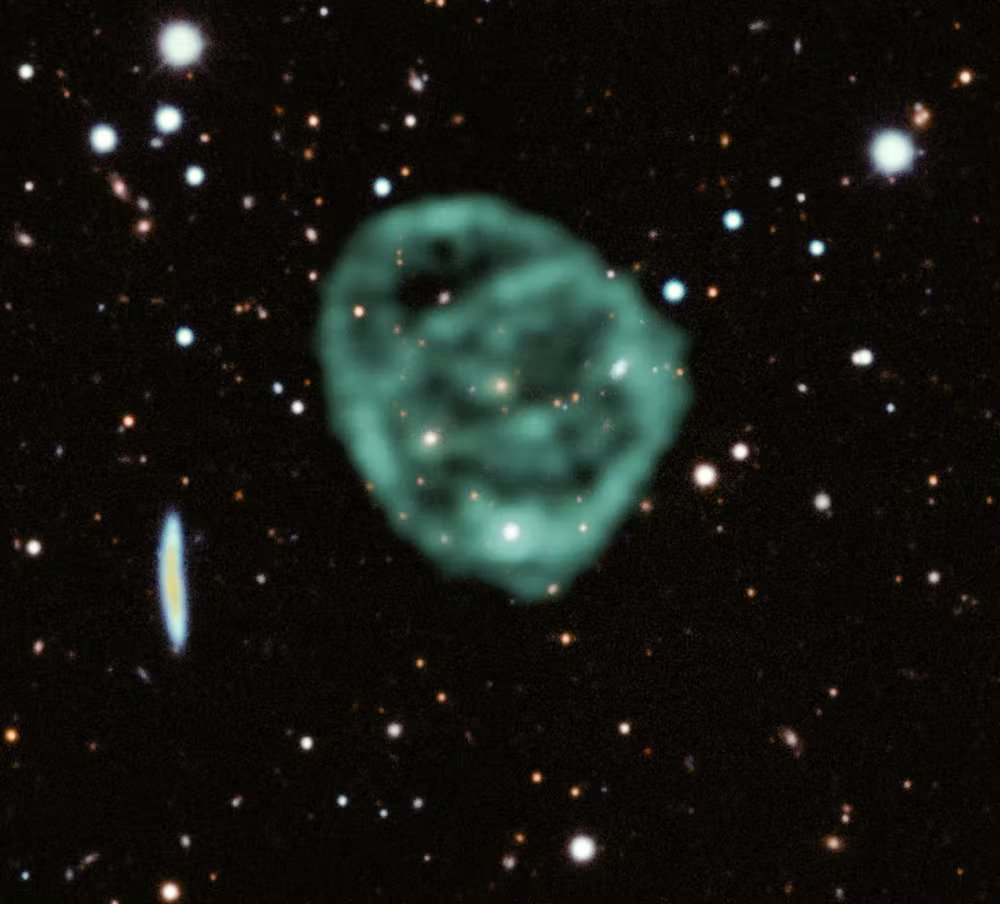
These enormous ring-shaped structures span roughly one million light-years across and emit exclusively in radio wavelengths, making them invisible to optical telescopes. First spotted in 2019, these perfectly circular “halos” don’t match any known cosmic phenomena like supernova remnants or galaxy clusters. Their clean, symmetric appearance and massive scale suggest powerful shockwaves from unknown energetic events, possibly involving supermassive black hole mergers or galaxy collisions. Only a handful have been identified so far, leaving scientists to wonder whether they’re witnessing rare cosmic accidents or common features they’ve simply overlooked.
What makes Odd Radio Circles so puzzling isn’t just their size – it’s their perfection. The near-flawless circular shape implies an event that released energy uniformly in all directions at once, which itself is extraordinary. Supernovae can produce expanding shells, but nothing previously known operates at remotely this scale with this kind of symmetry. As radio telescope sensitivity improves, researchers expect to find more of them, which could either explain their origin or simply reveal how common these colossal, poorly understood structures actually are.
10. The CMB Cold Spot: A Void That Hints at Something Bigger
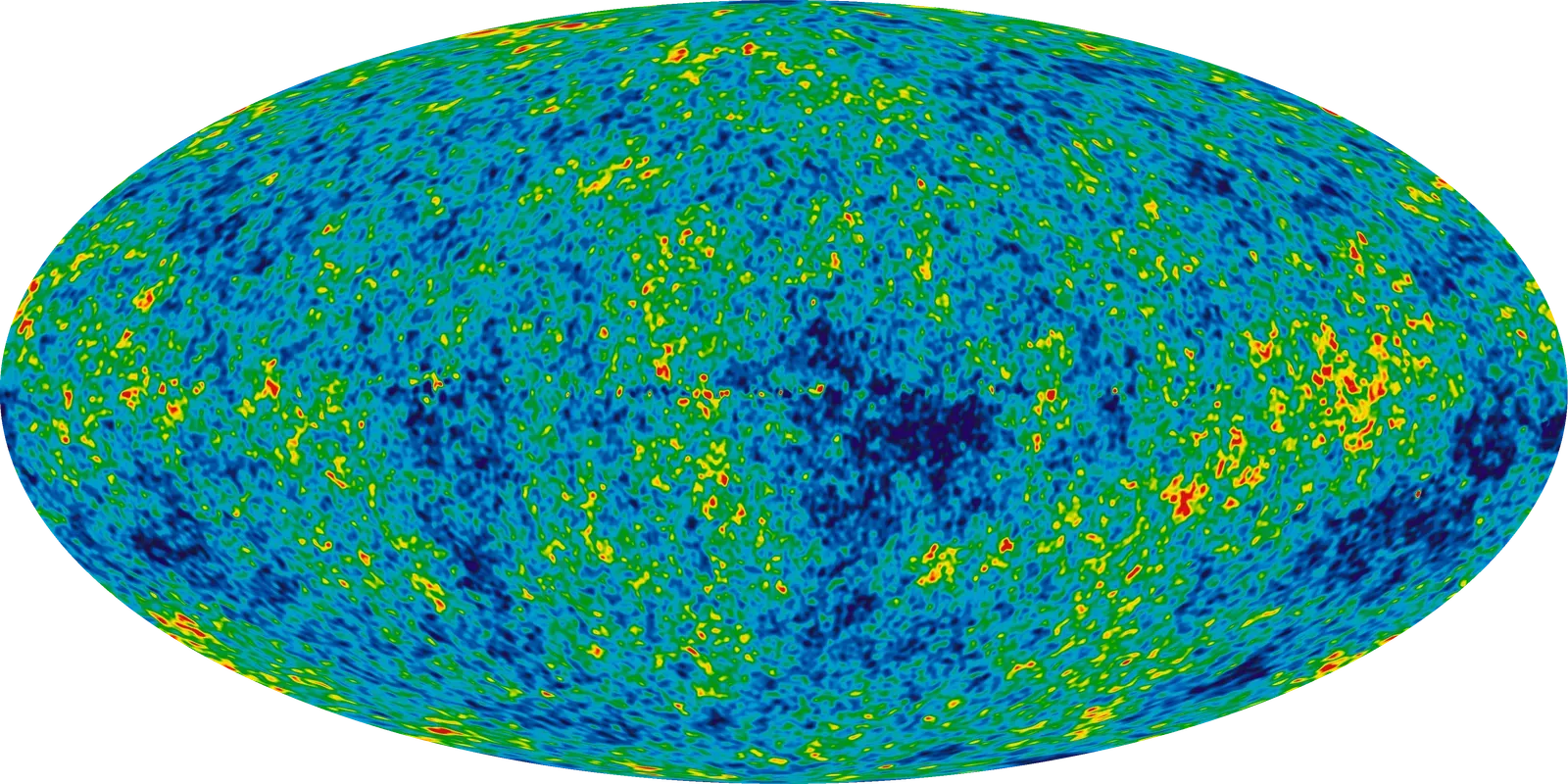
A massive, unusually cold region in the cosmic microwave background has baffled astronomers for years. Some theories suggest it could be evidence of a parallel universe, a void in space, or an unknown cosmic event that shaped the early universe. Whatever the cause, this chilling anomaly challenges everything we know about the structure of the cosmos. In 2024, scientists detected unusual anomalies in the Cosmic Microwave Background radiation – the afterglow of the Big Bang. These anomalies include unexpected temperature fluctuations and irregularities that challenge our understanding of the early universe, and the new data suggests there might be underlying physics not yet incorporated into the standard cosmological models.
The Cold Spot is not a tiny deviation – it spans a region of the sky far larger than statistical models of cosmic structure can easily account for. One of the more studied explanations involves a supervoid, an enormous underdense region of space that could cool photons passing through it. While evidence for such a void exists, it doesn’t seem large enough to fully explain the temperature drop. The more exotic possibilities – including the imprint of a collision with another universe – remain speculative but haven’t been ruled out, keeping the Cold Spot at the very frontier of cosmological research.
The Universe Still Has the Upper Hand
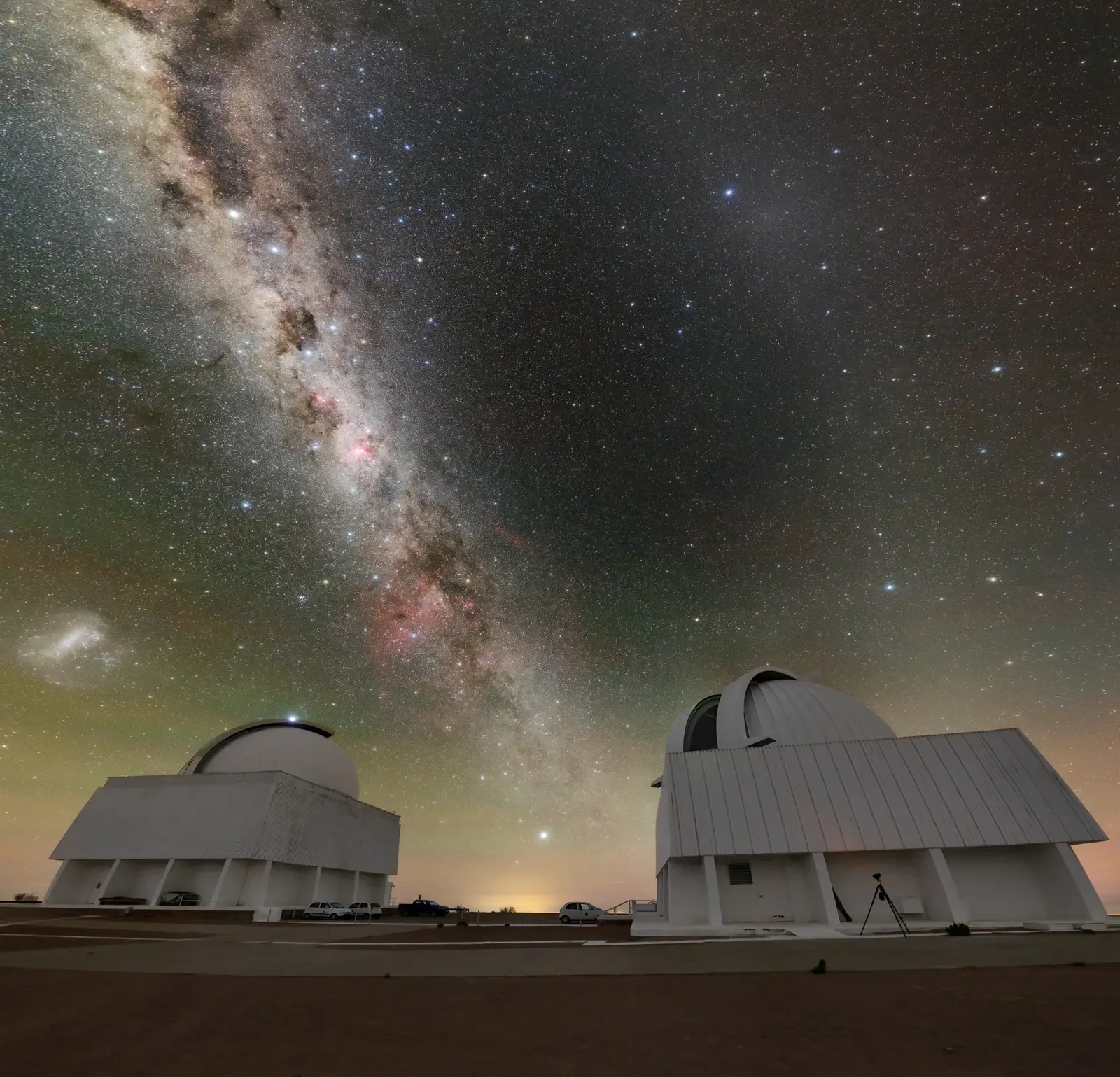
What ties all ten of these phenomena together isn’t simply that they’re unsolved. It’s that each one sits at the intersection of what we know and what we realize we’ve been wrong about. Fast radio bursts arrive from dead galaxies where their sources shouldn’t exist. A star dims in ways that none of our models account for. A signal from 1977 has never been heard again. Structures wider than galaxies appear in perfect circles with no known cause.
Science doesn’t stall at these boundaries – it tends to accelerate toward them. New instruments like the James Webb Space Telescope, next-generation radio arrays, and more sensitive dark matter detectors are narrowing the gap between observation and understanding. Still, there’s something quietly reassuring about the fact that the cosmos remains larger than our current grasp of it. Every one of these mysteries is an invitation, not a dead end – and the history of astronomy suggests that the strangest questions tend to yield the most transformative answers.