
Every so often, the universe does something so strange that even the best-trained minds just have to sit back and say, “Wait… what?” We like to think of space as a big machine that follows clear rules, but history keeps proving that our rulebook is missing entire chapters. Some of the most powerful discoveries of the last few decades started not with certainty, but with confusion and a little bit of disbelief.
What follows isn’t a list of sci‑fi myths or internet hoaxes. These are real astronomical events: measured, recorded, puzzled over in conference rooms and late-night Zoom calls by people who do this for a living. In many cases, we have some ideas about what might be going on, but the explanations are incomplete or still hotly debated. That tension – the gap between data and understanding – is exactly where science is most alive.
The Wow! Signal: A Cosmic Shout That Never Came Back
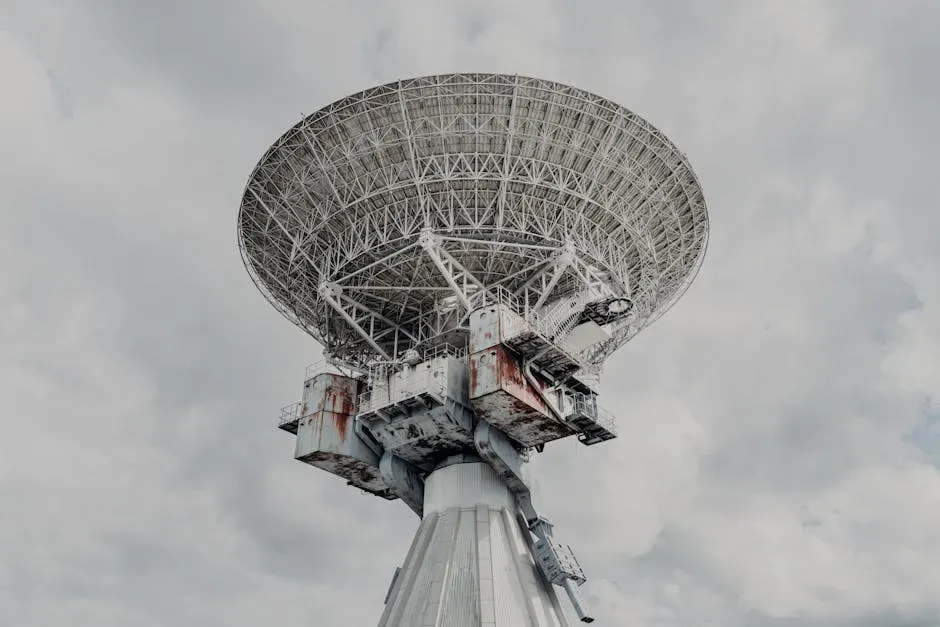
Imagine watching a radio telescope readout and suddenly seeing a spike of signal so strong and clean it looks like the sky just shouted at you. That’s essentially what happened in August 1977, when the now‑famous “Wow! signal” was detected by the Big Ear radio telescope in Ohio. It lasted for a bit more than a minute and came from the direction of the constellation Sagittarius, with a pattern that looked eerily like what researchers expected from a narrowband artificial transmission.
Here’s the part that keeps people up at night: it was never seen again, despite many attempts to recheck the same patch of sky with more sensitive instruments. Natural explanations have been proposed – passing comets, satellite interference, rare atmospheric effects – but none of them fully fits the signal’s characteristics and timing. Astronomers do not claim it was from aliens, but they also cannot confidently say what it was, and that uncomfortable “we still don’t know” has kept the Wow! signal in the scientific conversation for nearly half a century.
Tabby’s Star: The Baffling Flicker of KIC 8462852
When researchers first looked closely at the light curve of a star cataloged as KIC 8462852, they found something that simply did not match any textbook example. The star dimmed by huge amounts, sometimes by more than one fifth of its brightness, and not in a nice, regular rhythm like a planet passing in front. Instead, it flickered in uneven, seemingly chaotic dips over days and weeks, as if someone were randomly turning a cosmic dimmer switch.
Ideas quickly piled up: swarms of comets, clouds of dust, leftover planetary rubble, or even gigantic artificial structures. Follow‑up observations in multiple wavelengths later showed that dust is almost certainly involved, since the star’s light reddens in a way solid structures wouldn’t cause. Still, the scale and pattern of the dimming are strange, and no one model fully captures all the behavior. The initial wild speculation about alien technology has cooled, but Tabby’s Star remains an uncomfortable case where the data don’t slide neatly into any single known category.
Fast Radio Bursts: Millisecond Flashes From Nowhere
In the early 2000s, astronomers started noticing odd, ultra‑brief blasts of radio waves in old data: millisecond‑long spikes that seemed to come from far beyond our own galaxy. Each burst released as much energy as the Sun emits in days, squeezed into the blink of an eye. At first, many assumed they were glitches, interference, or some kind of processing error, because the idea of such intense flashes from deep space sounded almost absurd.
Today, hundreds of these fast radio bursts (FRBs) have been cataloged, including some that repeat and some that fire once and then fall silent forever. A few have been traced back to highly magnetized neutron stars, which gives us at least a partial explanation. But not every FRB fits that picture, and the variety of patterns, energies, and environments suggests there may be multiple unrelated causes. The more data we collect, the more the category fractures, and the honest answer right now is that the FRB story is still very much unfinished.
Oumuamua: The Interstellar Visitor That Didn’t Behave
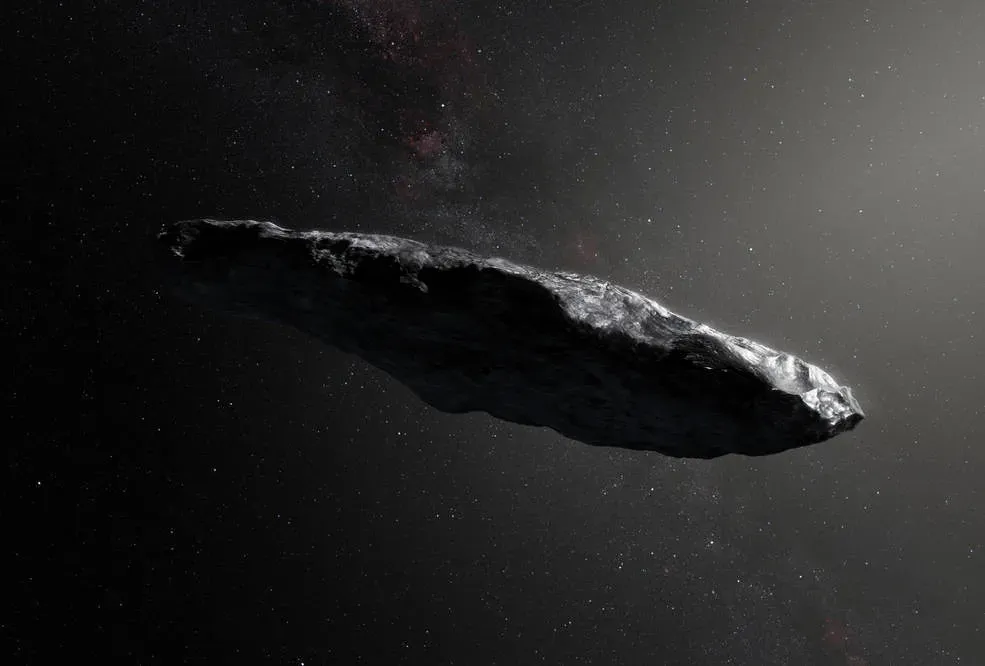
In 2017, astronomers spotted something moving through the inner solar system on a path no ordinary comet or asteroid could follow. It was clearly not gravitationally bound to the Sun, meaning it had come from another star system altogether. Dubbed Oumuamua, it shot past on a strange, elongated trajectory and showed an odd, tumbling rotation, hinting at a highly unusual shape – more like a flattened shard than a round rock.
The real puzzle came when Oumuamua appeared to accelerate slightly as it moved away from the Sun, as if something were giving it a tiny extra push. Comets can do this when sunlight vaporizes their ices, but no obvious gas or dust was detected. Some researchers have suggested exotic explanations, from hydrogen ice to fracturing rock to more speculative ideas involving artificial origins. The truth is that Oumuamua left too quickly for us to study in detail, so we are stuck with limited data and a handful of imperfect theories that feel more like guesses than satisfying answers.
Dark Matter: The Missing Mass Holding Galaxies Together
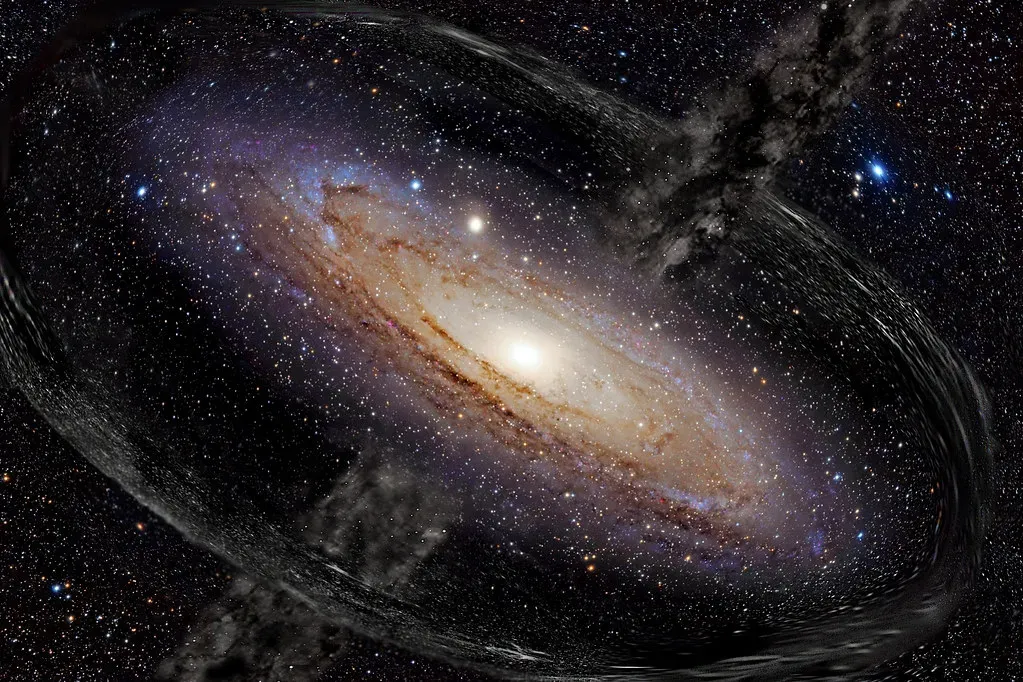
When astronomers measure how fast stars orbit within galaxies, they find something that does not add up: stars in the outer regions move far too quickly to be held in place by the visible mass alone. By the usual rules of gravity, many galaxies should simply fly apart. Yet they do not. The simplest way to reconcile this is to assume that there is extra, invisible matter providing the missing gravitational pull, a kind of ghostly scaffolding we cannot see directly.
Decades of observations, from galaxy clusters to the cosmic microwave background, all point to this unseen component making up the vast majority of matter in the universe. And still, not a single dark matter particle has been definitively detected in laboratories on Earth. Experiments have ruled out many once‑popular candidates, forcing theorists to rethink old assumptions. We know something is there because of how it tugs on what we can see, but exactly what it is remains one of the most frustrating and stubborn mysteries in modern physics.
Dark Energy: The Force Making the Universe Speed Up
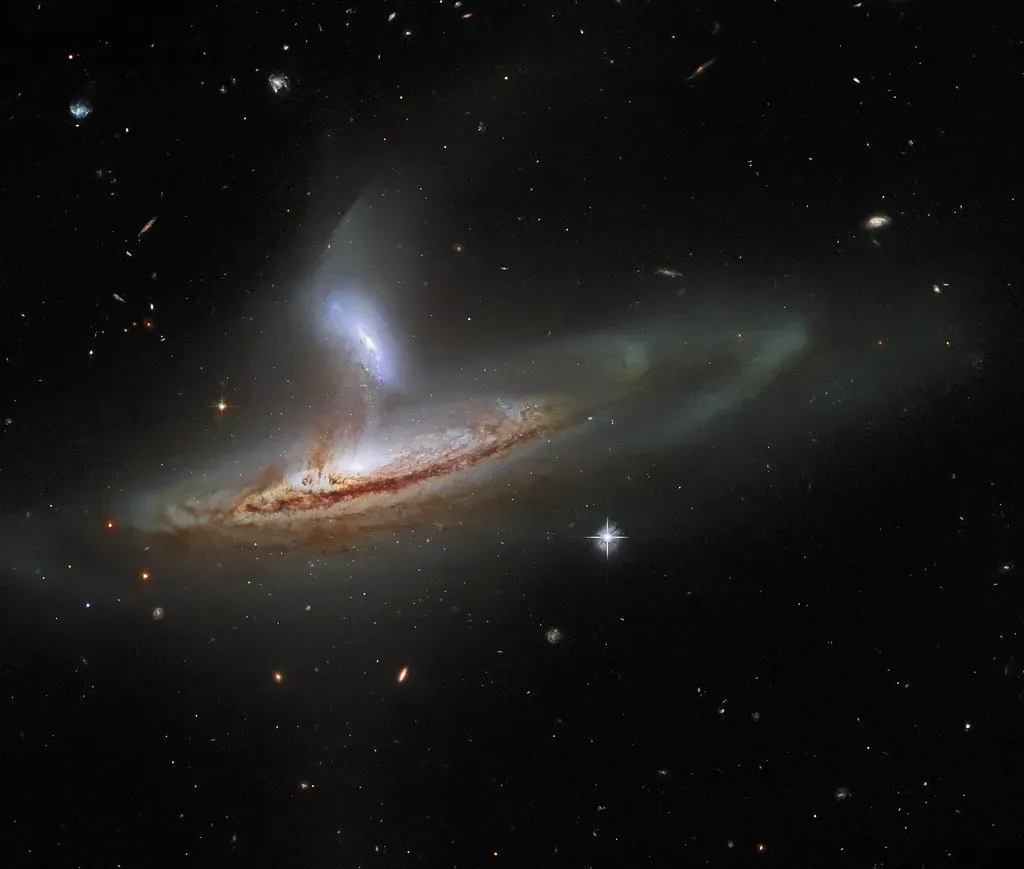
For a long time, scientists expected the expansion of the universe to slow down over time, pulled back by gravity like a ball tossed into the air. In the late 1990s, measurements of distant exploding stars showed the opposite: the expansion is not just continuing, it is accelerating. Something is pushing space itself to stretch faster and faster, a phenomenon we now label dark energy simply because we have no better name for it.
Current estimates suggest this unknown component makes up roughly about two thirds of the entire cosmos, dwarfing ordinary matter by a huge margin. Some models treat dark energy as a mysterious field pervading all of space; others see it as a property of empty space itself. None of these ideas has been confirmed, and no lab test has yet pinned down its nature. We can describe how dark energy behaves on large scales through equations, but that is like describing the outline of an animal in the dark without knowing what kind of creature you are looking at.
Gamma-Ray Bursts: The Brightest Explosions in the Universe
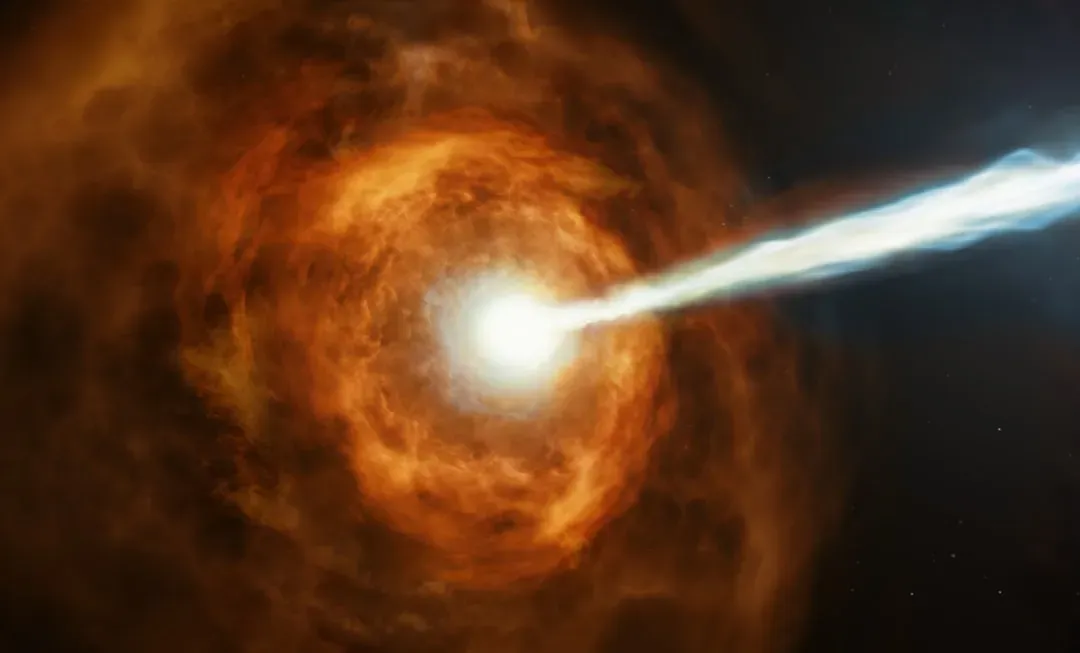
In the Cold War era, satellites built to watch for nuclear tests instead stumbled on something much stranger: sudden, intense bursts of gamma rays coming from random directions in space. These gamma‑ray bursts (GRBs) flare up without warning, sometimes lasting less than a second, sometimes a bit longer, and for that brief time they can outshine entire galaxies. Early on, no one knew how far away they were, or even if they were happening within our own galaxy or far beyond.
We now know many GRBs are linked to the deaths of massive stars or the collisions of neutron stars, but big questions linger. Some bursts are far more energetic than models comfortably allow, and the diversity of their durations and afterglows suggests multiple, overlapping mechanisms. In a few cases, the timing and structure of the gamma rays themselves hint at odd processes in extreme physics regimes we barely understand. GRBs are no longer a total mystery, but every time we think we have them boxed in, a weird outlier event stretches the box a little wider.
The Pioneer Anomaly: Spacecraft That Drifted Off Script
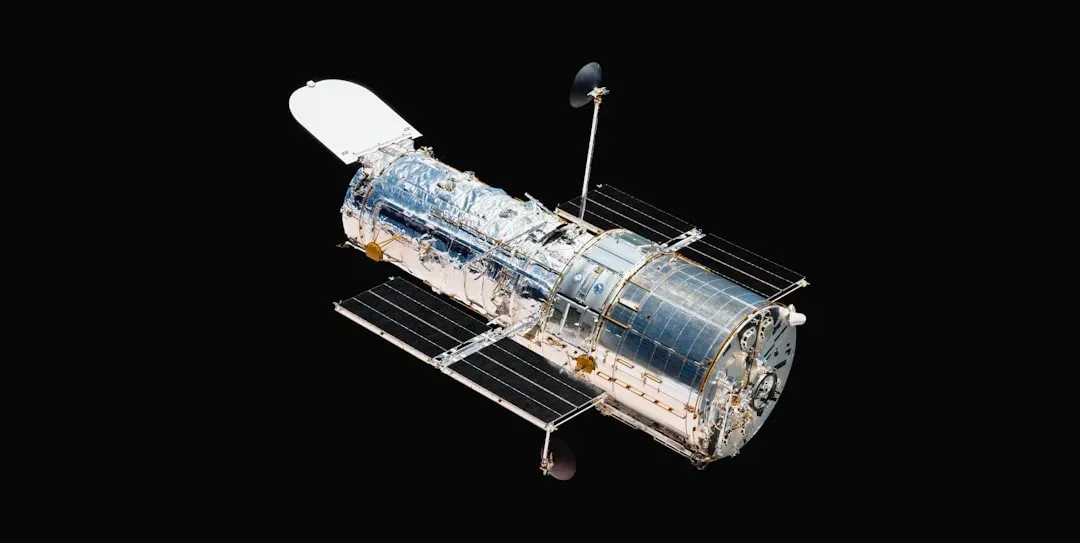
In the late twentieth century, engineers noticed that the Pioneer 10 and Pioneer 11 spacecraft, now far from the Sun, were deviating ever so slightly from their predicted paths. The effect was tiny, a slow inward drift that could easily be ignored if the navigation calculations were less precise. Yet it was consistent enough across both spacecraft that people began to wonder if something fundamental was off in our understanding of gravity over long distances.
Years of detective work followed, with teams re‑examining thermal radiation, spacecraft design, and data processing techniques. The leading explanation today is that uneven heat emissions from the crafts themselves acted like a faint rocket thrust, nudging them off course. This appears to resolve much of the anomaly, but some specialists still debate whether all of the discrepancy is fully accounted for. The Pioneer saga shows how even simple, well‑understood machines can produce puzzles that blur the line between engineering glitch and possible new physics.
Strange Radio Signals From Nearby Stars
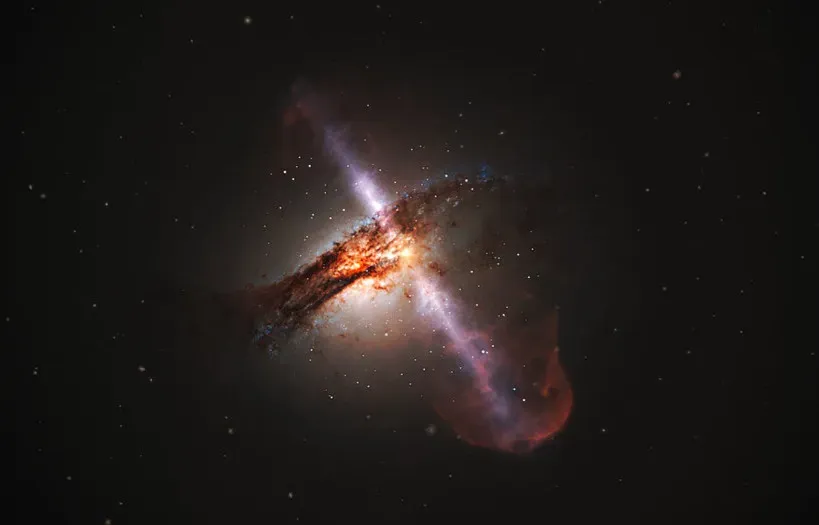
In the past decade, astronomers searching for planets around nearby stars have occasionally stumbled on odd radio signals that make everyone stop and double‑check their equipment. One example came from the direction of Proxima Centauri, the closest star to our Sun, where a narrowband signal was detected that at first did not match known sources of interference. For a brief moment, headlines flared and people whispered about the possibility of a deliberate transmission.
Follow‑up analysis for that case strongly favored mundane explanations, most likely a form of human‑made radio noise that just happened to line up awkwardly with the telescope’s view. But the episode highlighted how hard it is to distinguish truly novel cosmic signals from the technological clutter of our own planet. Surveys continue to pick up transient blips and patterns that take months to untangle, and while most end up being harmless artifacts, a small number remain ambiguous enough to keep the door cracked open for more exotic possibilities.
The Hubble Tension: Conflicting Measurements of the Universe’s Expansion
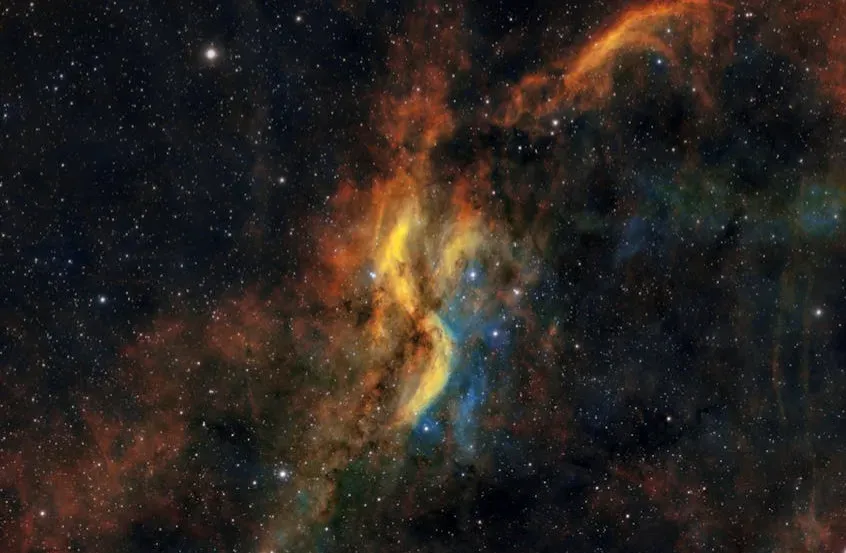
One of the basic numbers in cosmology is the rate at which the universe is expanding, often called the Hubble constant. In principle, you can measure it in two different ways: by looking at nearby galaxies and standard candles, or by analyzing the imprints of early‑universe physics on the cosmic microwave background. The surprise over the last few years has been that the two methods consistently give different answers, with the local measurements indicating a faster expansion than the early‑universe ones.
This mismatch, known as the Hubble tension, is not a small rounding error; it is large enough that many researchers think it might be pointing to new physics beyond our current models. Ideas include subtle changes in how dark energy behaves over time, unknown particles in the early universe, or even modifications to the theory of gravity itself. So far, no single explanation has emerged that fits all the data cleanly. We are left with an uncomfortable choice: either some of our best observations are missing a hidden systematic error, or our standard picture of cosmic history is incomplete in a deep way.
Conclusion: When the Universe Refuses to Play Along
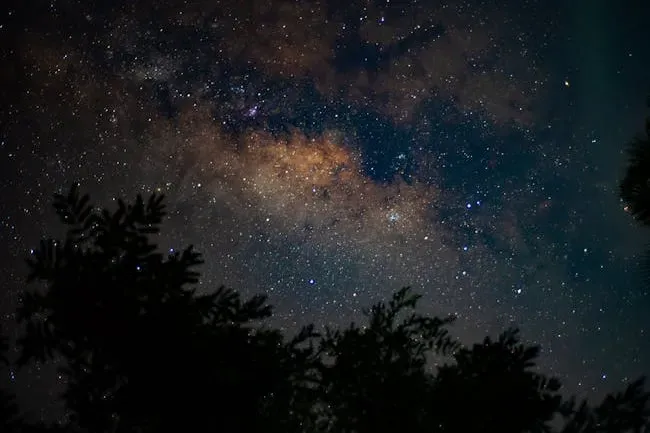
Looking across these mysteries, a pattern appears: every time we think the cosmos is finally starting to make sense, it tosses us a curveball. A one‑off radio spike, a strangely dimming star, a wandering interstellar object, or a stubborn mismatch in basic measurements – each of these feels like a splinter in our understanding, small but impossible to ignore. Some will probably end up with very down‑to‑Earth explanations, more about messy data and complex environments than about new laws of nature.
Yet a few of these puzzles are likely hinting at deeper truths we have not yet uncovered, the way unexplained orbits once pointed to Neptune or odd spectra hinted at quantum mechanics. That, to me, is the most exciting part: the sense that we are still beginners in a universe that is far stranger than our current theories allow. The sky is not just a backdrop of pretty lights; it is an ongoing experiment that occasionally shocks its own observers into silence. Which of these mysteries do you think will rewrite the textbooks first?