If you could somehow dive six thousand kilometers straight down, past the crust, through the mantle, and into the very heart of our world, you’d hit something wilder than science fiction: a metal sphere as hot as the surface of the sun. It’s not just a poetic comparison. Deep below your feet, iron and nickel are squeezed and heated to temperatures of roughly about five to six thousand degrees Celsius, similar to the outer layers of our star.
That blazing heart doesn’t just sit there. It drives earthquakes, volcanoes, magnetic fields, continental drift, and maybe even helped life get started in Earth’s early days. In a strange way, we live on the thin, cool skin of a furious engine. The wild part? Nobody has ever seen it directly, yet we can still map, measure, and model it with surprising precision.
How Do We Even Know Earth’s Core Is That Hot?
It sounds almost unbelievable: claiming temperatures as high as the sun’s surface without ever drilling anywhere close. The deepest humans have drilled is the Kola Superdeep Borehole in Russia, which barely scratched a bit over twelve kilometers, not even one percent of the way to the core. So scientists rely on a mix of seismic waves, lab experiments, and computer models to reconstruct the invisible interior.
When earthquakes happen, they send seismic waves through the planet, and those waves bend, bounce, and slow down in ways that depend on the material they travel through. By tracking how different types of waves move, researchers figured out that Earth has a solid inner core, a liquid outer core, a thick mantle, and a thin crust. Then they recreated similar pressures and compositions in high‑pressure labs, compressing iron and nickel using diamond anvils and powerful lasers to see what temperatures would match the behavior we detect deep below.
The Inner and Outer Core: A Metal Heart in Two Layers
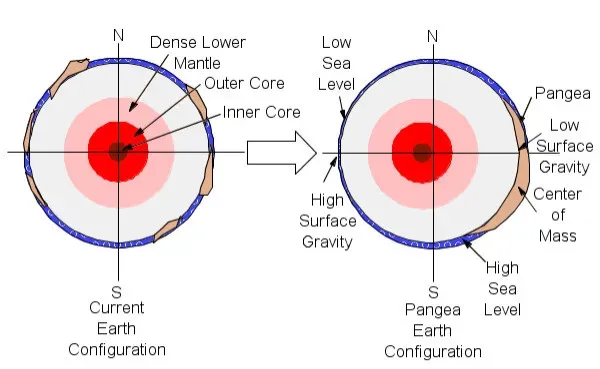
Earth’s core isn’t just a single ball of molten metal; it’s a nested structure, like a cosmic jawbreaker. At the very center sits the solid inner core, mostly iron with some nickel, under pressures so intense that the metal is squeezed into a solid despite being almost unimaginably hot. Surrounding this is the liquid outer core, a roiling ocean of molten metal swirling slowly around the inner sphere.
That simple fact – solid inside, liquid outside – changes everything. The temperature difference and the flow in the outer core help drive massive electrical currents, which in turn generate our magnetic field. You can imagine the core a bit like a gigantic, self-powered dynamo: metal rushing, churning, and spiraling through magnetic fields and creating more magnetism as it goes.
What Keeps the Core So Blazingly Hot?

Earth’s core isn’t hot just because “it started that way.” The original heat from when the planet formed out of colliding space rocks still matters, but it’s only part of the story. When Earth grew in its early days, constant impacts and gravitational settling of heavy elements created intense friction and heat, some of which is still trapped deep inside because rock is a surprisingly poor conductor at that scale.
On top of that, radioactive elements in the mantle and crust constantly release energy as they decay, while the slow, ongoing growth of the solid inner core also releases latent heat. The result is a long-running energy budget: heat from formation, heat from radioactive decay, and heat from crystallization all combine to keep the core roaring thousands of degrees hotter than the rock above.
The Core as Our Hidden Energy Engine
Even though we rarely think about it during a normal day, the heat engine inside Earth quietly shapes almost everything about the planet’s surface behavior. That energy drives convection in the mantle, which is the slow, creeping movement of hot rock rising and cooler rock sinking over millions of years. Those mantle currents drag plates around, fueling plate tectonics, mountain building, and the rearrangement of continents.
If the core and mantle were cold and still, our world would be geologically dead, more like the Moon or Mars: no volcanoes, little tectonic activity, far fewer dramatic landscapes. The engine inside Earth is like the invisible motor that keeps the crust restless and alive. Every time you see a volcanic eruption on the news or read about a new mountain range uplifting, you’re seeing energy that ultimately traces back to that ultra-hot core.
Volcanoes, Earthquakes, and the Core’s Fiery Fingerprints
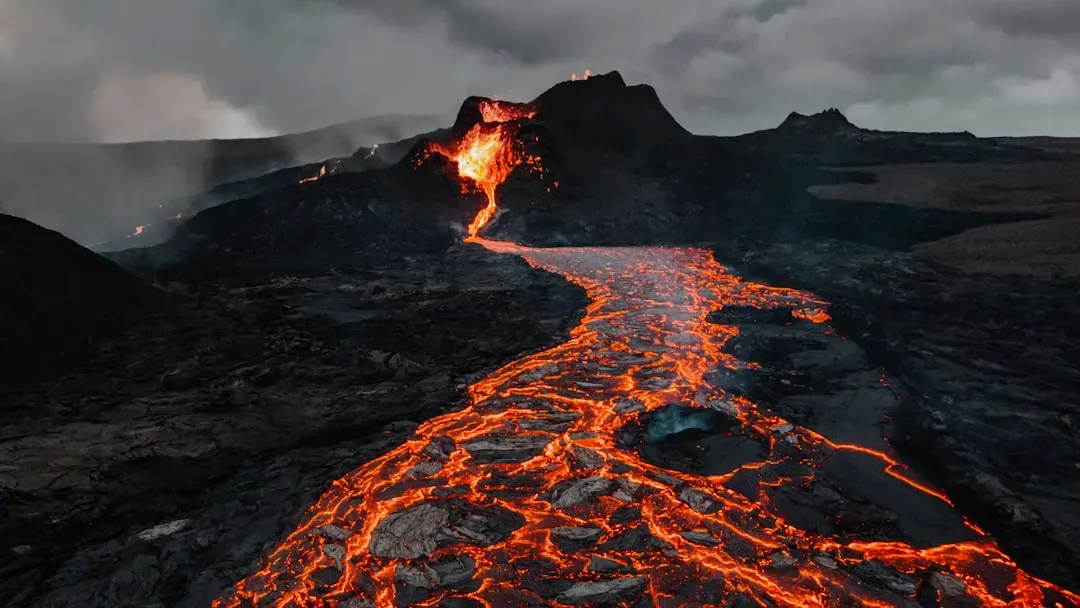
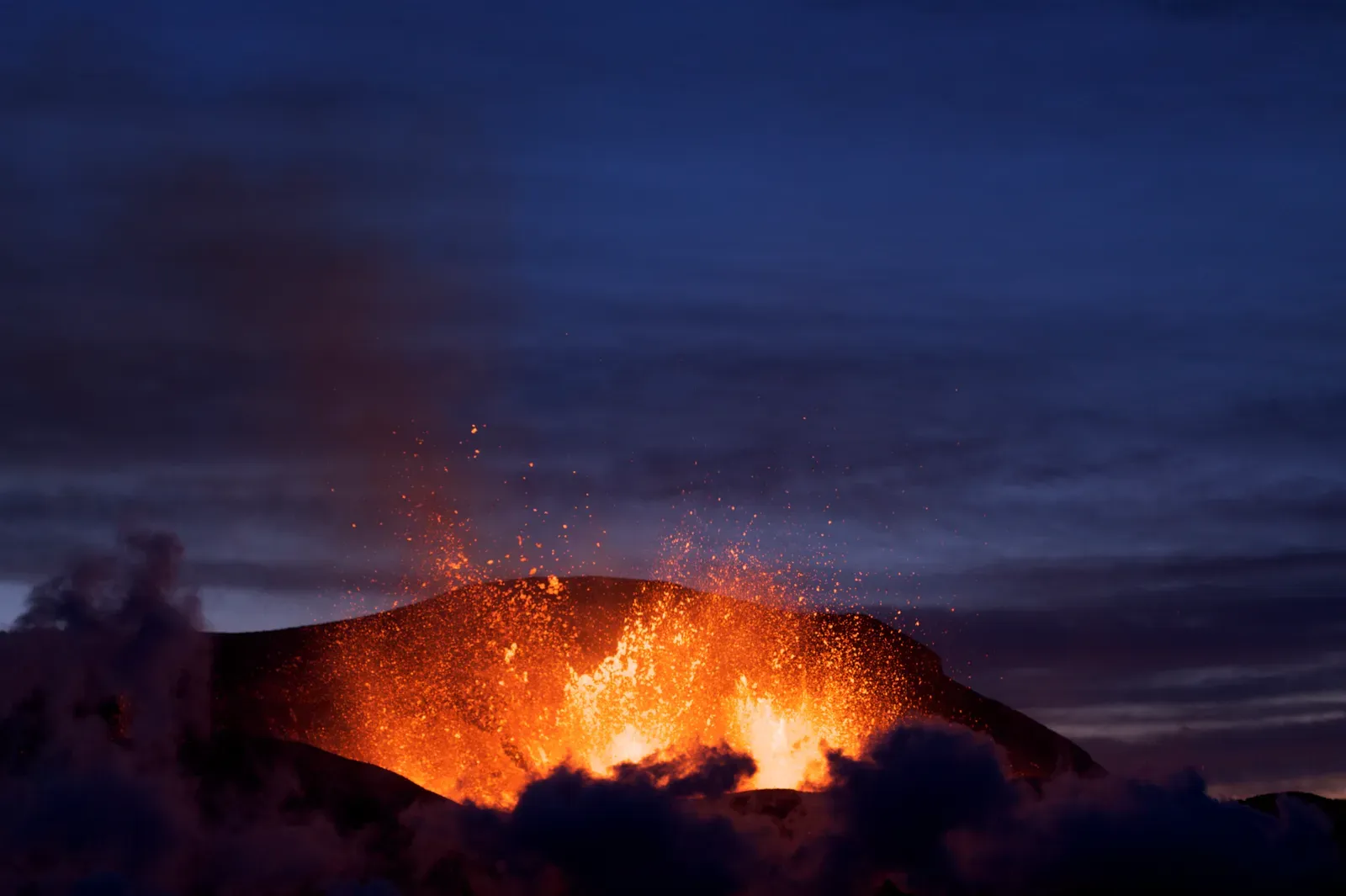
Volcanoes might seem like local dramas – a mountain here, an island there, blowing its top – but they’re part of a much bigger energy story. Magma forms when parts of the mantle partially melt, often along plate boundaries, and that melting is driven by heat rising from deeper inside the planet. The core doesn’t directly send lava to the surface, but its stored energy powers the processes that eventually create and move that magma.
Earthquakes tell a similar story. As tectonic plates grind, collide, and slip past each other along faults, the stress builds over decades or centuries and then releases in sudden jolts. All of that motion is only possible because the interior is convecting and the outer shell is broken into plates. In a roundabout but real way, when a major quake rattles a city, the energy ultimately starts its journey in that blazing, restless core.
The Magnetic Shield: A Planetary Forcefield from the Core
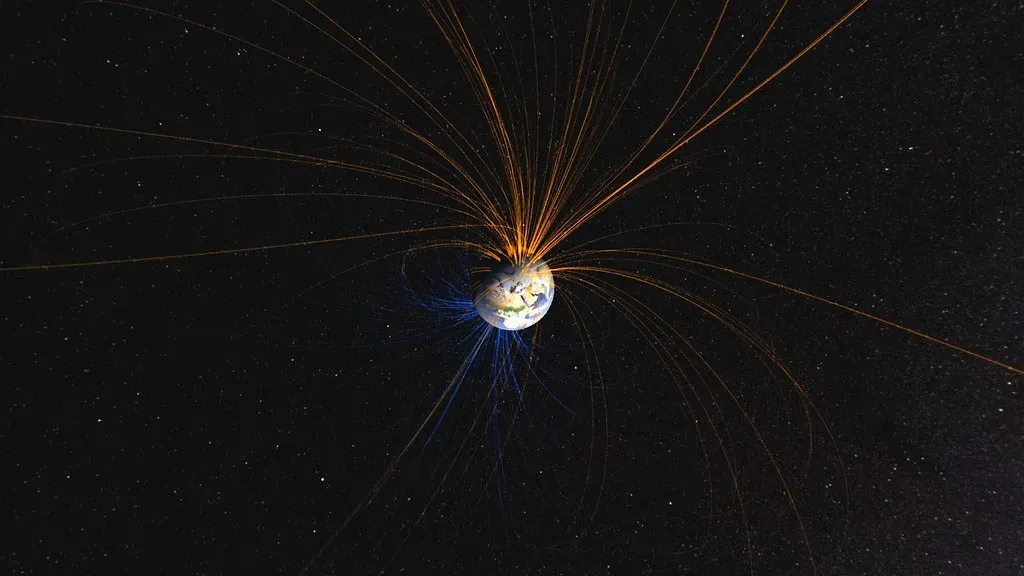
One of the most incredible gifts from Earth’s hot core is something you can’t see but your whole life depends on: the global magnetic field. As molten metal in the outer core flows and spins, it acts like a gigantic electric generator, creating a constantly shifting magnetic field around the planet. That field stretches far into space and carves out a protective bubble in the solar wind.
Without this shield, charged particles from the sun would slam into our atmosphere much more directly, stripping it away over time and bathing the surface in harmful radiation. Mars is a haunting comparison: a planet that likely had an early magnetic field that faded as its interior cooled, followed by a thinning atmosphere and a shift to a cold, dry world. In that light, the Earth’s hot core is not just a curiosity – it’s a guardian.
Could We Ever Tap the Core’s Energy Directly?

It’s tempting to imagine drilling deep enough to plug straight into the core like a socket: infinite clean energy, right beneath our feet. In reality, we’re laughably far from that. The drilling technology we have today barely reaches the shallowest crust compared to the thousands of kilometers that separate us from the core. The pressures and temperatures at even a fraction of the way down would destroy any known equipment.
However, we already exploit a tiny fraction of Earth’s internal heat through geothermal energy – hot springs, steam fields, and engineered systems that pull heat from deep rock. That’s not “core tapping” in any literal sense, but it exists only because the interior remains hot. If we think of the core as the engine, these geothermal projects are like holding your hands near the hood of an idling car and warming them on the rising heat.
What Happens If the Core Cools Down Too Much?

The core is cooling slowly over geological time, though not on any schedule that affects your daily life. As it cools, the solid inner core gradually grows, and the heat flow that drives outer core convection and the geodynamo might eventually weaken. That could mean a future where Earth’s magnetic field becomes unstable or even fades significantly, changing how space weather affects our planet.
Geologically, a much cooler interior could also mean less volcanic and tectonic activity, a quieter crust, and fewer fresh mountains and continents reshaping themselves. From a human timescale, this is almost unimaginably far away, but from a planetary perspective, it’s part of the natural life cycle of a rocky world. There’s something humbling in knowing that even Earth’s roaring heart is slowly winding down.
How Scientists Study a Place No One Can Visit
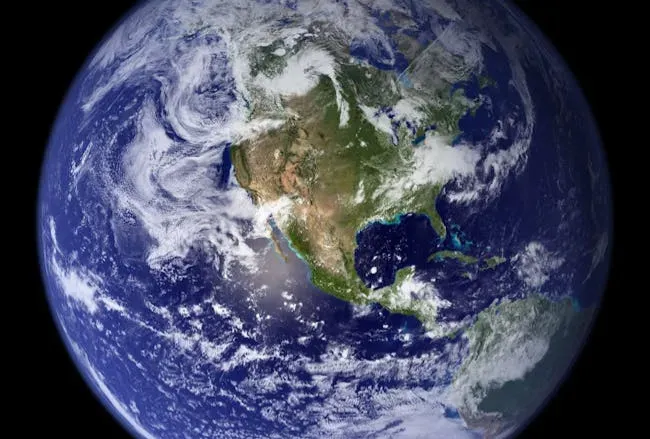
Trying to understand the core is like trying to decode the inside of a locked safe by listening to how coins bounce around inside. Seismology is one of the main tools, with networks of instruments around the globe picking up the tiniest vibrations from distant quakes. The way those waves travel reveals where materials are solid or liquid and how their properties change with depth, almost like a CT scan of the planet.
On the lab side, scientists use diamond anvil cells and powerful lasers to squeeze tiny samples of iron to conditions similar to those at the core. They measure how these samples behave, then match that data with seismic observations and theoretical models. Add in satellite measurements of the magnetic field and supercomputer simulations of fluid motion in the core, and you get a surprisingly detailed, though still evolving, picture of Earth’s fiery center.
The Core’s Heat and the Story of Life on Earth
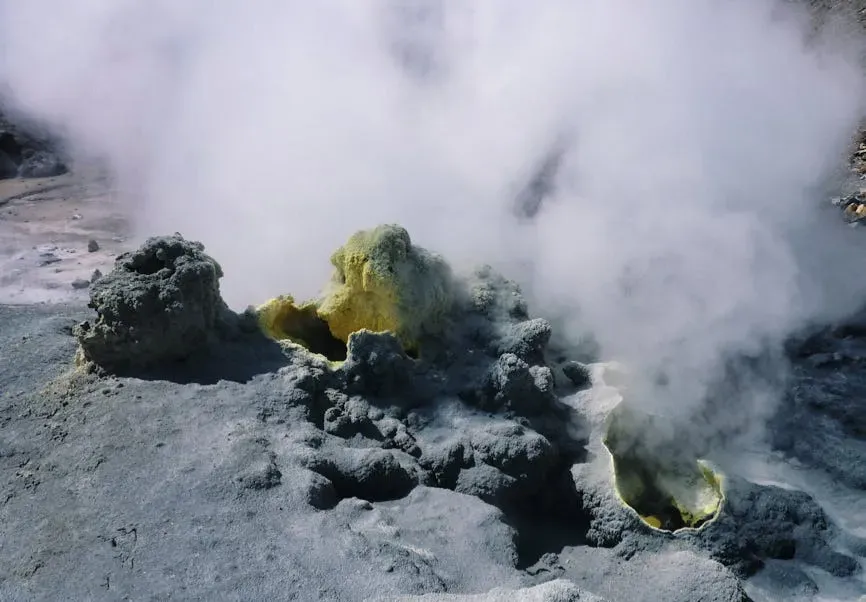
There’s a fascinating twist: the hot interior of Earth might have helped life get started in the first place. Early in the planet’s history, hydrothermal vents on the ocean floor – powered by internal heat and water circulating through hot rock – provided chemical gradients and energy sources that many researchers think could have nurtured the first simple life forms. Even today, entire ecosystems thrive around these vents in total darkness, independent of sunlight.
The constant reshaping of the surface through plate tectonics, driven by deep heat, also recycles carbon and nutrients between the atmosphere, oceans, and crust. That long, slow cycling helps stabilize climate over millions of years, giving life time to evolve and adapt. In a very real sense, the blazing metal heart at Earth’s center doesn’t just fuel volcanoes and earthquakes; it has quietly helped keep the planet habitable for billions of years.
Conclusion: Living on the Skin of a Star-Hearted World
We walk around on cool ground, gaze at calm skies, and forget that beneath our feet lies a churning, metal heart with sun-like temperatures. That invisible inferno powers plate tectonics, raises mountains, feeds volcanoes, drives our magnetic shield, and may have played a starring role in the origin and endurance of life itself. In everyday life it’s easy to think of Earth as solid and still, but inside, it’s closer to a slow-motion storm than a quiet rock.
The next time you feel a mild earthquake, soak in a hot spring, or watch footage of shimmering auroras dancing near the poles, you’re seeing tiny hints of that deep, hidden engine. We might never touch the core, but its fingerprints are all over the surface of our world and our history. When you think of our planet now, does it feel a little more like a living, breathing being than just a ball of stone?