
Imagine two coins, tossed on opposite ends of the universe, and every single time one lands heads, the other lands tails. Instantly. With no message sent between them. No wire, no signal, no delay. That’s not a magic trick. That’s quantum entanglement, and it’s one of the most mind-bending, reality-shaking phenomena ever confirmed by science.
You might think this is the stuff of science fiction. Honestly, even some of history’s greatest physicists thought so too. But today, in 2026, quantum entanglement is not only experimentally verified – it is driving the next generation of computing, communication, and our most profound philosophical questions about the nature of existence. What you’re about to read may change the way you see the very fabric of the world around you. Let’s dive in.
The Strange Birth of a Revolutionary Idea
First proposed by physicists Albert Einstein, Boris Podolsky, and Nathan Rosen in 1935 with their famous “EPR paradox,” and later more completely understood through experiments performed by physicist John Bell in the 1960s, quantum entanglement reveals a deeply counterintuitive truth: particles can, no matter how far apart they are, instantaneously affect the states of each other. Think about that for a moment. Not in minutes. Not in seconds. Instantaneously.
In 1931, Hermann Weyl observed that quantum systems composed of multiple interacting parts exhibit a kind of Gestalt, in which “the whole is greater than the sum of its parts.” Then, in 1932, Erwin Schrödinger derived the defining equations of quantum entanglement but left them unpublished. It’s wild to think that the mathematics of one of the most important discoveries in human history sat quietly in a drawer for years. Science moves in mysterious ways.
What Quantum Entanglement Actually Means
Quantum entanglement is the phenomenon wherein the quantum state of each particle in a group cannot be described independently of the state of the others, even when the particles are separated by a large distance. The topic of quantum entanglement is at the heart of the disparity between classical physics and quantum physics: entanglement is a primary feature of quantum mechanics not present in classical mechanics. This isn’t a minor footnote. This is a fundamental structural difference in how reality operates at its smallest scales.
At its core, quantum entanglement hinges on superposition – a principle that allows particles to exist in multiple states at once until measured. This creates a unique correlation between their properties, rendering them as parts of a single system rather than isolated entities. Here’s a simple analogy: imagine two gloves packed into separate boxes and shipped to opposite ends of the planet. The moment you open one box and find a left glove, you instantly know the other is right-handed. But in quantum entanglement, neither glove “is” left or right until you look. That’s the crucial difference. The outcome is not pre-determined – it is co-created at the moment of measurement.
Einstein’s Disbelief and Bell’s Game-Changing Theorem
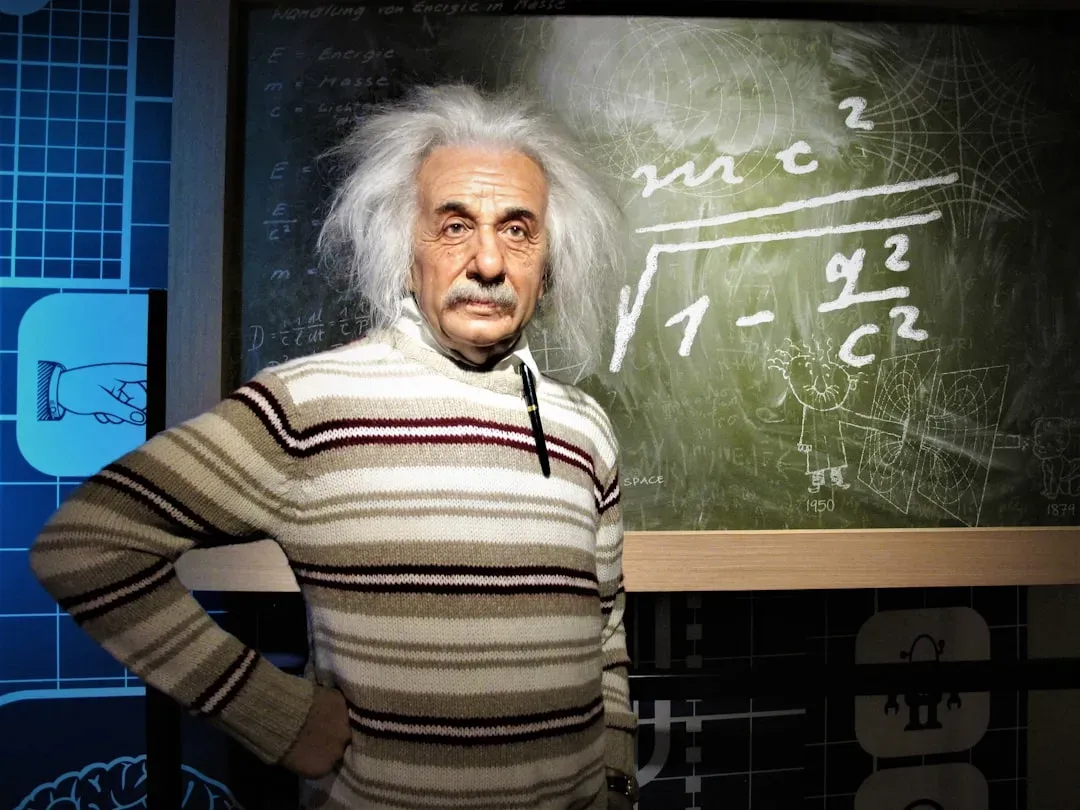
Albert Einstein famously referred to this phenomenon as “spooky action at a distance,” as it seemingly violates the classical notion of locality – the idea that objects are only directly influenced by their immediate surroundings. Einstein was deeply uncomfortable with entanglement, and it’s easy to understand why. His entire worldview depended on the idea that reality is local, causal, and orderly.
The debate remained theoretical until 1964, when physicist John Bell derived a mathematical inequality – Bell’s theorem – that could distinguish between quantum entanglement and any local hidden variable theory. This was a game-changer: entanglement was no longer a matter of philosophy, but something that could be tested in the lab. Bell’s work laid the theoretical foundation for future experiments. In other words, Bell handed science a tool sharp enough to cut through centuries of philosophical fog. What followed was a wave of experiments that, one by one, confirmed the impossible.
From Theory to Proof: The Nobel Prize That Changed Everything
In 2022, the Nobel Prize in Physics was awarded to Aspect, Clauser, and Zeilinger “for experiments with entangled photons, establishing the violation of Bell inequalities and pioneering quantum information science.” This was no small deal. This was the global scientific community putting its stamp of approval on one of the strangest ideas in human history.
Their work demonstrated that quantum entanglement is not just a theoretical prediction – it’s a measurable, real-world phenomenon with profound implications for quantum information science, opening the door to practical quantum technologies. Through these experiments, what was once dismissed as “spooky action” is now one of the most validated phenomena in modern physics, forming the backbone of technologies like quantum cryptography, quantum networks, and teleportation protocols. It took nearly a century to go from Einstein’s skepticism to a Nobel Prize. But here we are.
Non-Locality and What It Tells You About the Universe

Entanglement subverts the understanding of locality – how things can be affected only by what is nearby. In the quantum domain, non-locality means objects interact with each other instantaneously, even thousands of miles apart. Such a relation implies that on quite a fundamental level, the boundaries between objects, as we demarcate them for understanding, are not as real as we conceptualize them to be. Let that sink in. The walls you see between things, between you and the world around you, may be far less solid than they appear.
Quantum entanglement demonstrates that measurement outcomes can remain strongly correlated across distance, without any classical signal passing between the systems at the moment of measurement. This can be interpreted alongside the concept where observer, observed, and process are understood as an integrated whole. The analogy highlights a structural similarity: relationships may be fundamental, not derivative. I think this is where things get truly extraordinary. The universe doesn’t seem to be made of isolated things connected by forces. It might be made of relationships, all the way down.
The Breathtaking Real-World Applications of Entanglement
One of the most exciting applications lies in the field of quantum computing and quantum cryptography. Quantum computers, leveraging the principles of entanglement and superposition, promise to solve complex problems far more efficiently than classical computers. Meanwhile, quantum key distribution protocols utilise the properties of entanglement to enable secure communication channels that are theoretically invulnerable to eavesdropping. We’re talking about a future where sensitive data could be virtually unhackable. That alone is revolutionary.
Researchers at the U.S. Department of Energy’s Fermi National Accelerator Laboratory and the California Institute of Technology are using a special kind of light – called “squeezed light” – they believe can overcome key challenges in building scalable quantum networks. The cutting-edge research represents essential progress toward building a quantum network that could transform scientific research by connecting powerful quantum computers. The pace of this progress is honestly staggering. What was science fiction a decade ago is now engineering. The quantum internet is no longer a dream – it’s a construction project.
What Entanglement Suggests About the Nature of Reality Itself
One philosophical interpretation of quantum entanglement is that the universe does not exist of separate, independent parts but as one single and mutually dependent whole. This is where science and philosophy stop fighting and start having a very interesting conversation. If no particle truly exists in isolation, then what does it even mean to say anything exists “independently”?
Using the AdS/CFT correspondence, Mark Van Raamsdonk suggested that spacetime arises as an emergent phenomenon of the quantum degrees of freedom that are entangled and live in the boundary of the spacetime. In other words, entanglement may not just be a quirky feature of particles. It could be the very thread from which space and time itself are woven. Because of entanglement, quantum physics seems to exhibit some sort of holism. This way of receiving quantum theory commits us to realism: there are quantum systems, and they are as quantum theory describes them, namely subject to entanglement. Honestly, it’s hard to think of a more astonishing conclusion about the nature of existence.
Conclusion: A Universe That Is Deeply, Fundamentally Connected
Here’s the thing about quantum entanglement – it doesn’t just challenge physics textbooks. It challenges the story you’ve been telling yourself about what separates you from everything else. The universe, it turns out, may not be a collection of isolated objects bumping into each other. It may be a single, seamless, interconnected system in which every relationship matters, every interaction leaves a trace, and nothing is truly alone.
The interconnectedness of particles at the quantum level invites us to rethink the very fabric of reality, challenging our perceptions and expanding our understanding of the universe. As research in this field advances, we may yet uncover deeper truths that illuminate the profound, and often mysterious, relationships that govern our world. We are standing at the edge of something enormous. The science is no longer speculative – it’s Nobel Prize-winning, lab-tested, and technologically deployable.
The deeper question isn’t just whether particles are connected. It’s what it means for you, for all of us, if the universe is fundamentally, irreducibly whole. What would you do differently if you truly believed nothing in this cosmos was ever really separate? That’s a question worth sitting with for a while.