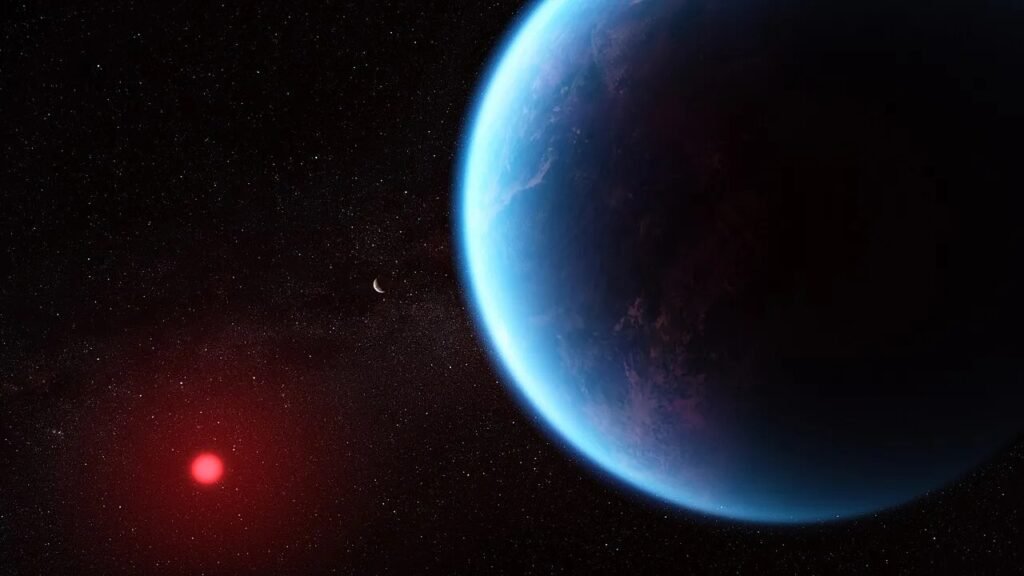
Somewhere about a hundred and twenty-four light-years away, in the direction of the constellation Leo, there’s a world that has quietly become one of the most talked‑about planets in modern astronomy: K2‑18b. It doesn’t glow, it doesn’t send signals, and yet it’s sparked heated debates, breathless headlines, and a very real question: are we finally staring at a serious candidate for alien
I still remember reading the first reports on K2‑18b and feeling that weird mix of awe and skepticism. On paper, it sounded almost too good to be true: a planet in the habitable zone, bigger than Earth, with hints of a hydrogen‑rich atmosphere and possibly even water vapor. But the deeper you look, the more complicated – and more fascinating – the story becomes.
The Fascination With “Another Earth”
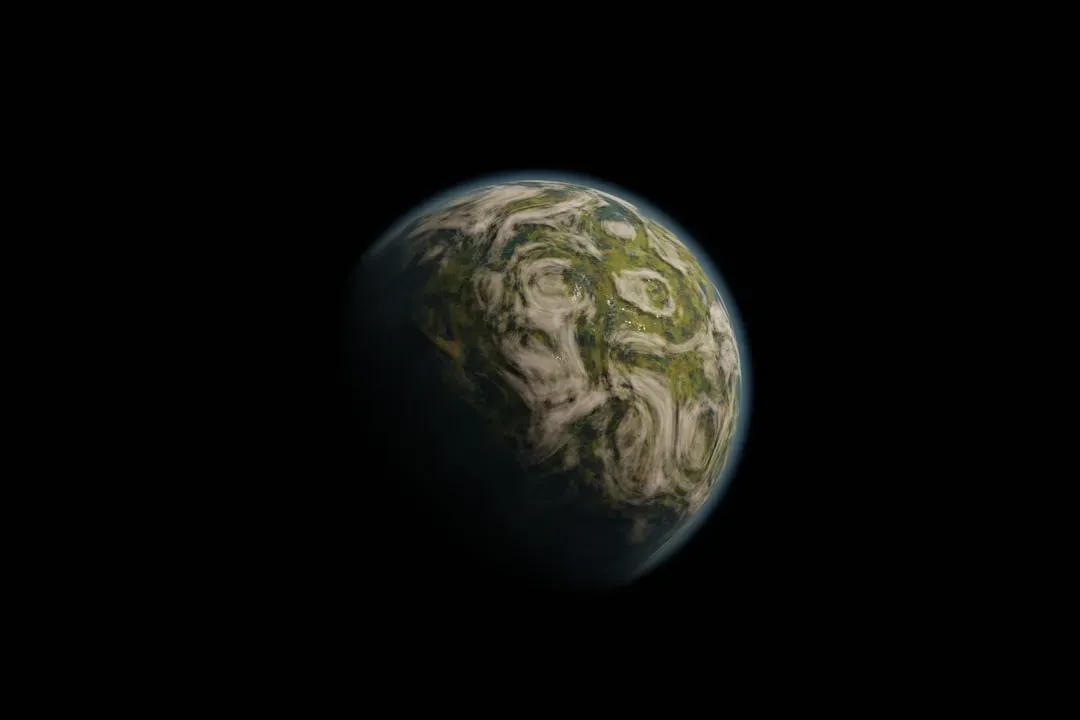
Ask most people what they imagine when they think of alien life, and you usually get something like a second Earth: blue oceans, white clouds, green continents. That image is so powerful that we often forget reality is almost certainly messier and stranger than our favorite sci‑fi movies. K2‑18b fascinates scientists precisely because it doesn’t fit neatly into that Earth‑twin fantasy.
Instead of being another small rocky planet, K2‑18b is what astronomers call a sub‑Neptune: bigger than Earth, smaller than Neptune, and likely wrapped in a thick atmosphere. It circles a cool red dwarf star, not a Sun‑like one, and its environment is shaped by flares and radiation that would make our weather forecasts look tame. So the question is not “Is this the next Earth?” but “Could life exist in conditions that are completely different from anything we’ve experienced?”
What Exactly Is K2‑18b?
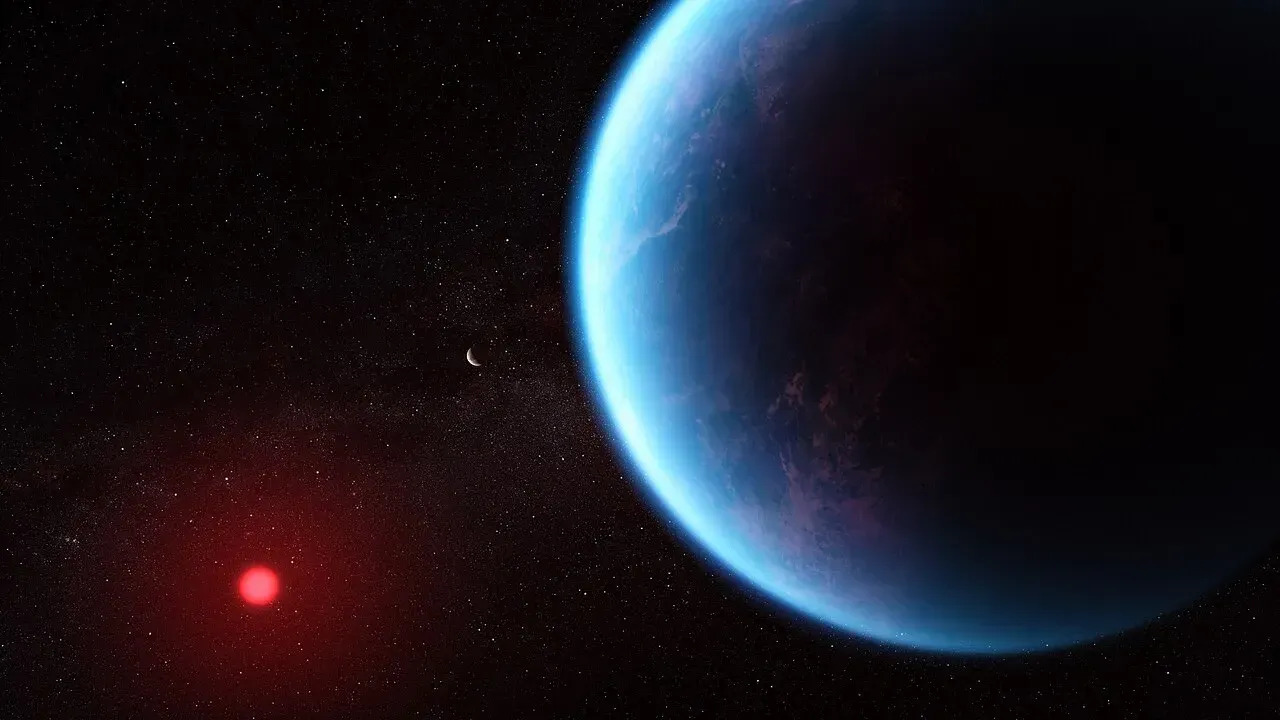
K2‑18b orbits a red dwarf star called K2‑18, roughly about eight times closer than Earth is to the Sun, but because its star is cooler and dimmer, the planet sits in that precious habitable zone where temperatures could allow liquid water. The planet itself is roughly more than twice Earth’s radius and several times its mass, putting it firmly in that in‑between category: too large to be a normal rocky planet, too small to be a gas giant like Neptune.
Current models suggest K2‑18b may be a “Hycean” world: a planet with a deep global ocean under a hydrogen‑rich atmosphere. That idea alone sounds like science fiction – an entire world that might be ocean from pole to pole, with a sky made of light gases instead of something Earth‑like. If that’s true, the planet’s surface, if it has one at all, might be far below dense, high‑pressure layers, while any potential life could be hanging out in a relatively mild atmospheric zone or within those deep oceans.
The Atmosphere Clues: Water, Methane, and the Big Debate
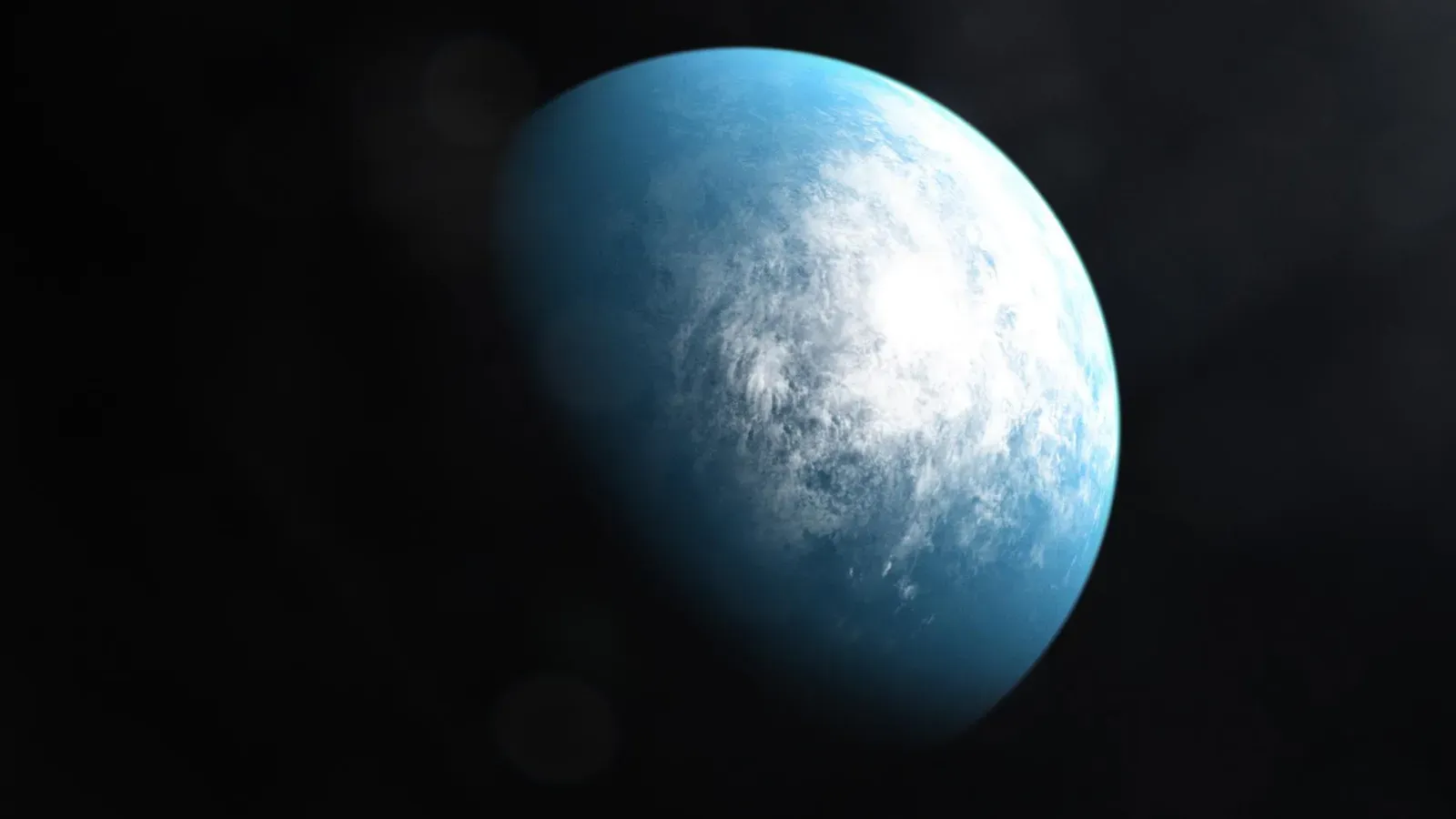
What really catapulted K2‑18b into the spotlight were the hints from telescopes like Hubble and, more recently, the James Webb Space Telescope. By watching the planet pass in front of its star, astronomers can study starlight filtered through its atmosphere, teasing out which gases are present. For K2‑18b, those signals suggested the presence of water vapor, methane, and carbon dioxide – exactly the kind of molecules you’d hope to see in a potentially habitable environment.
There was even a controversial whisper about a possible detection of dimethyl sulfide, a molecule that on Earth is strongly linked to life in the oceans. But follow‑up analyses pointed out that the data are not strong enough to confidently claim anything that dramatic. Right now, the safer view is that K2‑18b has a hydrogen‑rich atmosphere with trace amounts of carbon‑bearing molecules and water vapor, but nothing that unambiguously points to biology. In other words, the atmosphere is intriguing, but the evidence is far from a smoking gun.
Hycean Worlds: A New Class of Habitable Planets?
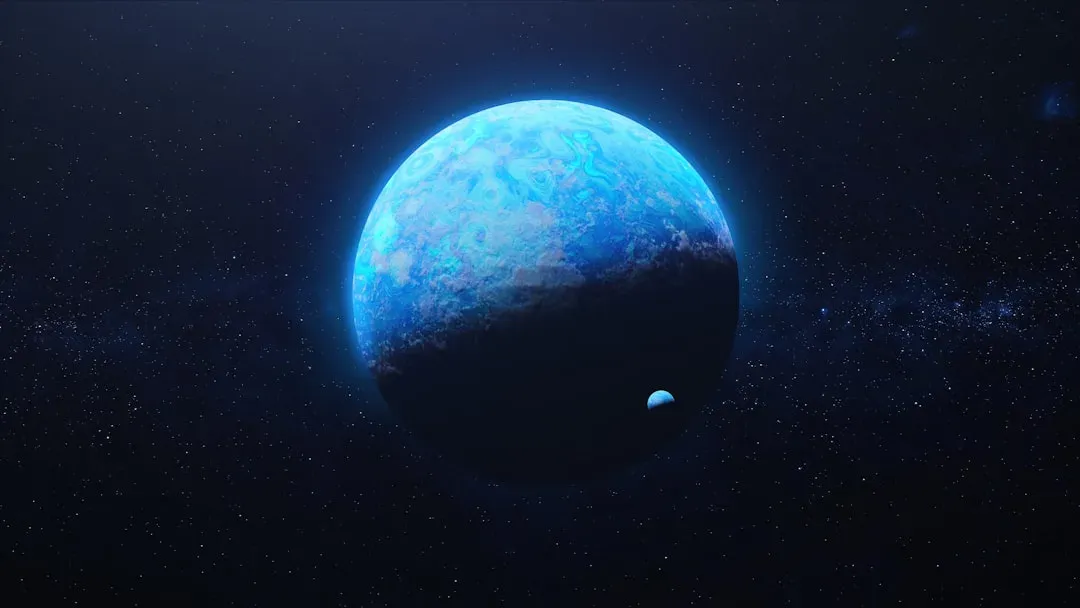
The idea of “Hycean” planets has exploded in the last few years, and K2‑18b has become the poster child for this concept. The term describes worlds larger than Earth, with deep oceans and thick hydrogen envelopes, where life might thrive in temperate layers despite high pressures and exotic conditions. If these planets are common in the galaxy – and current surveys suggest that sub‑Neptunes are extremely common – then we might have been looking for the wrong kind of world for decades.
Life on a Hycean planet, if it exists, wouldn’t look like our cozy coastal ecosystems. Picture instead a planet where sunlight filters through a thick, hazy atmosphere onto an endless, dark ocean. Any organisms might live in floating layers or deep underwater niches, far from any solid ground. It’s extremely alien, and yet the basic requirements we think life needs – energy, chemistry, stability – could still be there in abundance. That’s what makes K2‑18b so important: it forces us to expand what we even mean by “habitable.”
The Harsh Reality: Why K2‑18b Might Be Inhospitable
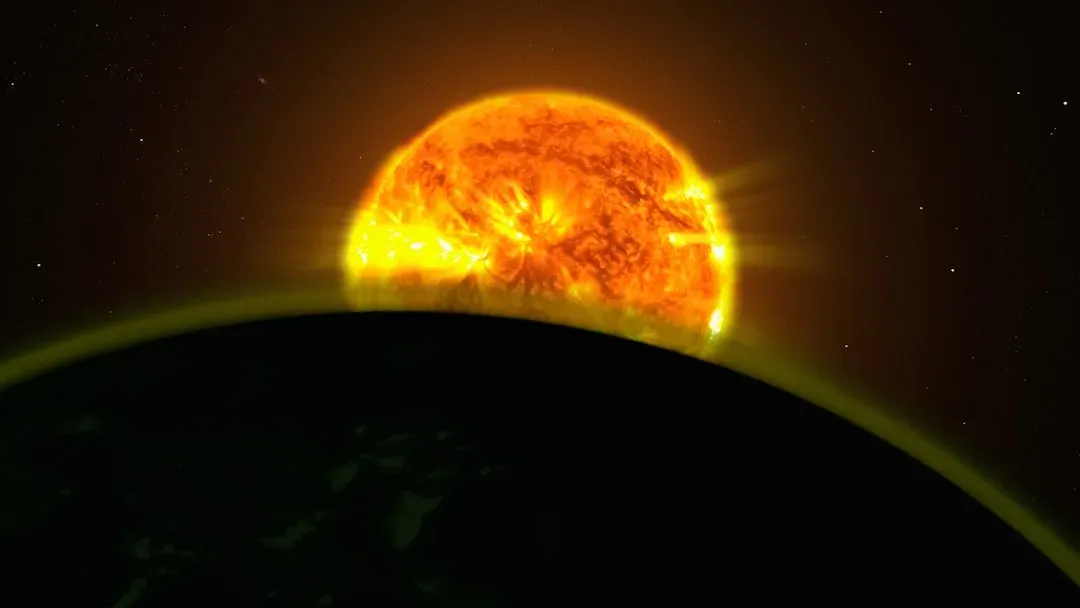
For all the excitement, there are very real reasons to be cautious about calling K2‑18b a leading home for life. A thick hydrogen atmosphere can mean high surface temperatures and pressures that are totally hostile to familiar biology. Some models suggest that if the hydrogen layer is too deep, any putative ocean below might be more like a high‑pressure supercritical fluid than anything resembling an Earth‑like sea, with temperatures hot enough to destroy complex organic molecules.
On top of that, its red dwarf star is likely more active than the Sun, with stellar flares and bursts of radiation that can strip atmospheres or bombard the planet with high‑energy particles. Depending on the strength of the planet’s magnetic field and its atmospheric structure, that might either drive interesting chemistry – or make the environment wildly unstable. So while K2‑18b looks promising on a slide in a conference talk, the details might push it toward being more of a laboratory for exotic physics than a comfortable cradle for life.
Other Contenders: TRAPPIST-1, Proxima b, and the Wider Hunt
K2‑18b isn’t the only name in the conversation when we ask which planet has real chances of life. There’s the famous TRAPPIST‑1 system, with several Earth‑size planets packed so tightly around a tiny red star that they’d make our solar system look practically empty. Some of those worlds sit in their star’s habitable zone, and their small sizes suggest rocky compositions more like Earth than like Neptune. Then there’s Proxima Centauri b, orbiting the closest star to the Sun, which has sparked endless speculation about nearby alien oceans and atmospheres we haven’t yet confirmed.
Each of these candidates comes with its own set of problems: extreme stellar activity, uncertain atmospheres, tidal locking, or poorly constrained planetary compositions. In truth, we’re in a phase where we have many promising “maybe” planets but no clear favorite. K2‑18b stands out not because it’s obviously the best, but because we can actually study its atmosphere with current telescopes, getting far more detail than we can from many smaller, more Earth‑like worlds. That observational advantage gives it an outsized role in the discussion, even if it turns out not to be habitable at all.
So, Does K2‑18b Really Have a Chance at Life?
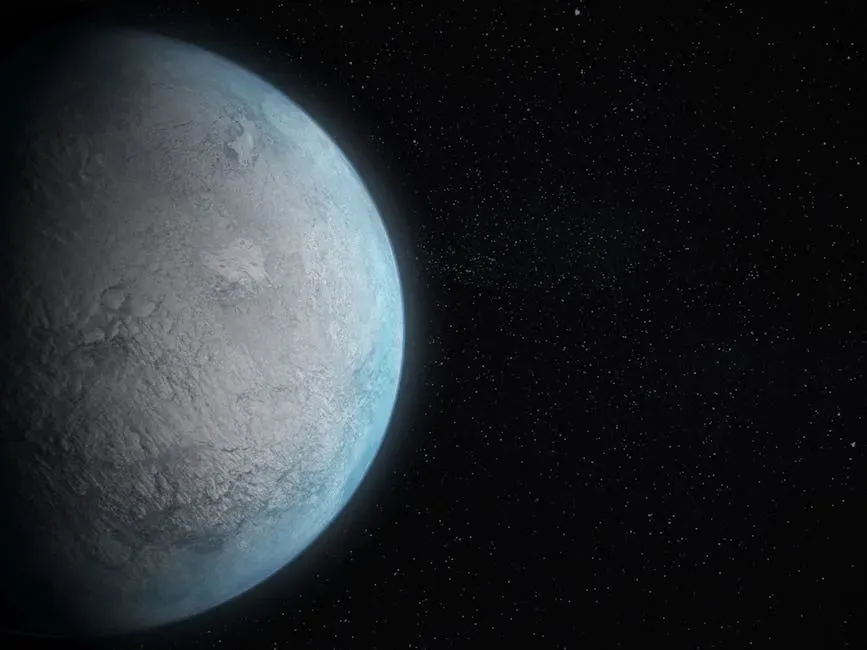
If you forced most astronomers to answer with a simple yes or no, many would probably lean toward “unlikely but not impossible.” K2‑18b is a strong candidate not for proven life, but for testing our ideas about where life could exist. The hints of water vapor and carbon‑bearing gases make it a serious world to watch, yet the uncertainties around its true structure and temperatures keep it firmly in the realm of speculation. Right now, it’s like a distant silhouette in the fog: suggestive, but far from clear.
From my own admittedly biased, human point of view, I’d say K2‑18b matters less as “the planet that might have life” and more as “the planet that forces us to grow up about what life could be.” It nudges us away from the comforting idea that we’re just looking for blue‑marble Earth clones and into a universe filled with strange possibilities: deep hydrogen skies, endless oceans, harsh red suns, and chemistry that doesn’t care what we find familiar. As next‑generation observations refine our view of K2‑18b, the real question quietly shifts from “Is it this planet?” to “Just how weird are the places where life might actually take hold?”