
If you’ve ever felt embarrassed about being wrong, the universe has a comforting message for you: even the smartest people in history have badly misread how reality works. Not just a little bit off, but totally, spectacularly wrong. And those mistakes did not slow science down – they were the fuel that pushed it forward.
Looking back from 2026, a lot of old “facts” about space and time now feel almost absurd. Yet, for centuries, brilliant scientists defended them with absolute confidence. That’s what makes these stories so wild: they remind us that today’s rock-solid truth might be tomorrow’s cosmic facepalm. Let’s walk through six moments when science got the universe wrong – and, weirdly, became much stronger because of it.
The Earth at the Center: The Cosmic Ego Trip
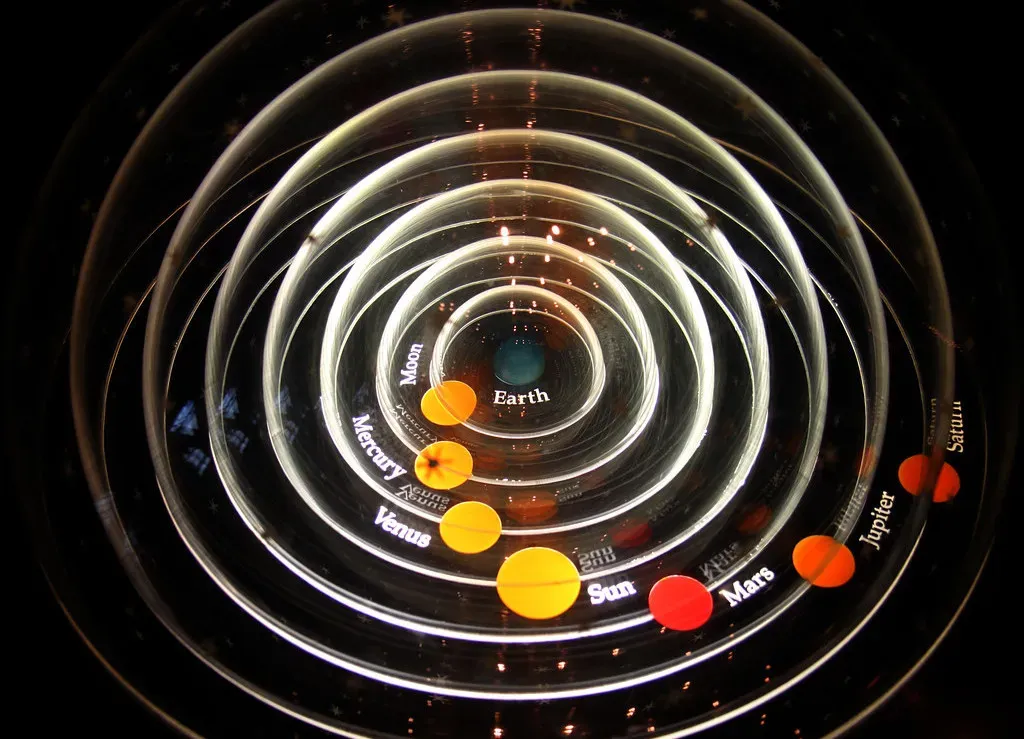
Imagine believing the entire universe spins around you – not metaphorically, literally. For well over a thousand years, many leading thinkers were convinced that Earth sat perfectly still at the center of creation, with the sun, moon, and planets embedded in nested crystal spheres circling us. This geocentric view, shaped by philosophers in ancient Greece and refined in the Middle Ages, fit beautifully with everyday experience: you don’t feel Earth move, the sky seems to rotate overhead, and nothing obviously contradicts the idea that we’re in the middle of everything.
What’s wild is how much effort went into saving this wrong idea. When planets appeared to move backward in the sky, astronomers added complicated loops called epicycles to patch the model instead of questioning the core assumption. It took the work of people like Copernicus and Galileo to flip the script and say, in effect, maybe it’s us doing the moving. The shift to a sun-centered solar system did more than tidy up some math; it cracked our cosmic ego. It was the universe’s way of telling us: you’re important, sure, but you’re not the main character.
Newton’s Unshakeable Gravity Meets Einstein’s Curveball
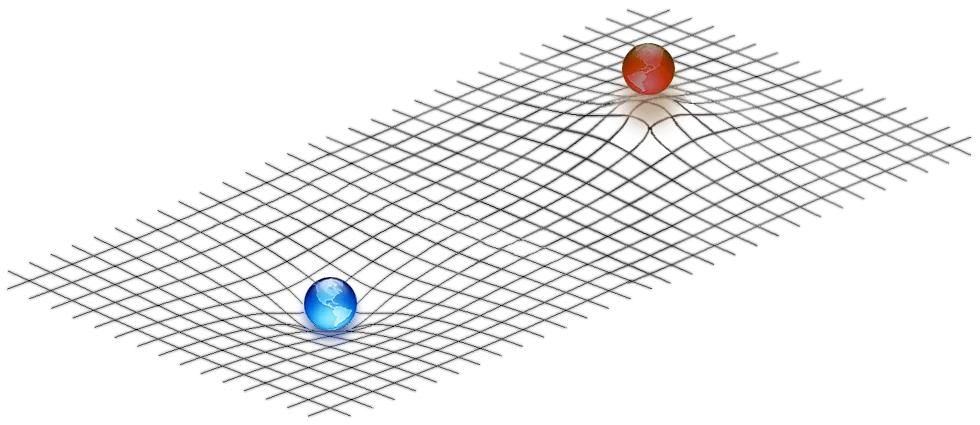
For a long time, Isaac Newton’s laws felt almost godlike in their power. His description of gravity as an invisible force pulling objects together worked scarily well, from falling apples to the motion of planets. Navigators, engineers, and astronomers all relied on Newton’s equations; the model was so successful that many scientists quietly assumed the big questions about motion and gravity were basically settled. Gravity was just a force acting instantly across empty space, and that was that.
Then tiny cracks began to show. Mercury’s orbit drifted in a way Newton’s model could not fully explain, and attempts to fix it felt like adding duct tape to a machine that was starting to rattle. In the early twentieth century, Albert Einstein flipped the whole story: gravity wasn’t a force at all, but the bending of space and time by mass and energy. Instead of planets being tugged, they were simply following curved paths in a warped cosmic landscape. Newton wasn’t useless – his math still works extremely well in everyday conditions – but the idea that he had the final word on gravity collapsed. It was a humbling reminder that even brilliant theories can be only a special case of something deeper.
The Static Universe That Refused to Stay Still
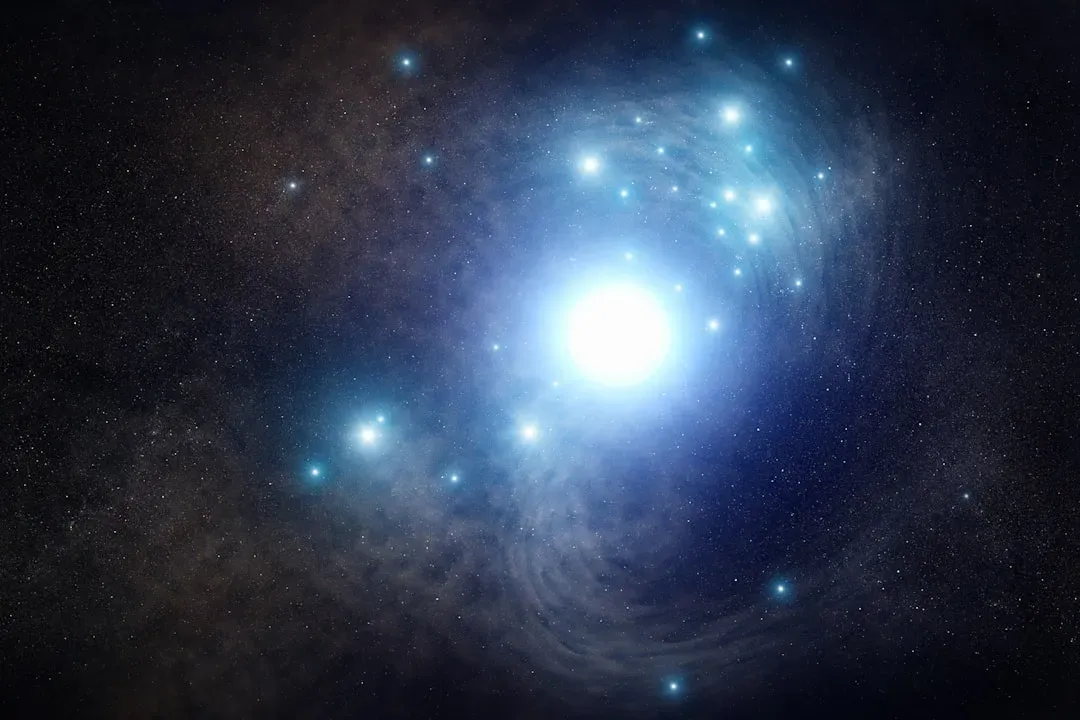
Not that long ago, many scientists assumed the universe was eternal, unchanging, and basically static on the largest scales. Even Einstein, when he first applied his equations of general relativity to the cosmos, tried to force the universe to sit still. His math naturally predicted a dynamic universe that could expand or contract, but he did not like that implication and added a custom “fix,” the cosmological constant, to keep things static. In hindsight, that move looks like someone changing the answer key so it matches what they wished were true.
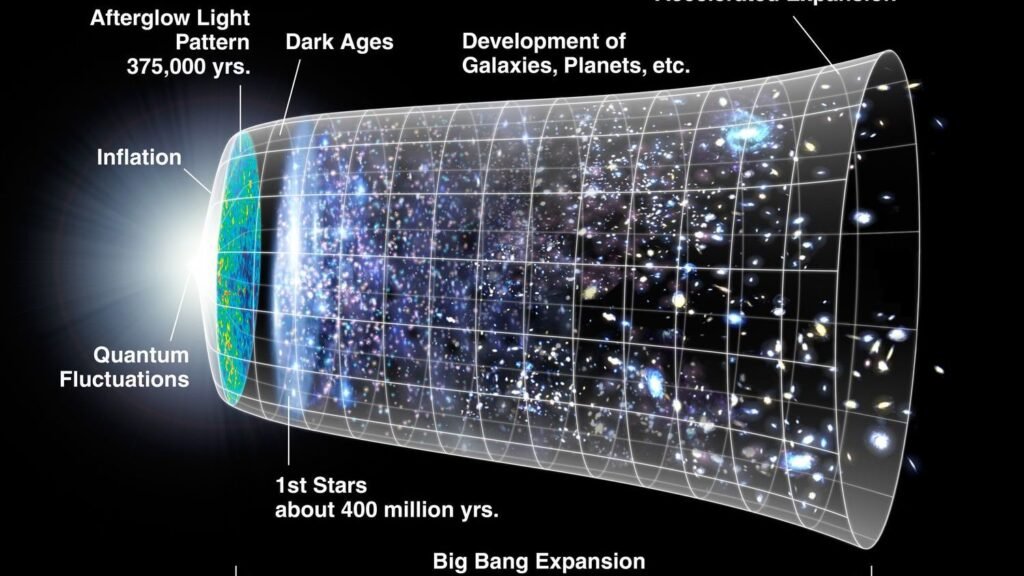
Reality, of course, did not cooperate. Observations of distant galaxies in the early twentieth century showed they were moving away from us, and the farther they were, the faster they receded. The universe was expanding, not sitting quietly. Later, the discovery of the cosmic microwave background – the faint afterglow of a hot, dense early universe – slammed the door on the static model and supported a universe with a dramatic origin. The idea of a timeless, changeless cosmos gave way to a dynamic story with a beginning, evolution, and likely an eventual fate. The universe, it turned out, is not a calm painting on a wall; it is more like a movie that has been playing for billions of years.
Steady State vs. Big Bang: A Universe That Always Was
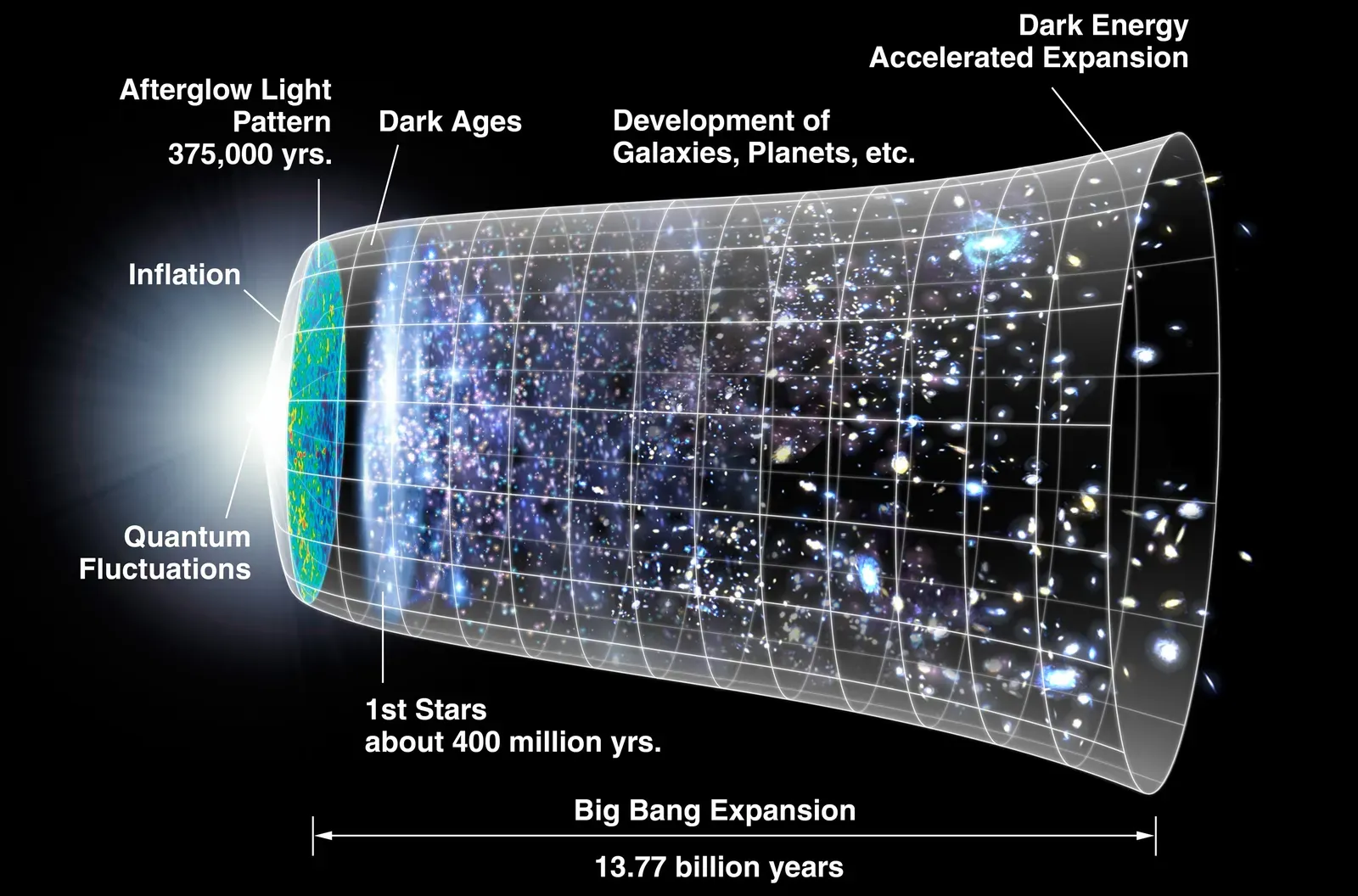
Even after evidence piled up for an expanding universe, not everyone was on board with the idea of a true beginning. In the mid-twentieth century, some influential astronomers championed the steady state model, which said the universe had always existed and always would, looking roughly the same at all times. As space expanded, new matter was said to magically appear to keep the overall density constant. Philosophically, this was appealing: no awkward cosmic birth, no time when the universe was smaller or younger, just an endless cosmic now.
For a while, steady state and Big Bang ideas competed seriously. The steady state camp tried to explain new observations through clever adjustments, but the data kept pointing elsewhere. When astronomers detected the cosmic microwave background, a uniform glow that matched predictions of a hot early universe, it was a blow the steady state model could not recover from. Additional evidence from the way galaxies cluster and the abundance of light elements reinforced the Big Bang picture. The universe, it seemed, did not gently hum along forever; it roared into existence and has been unfolding ever since. Sometimes the universe is less like a calm river and more like an explosion in very, very slow motion.
The Clockwork, Predictable Universe Meets Quantum Weirdness
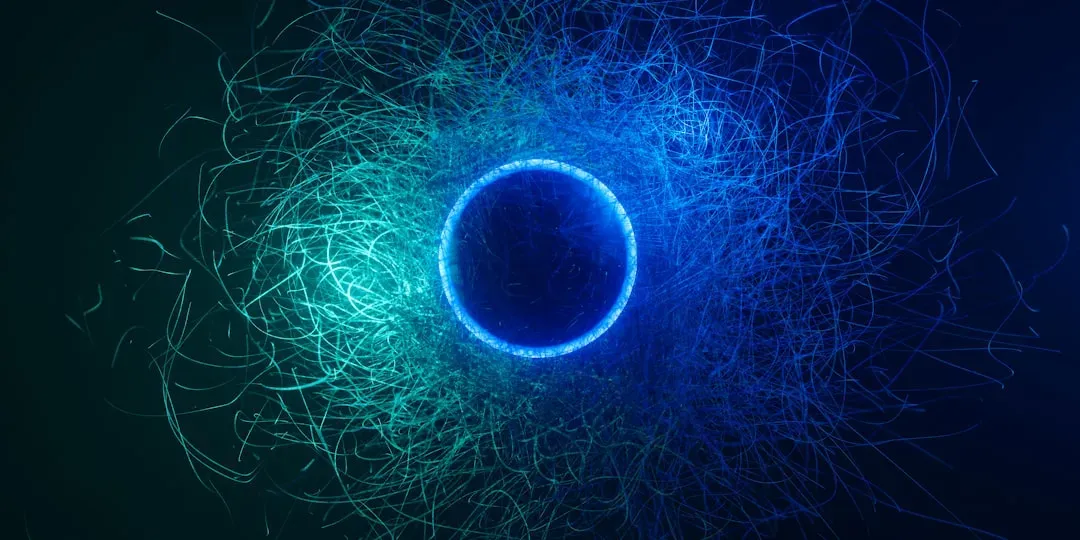
Before quantum physics crashed the party, many scientists pictured the universe as a perfectly predictable machine. If you knew all the positions and speeds of every particle, in principle, you could calculate the future and reconstruct the past with absolute certainty. This clockwork view made the world feel solid and understandable: mystery was just temporary ignorance. The atoms might be tiny, but their behavior, people assumed, followed strict, clear rules all the way down.
Then the quantum world showed up like a prank you couldn’t ignore. At very small scales, particles behaved more like smeared-out waves of possibility than tiny billiard balls. You could not know both their exact position and momentum at the same time, and many events seemed fundamentally probabilistic, not just uncertain because of bad instruments. Experiments repeatedly confirmed that nature itself bakes in randomness and non-intuitive effects like entanglement. The old dream of a fully predictable universe snapped. Instead of a rigid machine, reality at its core looked more like a dice game with rules that are precise but outcomes that are not fixed in advance.
Dark Matter, Dark Energy, and the Illusion of a Complete Cosmic Inventory
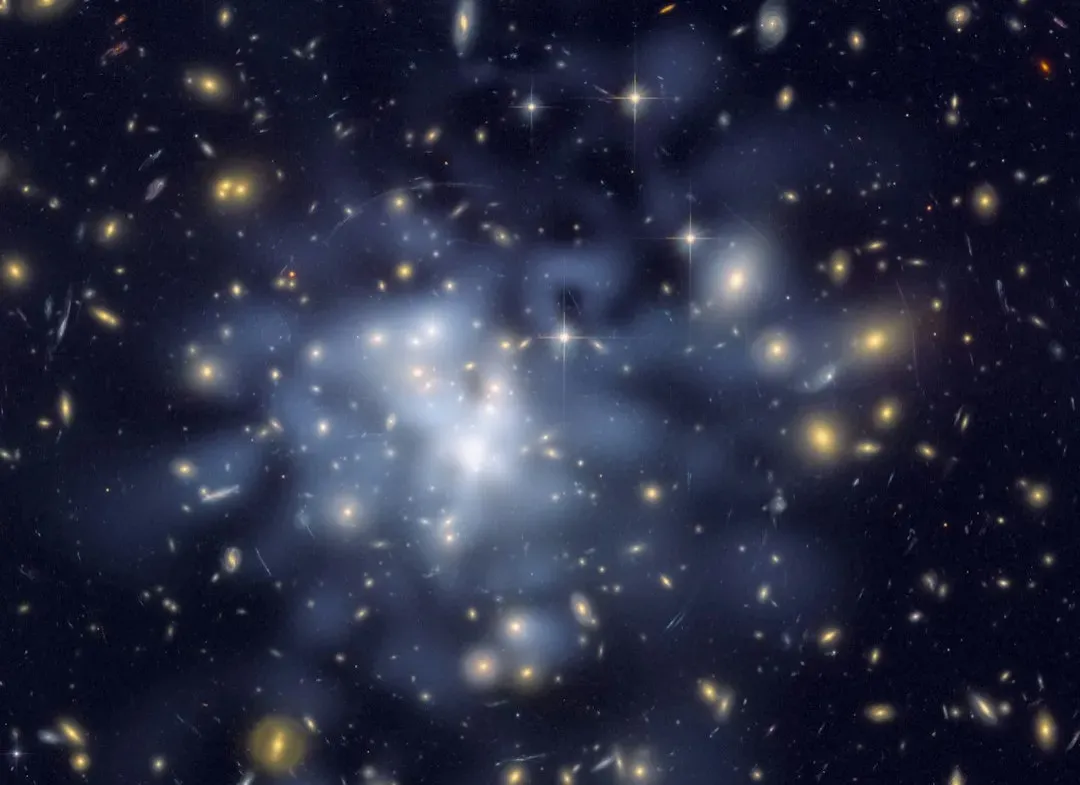
For a long stretch of the twentieth century, cosmologists felt they were closing in on a complete list of what the universe is made of. Stars, gas, dust, and the occasional black hole seemed to cover it. There was a quiet confidence that if you added up all the visible stuff and accounted for some unseen objects, you could explain the motions of galaxies and the expansion of space. The idea that most of the universe was invisible and unknown did not fit the mood. It felt like we were nearing the final chapter, not opening a new one.
Then the numbers stopped making sense. Galaxies were rotating too fast, clusters were held together more tightly than their visible mass allowed, and the universe’s expansion was not slowing down – it was speeding up. To make the math and observations match, scientists had to introduce dark matter, an invisible form of matter that outweighs ordinary matter by several times, and dark energy, a mysterious driver of accelerated expansion. Suddenly, the comfortable belief that we mostly understood the universe’s contents shattered. By current estimates, only a small fraction of the cosmos is the normal matter we can see and touch; the rest is something we still cannot directly detect or fully explain. It is like realizing the room you’ve been carefully organizing is just a closet in a much larger, mostly dark house.
Being Wrong as the Universe’s Favorite Teaching Method
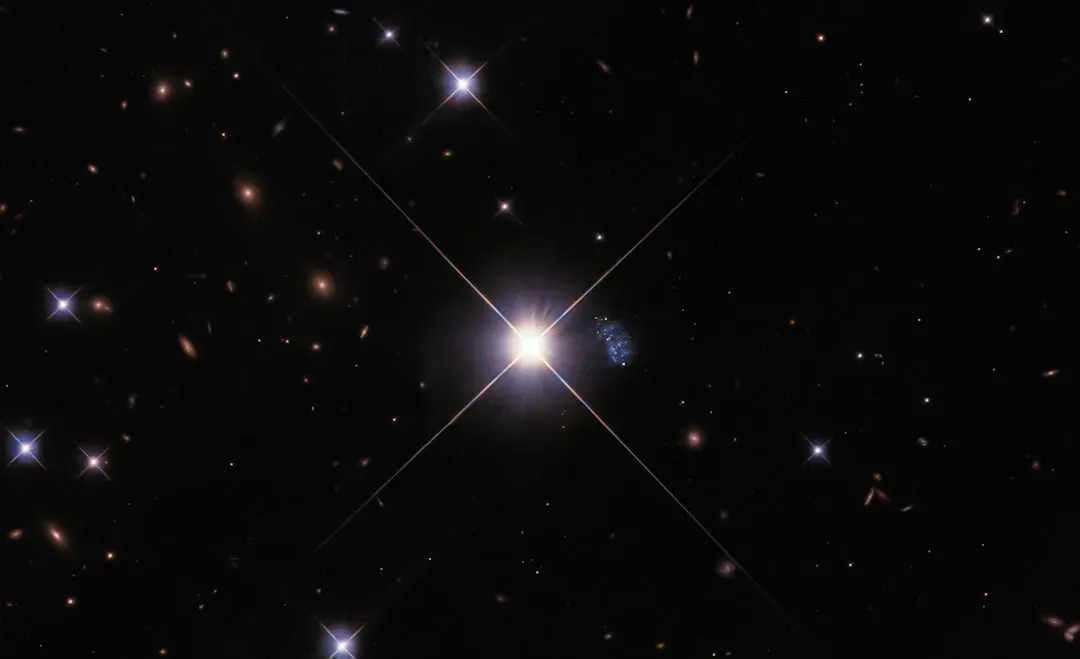
Looking back at these moments, it’s tempting to laugh at how wrong earlier scientists were. Earth at the center, a static universe, a fully predictable clockwork reality – from our vantage point, those ideas feel almost naive. But they were not silly at the time; they were serious, thoughtful attempts to make sense of limited evidence. The universe did not change; our questions did, our tools did, and our willingness to let go of cherished assumptions slowly grew. Each big mistake was less a dead end and more a signpost pointing toward a deeper truth.
What these stories really show is that being wrong is not a failure in science; it is almost the entire game. Every time the universe has forced us to admit we were off-track, it has opened a door to a richer, stranger picture of reality. Standing here in 2026, with dark matter unsolved and quantum gravity unfinished, it would be naive to think we finally have it all figured out. The next big “wrong” is almost certainly already hiding in plain sight. Which of today’s most confident ideas about the universe do you think will be the next to fall?