
You wake up every morning convinced of one absolute truth: that you are you. You feel real. You feel aware. You feel, without question, that your inner experience of the world is a faithful window onto reality itself. But what if that entire feeling, that lived, breathing sense of being a conscious self, is one of the most convincing tricks your brain has ever played on you?
Science has been wrestling with this question for decades, and the answers that are slowly emerging from labs around the world are as startling as they are uncomfortable. The deeper researchers dig, the more the ground beneath our sense of “self” seems to tremble. Let’s dive in.
The Hard Problem Nobody Can Solve
Here’s the thing that keeps neuroscientists up at night: humans know they exist, but how does “knowing” work? Despite all that’s been learned about brain function and the bodily processes it governs, we still don’t understand where the subjective experiences associated with brain functions originate. That gap, between measurable brain activity and the felt sense of being alive, is what philosophers call the “hard problem” of consciousness.
The scientific study of consciousness was sanctioned as an orthodox field of study only three decades ago. Since then, a variety of prominent theories have flourished, including integrated information theory, which has been recently accused of being pseudoscience by more than 100 academics. So not only is consciousness hard to explain, it’s hard to even agree on how to study it. Honestly, the field is in a kind of glorious chaos.
Your Brain Is Not a Camera, It’s a Prediction Engine
One of the most influential ideas reshaping how you should think about your own mind is the “controlled hallucination” theory. Your brain, rather than passively receiving sensory input like a blank canvas, is an active participant in generating your reality. It’s not just observing the world; it’s predicting and interpreting it. Think of it like your brain placing bets on what the world looks like, every single second, before the sensory data even fully arrives.
Rather than passively perceiving our surroundings, our brains are constantly making and refining predictions about what we expect to see; in this way, we create our world. If the raw data from your senses strongly supports a particular interpretation, that interpretation solidifies as your perceived reality. However, if the data is ambiguous or even contradictory, your brain may still lean towards its strongest prediction, and this can lead to illusions or misinterpretations. So the world you think you see? It’s your brain’s best guess. Nothing more, nothing less.
Illusionism: When Consciousness Becomes the Con Artist

A philosophical framework called illusionism makes a bold, almost dizzying claim. Broadly speaking, in illusionism, consciousness is not exactly what we think it is. The brain’s internal models are never perfectly accurate, and therefore absolutely nothing is exactly as the brain represents it. In the illusionist perspective, the reason why explanations of consciousness have been elusive is that scholars are mistakenly attempting to explain the subtleties of something that does not have the form they think it does.
Illusionism is a general philosophical framework in which specific theories of consciousness can be constructed without having to invoke a magical mind essence. The advantages of illusionism are not widely recognized, perhaps because scholars tend to think only of the most extreme forms and miss the range of possibilities. Think of it this way: you’ve spent your whole life studying a painting on the wall, only to discover the wall itself might not be there. That’s the kind of vertigo illusionism introduces.
Your Sense of Self Is a Useful Fiction

Let’s be real: you feel like a stable, unified person with a continuous identity. But neuroscience raises serious doubts about that. We have this sometimes perhaps necessary illusion that the self is necessarily unified. We have memories, we have emotions, we have a first-person perspective. We have a feeling that we have free will and we tend to experience these all of a piece, and cases of severe memory disorders show that intuition is wrong, that you can lose parts of the self while others remain.
Our experience of ourselves, as having an enduring, stable identity over time, is a useful illusion. The operative word there is “useful.” Your brain didn’t construct your sense of self for the sake of philosophical elegance. What the brain cares about in these cases is not where things are, but how well physiological regulation is going, basically how likely we are to keep on living. This highlights the aspect of prediction that enables control. When you can predict, you can control. You’re not conscious of being “you” because it’s true. You’re conscious of it because it keeps you alive.
What Optical Illusions and Split Brains Tell Us
Illusions serve as tools to investigate the neural underpinnings of consciousness by distinguishing brain activity associated with subjective experience from that linked to the stimulus itself. This is a genuinely clever research trick: show the brain something that doesn’t exist, and then watch how it responds. Findings highlight the difficulty in identifying a singular brain region that consistently reconstructs illusory experiences across all conditions. Multiple neural mechanisms across various areas are likely implicated in the processing and interpretation of illusory stimuli.
We tend to assume that our visual consciousness gives us a rich and detailed picture of the entire scene in front of us. The truth is very different, as research published in Psychological Science shows. More than half of people in one experiment said that there were only two letters present rather than three. Follow-up work seems to indicate that they’re pretty confident about this incorrect judgment. You’re not just misreading the world occasionally. You’re doing it constantly, and feeling absolutely certain about it. That’s the real twist.
Psychedelics Are Pulling Back the Curtain
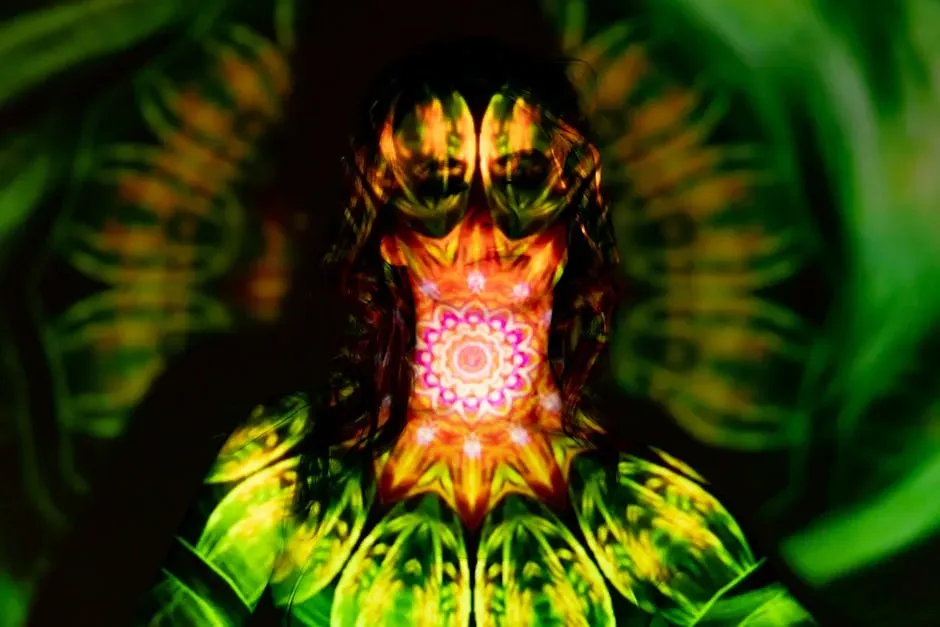
I think one of the most unexpected allies in consciousness research right now is the science of psychedelics. Perhaps the most tangible advances came from renewed interest in altered states of consciousness, particularly through psychedelic research. Multiple studies in 2025 demonstrated that psychedelic compounds can rapidly reorganize brain networks, temporarily dissolving rigid patterns of thought associated with depression, trauma, and addiction. When you disrupt the machinery, you start to see how the machinery actually works.
Psychedelics are known to induce altered states of consciousness, including visual distortions, alterations of the sense of time and space, mystic or spiritual experiences, ego-dissolution, as well as effects on mood and cognition. The fact that a chemical compound can make your sense of “self” temporarily dissolve is about as direct a demonstration as science can offer that the self is a constructed experience, not a fixed reality. Mindfulness, meditation, and psychedelics do not fabricate alternate realities but reveal more profound layers of human consciousness that have always existed, merely hidden by the brain’s filtering systems.
The Tools Are Finally Catching Up With the Questions
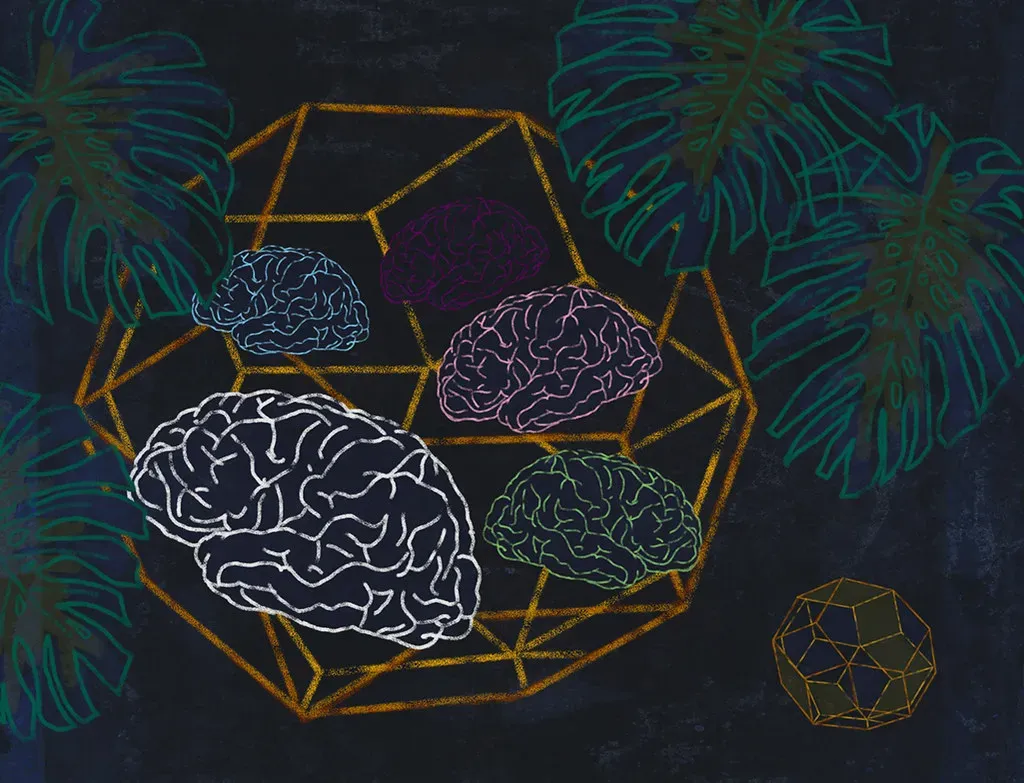
For a long time, researchers could observe consciousness but couldn’t probe it directly. That’s starting to change in remarkable ways. Scientists still don’t know how the brain turns physical activity into thoughts, feelings, and awareness, but a powerful new tool may help crack the mystery. Researchers at MIT are exploring transcranial focused ultrasound, a noninvasive technology that can precisely stimulate deep regions of the brain that were previously off-limits. In a new roadmap paper, they explain how this method could finally let scientists test cause-and-effect in consciousness research, not just observe correlations.
A study involved high-resolution scans that enabled researchers to visualize brain connections at submillimeter spatial resolution. This technical advance allowed them to identify previously unseen pathways connecting the brainstem, thalamus, hypothalamus, basal forebrain, and cerebral cortex. Together, these pathways form a “default ascending arousal network” that sustains wakefulness in the resting, conscious human brain. Meanwhile, when tested for “hidden consciousness,” one in four patients with severe brain injury who appeared unresponsive were able to respond to instructions covertly. Consciousness, it turns out, can be present even where we assumed there was none. That finding alone should make you question everything you think you know about the nature of awareness.
Conclusion: The Most Personal Mystery in the Universe
Questions about the nature of consciousness remain among the most perplexing areas of modern scientific research, with implications for both the human mind and our broader concept of reality. Many advancements over the last year have challenged long-held assumptions about where and how consciousness originates, how widespread it may be, and how profoundly altered states can reshape human perception. The picture that’s emerging is both unsettling and strangely beautiful.
You may not be the stable, unified, all-perceiving self you believe yourself to be. Your brain is a prediction machine, spinning a living story every waking moment, filling in gaps, making guesses, constructing a “you” that feels real enough to get out of bed. Consciousness science is entering an age of unprecedented opportunity, thanks to recent empirical and theoretical advances, increasing interest in the topic, and technological advances in neuroscience. The mystery of consciousness isn’t getting smaller. It’s getting more fascinating. And perhaps that’s exactly what a very convincing illusion would want you to think. What do you believe: are you the author of your experience, or just a character in a story your brain is telling itself?