

Science has sent probes to the edge of the solar system. It has mapped the human genome and decoded the structure of atoms. We live in a golden era of knowledge, and yet – here’s the thing – some of the most ordinary things you do every single day remain completely unexplained. We’re not talking about black holes or dark matter. We’re talking about yawning. Dreaming. The weird power of a sugar pill. These are phenomena happening inside your own body, in your own living room, and science genuinely has no complete answer for any of them.
It’s both humbling and oddly thrilling. The universe isn’t hiding its biggest secrets in distant galaxies alone. Sometimes, they’re hiding right behind your eyelids. Let’s dive in.
1. Why You Yawn – and Why It’s Contagious

You’ve done it thousands of times in your life without a second thought. The act of yawning feels so unremarkable that humans do it all the time without thinking. However, the science behind this everyday act remains a genuine mystery. That should stop you in your tracks. Something so basic, so universal, so deeply human – and we genuinely don’t know why it happens.
Yawning remains a mystery partly because it has complex mechanical, biological, neurological, and behavioral influences. It’s hard to know where one influence ends and the next begins. The old theory – that you yawn to suck in more oxygen when carbon dioxide builds up – was actually debunked back in 1987. One of the more recent and prominent theories that still holds some weight is that yawning may be a way to regulate brain temperature. Think of it as a biological fan for your skull.
Whether a physiological reason for yawning exists or not, what experts agree upon is that yawning is indeed contagious. Similar to the mystery surrounding why we yawn, experts also aren’t really sure why yawns are so contagious. Honestly, I find this part the most fascinating. Contagious yawning doesn’t really appear in human behavior until early childhood. Taken together, experts believe that contagious yawning may be a social communication tool specific to higher-order animals. Even reading this right now may have triggered one. Did it?
2. Why You Dream – and What Dreams Actually Do

Each night, your mind slips into strange, vivid worlds where logic bends, time distorts, and impossible events unfold. Dreams are universal, yet their purpose remains a puzzle. You might wake up from a dream about flying over your childhood home or arguing with a stranger who has your mother’s face, and wonder what on earth your brain was doing. The unsettling answer is: science isn’t sure either.
One leading theory, the activation-synthesis hypothesis, suggests that dreams result from the brain trying to make sense of random bursts of neural activity during REM sleep. According to this view, dreams are the mind’s attempt to create order out of chaos, weaving narratives around electrical signals that have no inherent meaning. It’s a bit like your brain writing a novel from a random pile of scrambled sentences. A 2025 fMRI study by the Max Planck Institute for Human Cognitive and Brain Sciences suggested that dreams are essential for “future proofing” memory and practicing social scenarios. However, the exact mechanism of content generation remains opaque. The continued lack of consensus among researchers highlights a major gap in cognitive science that affects us all.
Neuroscientists at Northwestern University have shown that dreams can actually be nudged in specific directions – and those dream tweaks may boost creativity. By playing subtle sound cues during REM sleep, researchers prompted people to dream about unsolved brain teasers they had struggled with earlier. An astonishing three quarters of participants dreamed about the cued puzzles, and those puzzles were solved far more often the next day. So dreams may serve you in ways you’ve never realized. The mystery of dreams is far from solved. New technologies are pushing the frontier of dream research. Brain imaging and machine learning algorithms are getting closer to reconstructing dream images from neural activity.
3. The Baffling Power of the Placebo Effect

Imagine taking a sugar pill and your chronic pain genuinely easing. Not because you imagined it. Not because you were fooled. Because something real happened inside your body in response to absolutely nothing pharmaceutical. The sheer, measurable power of the placebo effect – where a patient’s belief in a fake treatment produces a genuine, physiological response – is a profound mystery that confounds pharmacology. Scientists have documented the brain releasing its own highly potent painkillers, or even adrenaline, based entirely on the patient’s expectation. The precise mechanism by which a non-active substance triggers a physical cure remains utterly baffling to modern medicine.
How placebos work is still not quite understood, but it involves a complex neurobiological reaction that includes everything from increases in feel-good neurotransmitters, like endorphins and dopamine, to greater activity in certain brain regions linked to moods, emotional reactions, and self-awareness. Think of it like your brain having a secret pharmacy it only opens under certain conditions of belief and expectation. In one study, researchers discovered that a placebo was roughly half as effective as a real drug at reducing pain after a migraine attack – even when the patient knew they were taking a placebo. The researchers speculated that a driving force was the simple act of taking a pill. People associate the ritual of taking medicine as a positive healing effect. Even if they know it’s not medicine, the action itself can stimulate the brain into thinking the body is being healed.
A 2025 review published in the New England Journal of Medicine reiterated that the placebo effect represents a powerful, untapped window into the mind-body connection that defies simple chemical explanation. Researchers are struggling to harness this ability without fully understanding its precise neurological trigger. Unlocking the true power of the placebo could fundamentally revolutionize current pain management and chronic disease treatment protocols. In other words, your beliefs may be one of the most potent medicines ever discovered – and we still can’t fully explain why.
4. The Mpemba Effect – Why Hot Water Can Freeze Faster Than Cold

Here’s a genuinely strange one that sounds like a trick question at a dinner party. Sometimes, hot water freezes faster than cold water. This odd phenomenon is called the Mpemba effect, named after a Tanzanian student, Erasto Mpemba, who observed it in the 1960s. At first glance, it seems physically impossible. Cold water should have less work to do to get to freezing point. Common sense agrees. Physics, apparently, does not always care.
The effect has been reproduced in experiments, but explanations vary. Some suggest it’s due to differences in evaporation, convection, or the behavior of hydrogen bonds in water molecules. Yet no single theory fully explains why hot water can beat cold in the race to freeze. It’s a bit like a slower runner overtaking a faster one in a race, with no one quite sure how it happened. This simple, everyday mystery – why hot water freezes faster – remains unsolved, proving that even the most ordinary substance on Earth still holds secrets. Water. The stuff you drink every day. Still mysterious in 2026.
5. Consciousness – The Biggest Mystery of All
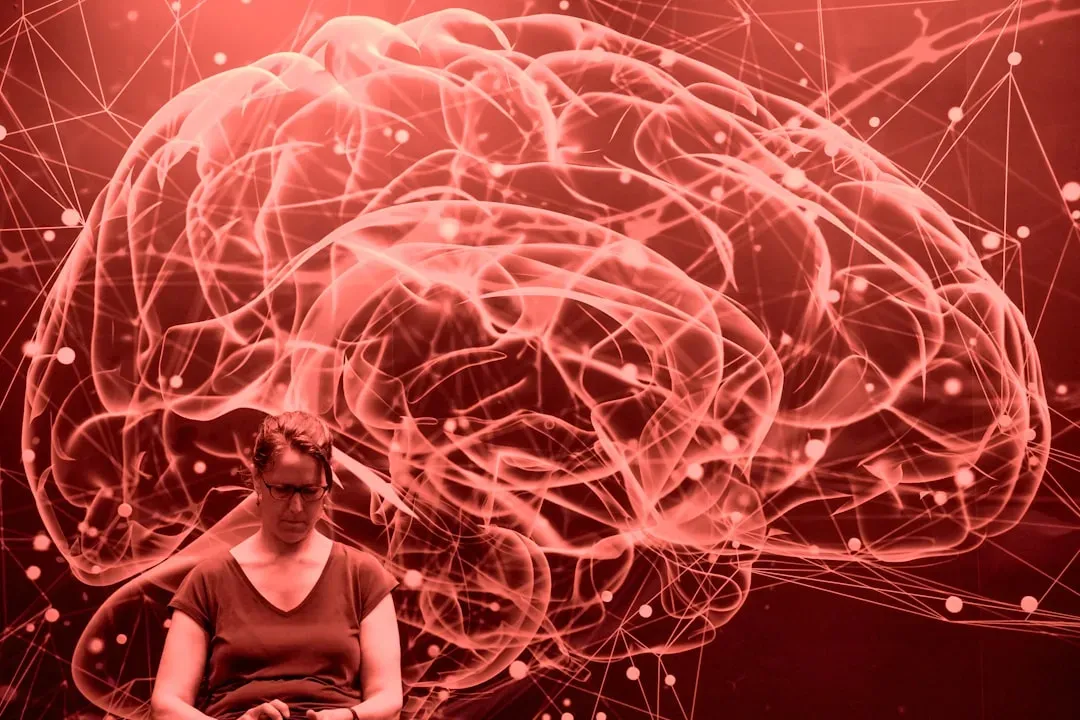
You are reading these words right now. You are aware of the room you are in. You have a feeling about whether this article is interesting or not. That awareness, that inner experience of “being you” – it’s so familiar that you never question it. You probably should. Despite significant advances in cognitive science, the fundamental question of how a physical brain generates the subjective experience of consciousness – the feeling of “being you” – remains a major unresolved scientific and philosophical challenge. Scientists can map brain activity and identify neurological correlates, but they cannot explain the raw, personal experience of thought and feeling itself. Why doesn’t the brain simply process information like a sophisticated computer chip instead of creating a rich, internal, subjective world?
This “hard problem of consciousness,” as philosopher David Chalmers calls it, remains unsolved. Some argue consciousness emerges from complex computation, meaning machines might one day achieve awareness. Others suggest it is a fundamental property of the universe, woven into the fabric of reality like space and time. Still others believe it arises from quantum processes within the brain. I think what makes this so unsettling is the intimacy of it. It’s not happening far away in space. It’s happening right now, inside your skull, as you read this sentence.
This “hard problem” of consciousness is the ultimate biological mystery that effectively straddles the line between science and philosophy. Researchers can track the electrical impulses and chemical changes that occur in the brain, but the non-physical, qualitative experience of awareness – often called qualia – that arises from that activity remains entirely unexplained. It’s the one mystery where the very tool we use to investigate – the human mind – is also the object being investigated. That’s a loop science has not yet found a way out of.
Conclusion

It’s easy to assume that science has figured most things out. Vaccines, space travel, quantum computing – the achievements are staggering. Yet the five phenomena explored here share something remarkable: they are utterly ordinary, they happen every single day, and they remain genuinely unsolved. You yawn. You dream. You respond to sugar pills. You boil water. You think. And none of it is fully understood.
There is something deeply comforting about that, if you think about it. The universe is not a closed book. It is still being written, and some of its most interesting chapters are hidden inside the mundane moments of your daily life. The next time you catch yourself mid-yawn at your kitchen table, remember: you are participating in one of science’s oldest unsolved mysteries.
Which of these surprises you the most – and which did you assume science had already figured out? Tell us in the comments.