
Our planet is roughly 4.5 billion years old, and yet there are places on its surface that still make even the most seasoned geologists scratch their heads. These are not remote theories or fringe ideas. These are real, physical structures you can visit, touch, and stand in front of, and they still refuse to give up their full secrets.
Think about that for a moment. With satellite imaging, drone technology, ground-penetrating radar, and centuries of accumulated geological research, you would expect science to have most of the answers by now. Some of the formations below have been studied for decades. Many remain stubbornly mysterious. So get ready to have your perception of the natural world turned completely upside down. Let’s dive in.
1. The Eye of the Sahara (Richat Structure), Mauritania
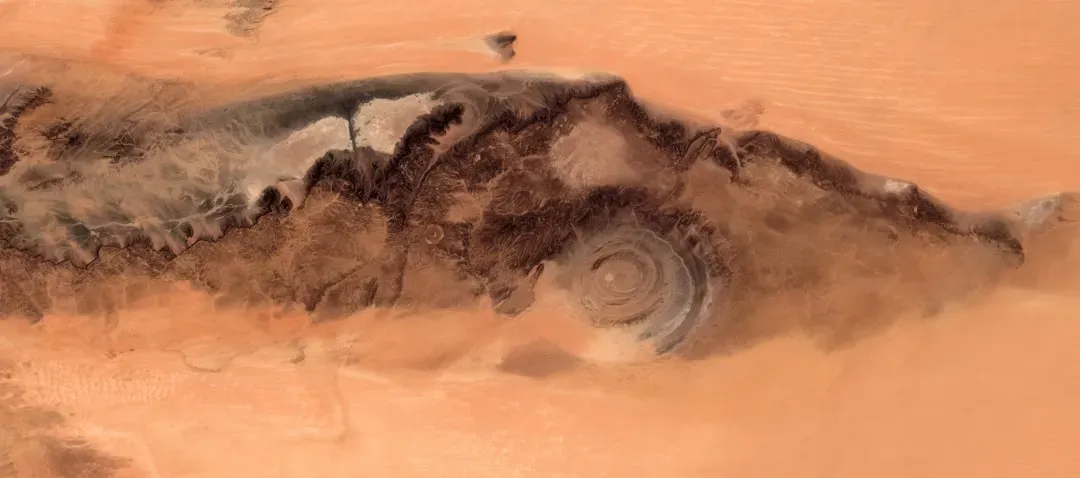
You may have seen a photograph of it from space and assumed it was a crater. Perfectly understandable. The Eye of the Sahara, also known as the Richat Structure, is a 28-mile-wide site of huge concentric circles found in the western African nation of Mauritania. From above, it looks like a bull’s-eye drawn directly onto the desert floor by a giant hand, eerily precise and impossibly symmetrical.
Geologists initially thought the site was created by an asteroid impact, but there isn’t enough melted rock among the rings to support this theory. Similarly, there’s no evidence to suggest a volcanic eruption. More recently, geologists have proposed that the Eye of the Sahara could be an eroded, collapsed geological dome formed some 100 million years ago when the supercontinent Pangea broke up, with ancient rocks found on the surface having originated as much as 125 miles beneath the Earth’s crust. Honestly, for something this enormous, the lack of a definitive answer is staggering.
2. The Nastapoka Arc, Canada
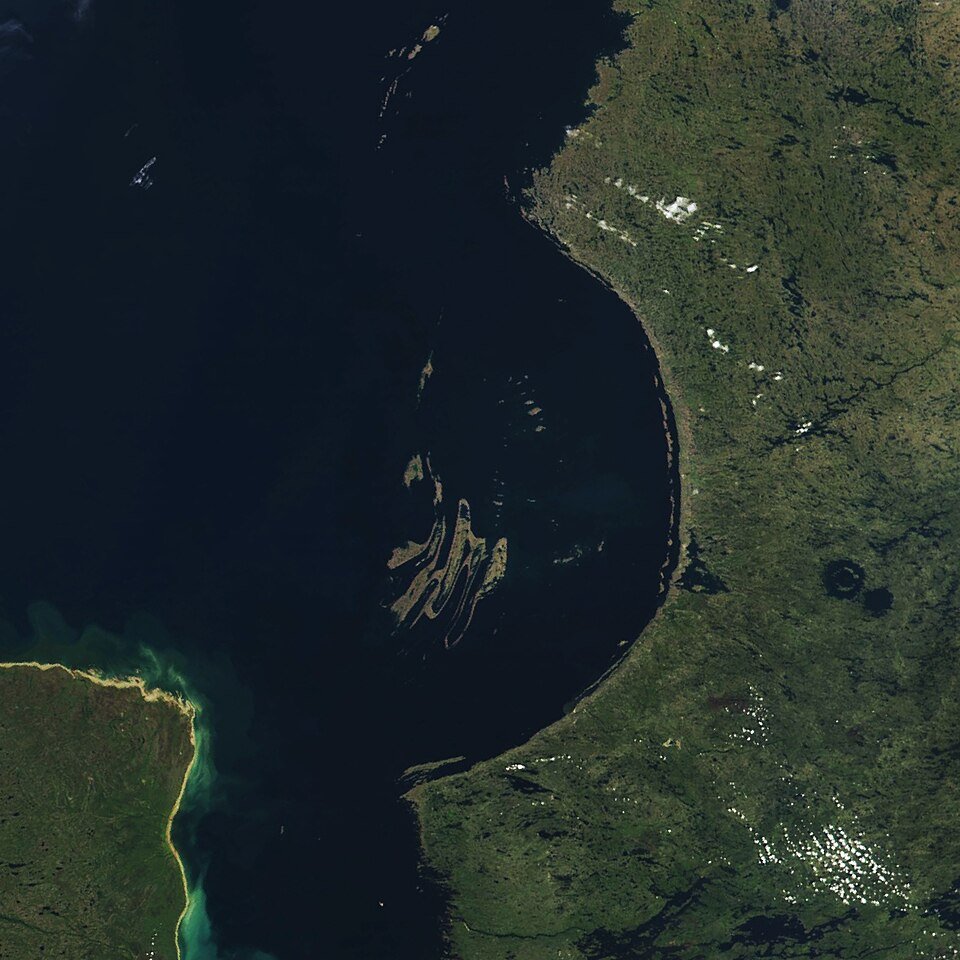
Imagine flying over Hudson Bay in Canada and noticing something deeply unsettling below you. A near-perfect arc, curving along the southeast corner of one of the largest bodies of water on Earth. In the southeast corner of Hudson Bay, Canada, lies a near-perfect arc, also known as the Hudson Bay Arc, which was first thought to be an impact crater from a meteorite. None of the usual confirming evidence, such as shatter cones or unusual melted rocks, has been found in the vicinity.
The most commonly accepted theory for the arc, based on geological evidence collected in the 1970s and later, is that it is a boundary formed when one shelf of rock was pushed under another. That doesn’t explain how or why it’s so perfectly round, so the Nastapoka Arc remains subject to ongoing study. Nature rarely draws circles this clean. The precision of it is the kind of thing that makes you feel like someone, or something, drew it with a compass. Hard to shake that feeling.
3. The Sailing Stones of Death Valley, USA
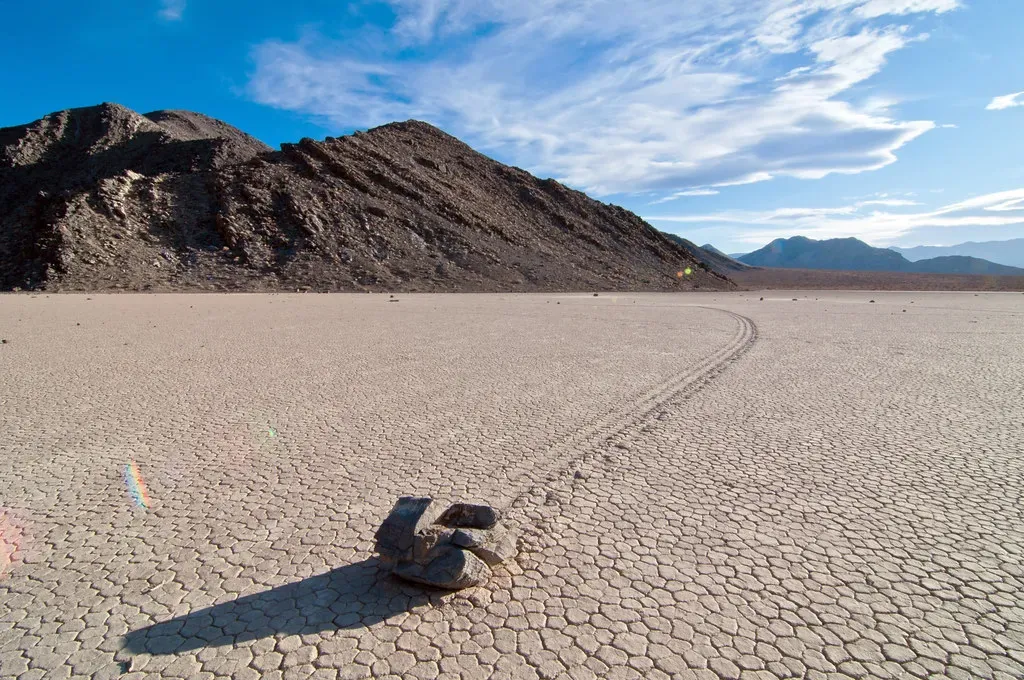
Here’s the thing: rocks don’t move. That’s basically the most fundamental truth of geology. Heavy, massive, inert objects sitting on flat desert ground simply do not glide across the surface on their own. Yet that is exactly what happens at Racetrack Playa in California. The sailing stones of Death Valley’s Racetrack Playa are rocks that, weighing up to hundreds of pounds, appear to glide, sometimes non-linearly, across the desert floor without animal intervention.
The phenomenon of the sailing stones is a mysterious geological occurrence that has puzzled scientists and intrigued visitors for years. Located in the Racetrack Playa of Death Valley National Park in California, these rocks appear to move across the desert floor on their own, leaving behind long tracks that can stretch for hundreds of feet. Despite years of study, the cause of this movement is still not fully understood. NASA research suggests that during the winter months, ice forms around the rocks, perhaps allowing them to slip across the frozen surface of the playa. It’s a theory, but it still doesn’t fully explain the sheer variety of their paths.
4. The Great Unconformity, Grand Canyon, USA
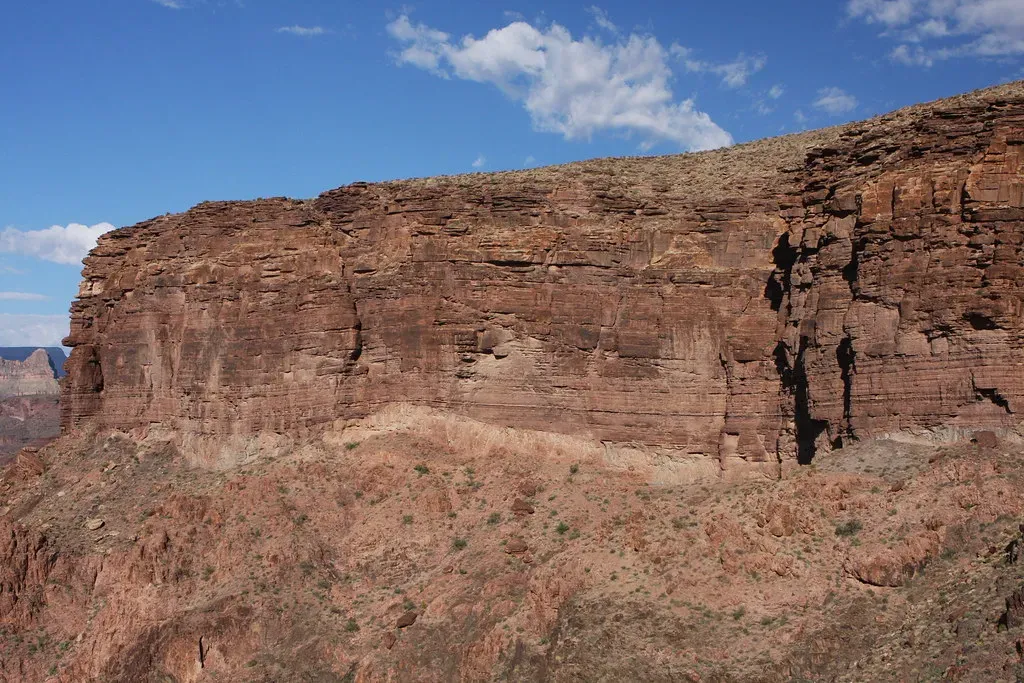
If you stood at the edge of the Grand Canyon and looked down at the layers of rock beneath you, you would be reading the story of Earth’s history like the pages of a book. Except there is a chapter missing. A very, very long chapter. The Great Unconformity is a huge gap in the geological record: layers of rock dating from about 1.2 billion to 250 million years ago are completely missing from certain areas around the globe. This enormous chunk of lost time can be seen clearly in the stratigraphy of the Grand Canyon, where there is plenty of rock from the Cambrian period at 540 million years ago, but the layer beneath it is basement rock formed roughly 1 billion years ago and empty of fossils.
Roughly 700 million years of Earth’s story simply vanished. An emerging theory called “Snowball Earth” may explain where the rock disappeared to. Around 700 million years ago, Earth was encased in snow and ice. Moving glaciers peeled off the planet’s crust with the help of lubricating sediments, pushing it into oceans, where it was reabsorbed by subducting tectonic plates. It’s a bold theory. Compelling, even. Still, imagining the entire surface of the Earth scraped clean like frost off a windscreen is the kind of thought that keeps geologists awake at night.
5. The Mima Mounds, Washington State, USA
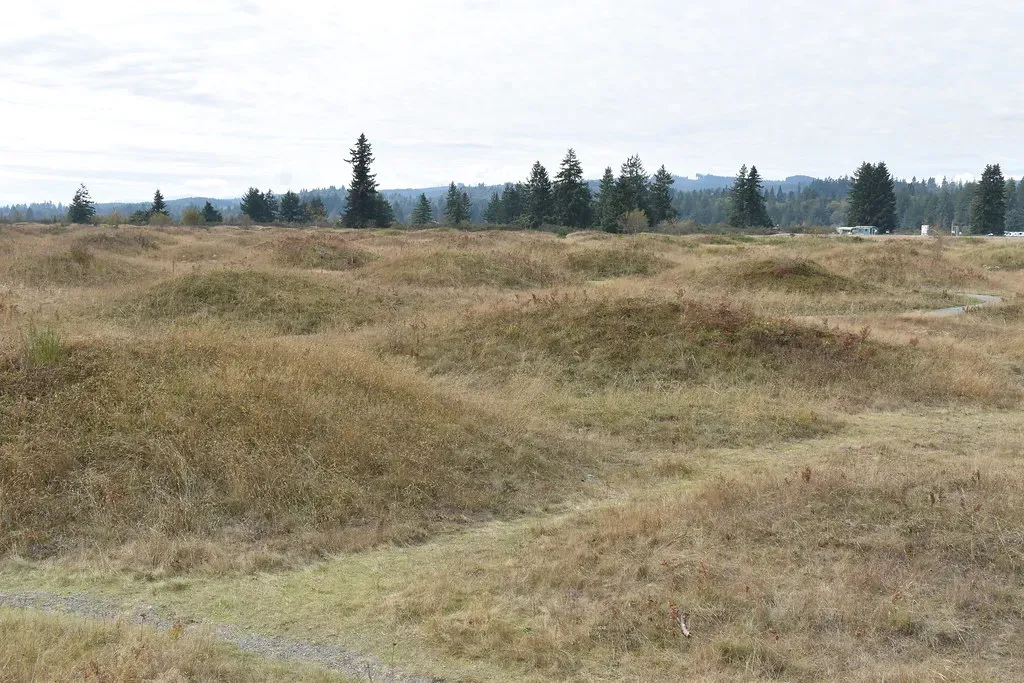
Picture a vast grassland that looks, from a distance, like a giant bubble-wrap landscape. Thousands upon thousands of uniform, rounded earthen mounds, stretching as far as the eye can see, perfectly spaced, almost rhythmically patterned. The Mima Mounds are mysterious, uniform undulations in the grasslands of Washington State near Olympia, ranging from 10 to 164 feet in diameter and up to 6.5 feet tall. When American explorer Charles Wilkes set eyes on them in 1841, he believed they were human-made burial mounds and had three of them excavated, only to find them filled with loose stones.
Theories have ranged from glacial activity to burrowing pocket gophers to seismic vibrations over millennia. I think it’s the sheer uniformity that gets people. Nature tends toward chaos, not orderly repetition. Similar mound patterns have since been found on several other continents, which deepens the mystery even further, suggesting whatever process formed them was not merely local but potentially global in scale. No single explanation has yet satisfied the scientific community as the definitive answer.
6. The Fairy Circles of Namibia
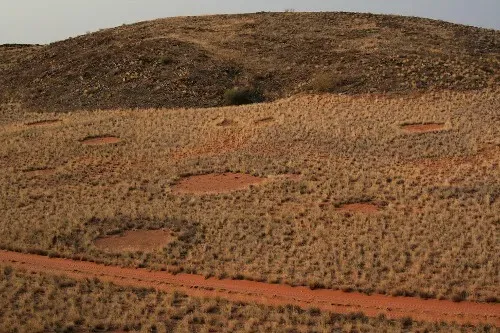
Few things in geology feel as close to magic as the Fairy Circles of the Namib Desert. Standing at the edge of one, you could almost convince yourself you had stumbled onto sacred ground. The mysterious fairy circles of Namibia are circular patches, typically six to 40 feet in diameter, of barren soil bordered by grass, extending for over 1,000 miles throughout the Namib Desert in Southern Africa, one of the driest regions on Earth.
These circles are typically between 6 and 30 feet in diameter, evenly spaced, sometimes covering hundreds of acres. The cause of these circles has long been a mystery, but there are many theories that attempt to explain this strange phenomenon. One popular theory is that the circles are created by termites, which burrow beneath the surface of the desert and create underground tunnels that allow water to spread evenly throughout the area. Other scientists argue it is competing desert plant life that creates circular dead zones as a survival strategy. Both camps have evidence. Neither has won the argument. The circles keep growing regardless.
7. The Giant Crystals of Naica Cave, Mexico
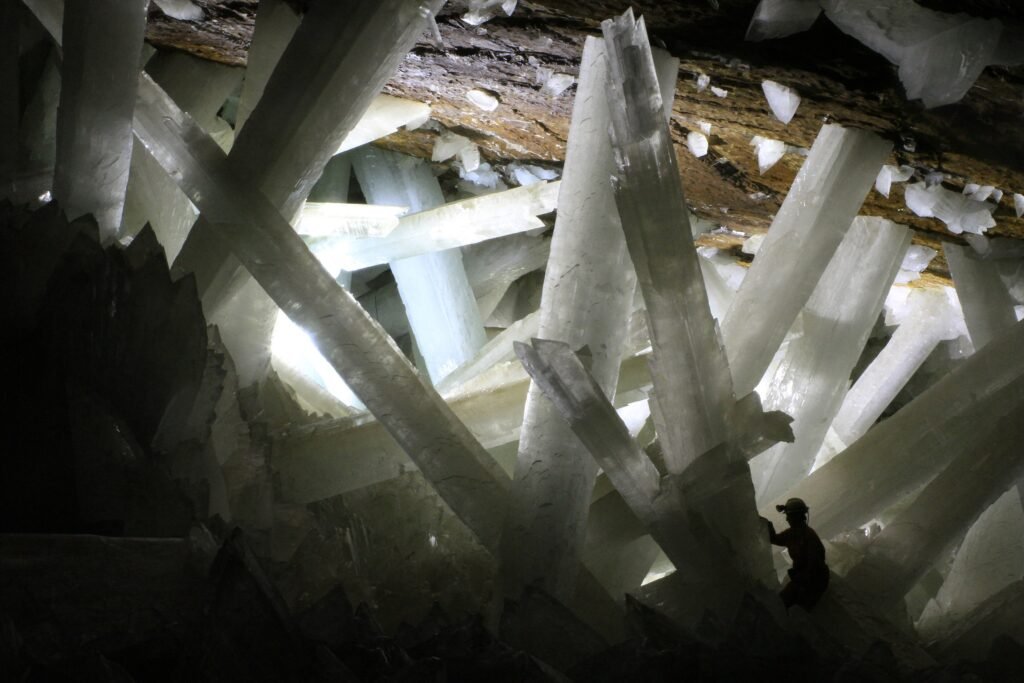
There are caves, and then there is Naica. Discovered by miners in the year 2000 beneath a mountain in the Chihuahuan Desert, the Cave of the Crystals is something so alien and so overwhelming that even trained scientists have struggled to process it with their own eyes. The otherworldly crystals in the Cave of the Crystals in Mexico can reach sizes larger than houses, by far the largest such crystals known on the planet. They apparently grow at incredibly slow rates, with gypsum formations taking as long as a million years to reach more than two stories tall.
What makes it truly hard to explain is the sheer scale combined with the specific geological conditions required to produce it. The cave sits deep below the Earth’s surface where magma-heated water sat undisturbed for hundreds of thousands of years, allowing the selenite crystals to grow uninterrupted. Researchers speculate that microscopic pockets of liquid within these giant crystals might hold microbes, potentially ancient life preserved inside the stone itself. Think about that: life possibly locked inside a crystal for half a million years. The cave is so hot and humid that unprotected visitors can survive inside for only minutes before their bodies begin to fail.
Conclusion: The Earth Still Holds Its Secrets Close
There is a certain kind of comfort in living on a planet that still refuses to explain itself entirely. Every one of these seven formations represents a reminder that geology, for all its tools and centuries of study, is still very much a field of open questions. From a perfectly circular arc in a Canadian bay to rocks that wander across a desert floor, the Earth is not done surprising us.
What I find most fascinating is not the mystery itself, but what the mystery says about human knowledge. We have sent robots to Mars, mapped the human genome, and split the atom. Yet we still genuinely do not know why thousands of mounds arranged themselves uniformly across a Washington State grassland. That’s humbling in the best possible way.
The next time you stand on solid ground, consider what might be going on deep underneath your feet, or in a desert halfway across the world, where a rock is quietly, inexplicably, on the move. Which of these seven formations surprised you the most? Drop your thoughts in the comments below.