
For all our talk about being in a “high-tech age,” nature still gets the last laugh. We’ve put robots on Mars and sequenced the human genome, yet our best scientists are still scratching their heads over some everyday mysteries right here on Earth. That isn’t because science is failing; it’s because the universe is far stranger and more complicated than any of us were raised to believe.
I still remember the first time I saw ball lightning mentioned in a physics textbook and realizing the tone was basically: “we’ve seen it, we think, but… yeah, no one really knows.” That mix of awe and confusion hasn’t gone away. The seven phenomena below are a reminder that, even in 2026, there are corners of reality where our explanations wobble, our models break, and the world feels deliciously wild again.
1. Ball Lightning: Mysterious Orbs in the Storm
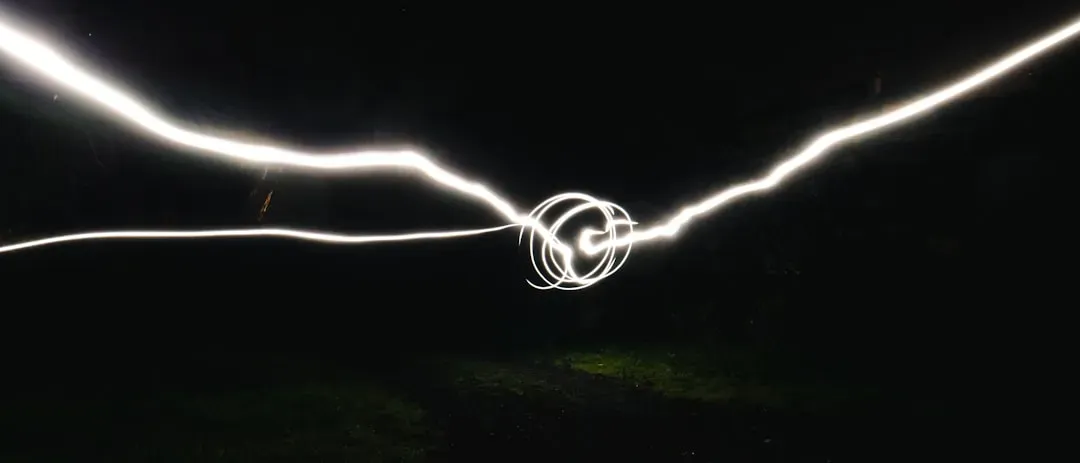
Imagine standing at your window during a thunderstorm and seeing a glowing orb of light float silently through your living room, then vanish without a sound. It sounds like a scene from a sci‑fi movie, but reports of “ball lightning” like this go back centuries across different cultures. People describe luminous spheres, sometimes the size of a grapefruit, sometimes closer to a beach ball, that drift, bounce, or even pass through walls before disappearing in a flash or quietly fading away.
The strangest part is that our best instruments rarely catch these things in the wild. There have been a few suggestive recordings and one or two lab experiments that might have created similar effects, but there’s no agreed‑upon explanation that fits all the reports. Some theories involve vaporized silicon in soil, others focus on electromagnetic fields or plasma structures that are somehow stabilized in air. The honest truth is that scientists are still piecing together scattered data and eyewitness accounts, trying to distinguish misidentifications from the genuinely bizarre.
2. Earthquake Lights: The Sky That Glows Before the Ground Breaks
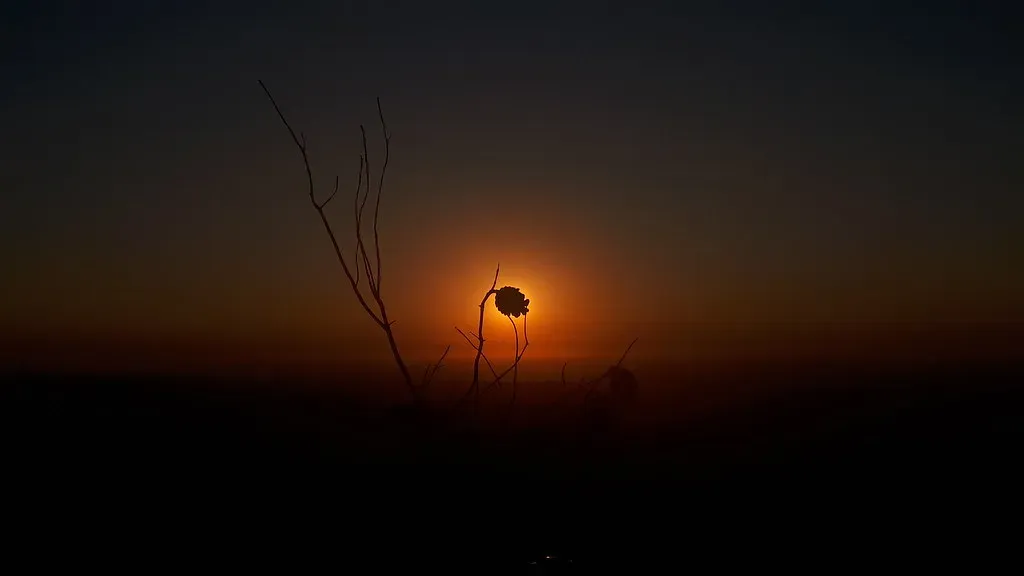
Just before some major earthquakes, people have reported eerie glows in the sky: flickering bands of light, floating orbs, even something that looks like a silent, upside‑down aurora far from the polar regions. These so‑called “earthquake lights” are deeply unsettling if you think about what they might signal – a brief, ghostly warning before the ground rips apart beneath your feet. For a long time, geologists and seismologists treated most of these stories as folklore or misremembered lightning.
In recent decades, though, cameras and smartphones have started catching these lights on video, forcing the scientific community to take them more seriously. One leading idea is that electrical charges are generated in certain types of rocks under intense stress, then released into the atmosphere where they ionize the air. But not all quakes produce lights, and not all lights near quakes behave the same way, so any simple explanation falls apart quickly. The phenomenon sits in this uneasy space where physics, geology, and atmospheric science overlap, and no one discipline has fully cracked it yet.
3. Fast Radio Bursts: Cosmic Signals from Nowhere
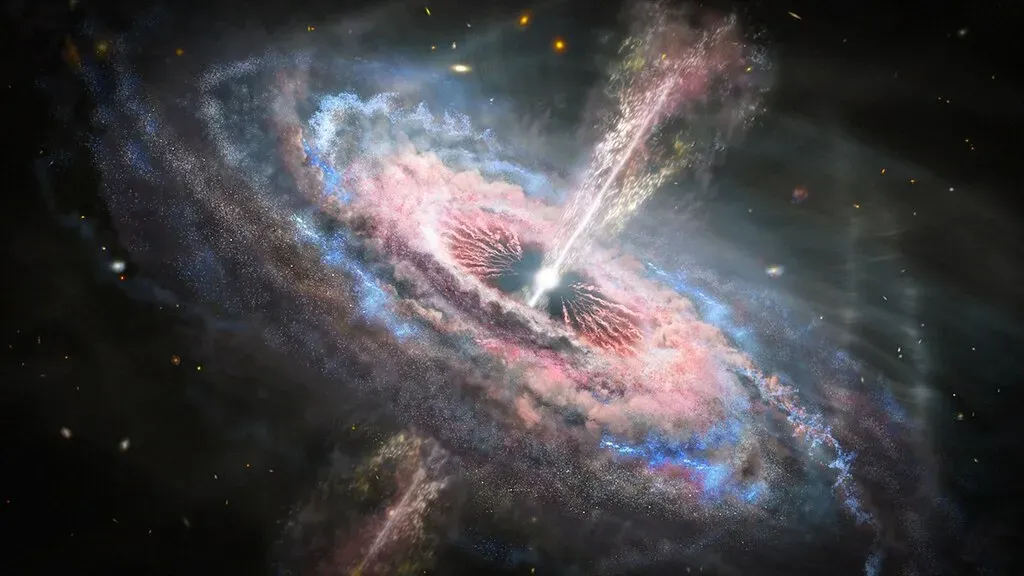
Fast radio bursts, or FRBs, are like the universe tapping us on the shoulder with a mysterious Morse code no one can read. They’re insanely powerful, ultra‑brief flashes of radio waves coming from far beyond our galaxy, lasting only a fraction of a second. In that instant, a single burst can release as much energy as our sun does in days, yet they arrive as tiny whispers at our radio telescopes, hidden in the noise until careful algorithms haul them out.
Some FRBs repeat from the same location; others burst once and never speak again. We’ve tied a few of them to extreme objects like magnetars – neutron stars with magnetic fields so intense they twist space – but that only explains a subset. There’s still no consensus on why they vary so much, why some follow strange periods, or exactly what processes drive them. The more observatories we build and the more FRBs we catalog, the more it feels like we’re assembling a jigsaw puzzle where half the pieces belong to a completely different picture.
4. Dark Matter and Dark Energy: The Invisible Majority of the Universe
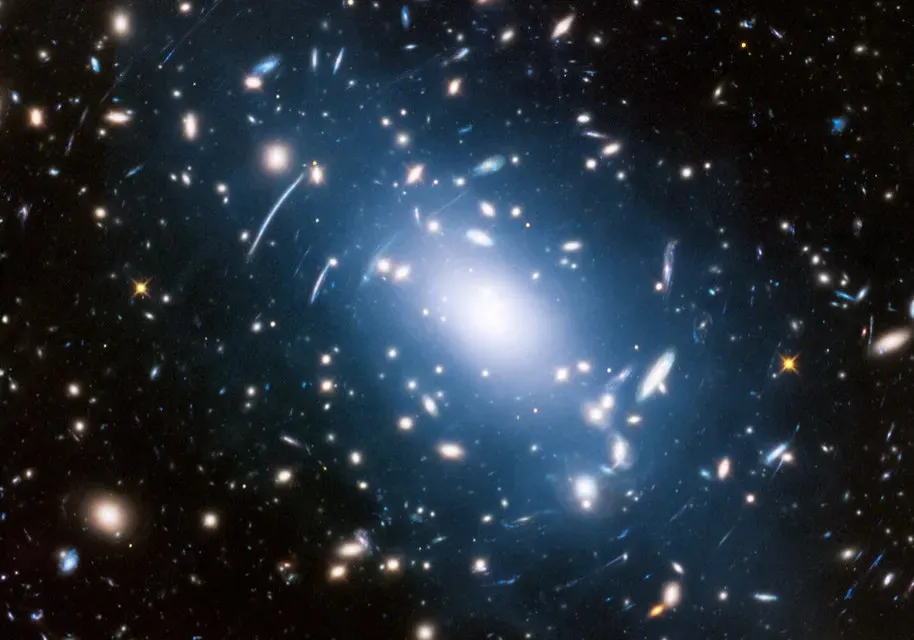
Here’s the most humbling fact in modern science: everything we see – stars, planets, dust, you, me – makes up only a tiny slice of the universe’s total content. Astronomers now believe that the vast majority of the cosmos is made of something we cannot see and have never directly detected: dark matter and dark energy. Dark matter seems to hold galaxies together like an invisible scaffolding, while dark energy appears to be driving the accelerating expansion of the universe itself.
We know these things exist not because we see them, but because we see their fingerprints: how galaxies rotate, how light bends around clusters, how the cosmic expansion speeds up over time. Experiments deep underground, in space, and at particle colliders have been hunting for dark matter particles for years, and so far they’ve found nothing definitive. Dark energy is even more elusive, closer to a name for “whatever is making this expansion behave so strangely” than a fully understood entity. In a way, it’s like building physics on a ghost story we can’t stop telling because all the evidence keeps pointing to it.
5. Consciousness: How Matter Wakes Up and Feels

When you stub your toe, there’s a private, unmistakable burst of pain that only you experience. That inner world – thoughts, feelings, awareness – is what we call consciousness, and it has become one of the most stubborn puzzles in all of science. We can map brain activity in incredible detail, we know which regions are critical for language, vision, and even certain emotions, but we still don’t know how electrochemical signals in a network of neurons produce the feeling of “being you.”
Some researchers argue that consciousness emerges once information in the brain becomes integrated enough, like a symphony arising from individual instruments. Others explore ideas that border on philosophy, suggesting that consciousness might be a fundamental feature of reality that matter can “tune into” under the right conditions. Despite advances in brain imaging and artificial intelligence, there’s no shared theory that explains why some physical systems are conscious and others – like your laptop – don’t seem to be. It’s unsettling that we can build machines that mimic conversation yet still have no solid way to test whether anything actually “feels like something” from the inside.
6. The Mpemba Effect: When Hot Water Freezes Faster Than Cold

The Mpemba effect sounds like a prank the universe is playing on everyone who took basic physics. Under certain conditions, hot water has been observed to freeze faster than cold water, which runs directly against our everyday intuition. The effect is named after a Tanzanian student who noticed it while making ice cream decades ago and pressed his teachers until someone finally listened and tested it formally. Since then, the effect has popped up in various experiments – but not always, and not consistently.
Scientists have thrown a lot of ideas at it: differences in evaporation, dissolved gases, convection currents, or the structure of hydrogen bonds in water possibly changing with temperature. The catch is that water is far more complicated at the molecular level than most of us realize, and tiny variations in purity, container shape, or cooling environment can flip results. Some teams reproduce a clear Mpemba effect; others, using slightly different setups, find nothing unusual at all. The argument isn’t just about why it happens, but whether it really happens reliably in the first place, which makes it a strangely slippery target for a “simple” everyday substance.
7. Rogue Waves: Monster Walls of Water from a Calm Sea

For centuries, sailors told stories of single, towering waves that appeared out of nowhere on relatively calm seas, hitting ships like a moving cliff and then vanishing. These “rogue waves” were long dismissed as exaggerations or misremembered storms, the stuff of sea legends shared over too much rum. Then, in the late twentieth and early twenty‑first century, satellites and offshore platforms finally started measuring them in real time, confirming that extraordinarily tall, isolated waves really do surge out of the ocean without an obvious trigger.
We now know that rogue waves can reach heights roughly about twice that of surrounding waves and can be steep and almost vertical on one side. Several mathematical models show how wave energy can bunch up due to currents, wind, and nonlinear effects, amplifying a single wave to monstrous size. But predicting when and where they will hit is still extremely hard, because the ocean is a chaotic system and the conditions required seem to be both rare and sensitive to small changes. For ships and offshore structures, this means there is always a small but terrifying chance that a “freak” wall of water may slam into them with almost no warning at all.
Conclusion: Living with the Unknown
What ties all these mysteries together is not that science has failed, but that nature keeps staying one step ahead of our neat explanations. From glowing spheres in thunderstorms to the question of why you experience anything at all, these puzzles mark the frontier between what we think we know and what reality delivers. I actually find that comforting; if everything were neatly solved, the world would feel smaller, flatter, a bit like a game after you’ve already seen the ending.
In the coming years, more data, better tools, and maybe a few lucky accidents will chip away at these questions, and some of today’s mysteries will eventually move into the “textbook explanation” category. But new oddities will replace them, just as fast radio bursts and dark energy once did for earlier generations. The universe, it seems, has no interest in letting us get bored. Which of these mysteries would you most want to see solved in your lifetime?