Somewhere in our deep prehistory, long before writing, cities, or even agriculture, our ancestors opened their mouths and did something no other species has ever done quite the same way: they started talking. How that leap happened is one of the most tantalizing mysteries in science. There are no recordings, no fossils of first words, no ancient transcript of the moment sound turned into meaning. We’re left with clues, analogies, and a handful of bold theories trying to explain how the human voice became a tool powerful enough to build civilizations.
As strange as it sounds, the debate over the origin of language has swung between serious science and almost playful speculation for centuries. Some early linguists even banned the topic, calling it “unscientific,” because hard evidence seemed impossible to get. Today, advances in genetics, neuroscience, primatology, and archaeology have brought the question back into the spotlight. What follows are eight of the most intriguing ideas about how human language might have been born, each shining a different light on what it means to be a talking animal.
The Gesture-First Theory: Language Began With Hands, Not Tongues

Imagine a group of early humans at a hunt, moving silently through tall grass, communicating with quick flicks of the wrist, subtle arm movements, and facial expressions. The gesture-first theory argues that language originally grew out of this rich system of hand and body signs, long before the tongue took over. Our closest relatives, chimpanzees and bonobos, rely heavily on gestures to communicate, and their gestures are surprisingly flexible and intentional compared to their vocal sounds. That contrast has led many researchers to suspect that our own linguistic journey started with a similar emphasis on visual signals.
Supporters of this idea point to the way modern sign languages develop full grammar and creativity, proving that complex language doesn’t need sound at all. They also highlight how much of our brain is devoted to fine hand control and how strongly gestures and speech are linked in everyday conversation; most of us “talk with our hands” without even realizing it. In my own experience, whenever I try to explain something tricky, my hands start drawing shapes in the air as if they’re helping my brain think. The gesture-first theory suggests that at some point, vocalizations gradually took over much of the heavy lifting, possibly because they work better in the dark, at a distance, or when our hands are busy with tools.
The Vocal-Vocalization Theory: From Animal Calls To Flexible Speech

On the other side of the debate is the idea that language grew directly out of animal-like calls that slowly became more flexible and controlled. According to this vocal-vocalization theory, human speech didn’t need a visual detour through hand gestures; instead, it evolved by turning emotional cries, alarm calls, and social sounds into something more structured. Over time, our ancestors gradually gained fine motor control over the tongue, lips, and larynx, allowing them to produce many distinct sounds and combine them in endlessly varied ways. This shift might have happened side by side with changes in brain regions controlling voluntary sound production.
Researchers have found that some species, like certain songbirds and a few mammals, can learn and modify vocal patterns, but the human capacity goes far beyond that. Infant babbling, for instance, seems like a playful testing ground for the vocal system, where babies explore sound combinations long before they attach firm meanings to them. Advocates of the vocal route argue that this kind of early experimentation could have deep evolutionary roots. The fact that speech can be used even without eye contact, through walls, or in total darkness gives vocal language a huge practical advantage, especially in group coordination and long-distance interaction.
The “Bow-Wow” and Sound-Symbolism Theory: Words Imitated the World
The old “bow-wow” theory might sound cute, but underneath the nickname is a serious hypothesis: that the first words were imitations of environmental sounds. Think of calls like “buzz” for an insect or “hiss” for a snake, where the shape of the word seems to echo what it describes. Modern languages contain many such onomatopoeic words, and there’s also something deeper called sound symbolism, where certain sounds tend to be linked with particular feelings or concepts across very different cultures. For example, small or light things are often represented with high, front vowels, while bigger or heavier things lean toward lower, back vowels.
This theory suggests that our ancestors could have used natural sounds as a starting vocabulary, gradually shaping them into more abstract meanings over time. From there, once a few sound-meaning pairings existed, social use and cultural creativity could have expanded the system rapidly. Critics point out that only a small fraction of modern vocabulary is obviously imitative, but supporters argue that even a small “seed set” of sound-symbolic words might have been enough to kickstart a much broader process. It’s a bit like how a simple children’s game can grow into an intricate shared culture once people keep playing and adding new rules.
The “Pooh-Pooh” Theory: Language Sprang From Emotion and Exclamation
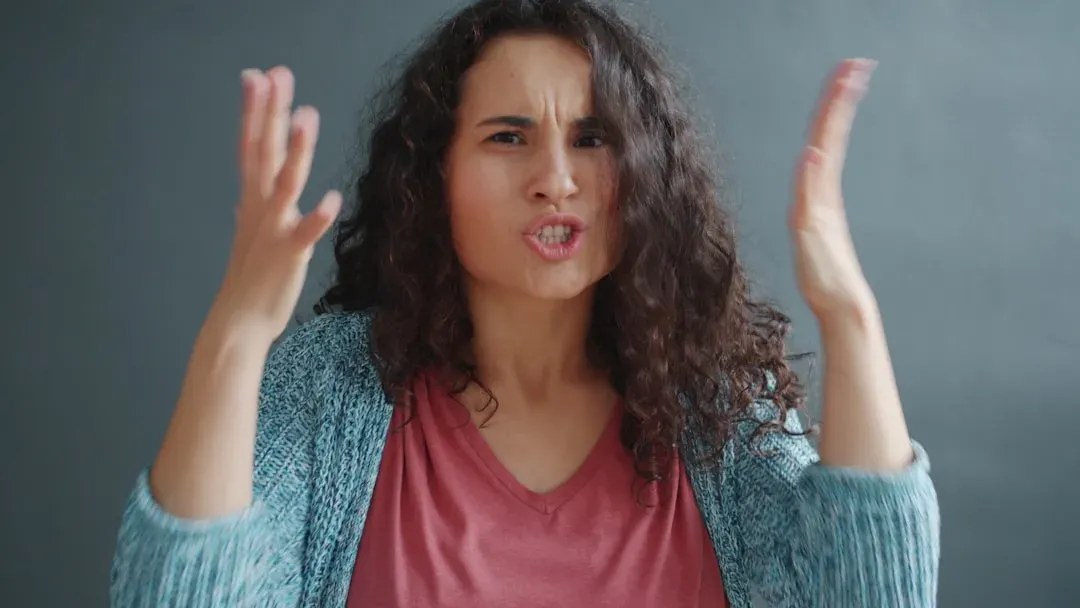
Another early idea with a funny nickname is the “pooh-pooh” theory, which claims language began as emotional outbursts: cries of pain, surprise, joy, anger, or disgust. Picture someone stepping on a thorn and yelling out, or laughing during a playful moment; over time, these repeated expressions could have taken on more specific social meanings. Modern research on animal communication shows that many species have distinct calls for different emotional states, and humans still use plenty of non-word vocalizations that clearly communicate feelings. Sighs, gasps, groans, and laughs all carry powerful emotional information without needing grammar.
Supporters of this theory argue that as our social lives grew more complex, managing relationships and alliances required a more nuanced emotional vocabulary. The raw exclamations might have slowly shifted into more controlled, conventionalized forms that functioned as early words. However, there’s a tension here: emotional cries are often reflexive and involuntary, whereas language is deliberate and highly flexible. The challenge is explaining how the system moved from spontaneous noise to structured, rule-governed communication. Still, the idea that language has emotional roots resonates with everyday experience; even now, the tone and feeling in someone’s voice can matter more than the precise words they choose.
The “Yo-He-Ho” and Cooperation Theory: Language Evolved To Coordinate Work
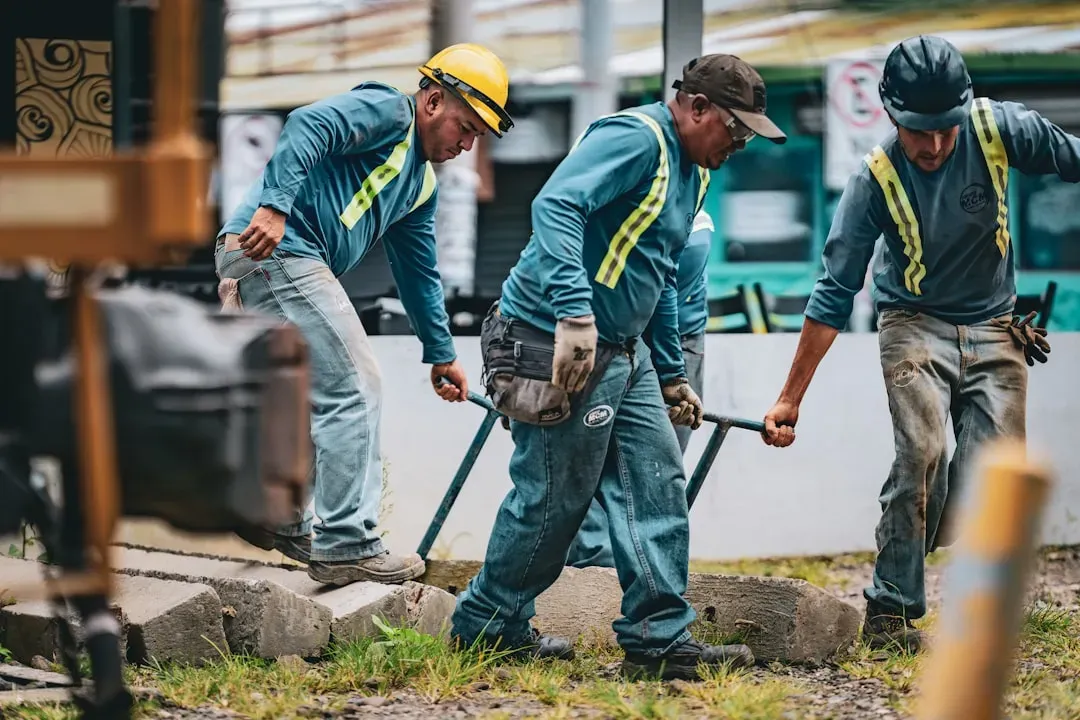
The “yo-he-ho” theory focuses on group effort: the grunts, chants, and rhythmic calls that people use to synchronize physical labor. Imagine hauling a heavy log with several others; someone starts a chant, and everyone pulls on the same beat. This idea suggests that such coordinated sounds gradually became more elaborate and meaningful, turning into a system for planning, dividing tasks, and encouraging teamwork. In many traditional societies, work songs and chants still play a big role, and they often blend rhythm, emotion, and instruction in an almost seamless way.
Modern evolutionary thinking emphasizes how deeply cooperative humans are compared to most animals, and language seems almost tailor-made for organizing complex collaboration. Some researchers propose that being able to talk about future plans, share strategies, or agree on rules would have offered a huge survival advantage. The “yo-he-ho” perspective fits with this by grounding language in shared physical effort and mutual reliance. When I think about this theory, I picture early humans not as lone geniuses inventing words, but as tired, sweaty groups trying to move something heavy, gradually discovering that singing and shouting together could do far more than just keep a rhythm.
The Social-Gossip Theory: Language as Verbal Grooming

One of the most provocative modern theories is that language evolved as a kind of “vocal grooming” to manage social bonds in large groups. Among primates, physical grooming isn’t just about hygiene; it’s about building trust and alliances. The problem is that grooming is one-to-one and takes time, so there’s a limit on how big a group can stay cohesive that way. Spoken language, in contrast, lets one person “groom” multiple others at once by sharing stories, news, and personal opinions. Some researchers argue that gossip, in this broad sense, was the original killer app of language.
From this angle, talking about who did what to whom isn’t shallow noise; it’s a sophisticated tool for tracking reputations, enforcing norms, and choosing who to trust. Anthropological studies of small-scale societies show that a large portion of everyday conversation centers on social information rather than abstract topics. In my own life, I’ve noticed how quickly conversations drift toward other people: friends, coworkers, public figures, even strangers. The gossip theory claims that as group sizes increased in our evolutionary past, individuals who were better at managing social information through talk had a serious edge, and language exploded in complexity to handle that demand.
The Cognitive Leap and “Recursive” Theory: Language From a New Kind of Mind
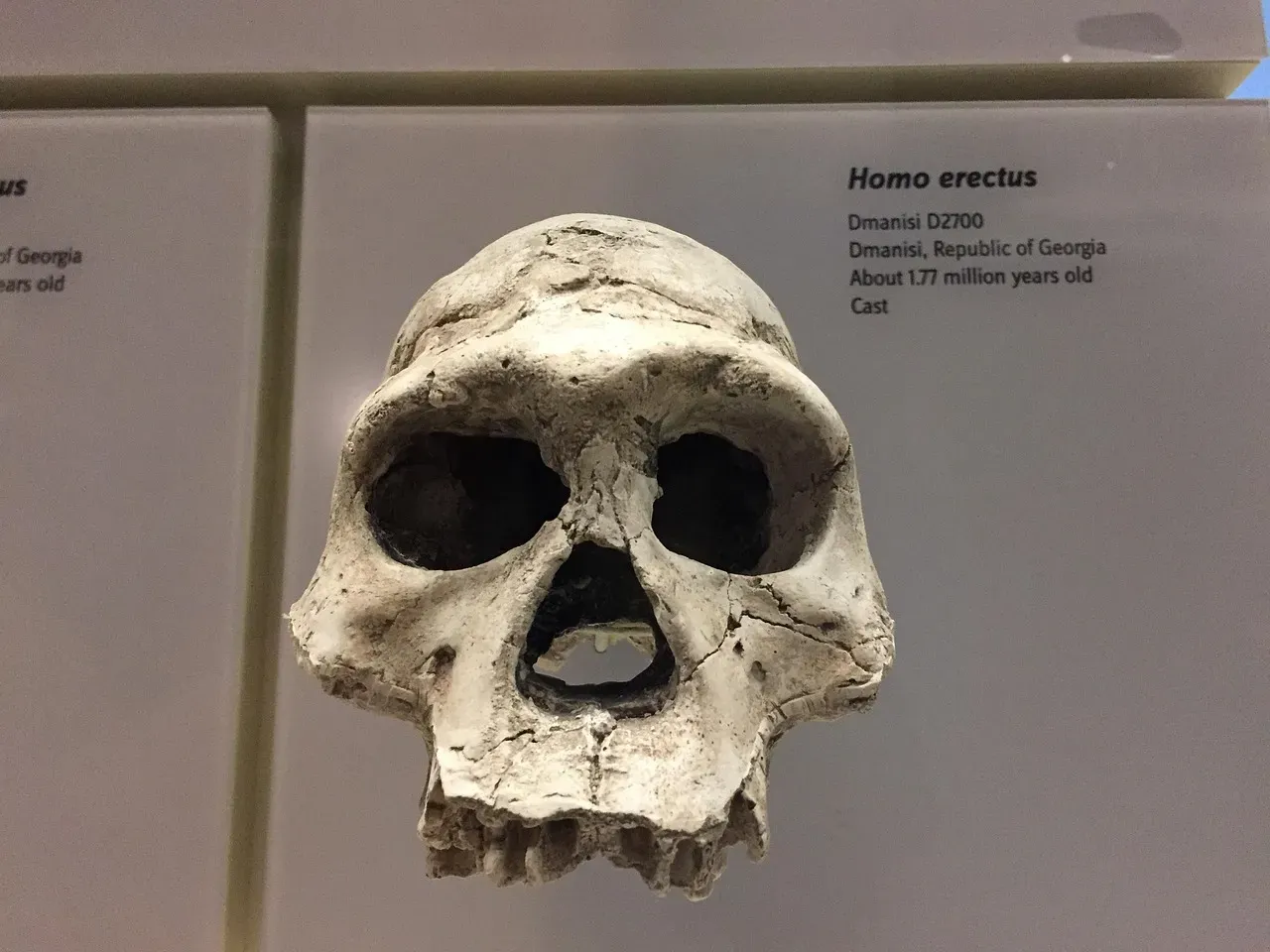
Another influential idea says that language emerged not from specific calls or gestures, but from a deeper shift in how our brains handle information. According to this cognitive leap theory, the critical change was the ability to combine ideas within ideas, building nested structures in thought. This capacity, sometimes described as recursion, allows us to create sentences like “The hunter who saw the animal that scared the child ran away,” where clauses are embedded inside other clauses. Once that kind of mental layering appeared, a full grammar could have unfolded relatively quickly.
Supporters point to the fact that human language can generate an infinite variety of expressions from a finite set of words, and that this combinatorial power seems closely tied to certain brain circuits. Some genetic findings, such as those involving genes that affect speech and language development, suggest that small biological changes can have large effects on our communicative abilities. From this perspective, language might have emerged less like a slowly accumulating pile of vocabulary and more like a threshold event, triggered when the right cognitive machinery clicked into place. It’s a bit like getting the final part of a puzzle that suddenly makes the whole picture clear and usable.
The Cultural-Evolution and “Multiple Origins” Theory: Language as a Snowball Effect
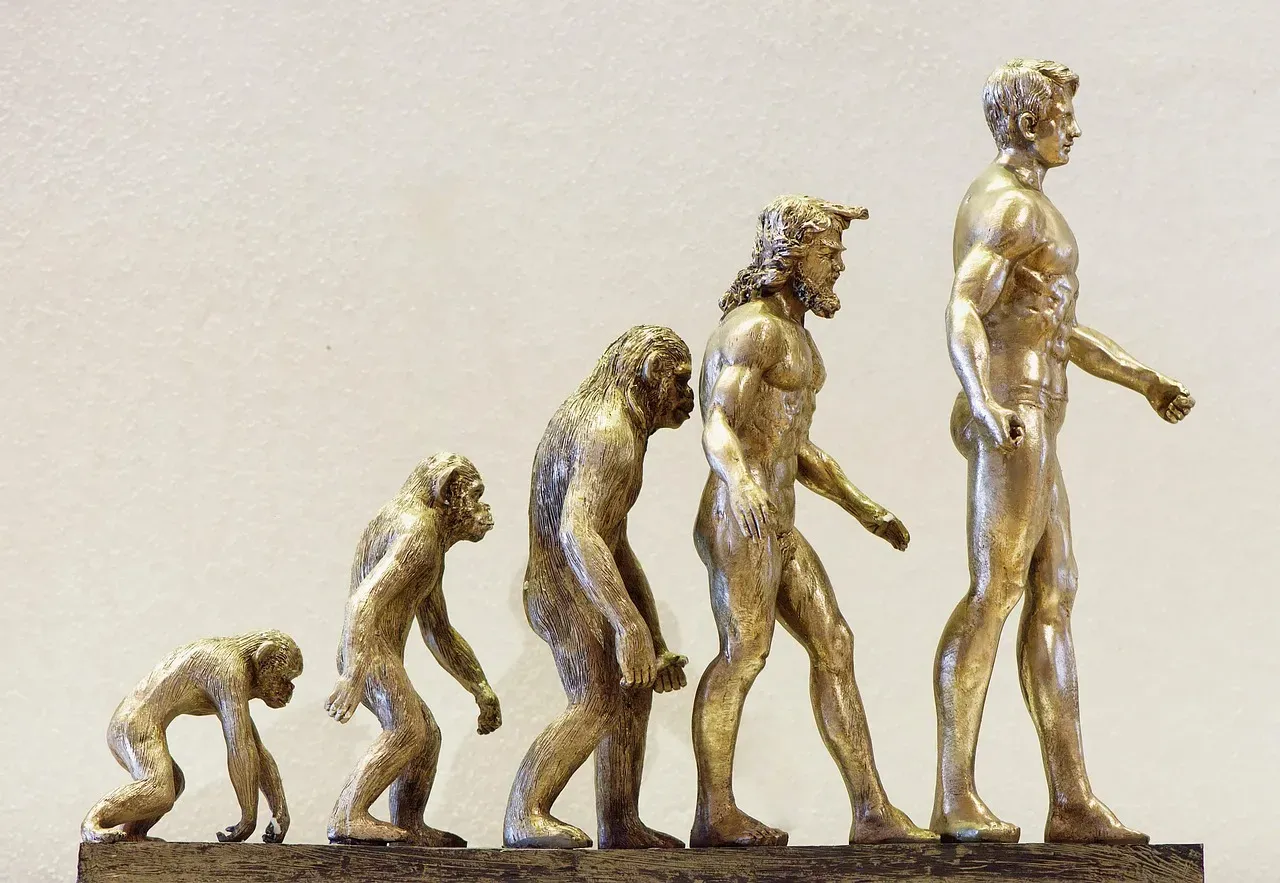
A more recent approach emphasizes that language is not only biological but also cultural, shaped by learning, convention, and repeated use over generations. The cultural-evolution theory proposes that once early humans had some basic capacity for symbolic communication, languages themselves evolved through a kind of natural selection. Easier-to-learn patterns, clearer distinctions, and more efficient structures survived and spread, while confusing or overly complex features faded away. In this view, what we call “the origin of language” might not be a single leap, but a long, messy process where biological changes and cultural shaping kept feeding into each other.
Some researchers involved in this line of work argue that different groups could have developed their own proto-languages at different times, with convergent pressures pushing them toward similar levels of complexity. Experimental studies with artificial languages show that when people repeatedly learn and pass on new communication systems, those systems quickly become more structured and language-like. This suggests that even a rough, inefficient early code could, through repeated use, snowball into something richly expressive. It makes the origin of language feel less like a single spark and more like a slow-burning fire that eventually lit up the entire human world.
Conclusion: Many Paths, One Human Voice

Looking at these theories side by side, what stands out is how many different forces could have pushed our ancestors toward language: hands and gestures, emotional cries, environmental sounds, hard physical work, social gossip, cognitive breakthroughs, and cultural tinkering. It’s entirely possible that more than one of these stories is partly true and that the real history of language is a tangled braid of them all. Our voices today carry traces of all those influences: the rhythm of work songs, the bite of emotional outburst, the subtle echo of the world’s sounds, and the intricate logic of a brain that can nest thought inside thought.
What we can say with some confidence is that language is not a thin layer pasted onto human life; it is woven into everything we do, from caring for babies to planning space missions. However it began, that first step from simple signal to shared meaning changed our species forever, turning information into a collective resource and memories into something we can build on together. When you speak, you’re participating in a mystery that stretches back hundreds of thousands of years, carried through countless mouths before yours. Which of these origin stories feels closest to the truth to you?