
If you could zoom in on a “still” night sky with impossibly powerful eyes, you’d see something shocking: many of those calm, steady stars are not steady at all. They sway, tilt, and trace tiny loops in space, as if someone were tugging them around with an invisible string. That subtle motion is what astronomers call a wobble, and it’s one of the most revealing clues we have about hidden worlds and companions we can’t see directly.
When I first learned that stars move in these tiny, graceful circles because of planets we can’t even photograph, it completely rewired how I thought about the universe. Suddenly, the sky felt crowded, busy, alive with unseen motion and silent gravitational arguments between stars and their partners. This “hidden dance” is not just a poetic phrase; it’s a literal description of how gravity choreographs the universe. Once you understand why stars wobble, it’s hard to ever look up at the night sky the same way again.
The Gravitational Tug-of-War Behind Every Wobble
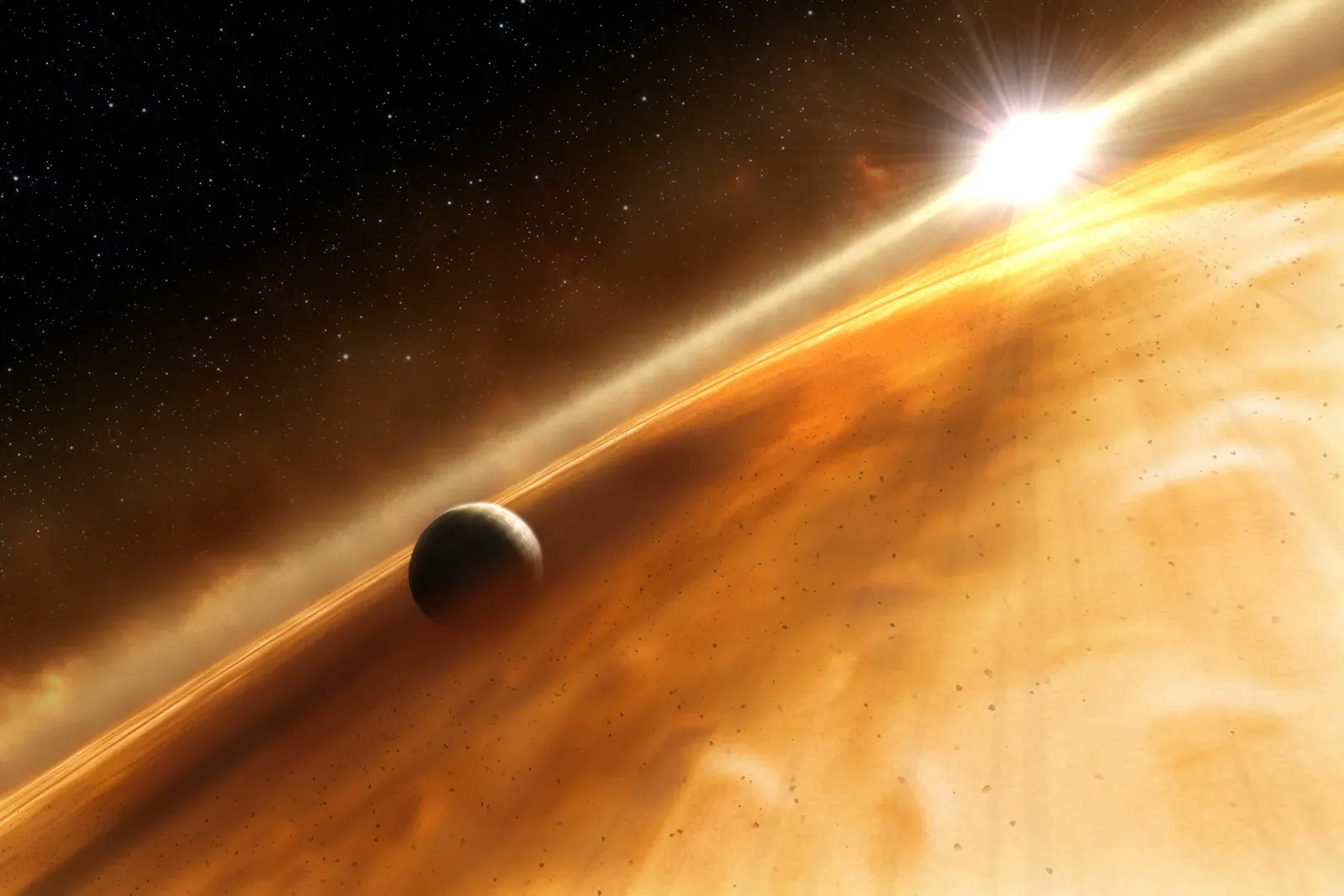
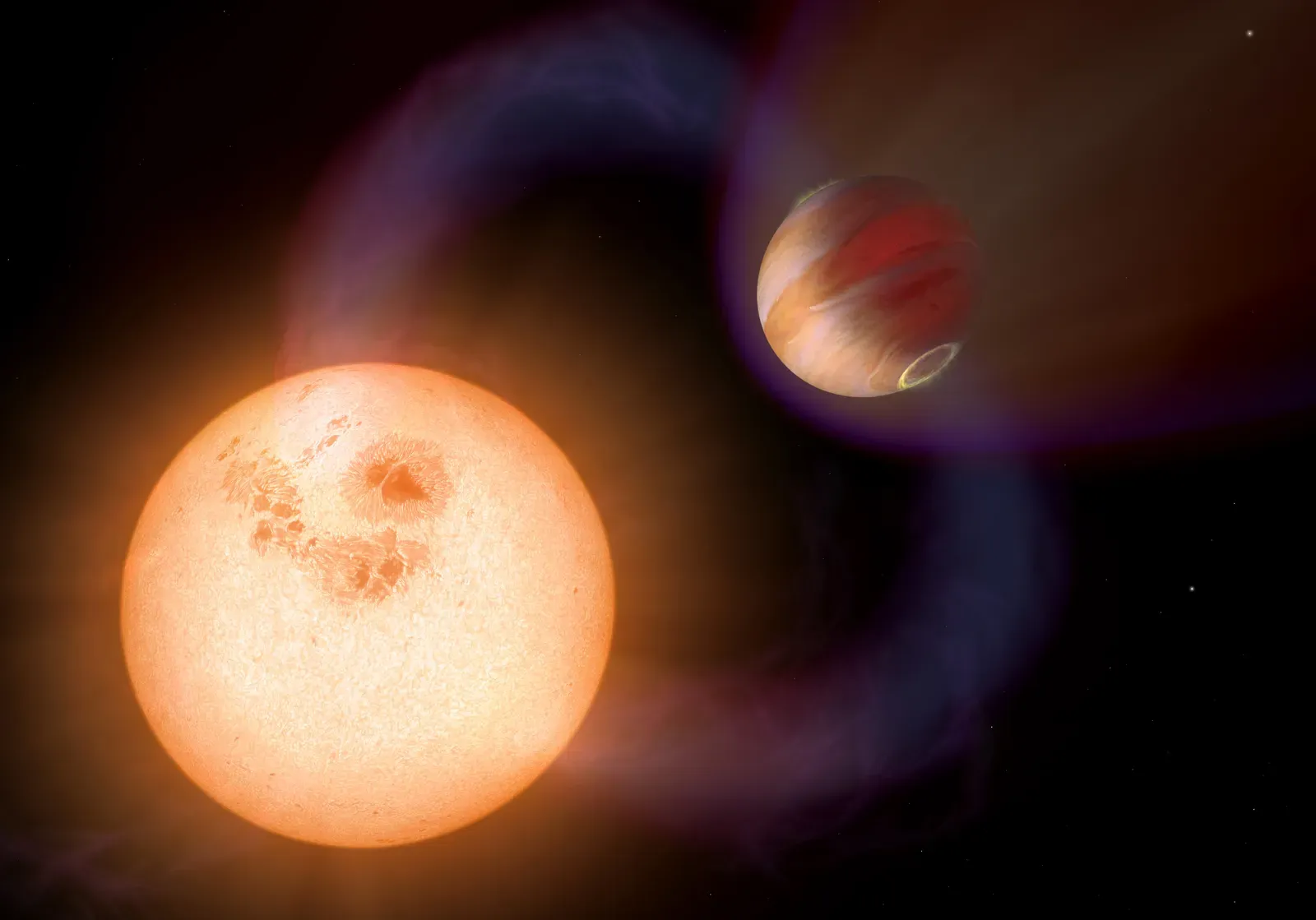
Here’s the key idea that flips everything: planets don’t simply orbit stars the way a pebble orbits the center of a circle you draw on paper. Instead, both the planet and the star orbit a shared point called the center of mass, or barycenter. When the planet is tiny and the star is huge, that shared point sits deep inside the star, but not exactly at its center. So instead of staying perfectly still, the star traces out a small loop or wobble around that hidden point.
You can picture it like a parent and a child spinning around while holding hands. The kid swings in a wide circle, but the adult also gets pulled slightly off balance and moves in a small circle too. In space, the “child” might be a massive planet like Jupiter, and the “adult” is the star. The wobble we see is the star’s side of the dance, and it’s entirely caused by gravity trying to keep both partners moving around their shared center.
How Tiny Motions Reveal Giant Hidden Planets
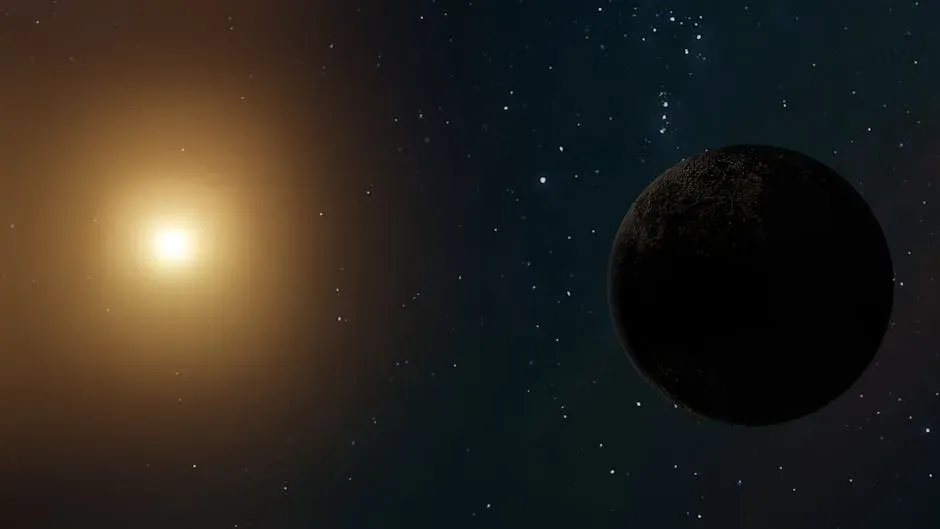
The wild part is how ridiculously small some of these stellar wobbles are compared with the distances involved. A star might shift its position by less than the apparent width of a coin seen from hundreds of kilometers away, and yet that slight twitch is enough to betray the presence of a huge planet. For systems like our own, a star can move in a small orbit only a fraction of the size of the planet’s orbit, but with the right instruments, astronomers can pick it out of the cosmic background.
One way they do this is by measuring the star’s changing light with a method called radial velocity. As the star is tugged toward us, its light shifts slightly toward the blue end of the spectrum; as it’s pulled away, it shifts toward the red. That back-and-forth pattern is like a heartbeat reading for the star, and from it, astronomers can infer the presence, mass, and even approximate orbit of the unseen planet doing the pulling. The star’s wobble becomes a code, and once you know how to read it, entire planetary systems start to appear from what first looked like empty space.
Beyond Planets: Binary Stars and Complex Stellar Dances
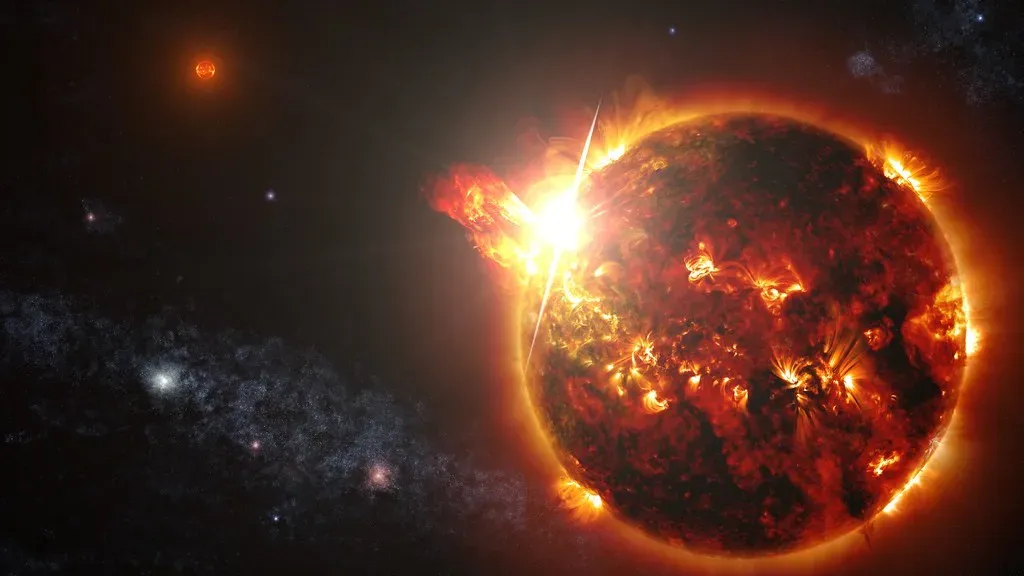
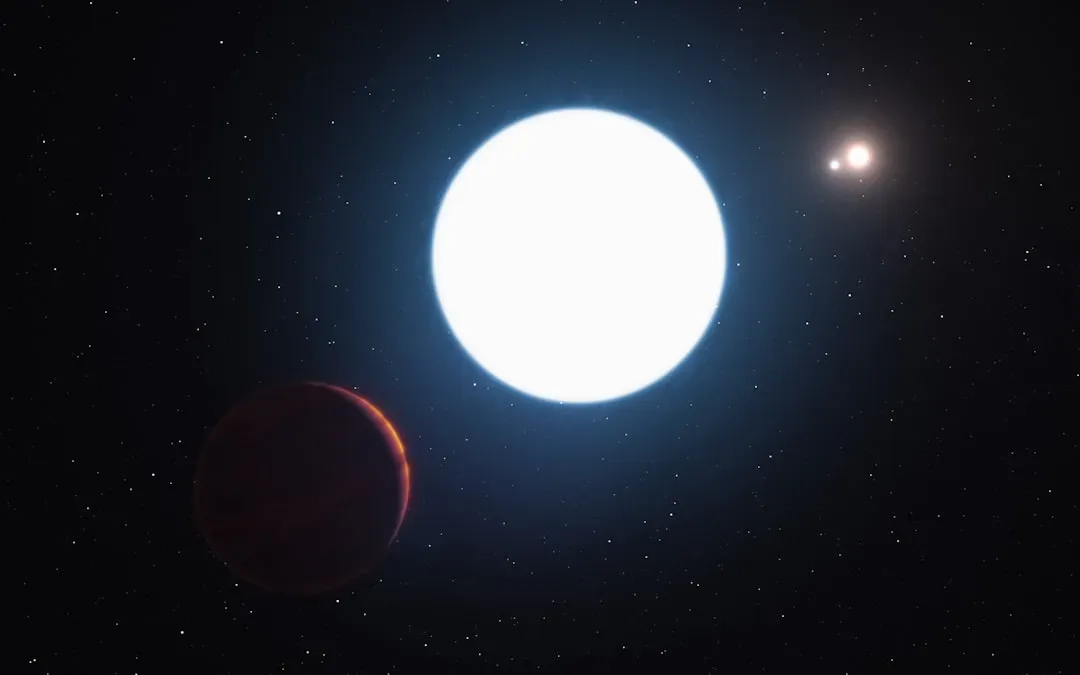
Planets aren’t the only culprits. Many stars have stellar companions, forming what are called binary or multiple star systems. In those cases, the two stars orbit their shared center of mass, causing obvious and sometimes dramatic wobbles. If one star is much heavier than the other, the lighter one traces a wide path while the heavier one executes a tighter loop, but both are constantly on the move. To an observer far away, that motion can look like a regular oscillation in position or brightness.
Sometimes, these systems are even more tangled: triple or quadruple star systems where different pairs orbit each other while all orbit a larger common center. The resulting motion is a layered series of wobbles on top of wobbles, like a spinning top mounted on another spinning top. Astronomers study these patterns to understand how such systems formed, how stable they are over millions or billions of years, and whether planets could survive in those gravitationally chaotic environments without being ejected or torn apart.
The Subtle Role of Starspots, Pulsations, and Stellar Activity
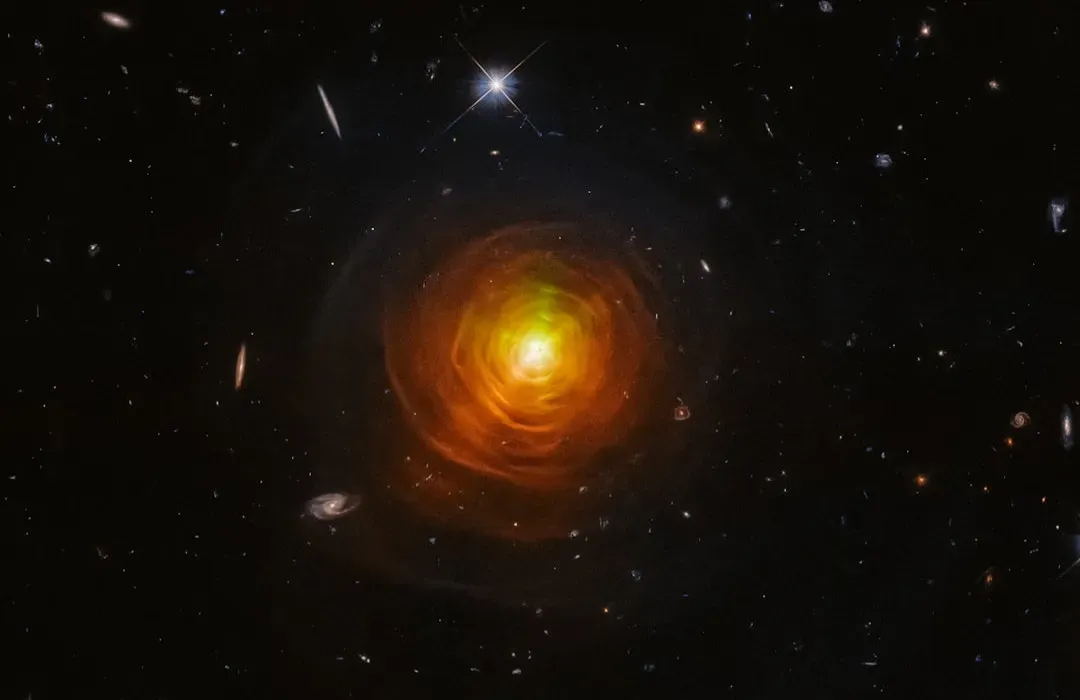
Not every apparent wobble comes from a planet or a companion star. Sometimes the star itself is the trickster. Stars can have starspots, which are cooler, darker regions on their surfaces, similar in spirit to sunspots on our own Sun. As the star rotates, these spots come in and out of view, creating slight shifts in the star’s brightness and, in some cases, subtle distortions in the spectrum of its light. To our instruments, that can masquerade as a gentle wobble, even when no planet is there.
Stars can also pulsate, expanding and contracting in size over time, which again changes their brightness and spectral features. If you’re not careful, those pulsations might look like an orbital signal. Distinguishing between genuine gravitational motion and the noisy heartbeat of the star itself is one of the big challenges in exoplanet hunting. Astronomers compare patterns across different wavelengths of light, track long-term behavior, and use additional methods like transits to double-check whether that wobble really comes from something orbiting the star, or just the star being a bit more restless than average.
Astrometry: Watching Stars Drift Millimeter by Millimeter
Another way to catch a wobble is to measure a star’s position in the sky with extreme precision, a field called astrometry. Instead of looking for changes in color or spectrum, astrometrists track how a star’s coordinates shift against the background of more distant stars. If, over years, that position does not form a straight line but instead a slightly wavy or looping path, it suggests a gravitational partner tugging it gently sideways as it moves through space. The wobble becomes literally visible as a small curve in its trajectory.
Space telescopes designed for ultra-precise positional measurements have turned this technique into a powerful planet-detection tool. Over time, as more data accumulates, astronomers can reconstruct the shape of the star’s path and figure out the mass and distance of the unseen companion. It’s a bit like watching a boat drift across a lake and noticing a repeated sideways bob every so often, then realizing there must be something heavy hidden just below the waterline, subtly pulling it off course.
Why Wobbles Matter: Mapping the Architecture of Alien Solar Systems
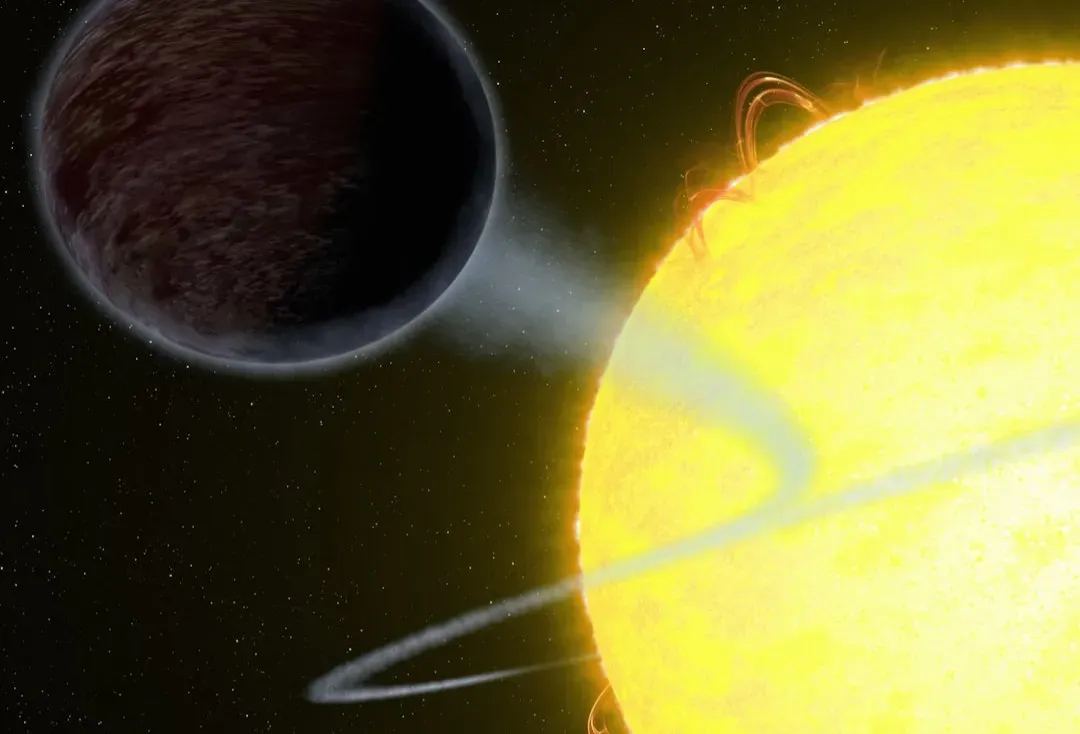
Every wobbling star we detect is like a door cracked open on a previously invisible solar system. From the size and timing of the wobble, astronomers can estimate how massive a planet is, how far it sits from its star, and whether its orbit is nearly circular or highly stretched out. Over the past few decades, this has revealed a zoo of planetary systems far stranger than our own, including giant gas planets skimming scorchingly close to their stars and multi-planet systems locked in orbital patterns that repeat like clockwork.
These discoveries have completely reshaped theories about how planets form and migrate over time. Early on, many scientists expected other systems to look roughly like ours, with small rocky planets close in and big gas giants further out. Wobbling stars told a very different story. Now, models of planet formation have to account for worlds that move inward and outward after birth, gravitational interactions that throw planets into new orbits, and complex resonances where planets tug on each other as well as on the star. The wobble is not just a curiosity; it’s a crucial clue to how cosmic neighborhoods are built.
The Future of Watching Stars Dance
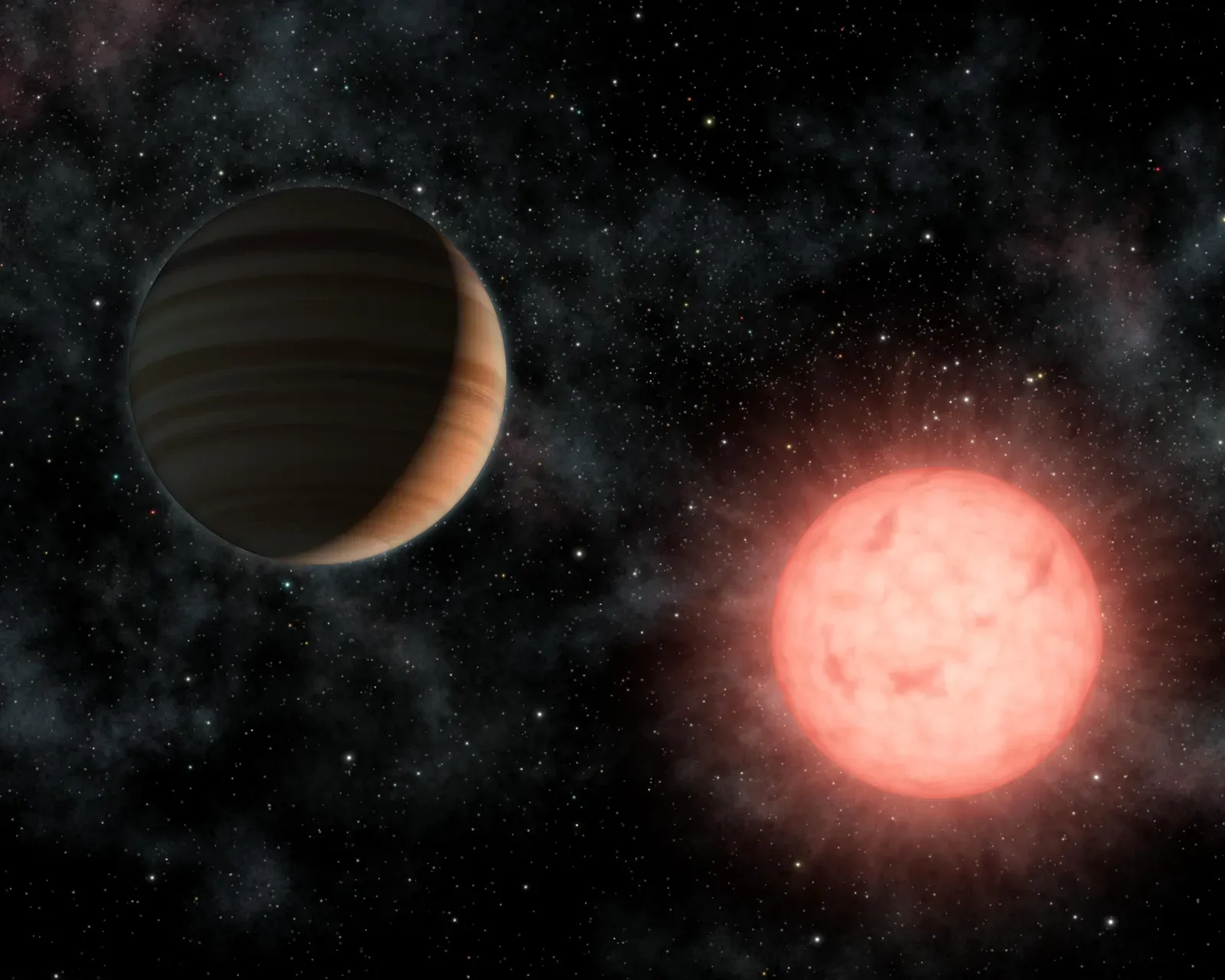
As our instruments get more sensitive, we’re starting to pick up smaller and slower wobbles that point to planets more like Earth, with lower mass and wider orbits. That means we’re gradually moving from finding only the big, obvious partners in this stellar dance to detecting more subtle, Earth-sized dancers closer to the background music. Long-term monitoring is key, because a planet with a long year takes a long time to complete its gravitational signature in the star’s motion. Patience, in this game, can literally reveal new worlds.
What excites many astronomers now is the prospect of combining wobble measurements with other methods like transit observations and direct imaging. When you know how much a star wobbles, how much its light dims when a planet passes in front of it, and eventually even what the planet’s atmosphere looks like, you move from guessing about a system to almost feeling like you’ve visited it. All of that begins with that tiny, almost imperceptible sway of a distant star in the dark. The next time you look up at a seemingly still point of light, it might be worth wondering: which unseen partners are quietly tugging it into its hidden dance?
A Restless, Moving Universe
The idea of a perfectly still, orderly sky has quietly died in the face of what we now know about stellar wobbles. Stars are constantly shifting under the pull of planets, companion stars, and their own internal moods, tracing out loops and curves we can only see with careful, patient observation. That gentle sway contains the fingerprints of entire systems: how many planets they have, how massive those planets are, and how the whole structure fits together like an interlocking puzzle.
What once seemed like a flat, static backdrop has turned into a restless, dynamic stage full of hidden motion. Each wobbling star is a reminder that the universe is not just out there, but in motion, evolving, and full of unseen relationships and gravitational stories still unfolding. Knowing that, it’s hard not to look up and ask yourself: if even the stars are quietly dancing, what else in the universe might be moving in ways we’ve only just begun to notice?