
What if everything you see, hear, feel, and believe is not actually “out there” in the world, but something your brain quietly assembled for you – like a painter filling a canvas before you even walk into the room? It sounds like science fiction. Honestly, it sounds like something from a late-night philosophy debate. Yet modern neuroscience makes a compelling, even unsettling case that your brain is doing exactly that, every single second of the day.
The implications of this are staggering. Your reality is not a direct recording of the world around you. It is an interpretation, filtered through memory, expectation, emotion, and biology. Two people can stand in the same room, look at the same scene, and experience something genuinely different. Let’s dive in to understand how this actually works, and why it matters so much.
You Are Living in a Controlled Hallucination
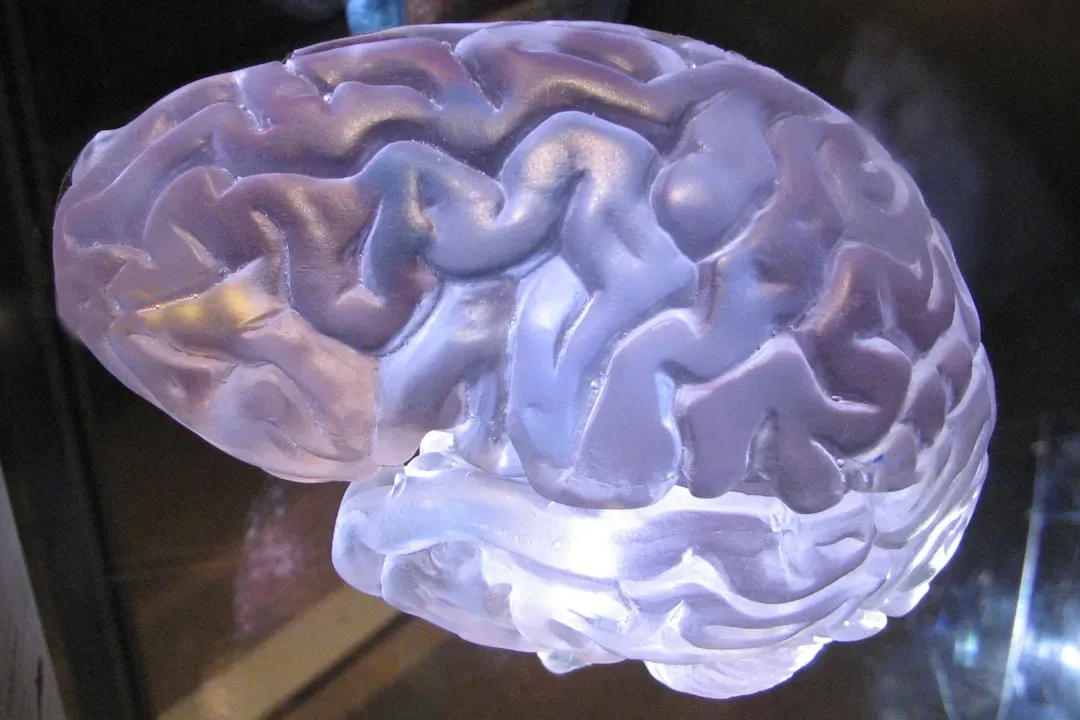
Here is the thing that tends to stop people cold when they first encounter it: neuroscientists have a specific name for what you experience as everyday reality. The contents of your perceptual world are what researchers call “controlled hallucinations” – brain-based best guesses about the ultimately unknowable causes of sensory signals. That “red apple” sitting on your kitchen counter? Your brain built that for you.
Perception is a process of active interpretation geared toward adaptive interaction with the world via the body, rather than a re-creation of the world within the mind. Think of it less like a camera and more like an artist who sketches a portrait based on a brief description, filling in the gaps from imagination and experience. Most of the time, the portrait is surprisingly close to the original. Sometimes, though, it is wildly off.
Your Brain Is a Prediction Machine, Not a Recorder
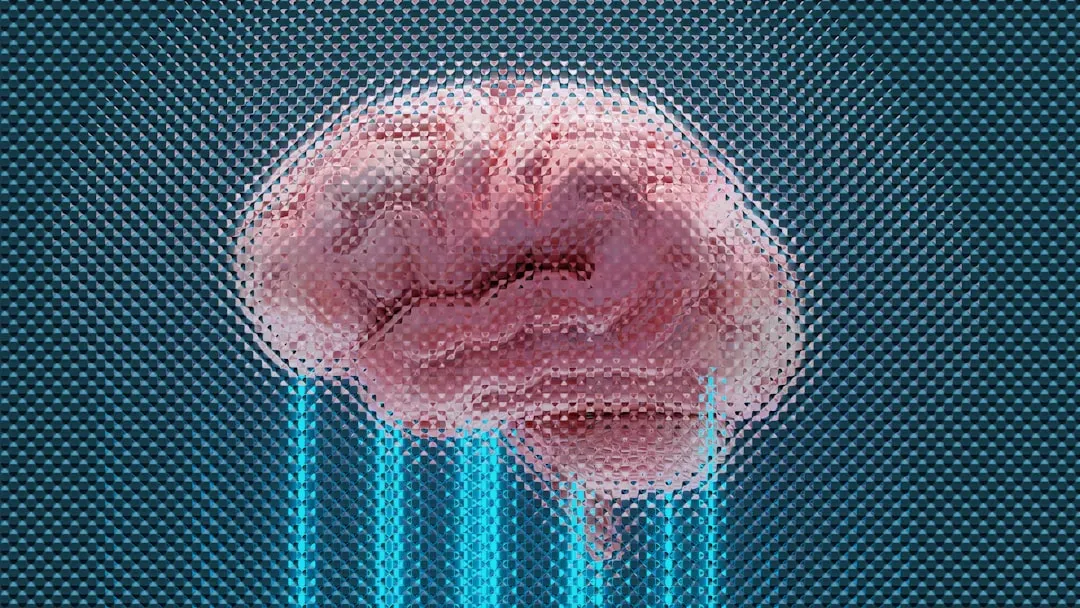
One of the most exciting ideas in modern neuroscience is the concept of predictive coding. While predictive processing theories represent something of a revolution in neuroscience in the last couple of decades, the idea of the brain as a prediction machine actually dates back to 19th-century German polymath Hermann von Helmholtz, who proposed that the things you perceive are simply your brain’s best guesses as to what is causing its sensory inputs. Over a century later, neuroscience is proving just how right he was.
Rather than waiting for sensory information to drive cognition, the brain is always actively constructing hypotheses about how the world works and using them to explain experiences and fill in missing data. Imagine you are reading a book in dim lighting. Your brain does not freeze and wait for perfect information. It predicts, fills in, and builds forward. It uses past experiences to generate a mental model of the world – a kind of “map” – and then checks whether incoming data confirms or contradicts that map. When your brain’s prediction matches reality, perception feels effortless.
Top-Down vs. Bottom-Up: The Two-Way Traffic of Perception
How you process incoming sensory information is referred to by neuroscientists as “bottom-up processing.” Additionally, your existing knowledge, assumptions, and memories can influence perception and recognition, which is referred to as “top-down processing.” Perception involves both. Think of it like a two-lane highway. Traffic flows both ways simultaneously, and the direction you are coming from shapes where you end up.
To construct reality, the brain combines top-down predictions flowing from higher cortical areas with bottom-up signals relaying raw sensory inputs from the environment. The fascinating and slightly humbling part? The heavy lifting of perception is performed by the top-down signals that convey perceptual predictions, with the bottom-up sensory flow serving only to calibrate these predictions. In this view, your perceptions come from the inside out just as much as, if not more than, from the outside in. You are, in a very real sense, projecting the world as much as receiving it.
Optical Illusions: Where the Brain’s Tricks Are Exposed
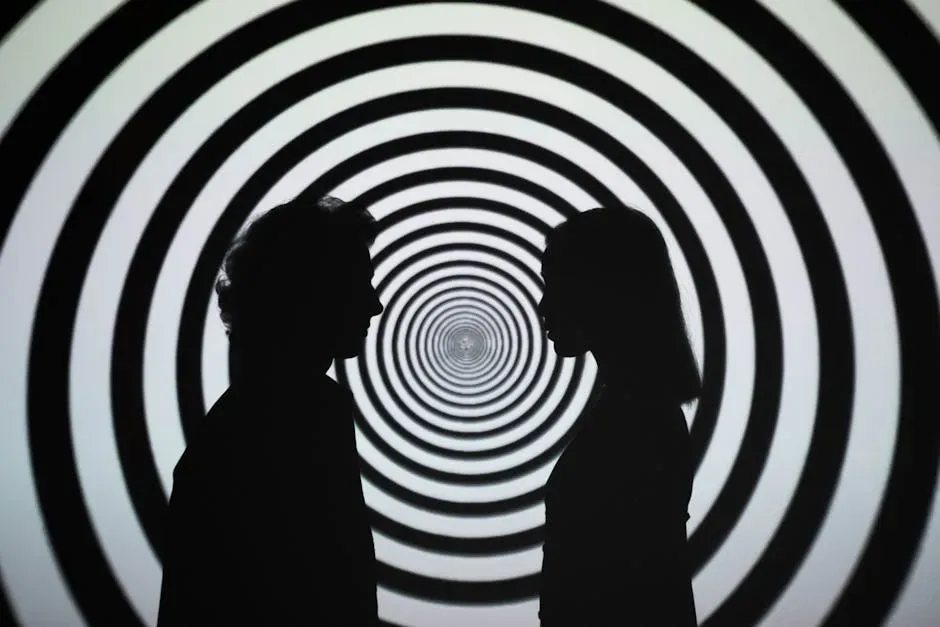
Let’s be real – optical illusions are not just fun party tricks. They are windows into the architecture of your mind. One of the most important tools used by neuroscientists to understand how the brain creates its sense of reality is the visual illusion. When an illusion fools you, you are not witnessing a malfunction. You are watching your perceptual system do exactly what it was built to do.
When information is incomplete or unclear, your brain is left to fill in the missing pieces with its best guess of what should be there. This means that what you experience is not actually what is out there in the world, but rather what your brain thinks is out there. The consequence is that your perception of the world depends on your experience and assumptions. A personal favorite example of this is the classic checkerboard shadow illusion, where two squares of identical color appear dramatically different in brightness. Your brain “knows” shadows make things darker, so it compensates – and gets it hilariously, stubbornly wrong.
Emotions and Memory Quietly Rewrite What You See
You might assume that perception is neutral and objective – a clean data feed from your senses. I know it sounds counterintuitive, but your emotional state is actively shaping what you perceive in any given moment. Emotions are not merely feelings; they play a critical role in how the brain processes information. Neuroscience shows that emotional systems interact with cognitive control networks, influencing what you attend to, how you encode and retrieve information, and how you evaluate options.
The amygdala, an almond-shaped structure nestled deep within the temporal lobe, serves as the brain’s primary emotional processing center. This region is responsible for threat detection, working like an emotional sentinel constantly scanning the environment for potential dangers. When it detects a threat – whether physical or social – it triggers your fight-or-flight response. Beyond danger, the amygdala helps encode emotional aspects of memories, which explains why emotionally charged events are typically remembered more vividly than neutral ones. Your past, in other words, literally colors your present.
No Two Brains Build the Same World
Reality is constructed by the brain, and no two brains are exactly alike. This is not just a philosophical observation – it has profound, practical consequences. To create a vision of reality, the brain’s work depends on intrinsic factors internal to the individual, such as knowledge, level of alertness, emotional state, and motivations. Two people raised in different cultures, with different traumas, different memories, and different expectations, will literally perceive the same event differently at a neurological level.
Consider synesthesia – a condition that makes this variation in perception beautifully vivid. Synesthesia is a stimulation of a particular type that always leads to another perceptual experience, with examples including tasting shapes and hearing colors. Experts suspect that approximately 1 in 300 people are synesthetes. For someone with this condition, a musical note might have a distinct color, or a number might carry a specific flavor. It is not imagination. It is a genuinely different brain building a genuinely different reality. Hard to say for sure where “normal” ends and “different” begins, but synesthesia makes clear that the spectrum is much wider than most of us assume.
Social Reality: How Groups of Brains Build a Shared World
An ensemble of human brains together create social reality, a superpower that can turn fish into puppies, boulders into currency, stereotypes into brain wiring, and a person into a president. Any group of people can make up abstract concepts, share them, and weave them into a reality. Money. Laws. National borders. Reputations. None of these exist in the physical world the way a rock or a river does. They exist because groups of brains agreed they do.
Your brain has a wonderful capacity to take bits and pieces of past experience and create something completely new that you have never experienced before. We call it imagination. That capacity does not switch off when you are with other people. This superpower to modify physical reality is called “social reality.” You or another person can simply make something up, communicate it to others, and if they treat it as real, it becomes real. This is simultaneously the engine behind culture, art, and civilization – and also the engine behind misinformation, groupthink, and mass delusion. Both roads lead from the same remarkable organ.
Conclusion: You Are the Author of Your Experience

After sitting with all of this, one thing becomes clear. If the science tells us our brains are making up a “story” about reality, we should be curious about, and even seek out the answers to, how that reality might be wrong. It is not about doubting everything that comes through our senses. It is about looking for our blind spots, with the goal of becoming better thinkers.
Understanding the constructive, creative mechanisms of perception has unexpected social relevance. Perhaps once we can appreciate the diversity of experienced realities scattered among the billions of perceiving brains on this planet, we will find new platforms on which to build shared understanding and a better future. Whether it’s bridging a political divide or simply understanding a loved one’s perspective, that starts with a stunning admission: your reality is not the reality.
Your brain is not a passive receiver. It is a relentless, creative, deeply personal author that writes the story of the world you inhabit, every waking moment. The next time you feel absolutely certain about what you saw, heard, or experienced, maybe pause for just a second – and ask yourself: is that the world, or is that me? What would you do if you discovered your most firmly held perception was simply your brain’s most confident guess?