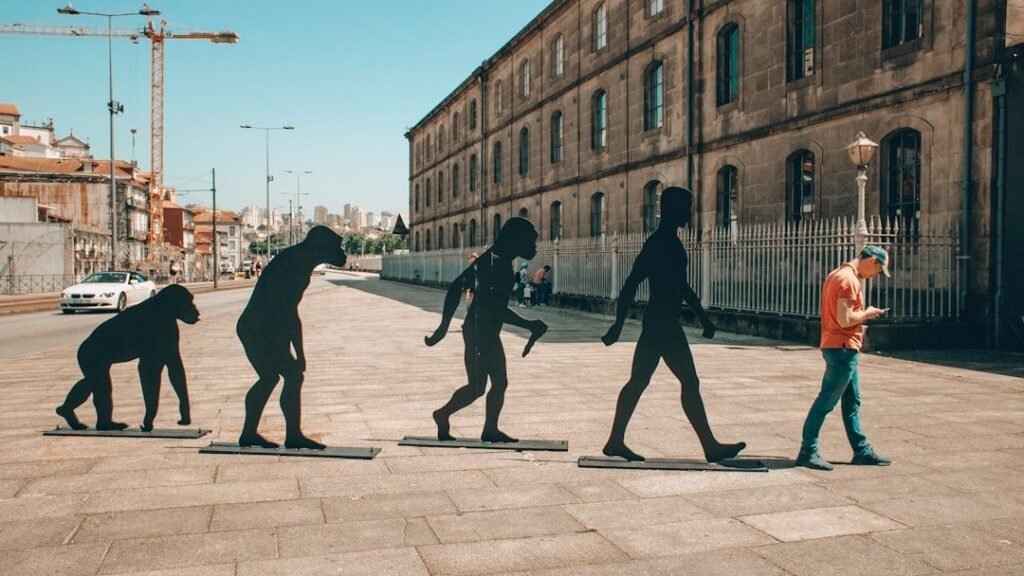

Most of us picture evolution as something that happened to our distant ancestors, cavemen chipping flint by firelight, slowly transforming over millions of years into the species we see in the mirror today. It feels ancient, remote, finished. Like a story that already has an ending.
Here’s the thing, though. That ending? It hasn’t been written yet. The idea that human evolution stopped once we built cities, invented medicine, and started ordering food online is one of the most widespread and stubbornly persistent myths in modern science. Surprising, right? Scientists armed with powerful genome sequencing tools are discovering that our DNA is still shifting, adapting, and reshaping itself in real time, sometimes at a faster rate than anyone expected.
So what exactly is changing inside you, genetically speaking? What forces are still pushing and pulling at the human genome in an age of antibiotics, supermarkets, and central heating? The answers are far more fascinating and occasionally strange than you might guess. Let’s dive in.
The Big Myth: Did Human Evolution Really Stop?
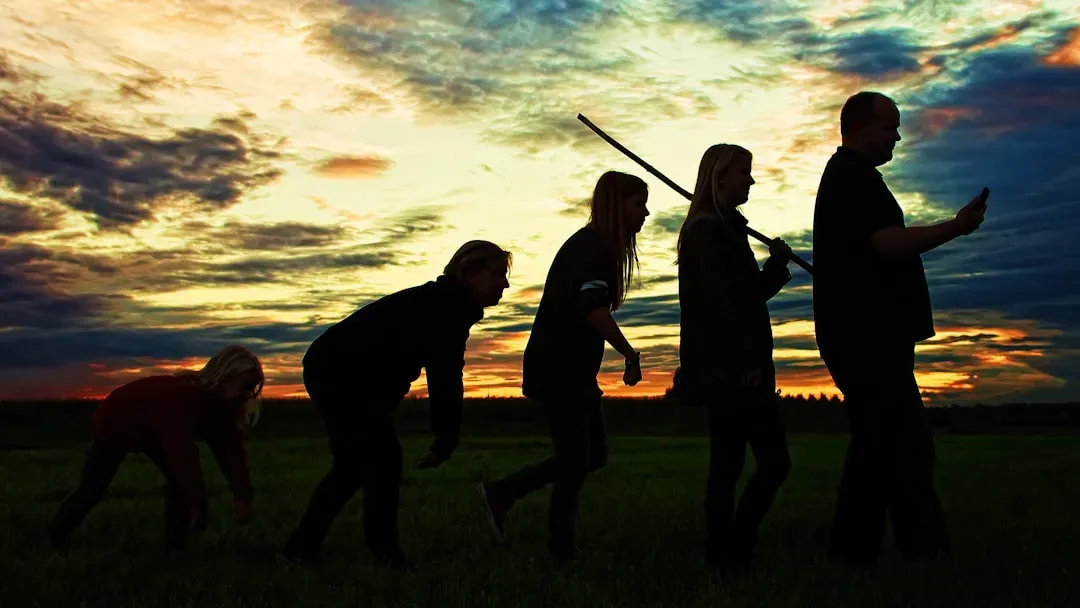
You’ve probably heard it said, maybe at school, maybe in a documentary, that humans have essentially stopped evolving. The logic sounds reasonable on the surface. Modern medicine saves people who would have died. Technology buffers us from environmental stress. Surely nature can’t select anymore if practically everyone survives? Honestly, it sounds convincing until you look at the actual genetic data.
Contrary to popular belief, not only are humans still evolving, but their evolution since the dawn of agriculture is faster than ever before. That’s a jaw-dropper. Human evolution might not be as spectacular as some imagine, but it is still an ongoing process that was shaping our life, is shaping our life, and will be shaping our life as long as humans exist.
Modern medicine’s ability to keep us alive makes it tempting to think human evolution may have stopped. Better healthcare disrupts a key driving force of evolution by keeping some people alive longer, making them more likely to pass on their genes. But if you look at the rate of our DNA’s evolution, you can see that human evolution hasn’t stopped, it may even be happening faster than before.
Humans display greater genetic unity than most other species, which has led many to assume that human evolution ended with the origin of modern humans. However, the diversity that we see within our species remains to be explained. Think of it like an iceberg. What you see at the surface looks stable, calm, unchanging. Below the waterline? Constant, churning movement.
What Ancient DNA Is Finally Telling You
Here’s where things get genuinely exciting. For most of the history of evolutionary science, researchers could only guess at how human genes had changed by studying living people. That’s a bit like trying to reconstruct a movie by only watching the final scene. Now, ancient DNA is changing everything.
The first ancient human genome was sequenced in 2010. Since then, the number of ancient genomes has expanded steadily to more than 10,000 today. With this growing dataset, researchers can conduct more precise analyses of how the three billion positions in the genome have changed in recent millennia in populations around the world.
One 2024 study of ancient DNA tracked the genetic changes in Europe amid major migrations and the transition to farming and pastoralism. Researchers analyzed more than 1,600 ancient genomes spanning the time from 11,000 years ago through the Middle Ages, comparing them with more than 400,000 modern genomes from the U.K. Biobank. When they looked at the modern data alone, they found no instances of selection. But when they examined ancient genomes, they found 11 sweeps. When they divided those ancient genomes into ancestral lineages, they found 21.
Think about that for a moment. The evidence of evolution was literally invisible until researchers looked backward in time. It’s like finding footprints only after the rain has stopped and the ground has dried. The tracks were always there, you just needed the right tools.
Lactose Tolerance: The Gene Mutation That Changed Civilization

One of the best-studied examples of recent human evolution is lactose tolerance. Nearly everyone in the world is born with the ability to produce the enzyme lactase, which breaks down the milk sugar lactose and makes it easier to extract energy from milk, essential for the survival of a suckling child. Most people lose this ability by adulthood. So the idea that most adults can drink a glass of milk without any issues? That’s actually a relatively recent genetic invention.
At least five different times in our recent evolutionary past, as people started to discover dairy, a genetic mutation arose to lengthen the activity of the lactase gene. Three of the mutations originated in different parts of sub-Saharan Africa, where there is a long history of cattle herding. Another one of the five genetic tweaks is common in Arabia and seems to have sprung up in ancient populations of camel and goat herders.
In some parts of the world, humans have evolved the ability to tolerate lactose. Today, more than roughly seven in ten European or European-descended adults can drink milk. This is because they carry a genetic variant in the region of DNA that controls the gene that codes for lactase, enabling lactase production to continue into adulthood. Meanwhile, in parts of East Asia, where milk is much less commonly drunk, an inability to digest lactose is the norm. Your relationship with a glass of milk is, quite literally, written into your DNA.
High Altitude Adaptations: Evolution in the Fast Lane

If you want to see human evolution in action at almost breathtaking speed, look up. Specifically, look toward the mountain peoples of Tibet, Ethiopia, and the Andes. These populations offer some of the most compelling evidence that natural selection is very much alive in the modern era.
Mutations allowing humans to live at high altitudes have become more common in populations in Tibet, Ethiopia, and the Andes. The spread of genetic mutations in Tibet is possibly the fastest evolutionary change in humans, occurring over the last 3,000 years. This rapid surge in frequency of a mutated gene that increases blood oxygen content gives locals a survival advantage in higher altitudes, resulting in more surviving children.
In the volcanic bedrock of the Andes, arsenic is naturally abundant and leaches into the drinking water. The dangers it poses are well known, as inorganic arsenic is associated with cancers, skin lesions, heart disease, diabetes, and infant mortality in other populations. But the biochemistry of Andeans has evolved to efficiently metabolize this notoriously toxic substance. Populations in Bolivia, along with groups in Argentina and Chile, have evolved variants around the gene AS3MT, which makes enzymes that break down arsenic in the liver. I think that’s one of the most striking examples of evolution I’ve ever come across. You’re essentially watching a population genetically rewire itself to survive in a toxic environment.
Disease Resistance and the Invisible Arms Race
Let’s be real, few forces in nature are more ruthless than infectious disease. Plague, malaria, tuberculosis, these aren’t just history lessons. They are evolutionary crucibles that have been hammering and reshaping the human genome for tens of thousands of years. New research finds that both the most ancient signals of balancing selection and some of the clearest signals of recent positive selection implicate pathogens as the strongest selective pressure to drive the evolution of modern humans.
Infectious diseases have historically exercised strong selective pressures on human populations, resulting in adaptive genetic variations, including HLA, CCR5, IFNL3, HBB, and TLR1 gene polymorphisms. These aren’t abstract genetic codes. They are the fingerprints of survivors, the inherited blueprint of every ancestor who made it through a pandemic and had children. Most human populations with a long history of endemic malaria have evolved genetic adaptations to malaria parasites due to the strong selective pressure that this infection has exerted. Since the parasite infects erythrocytes, the evolutionary pressure has selected genetic variants that affect red blood cells and the survival of the parasite as well. Genetic variants conferring resistance to the disease have spread through human populations over time.
Though modern healthcare frees us from many causes of death, in countries without access to good healthcare, populations are continuing to evolve. Survivors of infectious disease outbreaks drive natural selection by giving their genetic resistance to offspring. Our DNA shows evidence for recent selection for resistance of killer diseases like Lassa fever and malaria. Selection in response to malaria is still ongoing in regions where the disease remains common.
Physical Traits That Are Quietly Shifting
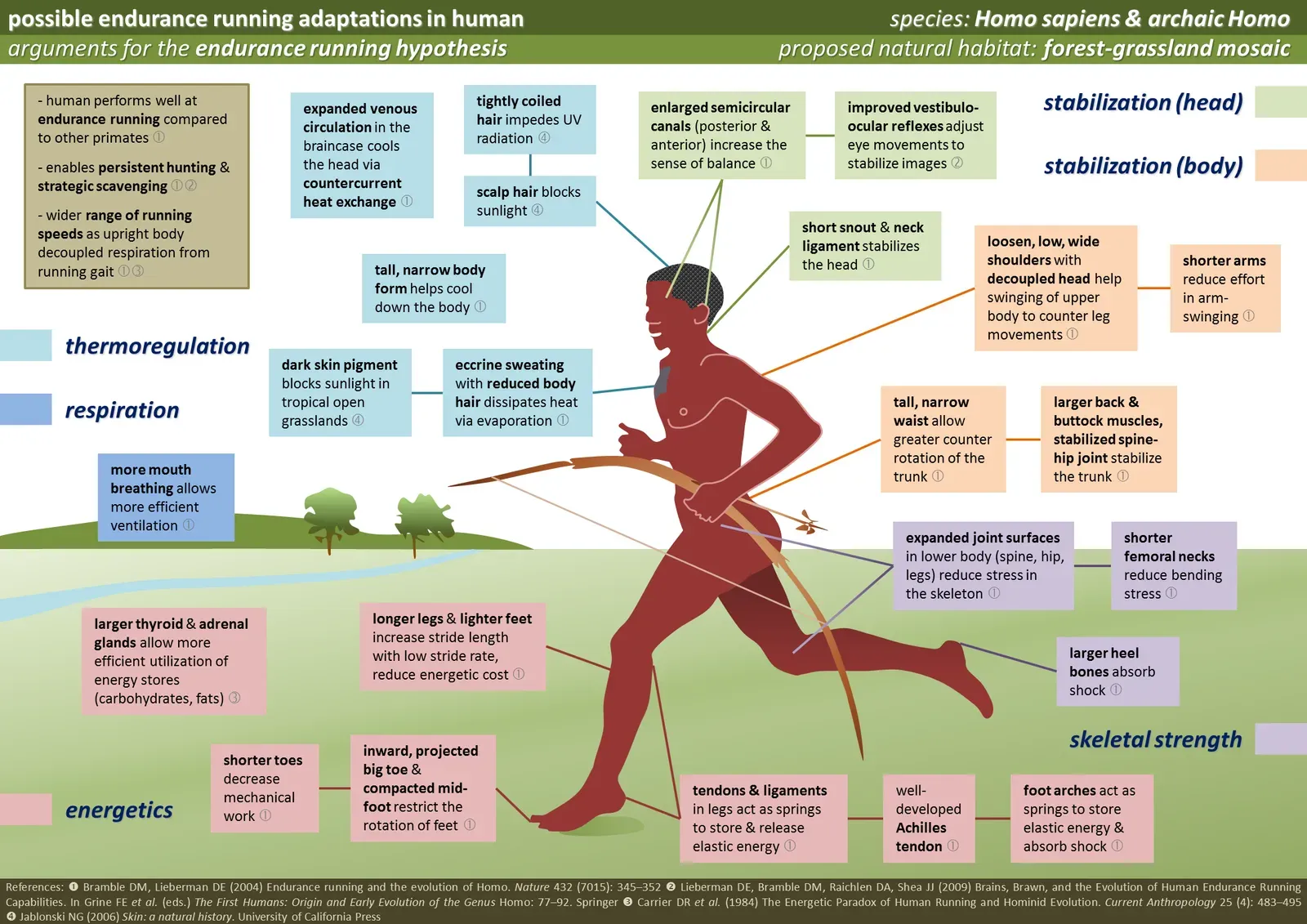
Bramble DM, Lieberman DE (2004) Endurance running and the evolution of Homo. Nature 432 (7015): 345–352
Lieberman DE, Bramble DM, Raichlen DA, Shea JJ (2009) Brains, Brawn, and the Evolution of Human Endurance Running Capabilities. In Grine FE et al. (eds.) The First Humans: Origin and Early Evolution of the Genus Homo: 77–92. Springer
Carrier DR et al. (1984) The Energetic Paradox of Human Running and Hominid Evolution. Current Anthropology 25 (4): 483–495
Jablonski NG (2006) Skin: a natural history. University of California Press, CC BY-SA 3.0)
Evolution isn’t always playing out in survival-or-death dramas. Sometimes it shows up in surprisingly ordinary places, like your earwax, the color of your eyes, or even how much you sweat. What is perhaps most extraordinary about our recent evolution is how many common physical features are completely new to human anatomy. The thick, straight black hair shared by most East Asians, for example, arose only within the past 30,000 years, thanks to a mutation in a gene called EDAR, which is crucial for orchestrating the early development of skin, hair, teeth, and nails.
Anthropologists have known about the variation in earwax for more than 100 years, but geneticists did not uncover the cause until recently. Dry earwax results from a relatively new mutation to a gene called ABCC11. Only 30,000 to 20,000 years old, the mutation also affects the apocrine glands, which produce sweat. If you have stinky armpits and sticky earwax, chances are you have the original version of ABCC11. If you have dry earwax and a little less need for deodorant, you probably have the newer mutation.
Having too much melanin can lead to vitamin D deficiency and bone deformities, while having too little makes a person more vulnerable to skin cancer. Europeans have evolved lighter skin in order to combat vitamin D deficiency in regions with low levels of sunlight. It’s hard to say for sure just how many of these subtle shifts are still unfolding, but the pace is almost certainly higher than most people assume. Your body is a living, breathing archive of every environment your ancestors ever had to survive.
What Modern Lifestyles Are Doing to Your Genes Right Now

Here’s the part that should really make you stop and think. Evolution isn’t just some process happening to people on remote mountain plateaus or in regions without hospitals. It is happening to you, to your neighbors, to everyone in your social media feed, right now, in the context of modern diets, screen time, delayed parenthood, and urban living.
Researchers have found that sets of genetic mutations that predispose people to early puberty and childbearing, heart disease, high cholesterol, obesity, and asthma also appear less often in people who lived longer and whose genes are therefore more likely to be passed down and spread through the population. Natural selection, in other words, is quietly weeding out certain genetic risks, even within one or two generations.
The human mutation rate itself may also be changing. The main source of mutations in human DNA is the cell division process that creates sperm cells. The older males get, the more mutations occur in their sperm. So if their contribution to the gene pool changes, for example if men delay having children, the mutation rate will change too. A study suggests that the number of new mutations increases by about two per year of delayed reproduction by the father, and that the total number of paternal mutations doubles every 16.5 years. In other words, the trend toward later fatherhood in many societies is not just a social shift. It’s a genetic one.
Conclusion: You Are a Work in Progress

If there is one clear takeaway from all of this research, it is that the human story is nowhere near over. Humanity is still evolving, and no amount of advanced technology will stop that. Realizing that evolution doesn’t only happen by natural selection makes it clear the process isn’t likely to ever stop. Freeing our genomes from the pressures of natural selection only opens them up to other evolutionary processes, making it even harder to predict what future humans will be like.
Still, there’s something quietly awe-inspiring about all of this. Every glass of milk you digest, every high-altitude breath you take, every immune response you mount, these are not just biology. They are chapters in a story that began millions of years ago and is still being written in your DNA today. New research raises the possibility that recent human history involved far more dynamic evolution than previously thought.
The next time someone tells you that humans have stopped evolving, you can smile and tell them the science disagrees. Completely. We are, each of us, a work in progress. What part of your own biology do you think might be quietly changing right now? Tell us what you think in the comments.