The Quest for Narrowband Signals Hits a Wall (Image Credits: Pexels)
Scientists have scrutinized the heavens for radio transmissions from extraterrestrial intelligences for more than 60 years, but confirmed detections remain elusive.
The Quest for Narrowband Signals Hits a Wall
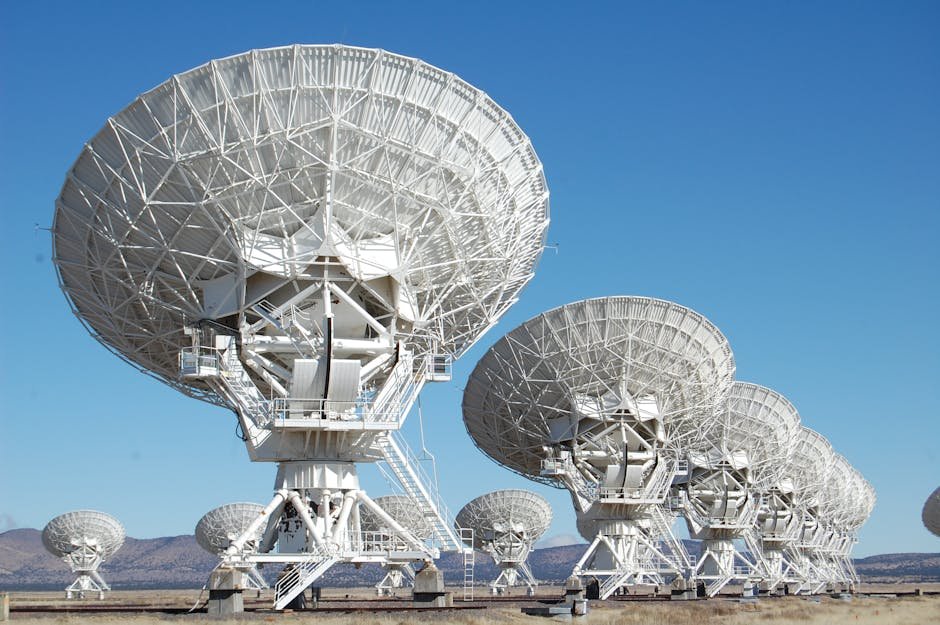
SETI efforts have long targeted narrowband radio signals, which feature sharp frequency spikes unnatural for cosmic phenomena like pulsars or gas clouds. These searches assumed such signals would arrive at Earth pristine and detectable. Yet, decades of observations with telescopes like the Allen Telescope Array and the Very Large Array turned up intriguing candidates that faded upon reexamination, often traced to human interference.
Researchers now propose a compelling explanation rooted in stellar activity. Turbulent conditions around distant stars could distort these signals long before they traverse interstellar space. This revelation challenges assumptions baked into traditional SETI protocols.
How Plasma Turbulence Scatters Radio Waves
Space weather encompasses solar wind – streams of charged particles – and coronal mass ejections, massive expulsions of plasma and magnetic fields. Around stars, these create fluctuating plasma densities that act like a cosmic prism on radio waves.
The effect, known as interplanetary medium scattering, broadens narrow signals by dispersing their energy across a wider frequency band. A once-piercing tone dilutes into a faint broadband hum, slipping below detection thresholds. Calibration using signals from our own Voyager and Pioneer spacecraft, warped by the Sun’s outbursts, provided the baseline for this model.
- Solar wind fluctuations smear frequencies through refractive scattering.
- Coronal mass ejections amplify turbulence, worsening broadening.
- Active stars produce denser, more chaotic plasmas than our Sun.
- Higher radio frequencies experience less distortion.
A Groundbreaking Study Quantifies the Impact
A team at the SETI Institute in Mountain View, California, published their analysis on March 5, 2026, in The Astrophysical Journal. Lead author Dr. Vishal Gajjar and co-author Grayce C. Brown developed a framework to predict signal broadening based on stellar types and distances.
They extrapolated solar system data to alien environments, focusing on red dwarf stars, or M-dwarfs, which constitute about 75 percent of Milky Way stars. These cooler stars unleash frequent flares and winds that could obliterate narrow technosignatures. “SETI searches are often optimized for extremely narrow signals,” Gajjar explained. “If a signal gets broadened by its own star’s environment, it can slip below our detection thresholds, even if it’s there.”EarthSky
Brown added, “By quantifying how stellar activity can reshape narrowband signals, we can design searches that are better matched to what actually arrives at Earth, not just what might be transmitted.” The work, funded by the institute’s STRIDE program, appears in the paper “Exo–IPM Scattering as a Hidden Gatekeeper of Narrowband Technosignatures.”
Redefining SETI Strategies for Active Stars
Red dwarfs dominate galactic real estate, hosting many potentially habitable exoplanets. Their volatility poses unique challenges for detection. Future surveys must widen tolerance for signal drift and prioritize higher frequencies less prone to scattering.
Observers could also time searches to avoid peak stellar activity or model distortions per target star. This shift promises to unmask signals previously dismissed as noise.
Key Takeaways:
- Stellar plasma broadens ET signals, explaining part of the radio silence.
- M-dwarfs amplify the effect due to intense space weather.
- Adjusted algorithms could boost SETI sensitivity dramatically.
This research reframes the search for cosmic company, suggesting technical tweaks rather than absence of life. As telescopes grow more powerful, accounting for stellar weather may finally crack the code. What do you think – could this be the key to hearing from our stellar neighbors? Tell us in the comments.