Every night, your brain quietly pulls off one of nature’s most extraordinary tricks. Without warning, without effort, it constructs entire worlds, complete with characters, storylines, and raw emotion, all while your body lies perfectly still. Dreams have puzzled humans for thousands of years, and honestly, even modern neuroscience is still catching up.
What’s wild is just how much we’ve learned in the past few years alone. Researchers are cracking open the “black box” of the sleeping brain in ways that would have seemed like science fiction not long ago. From planting ideas inside your dreams to communicating with you while you’re still fast asleep, the science of dream worlds is more thrilling and strange than most people realize. Let’s dive in.
1. Your Brain Is Nearly as Active Asleep as It Is Awake

You’d think that sleep equals quiet, right? The brain powering down, like a laptop on standby. Turns out, that picture couldn’t be further from the truth. Dreams are a most remarkable experiment in psychology and neuroscience, conducted every night in every sleeping person. They show that your brain, disconnected from the environment, can generate by itself an entire world of conscious experiences.
Positron emission tomography studies have shown that global brain metabolism is comparable between wakefulness and REM sleep, and that research has also revealed a strong activation of high-order occipito-temporal visual cortex in REM sleep, consistent with the vivid visual imagery during dreams. So in a very real sense, your sleeping brain isn’t resting. It’s rehearsing, replaying, and rebuilding entire realities, all without your conscious permission.
2. Dreams Don’t Only Happen During REM Sleep

Here’s the thing – most people grow up thinking dreams only happen in one specific sleep stage, the famous REM phase. Science just proved that assumption wrong. One of the first analyses of the largest-ever database compiling records of brain activity during sleep and dream reports confirmed that dreams do not occur only during REM sleep, but also during deeper and calmer NREM stages.
In cases where dreaming occurs in NREM stages, brain activity resembles wakefulness more than deep sleep, as if the brain were “partially awake.” Think of it like a television set that isn’t fully turned off, still flickering between channels. Roughly one third of a healthy adult’s life is spent sleeping, and throughout the night, during any sleep stage, these subjective conscious experiences we call dreams can repeatedly occur.
3. You Dream Between 3 and 6 Times Every Single Night

Most people wake up in the morning and assume they didn’t dream at all. In reality, your brain was an absolute storytelling factory all night long. We may not remember dreaming, but everyone is thought to dream between 3 and 6 times per night, and around 95 percent of dreams are forgotten by the time a person gets out of bed. That’s an almost incomprehensible amount of mental narrative slipping away each morning before you’ve even reached for your coffee.
If you don’t wake during or immediately after REM sleep, you’re less likely to remember your dreams, and if you don’t make a conscious effort to recall your dreams upon waking, they are even more likely to fade from memory. The forgetting isn’t a bug – it may actually be part of the design. The brain seems to treat most dreams like working notes, quickly discarding them once they’ve served their purpose.
4. Lucid Dreaming Is a Scientifically Confirmed, Measurable Brain State

Lucid dreaming – the ability to know you’re dreaming while you’re still inside the dream – sounds like something out of a movie. I think a lot of people assume it’s just something creative types talk about. But science has confirmed it’s entirely real and measurable. A 2025 study published in The Journal of Neuroscience found distinct brain-activity patterns that differentiate lucid dreaming from ordinary REM sleep, with researchers using EEG analysis to identify reductions in beta power in right parietal regions and increased alpha-band connectivity, evidence that lucid dreaming represents a hybrid state between wakefulness and dreaming.
Studies using neuroimaging techniques such as fMRI have shown that the prefrontal cortex becomes more active during lucid dreaming than during regular REM sleep, and this increased activity may enable the heightened awareness and control characteristic of lucid dreams. Imagine your rational, self-aware mind stepping backstage into a theater production that’s already running full tilt. That’s essentially what lucid dreaming is, biologically speaking.
5. Scientists Can Now Guide What You Dream About
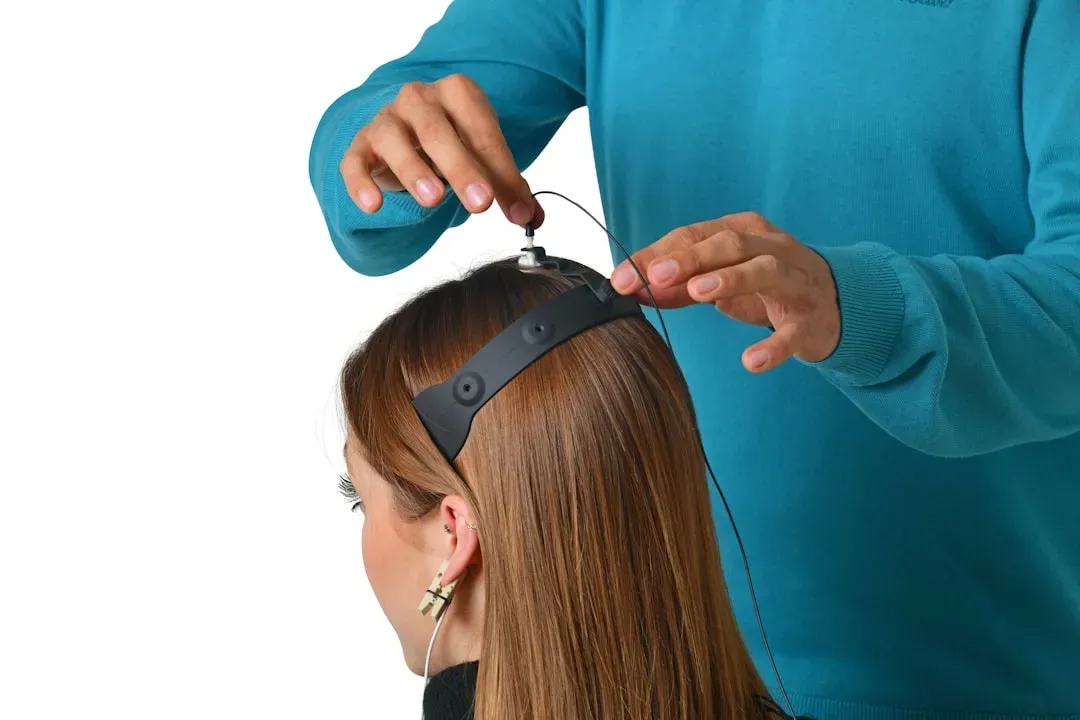
This one sounds almost too strange to believe, but the research is solid and genuinely groundbreaking. Neuroscientists at Northwestern University have shown that dreams can be nudged in specific directions. By playing subtle sound cues during REM sleep, researchers prompted people to dream about unsolved brain teasers they had struggled with earlier, and an astonishing three quarters of participants dreamed about the cued puzzles, with those puzzles solved far more often the next day.
The researchers used a technique called targeted memory reactivation. During sleep, they played sounds that reminded participants of earlier attempts to solve specific puzzles, and these audio cues were delivered only after brain monitoring confirmed that participants were fully asleep. The implications are staggering. Puzzles that appeared in dreams were solved at a much higher rate than those that did not, with participants solving roughly 42 percent of dream-related puzzles compared to just 17 percent of others.
6. Your Dreams Are Your Brain’s Emotional Laundry Service

Dreams aren’t just random noise. They seem to serve a deeply important emotional function, almost like your brain running a nightly cleanup cycle on your feelings. The sleeping brain can typically bring up emotional memories, process them, and remove their emotional charge – a process that may be explained by an evolutionary drive to evaluate important memories, including those tied to fear.
REM sleep is essential for maintaining emotional balance, reactivity, and the consolidation of emotional information, particularly negative ones. The influence of sleep on next-day mood is believed to be especially associated with REM sleep, where hyperactivity in limbic regions and reduced dorsolateral prefrontal cortex function create an optimal environment for processing and reprocessing emotional experiences. In other words, going to sleep after a hard day isn’t avoidance – it’s your brain doing genuinely necessary repair work. Skipping that process has real consequences.
7. Nightmares and PTSD Reveal a Broken Dream System

When dreams work properly, they help defuse painful experiences. When they don’t, the results can be devastating. In post-traumatic stress disorder patients, the brain seems to bring bad dreams back night after night, driven to evaluate fear memories but unable to ever remove their emotional charge. It’s like a washing machine stuck on the same cycle, spinning endlessly without ever finishing the job.
The sleep stage is thought to be important for processing emotional memories, and experiments have shown that rhythmic interactions between the amygdala and the prefrontal cortex during REM sleep normally reduce the expression of fear-associated memories. Researchers are now actively exploring auditory stimulation techniques during sleep as a potential therapeutic path forward. A 2024 study involving 49 PTSD patients who attended a virtual workshop on lucid dreaming found that participants were guided to imagine positive versions of their nightmares, and after just one week of training, all participants had reduced their PTSD symptoms.
8. Sleep Paralysis and Hypnagogic Hallucinations Explain Ancient Supernatural Lore

If you’ve ever jolted awake absolutely certain something was in the room with you – or found yourself frozen, heart hammering, unable to move – you’ve likely experienced one of the most unsettling phenomena in sleep science. Sleep paralysis is a state during waking up or falling asleep in which a person is conscious but in a complete state of paralysis, during which the person may hallucinate sounds or sensations, including hearing, feeling, or seeing things that are not there. Episodes generally last no more than a few minutes.
Hypnagogic and hypnopompic experiences accompanying sleep paralysis are often cited as sources of accounts of supernatural nocturnal assaults and paranormal experiences across cultures. That shadow on your chest. The old hag. The demon visitors described in folklore across centuries. All of it, remarkably, traces back to a glitch in how your brain transitions between sleep and wakefulness. Hypnagogic hallucinations are vivid, dreamlike experiences that occur during the transition between wake and sleep, and in roughly 85 percent of hallucinations, multiple senses are simultaneously involved, including visual, auditory, and tactile.
9. Your Waking Life Writes the Script for Your Dreams

Dreams often feel random, chaotic, almost absurd. Yet the raw material your brain uses to build them comes almost entirely from your real life. Dreams incorporate recent experiences, and memory-related brain activity is reactivated during sleep, suggesting that dreaming, memory consolidation, and reactivation are tightly linked. Think of your brain as a filmmaker who can only work with footage already shot during the day – it just arranges the clips in unexpectedly creative ways.
REM sleep and its main oscillatory feature, frontal theta, have been related to the processing of recent emotional memories, and since memories constitute much of the source material for dreams, researchers have explored the link between REM frontal theta and the memory sources of dreaming. Even more fascinating, recent experiences incorporated into both REM and NREM dreams had significantly higher emotional intensity than non-incorporated recent experiences, regardless of valence. So your brain doesn’t just replay your day – it tends to prioritize the moments that mattered most emotionally.
10. Dreams Are a Sensory Explosion – Including Touch and Pain

Most people assume dreams are mostly visual, like watching a film behind closed eyes. The reality is far richer and, honestly, stranger than that. A 2024 study found that vision was the most common sensory experience in dreams, followed by audio and touch, and by recruiting over 500 participants who completed custom dream diaries, the study found that sensory-rich dreams link to higher emotional intensity.
Remarkably, dreams can even include physical pain. It has been shown that a person can experience realistic, localized painful sensations in dreams through direct incorporation or from memories of pain, and in one 2023 study, patients with chronic pain seemed to experience pain in their dreams alongside pain in their waking lives. Your dreaming brain isn’t watching from the sidelines. It is fully inside the experience, generating sensations with the same vividness and biological reality as your waking moments. That’s not a glitch – that’s the astonishing power of your mind at rest.
Conclusion

The world inside your sleeping mind is not a passive slideshow. It is a dynamic, biologically purposeful universe that processes your emotions, consolidates your memories, responds to external cues, and may even help solve your hardest problems. Science in 2026 is only beginning to map its full territory, and every new discovery seems to reveal that dreams are more essential, more complex, and more extraordinary than we ever imagined.
What strikes me most is that something this profound happens every single night, for every single person, completely unnoticed. The next time you wake up from a vivid dream and shake it off as “just a dream,” maybe think twice. Your brain just ran a full overnight operation on your behalf. The least you can do is pay attention. So, what’s the strangest or most meaningful dream you can remember – and do you think your brain was trying to tell you something? Tell us in the comments.