Our planet is older than human imagination can truly grasp. It has been spinning, erupting, freezing, and reinventing itself for roughly four and a half billion years. You’d think, by now, we’d have figured most of it out.
Honestly, we’ve come remarkably far. We can predict hurricanes, sequence ancient DNA, and peer into the molten heart of the Earth using seismographs. Yet, tucked between the familiar and the explainable, there are corners of this planet that refuse to play by any known rules. Some phenomena are so deeply strange, so stubbornly resistant to scientific consensus, that they make even veteran researchers pause and stare.
These are not folklore legends or campfire myths. They are real, documented, and observable. They just don’t make sense. Let’s dive in.
Ball Lightning: The Glowing Sphere That Should Not Exist
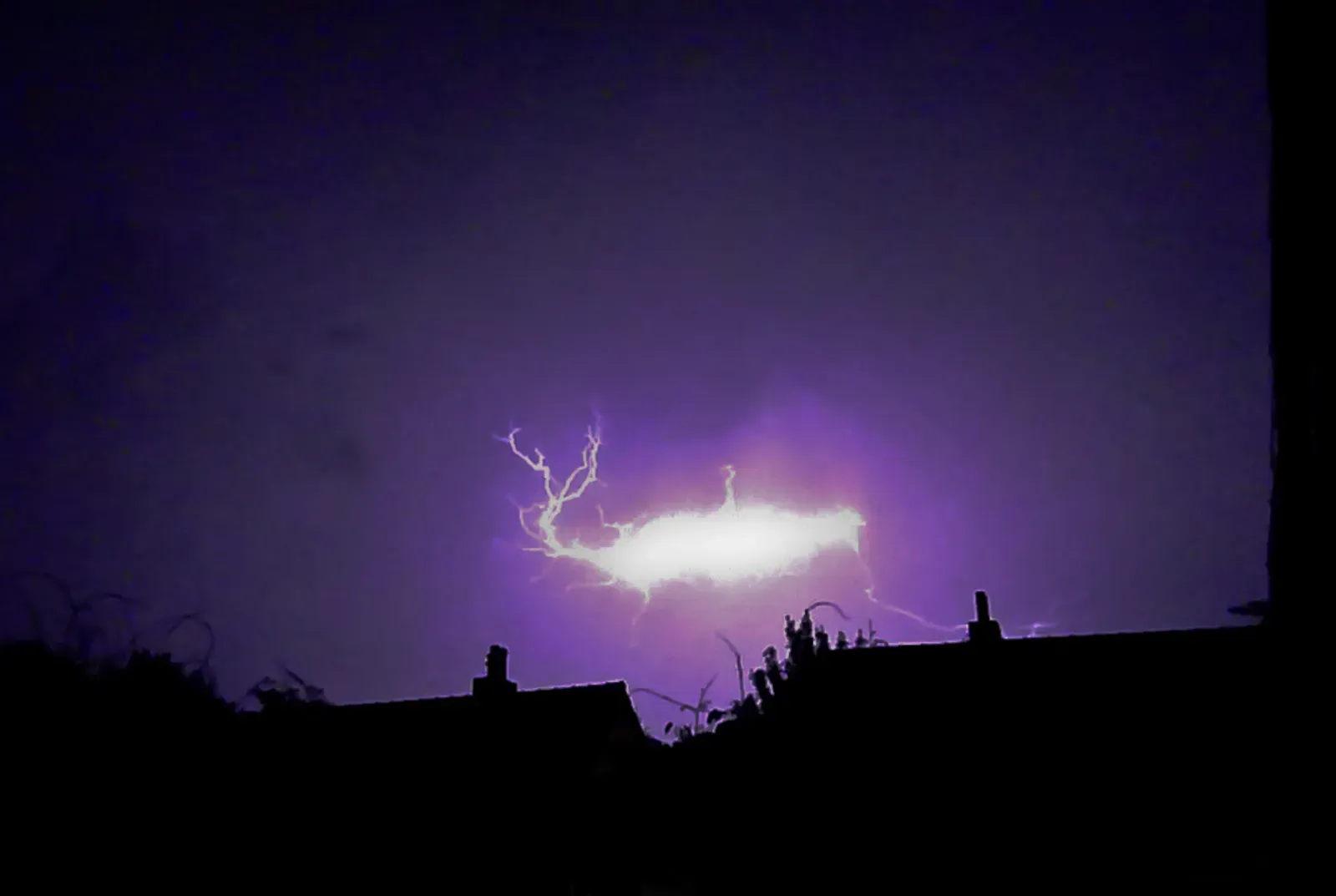
Picture this: a thunderstorm rolls in, lightning crackles across the sky, and then something truly impossible floats through your living room wall. Ball lightning is a mysterious phenomenon that many people have witnessed but no one can fully explain. You’re essentially looking at a glowing, spherical object that floats through the air, sometimes moving around and even bouncing off surfaces, typically measuring between ten to one hundred centimeters in diameter and lasting anywhere from a moment to just over a minute.
Ball lightning is a rarely observed phenomenon whose existence is attested to by thousands of eyewitness reports, but which has so far evaded a widely accepted scientific explanation. What makes this even more unnerving is its behavior. Observations have shown that ball lightning can even pass through walls and glass without leaving a mark, which raises eyebrows and makes people wonder what it really is.
One hypothesis suggests that ball lightning forms when a lightning strike ionizes particles in the air, creating a clump of ionized plasma that glows as it dissipates. Another posits that it might be caused by the vaporization of ground materials like silicon during a lightning strike, with vaporized nanoparticles forming a glowing ball as they are slowly oxidized in the air. Yet here’s the thing: despite these intriguing hypotheses, there is no consensus on what exactly causes ball lightning. The phenomenon remains difficult to study due to its rarity and unpredictability.
In January 2014, scientists from Northwest Normal University in Lanzhou, China, published the results of recordings made in July 2012 of the optical spectrum of what was thought to be natural ball lightning. At a distance of nine hundred meters, a total of 1.64 seconds of digital video was captured, from the formation of the ball lightning after an ordinary lightning strike to the optical decay of the phenomenon. Even that rare piece of evidence raised more questions than answers. As recently as July 2025, a couple in Rich Valley, Alberta, witnessed a pale blue “ball of fire” that hovered at an approximate height of seven meters above the ground and moved slowly with an oscillating quality for about twenty seconds before disappearing from view. The phenomenon was recorded and reported upon by news agencies. Centuries of reports, thousands of witnesses, and science still cannot tell you what it is.
The Hessdalen Lights: Norway’s Unexplained Sky Show
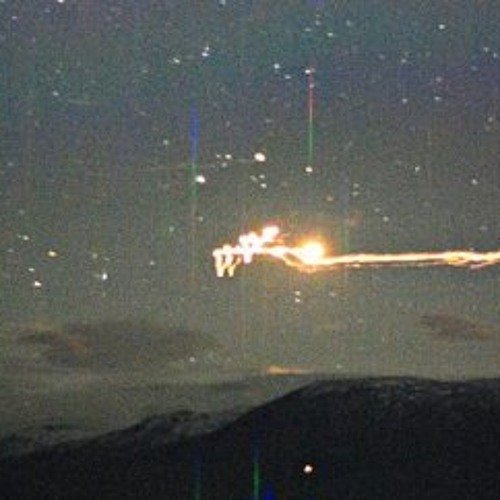
Deep in the hills of rural central Norway sits a quiet valley where something extraordinary has been happening for well over a century. The Hessdalen lights are unidentified lights which have been observed in a twelve-kilometer stretch of the Hessdalen valley periodically since at least the 1930s. They appear both by day and by night, seeming to float through and above the valley, usually bright white, yellow or red, and they can appear above and below the horizon. The duration of the phenomenon may be a few seconds to well over an hour.
Especially high activity occurred between December 1981 and mid-1984, during which the lights were observed fifteen to twenty times per week, attracting many overnight tourists. As of 2010, the number of observations had dwindled to only ten to twenty sightings yearly. Think of it this way: if your neighbor’s lights flickered unpredictably for decades on end, and no electrician in the world could explain why, you might start to lose sleep.
Unexplained plasma-like atmospheric light balls are observed at very low altitudes during alternate phases of maximum and minimum in the Hessdalen area. Several theories have been presented to explain the observed phenomenon, among these: piezo-electricity from rocks, atmospheric ionization triggered by solar activity and cosmic rays. One particularly wild idea is that the valley itself acts as a giant natural battery. The Hessdalen valley is split in two by a river, with zinc and iron-rich rocks on one side and copper-rich rocks on the other. The zinc and iron section would serve as the anode of this natural battery, while the copper half would be the cathode.
While these theories offer potential explanations, no single theory has been accepted as the definitive cause of the lights in Norway. While the phenomenon is complex, it’s possible that multiple factors interact to produce the lights. Continued research, with the aid of technological advancements and data from Project Hessdalen, will likely provide more insights into this enigmatic phenomenon in the future. In other words, the lights are still on and the scientists are still stumped.
Earthquake Lights: When the Ground Speaks in Fire
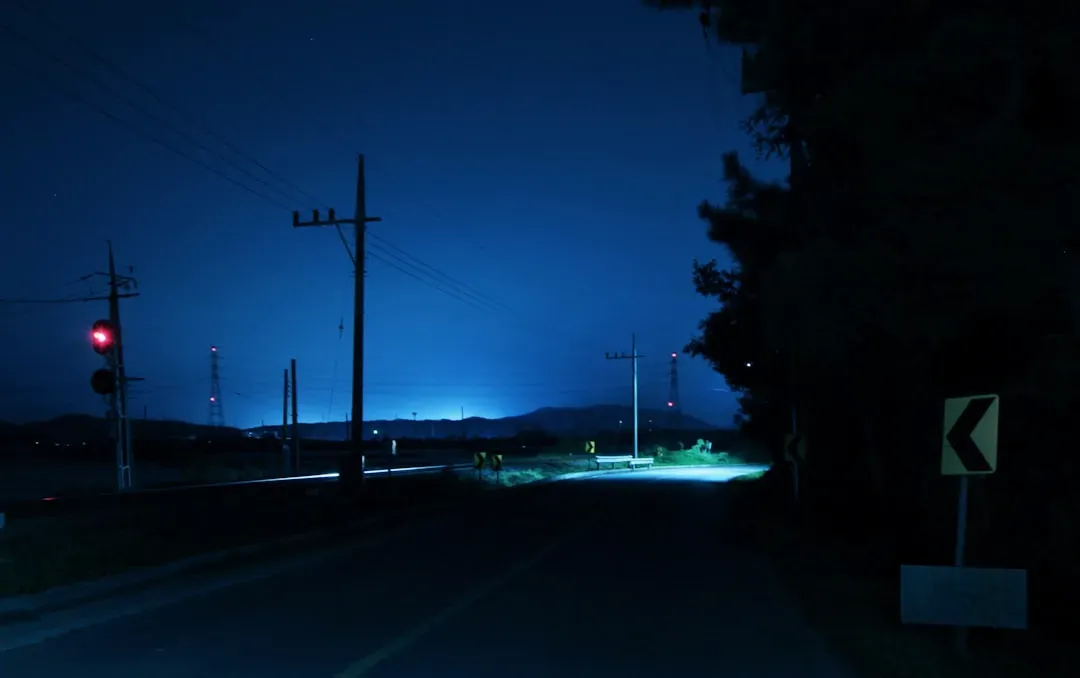
Earthquakes are terrifying enough on their own. The ground literally moves. Buildings collapse. Everything you thought was solid reveals itself to be anything but. Now add mysterious glowing lights in the sky just before the shaking starts, and you have a phenomenon so strange it sounds like something invented for a disaster movie. Before or during an earthquake, strange flashes of light sometimes appear in the sky. They can look like lightning, glowing orbs, or flames. Scientists aren’t exactly sure why. It may involve charged particles or shifting magnetic fields.
Earthquake lights, appearing as blue, white, or pink glows before seismic activity, remain unexplained, challenging our understanding of these luminous phenomena. It’s hard to say for sure whether they serve as a natural warning system or are simply a byproduct of geological stress, but their existence is not in doubt. Earthquake lights have been around for centuries, yet sightings remained virtually unpublicized until the advent of photography.
What’s particularly baffling is that not all earthquakes produce them. Some massive quakes generate no lights at all, while smaller events occasionally create stunning aerial displays. When solar activity disturbs the ionosphere, it may generate electric fields that penetrate fragile fracture zones in Earth’s crust. Some researchers believe this interaction between geology and electromagnetism is part of the answer. Still, no unified model can reliably predict when lights will appear, what color they will be, or how long they’ll last.
I think what makes earthquake lights genuinely unsettling is the timing. They arrive as a warning the Earth seems to send in a language we haven’t learned to read yet. Entire communities have reported them before devastating seismic events. They are documented. They are real. They are photographed. They are likely geophysical in nature, perhaps similar to the lights sometimes seen at the time of earthquakes, also produced by an unknown mechanism. The Earth is clearly doing something. We just don’t know what.
Fairy Circles: Nature’s Perfect Geometry Without an Architect
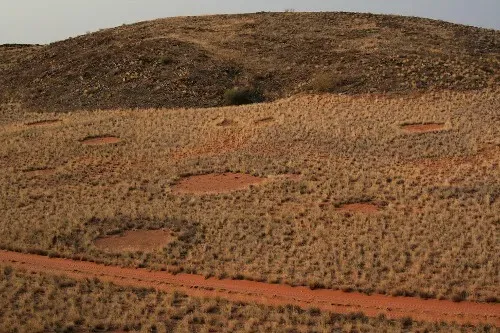
If you were flying over the Namib Desert and looked down, you’d see something that would make you blink twice. The mysterious fairy circles of Namibia are circular patches, typically six to forty feet in diameter, of barren soil bordered by grass. They extend for over one thousand miles throughout the Namib Desert in Southern Africa, one of the driest regions on Earth. Researchers have also spotted them in part of the Pilbara in Western Australia.
What really sets the scientific world on edge is not just their existence but their extraordinary mathematical regularity. They tile the landscape like a mosaic, spaced with an almost architectural precision. Known as fairy circles, these strange formations range from a few meters to over twenty meters in diameter. Theories about their origin range from termite activity to underground gas pockets, but neither has been definitively proven. Local Himba tribes attribute the circles to supernatural forces, calling them the “footprints of the gods.”
While no theory fully explains the origins of fairy circles, a 2022 study linking them to ecohydrological feedback has proven convincing. Significantly, the study debunks previous theories claiming pest activity is responsible. Scientists argued that the grass around the circles pulls water away from the center creating a vacuum effect that deprives inner grasses, which cannot survive. The circular shape makes sense as it maximizes water distribution to outer plants, leaving the middle bare.
Here’s the thing though: the water redistribution theory sounds elegant, but it still doesn’t explain why the circles are so eerily uniform in size, spacing, and shape across thousands of miles of desert. A single theory explaining the fluid dynamics of plant roots doesn’t quite account for what looks like a natural algorithm running across an entire continent. As researchers delve deeper into the phenomenon, the true cause of these fairy circles remains one of nature’s intriguing mysteries. The geometry is too perfect. Nature rarely does things this neat without a reason we can point to.
Earth’s Inner Core: The Planet’s Own Hidden Reversal
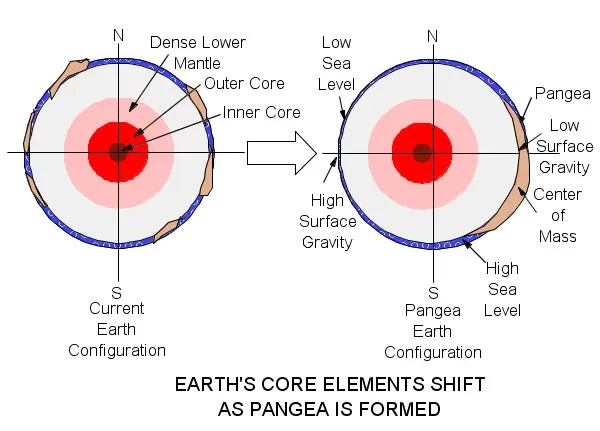
Here is something that should rattle you a little. Somewhere beneath your feet, past the crust you walk on, past thousands of kilometers of molten rock and pressure that defies imagination, the very center of the Earth appears to have reversed its spin, and changed shape. This is not theoretical. This is measured. Scientists in 2024 confirmed that Earth’s inner core reversed its spin, and in February 2025 the same team revealed changes to the inner core’s shape, with deformations in its shallowest level.
Think of it like this: imagine a spinning top inside a spinning top, deep inside another spinning top, and one day the innermost one decides to slow down and go the other direction. Nobody asked it to. Nobody saw it coming. Scientists discovered that the remnants of supercontinents hidden deep within the mantle, the large zone beneath the planet’s thin crust, are older than previously thought. The finding suggests that the rocky mantle isn’t as uniformly blended by Earth’s internal churning as once believed. In fact, there are many hidden structures, such as these ancient tectonic plates, that may shape activity in the mantle and on Earth’s crust in ways yet to be understood.
What’s particularly mind-bending is what else might be leaking out from the core. Gold is one of the metals believed to make up the core, and in May 2025 a study based on a Hawaiian rock formation suggested that at least a tiny amount of gold has escaped to the surface. That leaking raises a fascinating prospect: if it continues, more of this precious metal could travel from the center of Earth to the crust in the future. The Earth is more dynamic and strange than our textbooks ever suggested.
The reversal of the inner core, combined with the discovery that ancient supercontinent remnants persist deep in the mantle like geological fossils, paints a picture of a planet that is far more mysterious inside than out. In 2025, scientists lifted the curtain on strange phenomena, revealed the age of the oldest known rock formation, uncovered a thriving ecosystem nearly six miles beneath the ocean surface, and detected unexpected movement in the planet’s core. Each discovery opens a new door to a room full of more questions. That’s simultaneously thrilling and deeply humbling.
Conclusion: The Planet We Think We Know
There’s something quietly extraordinary about living on a planet that still surprises its most brilliant minds. We have mapped the ocean floor, sequenced ancient genomes, and sent machines to the edge of the solar system. Yet glowing orbs float through Norwegian skies without explanation. Circles of perfect geometry tile a desert with no architect. Lightning forms into spheres that drift through walls. The core of the Earth changes direction like a restless sleeper.
Science is not failing when it encounters these phenomena. In fact, I’d argue these mysteries are exactly what science is for. They are invitations. Each unsolved puzzle is proof that curiosity still has somewhere to go. The Earth has had four and a half billion years to build its secrets. We’ve had a few thousand years to look for them.
The most honest thing we can say is that our planet is stranger than we admit. Not in a supernatural way. In a deeply, beautifully natural way that we simply haven’t fully deciphered yet. So the next time you look at the ground beneath your feet, maybe ask yourself: what is happening down there right now that no one can explain? What do you think science will unravel first? Tell us in the comments below.