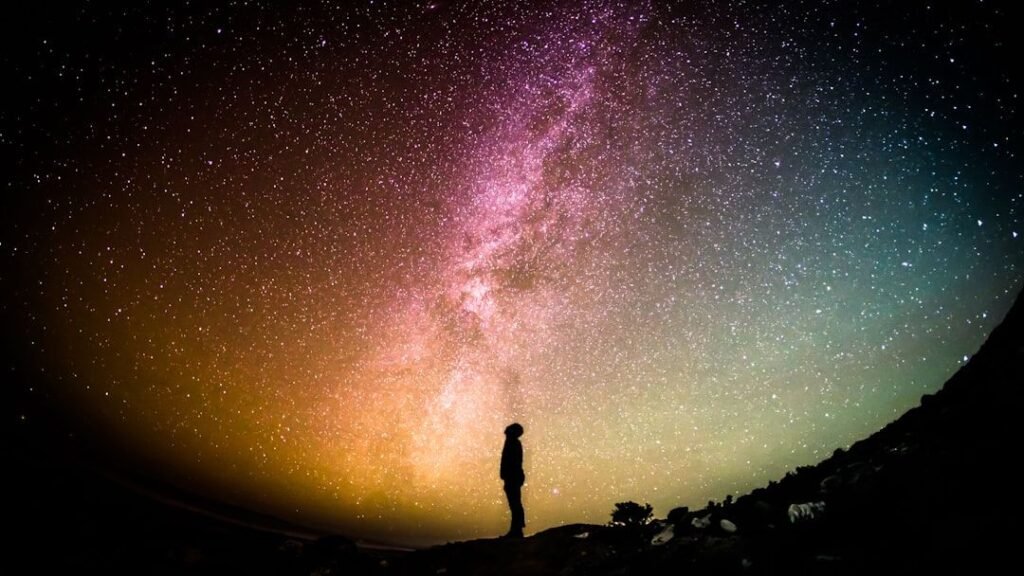
Imagine, just for a second, that the universe isn’t a cold, empty backdrop but something more like a mind: aware, feeling, maybe even faintly thinking. It sounds wild, almost like late-night dorm-room philosophy, yet versions of this idea are now being discussed seriously in modern consciousness studies and theoretical physics. The name for one of the boldest versions of this idea is panpsychism – the view that consciousness, in some primitive form, is a fundamental feature of reality itself.
We’re used to thinking that awareness lives only in brains, maybe in animals, certainly in humans. But as science keeps failing to crack the mystery of how grey matter lights up into lived experience, more researchers are wondering if we’ve framed the question the wrong way. Instead of asking how matter magically produces consciousness, panpsychism flips it: what if matter has always had some form of inner life, and complex brains just organize it in special ways?
The Strange Problem Of Consciousness That Science Still Can’t Crack

Here’s the unsettling truth: even in 2026, with quantum computers and images of black holes, nobody can fully explain why you have an inner life. We can map brain activity, trace neural pathways, and even roughly about one third of the brain can be linked to specific functions, but none of that tells us why seeing the color red feels like anything at all from the inside. This is sometimes called the “hard problem” of consciousness: how do physical processes turn into subjective experience?
Neuroscience does a great job describing the correlations between brain states and mental states: scan a brain, see certain areas light up, and you can predict what someone is seeing, hearing, or remembering. But correlations are not explanations. It’s like knowing every screw and wire in a smartphone without understanding what it feels like to watch a movie on it. At some point, the usual story of “matter plus complexity equals mind” just starts to look like hand-waving.
What Panpsychism Actually Says (And What It Doesn’t)
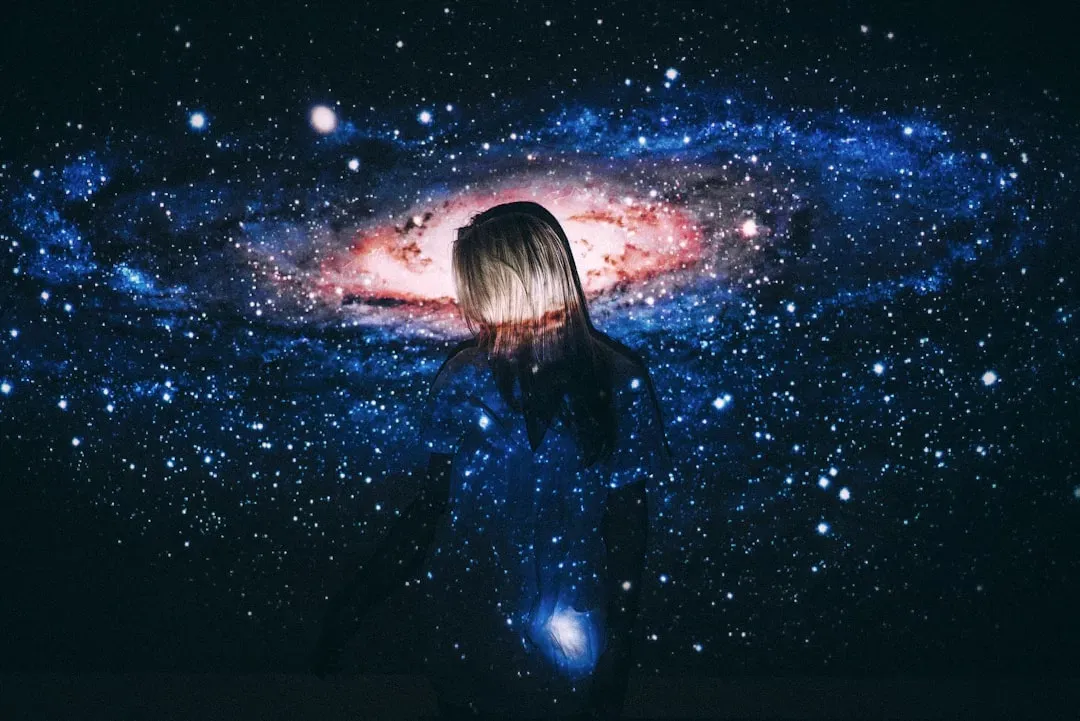
Panpsychism starts from a simple, almost unsettlingly direct move: if consciousness can’t be squeezed out of entirely non-conscious stuff, maybe consciousness has been there in some tiny, basic form all along. On this view, the fundamental building blocks of the world – particles, fields, or whatever our deepest physics talks about – have primitive forms of experience. They’re not little people, not tiny thinking minds, just… something it’s like to be them, however unimaginably simple.
That means rocks, tables, and smartphones are not “conscious” the way you are, but they’re made of ingredients that carry some kind of proto-experiential aspect. Conscious brains, then, don’t generate awareness from nothing; they organize and integrate these underlying glimmers into the rich, unified stream of experience we call a mind. It’s a bit like music: a single note is not a symphony, but without single notes, symphonies could never exist.
Could The Whole Universe Be A Kind Of Mind?

Once you accept that experience might be baked into the base of reality, a bigger, stranger question opens up: if all the parts have some form of experience, could the whole also have a kind of unified awareness? This is where cosmopsychism, a cousin of panpsychism, steps in and suggests that the universe as a whole might be the primary “subject,” with everything inside it as partial expressions of its one, vast mind. In other words, instead of little minds combining into a big one, the big mind comes first.
Some philosophers argue that this view neatly sidesteps a nasty problem for panpsychism: how do zillions of tiny micro-experiences merge into the single, coherent awareness you have right now? If the universe is fundamentally one integrated system, with deep physical entanglements stretching across space and time, it’s not absurd to at least entertain the idea that there’s also a kind of cosmic-level subjectivity. Not a human-like God, not a personality with preferences, but an unimaginably different kind of awareness that our own minds are faint shards of.
Why Serious Thinkers Are Taking Panpsychism More Seriously Now
A few decades ago, panpsychism was usually dismissed as mystical or unscientific. Yet in the last twenty years or so, it’s crept back into mainstream debate in philosophy of mind and even in some corners of theoretical physics and information theory. One big reason is sheer frustration: purely physicalist theories that treat consciousness as a by-product of complex computation still haven’t delivered a convincing explanation of subjective experience, despite enormous progress in brain science.
At the same time, some popular scientific frameworks accidentally sound a bit panpsychist. For example, theories that treat information as a fundamental ingredient of reality, or proposals where consciousness is linked to integrated information in a system, can be read as saying that wherever there is organized information, there is at least a tiny spark of experience. You don’t have to buy that conclusion, but it shows why the old line between “hard science” and “weird metaphysics” isn’t quite as clean as people once thought.
Everyday Life If Everything Is, In A Sense, Experiencing

If panpsychism or cosmopsychism is even approximately right, your everyday world is suddenly much stranger and more intimate than it looks. The trees you walk past, the river you cross, even the phone in your hand would not just be dead objects, but arrangements of fundamentally experiential stuff. They wouldn’t have thoughts or feelings like yours, but the gap between “me” and “everything else” would be thinner than it appears.
Personally, I remember sitting in a park after first really wrestling with these ideas and suddenly feeling like the world around me wasn’t just scenery anymore. It was like realizing you’ve been speaking in a loud voice in a room you assumed was empty – and then wondering if maybe, just maybe, you weren’t entirely alone. Whether or not you believe it, that shift in perspective can make the universe feel less like a machine and more like a vast, half-glimpsed community.
Objections, Criticisms, And Why The Debate Is So Heated
Critics of panpsychism are not shy, and they raise tough questions. One of the biggest is the combination problem: how do countless specks of tiny experience add up to a single, unified mind instead of just a chaotic noise of micro-feelings? Another common pushback is that panpsychism seems unfalsifiable: if you say that everything has some inner life but we can never directly detect it, are you really doing science, or just telling an elaborate story?
There’s also the worry that calling particles “conscious” dilutes the word until it almost stops meaning anything. Many scientists argue we should focus on consciousness as it appears in complex biological systems, not stretch it down to the level of electrons. On the other hand, defenders reply that all current theories of consciousness face deep puzzles and that panpsychism, while strange, might be the least absurd way to take experience seriously without turning it into magic. The fierceness of the debate says something important: nobody is satisfied, and we’re still very far from a final answer.
Why The Idea Of A Self-Aware Universe Matters For Us
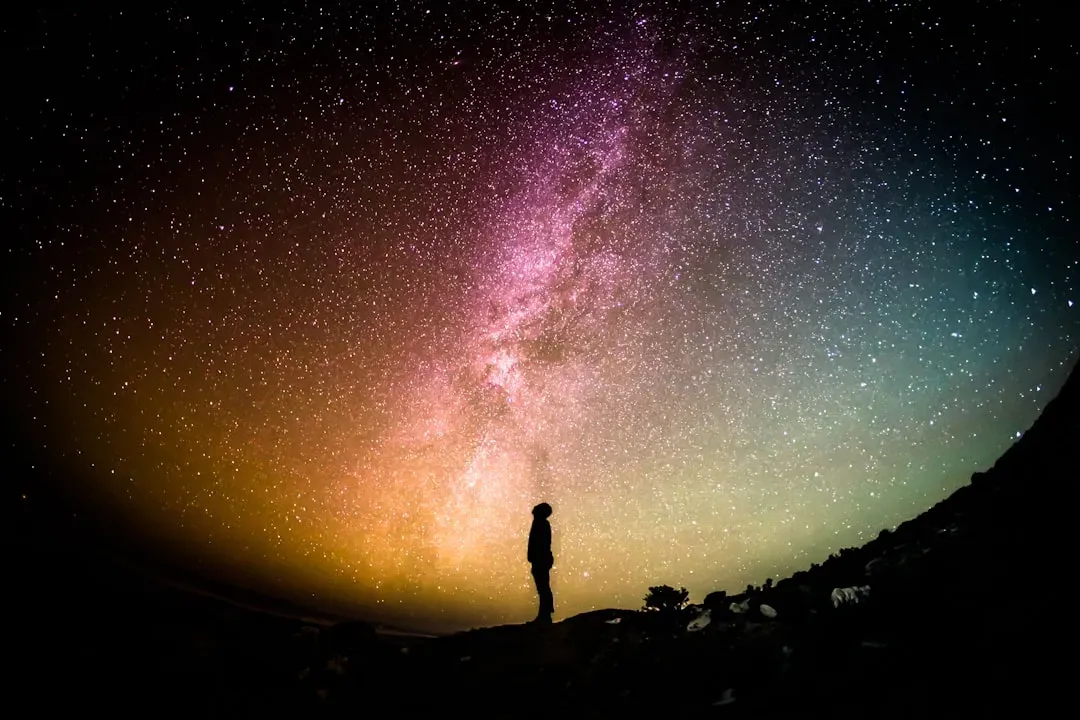
Even if you never become a card-carrying panpsychist, entertaining the possibility of a universe with some form of awareness changes how you place yourself in the big picture. Instead of being weird flukes of feeling in a cold, uncaring cosmos, conscious beings could be local intensifications of something that runs all the way down. That can shift existential anxiety into a quieter, more curious mood: not “Why is there consciousness at all?” but “What kind of reality gives rise to creatures like us?”
There are also ethical ripples. If experience is more widespread than we thought, even in very primitive forms, it forces us to reconsider what we treat as mere resources or tools. You don’t have to start apologizing to your toaster, but you might find yourself feeling a bit more reverent toward the fabric of reality itself. In a time when many people feel spiritually unmoored but scientifically minded, the idea of a subtly sentient universe offers a strange bridge between wonder and reason.
Living With The Possibility Of A Conscious Cosmos

We still do not know what consciousness fundamentally is, and right now, nobody can honestly claim to have a fully satisfying theory that ties brain activity, subjective experience, and the deep structure of the universe into one clean picture. Panpsychism and its cosmic cousin do not solve every puzzle, but they offer a daring alternative to the familiar story that awareness is just an accidental side effect of matter bumping around. They suggest that mind-like qualities might be woven into reality from the start, not painted on at the end.
Whether the universe is truly self-aware, or whether we’re simply projecting our own inner life onto the cosmos, the question forces us to pay closer attention to the most intimate mystery we know: the fact that anything at all feels like something from the inside. Maybe, one day, our best physics and our deepest reflections on consciousness will finally meet in the middle. Until then, the idea of a universe that, in some unimaginable way, also experiences, lingers like a quiet, electrifying possibility in the back of the mind.