Picture this: every thought you have, every memory, every flash of creativity might not just be the result of ordinary electrical signals, but of the same strange rules that govern subatomic particles. It sounds wild, almost like science fiction sneaking into neuroscience, but this is exactly the question behind the idea of the “quantum brain.” Are we just wet biological computers, or is there something deeper, stranger, and more fundamentally physical going on inside our skulls?
Over the last few decades, physicists, neuroscientists, and philosophers have cautiously circled around the same puzzle: can quantum effects like superposition and entanglement play any meaningful role in consciousness? Some say absolutely not; the brain is too warm, too noisy, too messy. Others argue that dismissing quantum processes is like trying to understand a smartphone using only the physics of a pocket calculator. Somewhere between these extremes lies a fascinating story about how far we can push our understanding of the mind.
Why People Think the Brain Might Be Quantum at All
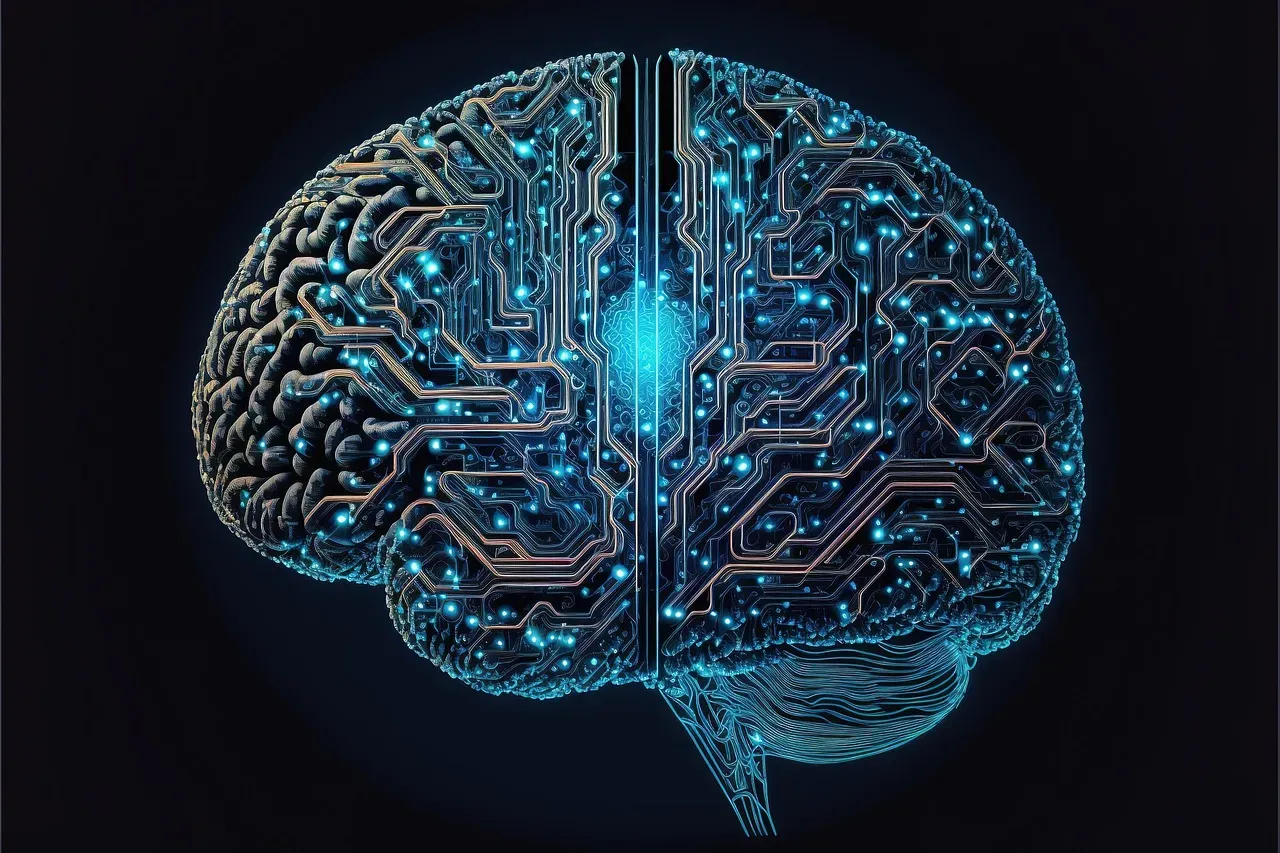
The brain is unimaginably complex: about the same number of neurons as there are stars in our galaxy, each one firing in patterns that change from millisecond to millisecond. When you stare at that complexity long enough, plain old classical physics can start to feel a bit… flat. Some researchers wonder whether the subtlety of consciousness, the fluidity of thought, and the weirdness of free will might hint at something beyond simple on‑off electrochemical signals.
On top of that, quantum physics already underpins pretty much everything else in nature, from chemical reactions to the way proteins fold. It would actually be more surprising if quantum effects somehow skipped the brain entirely while operating everywhere else in the body. The question isn’t whether quantum mechanics is involved at all – it always is, at some level – but whether those effects stay tiny and irrelevant or actually shape how we think and feel.
Superposition, Entanglement, and What They Would Mean in a Brain
In quantum physics, a particle can exist in a superposition of states, like being in multiple places at once until it’s measured. If something similar happened in the brain, it could, in theory, allow neurons or molecular structures to hold overlapping possibilities at the same time, only “collapsing” into a definite state when some threshold is reached. That sounds oddly similar to how we sometimes feel torn between options until a final choice snaps into place.
Entanglement is even stranger: two particles can become linked so that a change in one is reflected in the other, no matter how far apart they are. If entanglement were somehow exploited inside brain tissue, it could offer a radically efficient way to coordinate activity across distant regions, faster and more flexibly than ordinary signaling. Imagine a choir whose members adjust their voices not by listening to each other, but because their vocal cords are mysteriously connected behind the scenes. That’s the kind of coordination some quantum‑brain enthusiasts dream about.
The Microtubule Hypothesis and Orch-OR Theory
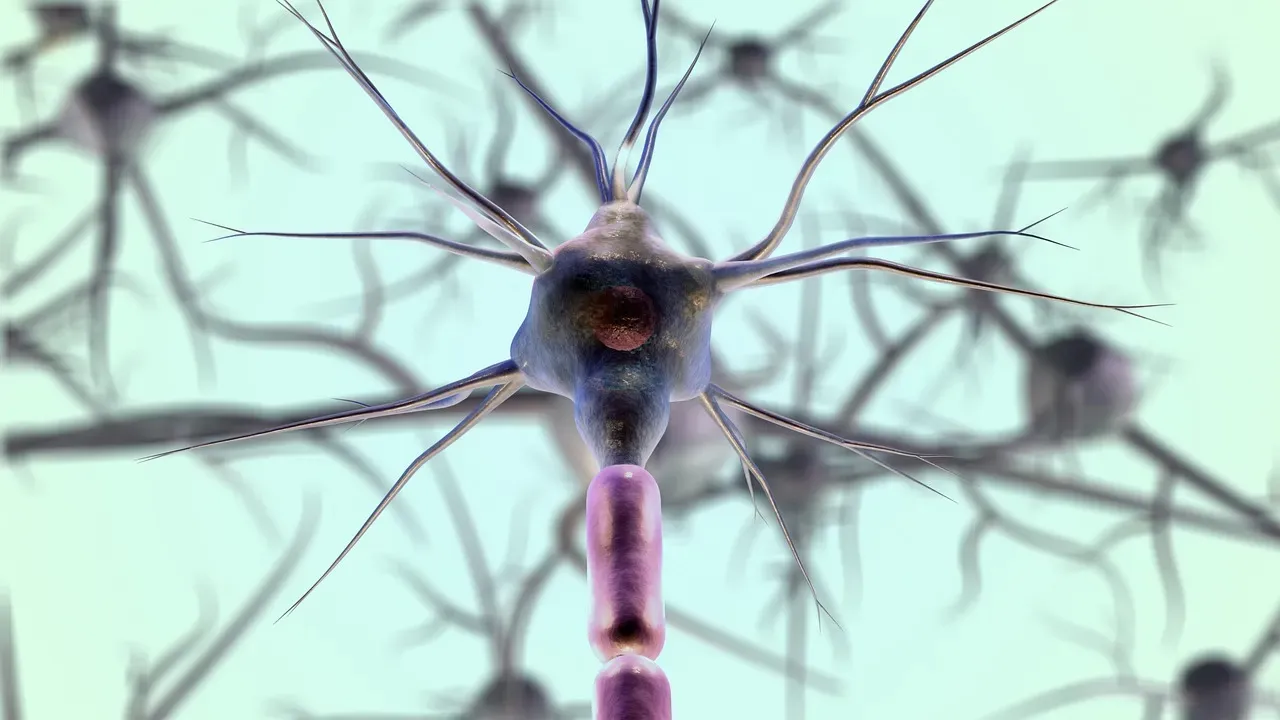
One of the boldest quantum brain ideas centers on microtubules, tiny tube‑like structures that help give neurons their shape and organize their internal machinery. The proposal, often called Orch‑OR (orchestrated objective reduction), suggests that microtubules can support quantum states that persist long enough to influence neural firing. According to this view, consciousness is not just the sum of neural signals, but emerges when certain quantum states collapse in a coordinated way.
This is a daring claim, and it’s triggered heated debate. Supporters point to the regular, lattice‑like structure of microtubules as potentially being more “quantum friendly” than the rest of the messy cell. Critics counter that even if microtubules can host some quantum phenomena, translating that into meaningful thoughts and feelings is a massive leap. It’s a bit like looking at a violin string and declaring that a full symphony must be hiding inside it – possible in principle, but far from proven.
The Harsh Reality: Warm, Wet, and Decoherent
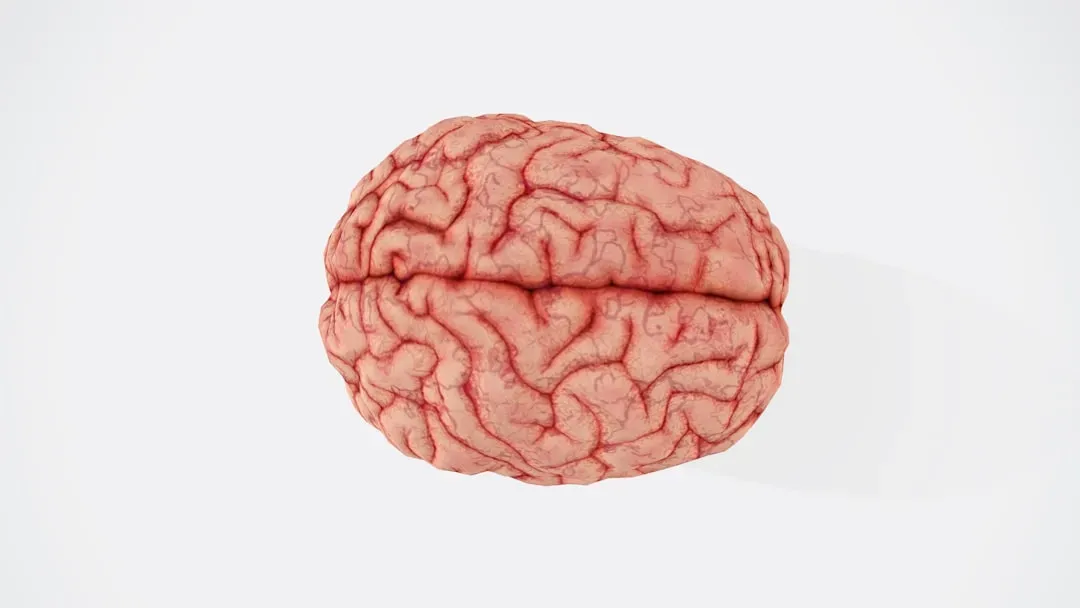
One of the biggest problems for any quantum brain theory is brutal and simple: brains are warm, wet, and noisy. In quantum experiments, researchers go to absurd lengths to protect fragile quantum states, cooling systems to near absolute zero and isolating them from vibrations. In contrast, your brain is sloshing around in fluid, stuffed with constantly moving ions, and running at body temperature. It’s like trying to keep a soap bubble intact in a hurricane.
This environmental chaos leads to what physicists call decoherence – quantum states losing their delicate “quantumness” and becoming ordinary classical states. Many scientists argue that decoherence would destroy any quantum states in the brain so quickly that they couldn’t possibly influence things like perception or decision‑making. From this angle, the idea of a quantum mind can feel like trying to build a house of cards in a washing machine: technically you still have cards, but good luck building anything stable.
Surprising Clues from Quantum Biology
Here’s where things get tricky: nature has already pulled off quantum tricks in warm, wet environments in several places. In photosynthesis, for example, some experiments suggest that plants use quantum coherence to move energy through their cells with remarkable efficiency. Migratory birds appear to sense Earth’s magnetic field using quantum effects in proteins within their eyes. Both of these systems operate at normal biological temperatures.
These discoveries don’t automatically mean the brain is quantum in any deep, consciousness‑shaping way. But they smash the old assumption that quantum effects only matter at super‑cold, ultra‑controlled scales. If a leaf and a robin can harness subatomic behavior to solve complex problems, it at least opens the door to the idea that brains might do something similar. The hard part is moving from “could” to “does” without hand‑waving or wishful thinking.
Quantum Computing, AI, and the Temptation to Compare
As quantum computers slowly move from lab curiosities toward real tools, people are naturally tempted to compare them to brains. Quantum computers can, under the right conditions, explore many possible solutions at once, which sounds eerily like what a brain does when it considers different options. This has fueled a narrative that maybe consciousness is like a built‑in quantum computer running inside our heads.
But the analogy only goes so far. Quantum computers are absurdly fragile and demand extreme precision, while the brain is sloppy, redundant, and resilient. A single glitch can ruin a quantum calculation; your brain, on the other hand, shrugs off small errors all the time. Personally, I find the most interesting comparison not in the hardware, but in the idea that both systems blur the line between pure calculation and something more creative. Still, that doesn’t prove the brain runs on subatomic principles; it just shows we like using whatever latest technology we invent as a metaphor for ourselves.
Free Will, Consciousness, and Why This Debate Feels So Personal
Part of the emotional charge around the quantum brain idea comes from what’s at stake: our sense of self. If the brain is purely classical, some people worry that consciousness becomes nothing more than a by‑product of mechanistic processes, like steam from an engine. Bringing quantum physics into the picture feels, to some, like a way to rescue mystery, agency, or even a sense of soul from being flattened into equations.
Others argue the opposite: that dragging quantum mechanics into the mind is just painting confusion with a fancy brush. They point out that randomness at the quantum level doesn’t magically create meaningful freedom or deep purpose; it just adds noise. I’ve noticed in my own thinking that the temptation is strong to treat “quantum” as a modern stand‑in for “almost magical,” especially when we hit the hard wall of not really understanding consciousness. The danger is that our emotional needs outrun the actual evidence.
Where the Science Stands Today – and What Comes Next
Right now, the most grounded position is cautious: quantum processes certainly exist in the brain at a fundamental level, but there’s no solid proof they play a central, orchestrated role in consciousness. Many neuroscientists are perfectly comfortable explaining perception, memory, and decision‑making with classical models, and those models do predict and match a lot of experimental data. On the other hand, a small but persistent group of researchers continues to test quantum‑inspired hypotheses, especially at the level of proteins and cellular structures.
The next decade or two will likely bring sharper answers, as tools improve for measuring ultra‑fast, ultra‑small processes inside living brains. Maybe we’ll discover that quantum effects help tweak signaling in subtle ways, or that they matter only in extreme states like anesthesia or near the edge of awareness. Or maybe we’ll find that the brain’s genius lies not in defying classical physics, but in pushing it to its absolute limits of complexity. Either way, the question forces us to look harder at what a mind really is – a strange, subjective light burning in a lump of matter – and ask ourselves how far down we’re willing to follow that mystery.