There’s something almost poetic about the idea that the solution to one of humanity’s greatest crises might be hiding in one of the planet’s least explored places. Miles beneath the ocean’s surface, in cold, crushing darkness, tiny microorganisms are quietly doing something extraordinary. Something that scientists are only now beginning to truly understand.
The deep ocean has always felt like another world. Alien, remote, and largely mysterious. Yet researchers are increasingly turning their attention downward, and what they’re finding is reshaping how we think about carbon, climate, and the future of life on Earth. Let’s dive in.
The Hidden World Beneath the Waves
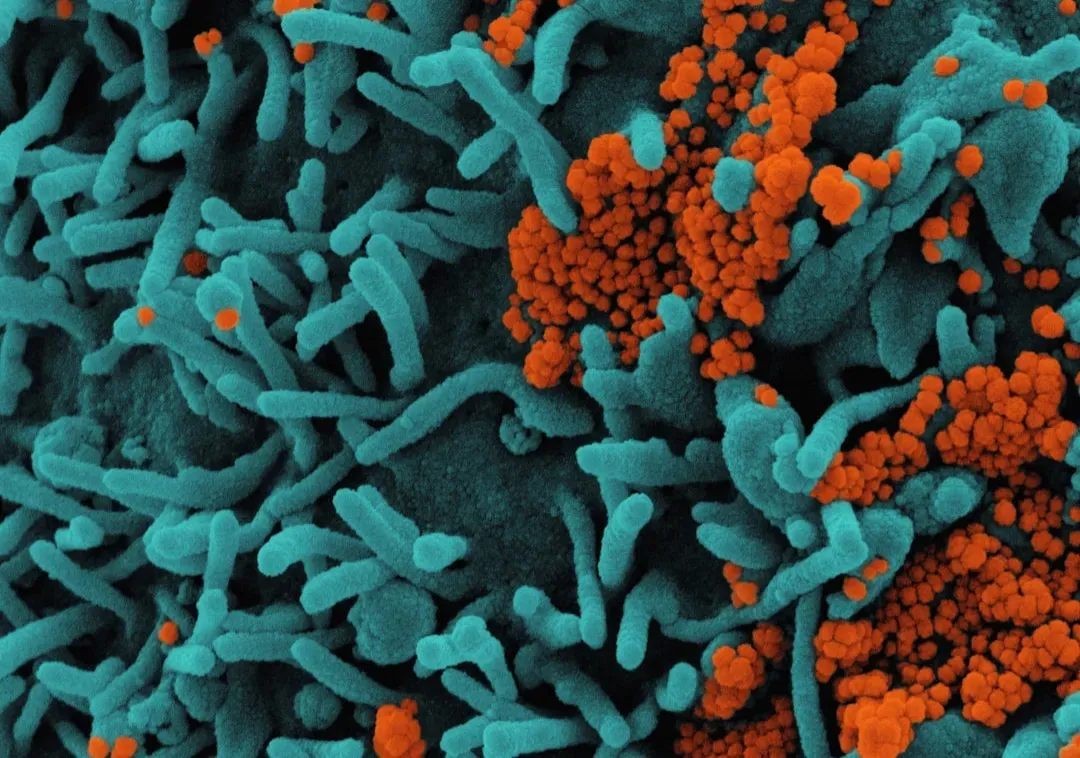
Most people picture climate solutions as big, visible things. Solar panels. Wind turbines. Carbon capture plants made of steel and concrete. Honestly, it’s easy to overlook the microscopic when the macro feels so urgent.
Here’s the thing though: the ocean already absorbs a staggering amount of carbon dioxide from the atmosphere each year. A significant portion of that work is being done not by chemistry alone, but by biology. Tiny single-celled organisms living in the deep sea are actively pulling carbon from the water column and locking it away.
These microbes exist in ecosystems so remote and under-studied that scientists still describe parts of the deep ocean biosphere as genuinely unknown territory. That’s not an exaggeration. Some zones remain as unexplored as the surface of Mars.
What Researchers Actually Discovered
The research emerging from recent scientific work focuses on how deep-sea microbial communities process and sequester carbon in ways far more complex than previously understood. These organisms don’t just passively absorb carbon. They actively transform it, cycling it through biological processes that can lock it away from the atmosphere for potentially thousands of years.
What makes this particularly exciting is the scale. The deep ocean represents the largest habitat on Earth by volume. If microbial activity there is playing a meaningful role in carbon sequestration, the implications for climate modeling and even climate intervention could be enormous.
Scientists are also noting that different microbial species contribute differently to this process. Some are more efficient than others. Identifying which communities do the heaviest lifting is now a core part of the research agenda.
The Carbon Pump Nobody Talks About
You’ve probably heard of the ocean’s “biological pump” before, but most descriptions stop at the surface layer. Phytoplankton blooms, carbon sinking downward, end of story. The reality is far messier and far more interesting.
Deep-sea microbes intercept that sinking carbon and do something with it. Some release it back as CO2. Others incorporate it into their own biomass or transform it into compounds that sink even further and stay out of the atmosphere for extended periods. Think of it like a recycling system with multiple possible outcomes, and scientists are still figuring out which pathways dominate under which conditions.
The nuance here matters enormously for climate projections. If we’ve been underestimating how much carbon gets permanently sequestered in deep water through microbial action, our models of ocean carbon capacity could be significantly off.
Why the Deep Ocean Is So Difficult To Study
Let’s be real: studying life several kilometers underwater is not easy. Equipment costs are extraordinary. Sampling missions are logistically complicated. Bringing organisms back to the surface without compromising them requires highly specialized technology.
There’s also the pressure and temperature issue. Deep-sea organisms are adapted to conditions that are essentially impossible to replicate in a standard lab environment. By the time researchers have a sample on deck, the biology has often already changed. It’s a bit like trying to study a snowflake by catching it and driving it to a lab in July.
Despite these obstacles, advances in autonomous underwater vehicles, environmental DNA sampling, and in-situ sensors are finally allowing scientists to observe these communities in something approaching their natural state. The technology is catching up to the curiosity, and the results are already surprising researchers.
What This Means for Climate Science
I think this is where the story gets genuinely consequential. Climate models are only as accurate as the data and processes they incorporate. If deep-sea microbial carbon cycling has been significantly underrepresented in those models, we may have been working with an incomplete picture of Earth’s carbon budget for decades.
That matters practically. Policymakers rely on climate models to set emissions targets, evaluate intervention strategies, and forecast future warming scenarios. Even a modest revision to how much carbon the deep ocean naturally sequesters could shift those projections in meaningful ways.
It’s hard to say for sure how large the revision might be. Researchers are cautious, as they should be. Still, the direction of the finding, that the deep ocean is a more active and complex carbon sink than assumed, points toward a possible underestimation of natural sequestration capacity. And that’s worth paying close attention to.
The Question of Human Intervention
Naturally, as soon as scientists identify a promising natural process, the question arises: can we enhance it? Could we deliberately encourage deep-sea microbial activity to sequester more carbon and help offset emissions?
It’s a compelling idea, but also a deeply uncertain one. Interfering with deep-ocean ecosystems carries serious risks. These communities have evolved over millions of years in conditions of remarkable stability. Introducing nutrients, altering chemistry, or otherwise disturbing the balance could have cascading effects that are impossible to predict.
Researchers are urging extreme caution before any intervention is even seriously considered. The science of understanding what’s happening needs to come first, long before the science of manipulation. This isn’t an area where moving fast is a virtue.
A Microbe-Sized Hope in a Big Problem
There’s a certain humbling quality to all of this. For years, climate conversations have centered on what humans must do to solve a problem humans created. Reduce emissions. Build cleaner technology. Change behavior. All of that remains necessary and urgent.
Yet here, in the deepest, darkest corners of the ocean, organisms without brains or even nuclei have been quietly running carbon management systems that dwarf anything we’ve engineered. Nature, it turns out, had a climate toolkit long before we realized we needed one.
The deeper we look, the more we find. Every new discovery from the deep ocean seems to reveal another layer of biological complexity that science hadn’t fully accounted for. It doesn’t solve the climate crisis, but it does remind us that we’re still learning, and sometimes, the most important discoveries are the ones we least expected to find.
What does it say about humanity that our best climate ally might be a microscopic organism living in pitch darkness at the bottom of the sea? What do you think about that? Tell us in the comments.