Few ideas in science capture the imagination quite like turning Mars into a second Earth. The thought of walking on the red planet without a spacesuit, breathing freely under an open sky – it sounds like science fiction, and honestly, it still kind of is. There’s a lot more standing between us and a livable Mars than most people realize, and the obstacles go far deeper than simply warming the planet up.
The conversation around terraforming Mars has picked up serious momentum in recent years, fueled by ambitious space programs and bold billionaire visions. Yet scientists are increasingly pointing out that the challenge isn’t just about fixing the climate – it’s about something far more fundamental, and far more complicated. Let’s dive in.
The Dream vs. The Reality of Terraforming
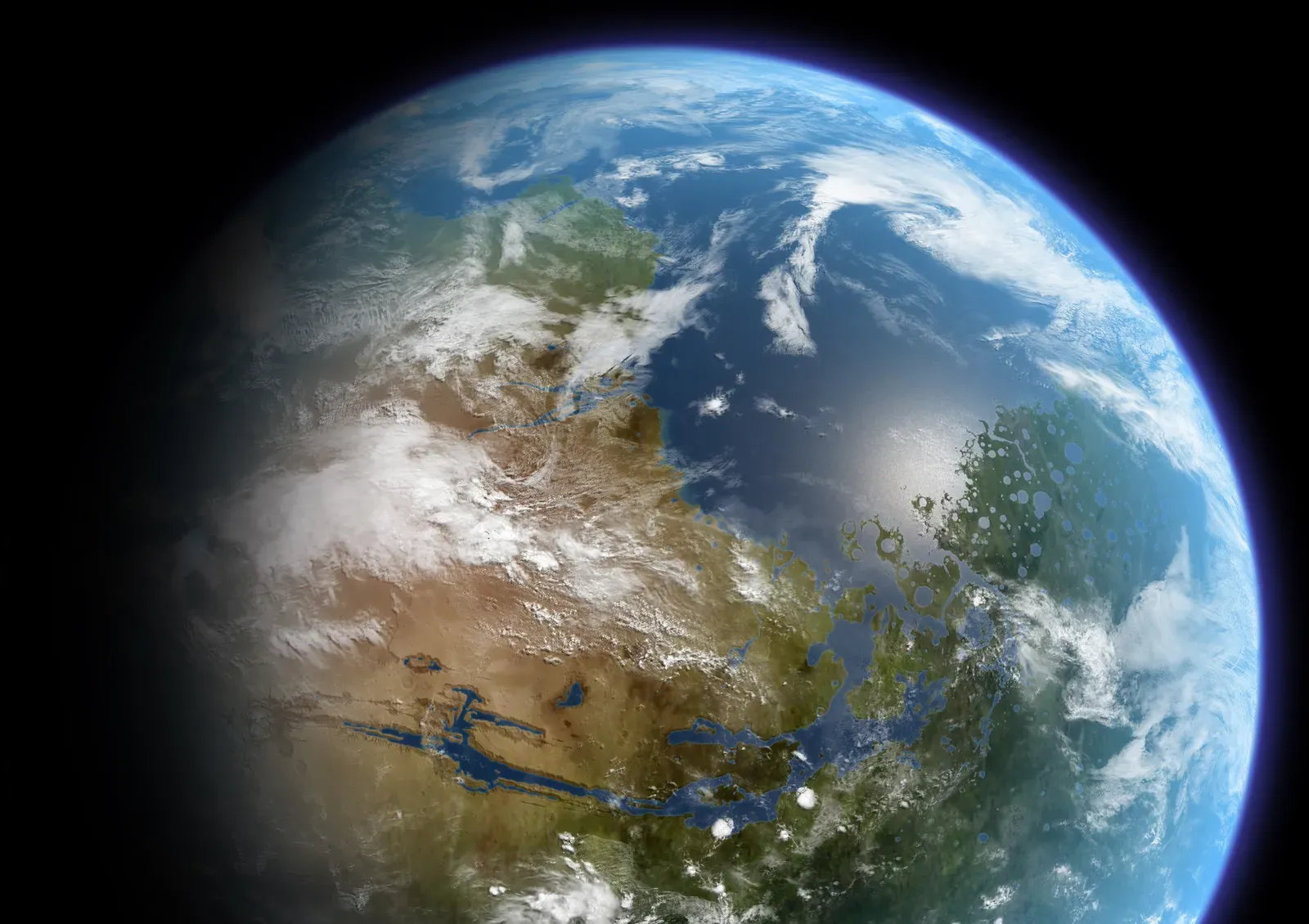
Let’s be real: the idea of terraforming Mars has existed in popular culture for decades, but it has only recently become a genuine topic of scientific debate. The basic concept is straightforward enough. You warm the planet, thicken the atmosphere, introduce liquid water, and eventually grow plants that produce oxygen. Simple on paper. Catastrophically difficult in practice.
The distance alone is staggering – Mars sits somewhere between roughly 55 million and 400 million kilometers from Earth depending on the orbital position of both planets. That’s not a commute you can optimize. Any terraforming effort would require sustained, multigenerational commitment on a scale humanity has never attempted before, which raises real questions about whether it’s even feasible within any meaningful timeframe.
Why Climate Change on Mars Is Only Half the Battle
Here’s the thing that tends to get glossed over in popular discussions: warming Mars is genuinely hard, but it isn’t the hardest part. Scientists have proposed various methods to raise the planet’s temperature, from releasing greenhouse gases into the thin Martian atmosphere to placing giant mirrors in orbit that focus sunlight onto the surface. These ideas sound bold, and some are technically plausible in theory.
The problem is that Mars doesn’t just have a cold climate. It has a fundamentally broken environment – a weak magnetic field, crushing radiation levels at the surface, and an atmosphere so thin it’s essentially a vacuum compared to Earth’s. Solving temperature alone wouldn’t make the planet habitable. It would just make it slightly less hostile.
The Magnetic Field Problem Nobody Wants to Talk About
This is honestly one of the most underappreciated challenges in the entire terraforming conversation. Mars lost its global magnetic field billions of years ago, and without that protective bubble, the solar wind constantly strips away atmospheric particles. Think of it like trying to fill a bathtub while the drain is open – you can pump in as much atmosphere as you want, but the sun keeps pulling it away.
Earth’s magnetic field is generated by the movement of its molten iron core. Mars, by contrast, has a largely cold and geologically inactive interior. There’s no straightforward way to restart that process. Some researchers have suggested placing a magnetic shield at the Mars-Sun L1 Lagrange point to deflect solar wind, but this is deeply speculative and would require technology we simply don’t have yet.
Atmospheric Pressure and the Chemistry Challenge
Even if you could somehow solve the magnetic field issue, you’d still face an enormous chemistry problem. The Martian atmosphere is roughly ninety-five percent carbon dioxide, with tiny traces of nitrogen and argon. For humans and most Earth life to survive, you need a very different mix – primarily nitrogen and oxygen in roughly the right proportions.
The planet simply doesn’t have enough nitrogen stored anywhere accessible to build a breathable atmosphere. Scientists have calculated that even if every known reservoir of nitrogen on Mars were released, it wouldn’t come close to what’s needed. That’s a sobering thought. You can’t just import what’s missing from Earth – the quantities involved are almost incomprehensibly large, and even with future space infrastructure, the logistics border on impossible.
Radiation: The Silent Killer on the Surface
Mars receives far more harmful cosmic and solar radiation than Earth does, and this isn’t a small difference – it’s a dramatic one. Without a thick atmosphere and a functioning magnetic shield, radiation levels on the Martian surface are roughly forty times higher than what humans experience on Earth. Prolonged exposure causes DNA damage, increases cancer risk significantly, and would be lethal over time without serious shielding.
This problem wouldn’t disappear even if you managed to warm the planet and thicken the atmosphere considerably. The atmosphere would need to be orders of magnitude denser than it is today to offer meaningful radiation protection. Until that threshold is reached – which could take thousands of years even under optimistic scenarios – every living thing on Mars would need to shelter underground or behind substantial artificial barriers.
The Timescale Problem: We’re Talking Millennia, Not Decades
I think one of the most important reality checks in this whole discussion is the sheer timescale involved. Optimistic scientific estimates suggest that even with advanced technology and unlimited resources, meaningful terraforming of Mars would take thousands to tens of thousands of years. That’s not a typo. Tens of thousands of years.
Compare that to the lifespan of most human institutions, which rarely survive a few hundred years intact. Civilizations rise and fall. Political priorities shift. The idea that humanity could maintain a single, unified, multigenerational project for thousands of years without interruption is… well, it’s a significant assumption. It doesn’t mean it’s impossible, but it demands a level of species-wide coordination we’ve never come close to demonstrating. That gap between ambition and attention span might be the biggest obstacle of all.
What Scientists Think We Should Do Instead
Rather than dismissing Mars colonization outright, many researchers are shifting toward what’s sometimes called “paraterraforming” – creating enclosed, pressurized habitats on or beneath the Martian surface rather than attempting to transform the entire planet. Think giant biodomes, subsurface colonies, or lava tube habitats that provide protection from radiation and pressure loss. It’s far less romantic than a terraformed Mars with open skies, but it’s actually achievable with technology that isn’t astronomically far off.
There’s also growing scientific interest in a more modest goal: making Mars survivable for humans in small numbers using local resources, without any expectation of broad atmospheric transformation. This approach would focus on in-situ resource utilization – extracting water ice, producing oxygen locally, and building permanent shelters. It’s still enormously difficult, but it’s a goal with a realistic timeframe measured in decades rather than geological epochs.
Conclusion: Mars Can Wait, But the Questions Can’t
Terraforming Mars is one of humanity’s most audacious ideas, and there’s something genuinely inspiring about the fact that serious scientists are even debating it. The ambition alone says something remarkable about where we are as a species. Honestly though, the more you dig into the science, the more it becomes clear that terraforming Mars in any complete sense is probably beyond the reach of any civilization we can currently imagine.
That doesn’t mean Mars is off the table. Far from it. Establishing permanent human presence there, even in modest protected habitats, remains a profoundly meaningful goal. The real lesson from all of this science isn’t that we should give up – it’s that we need to be honest about what terraforming actually requires, rather than treating it like an engineering problem with a known solution. Mars won’t become Earth. It will become something else, something new, on a timeline far longer than any of us will live to see.
What do you think – should we pour resources into Mars colonization even knowing the full scale of the challenge, or is there a stronger case for focusing on protecting the one planet we already have?