Space has a funny way of humbling us. Just when astronomers think they’ve mapped out the neighborhood, something extraordinary turns up practically next door. A newly confirmed planet orbiting one of the closest stars to our own solar system has scientists genuinely excited, and honestly, it’s not hard to see why.
This discovery touches on one of the biggest questions humans have ever asked: are we alone? The details are surprising, the implications are vast, and the science behind it is fascinating even for those of us who don’t spend our days peering through telescopes. Let’s dive in.
The Star at the Center of It All: Barnard’s Star

Barnard’s Star is not exactly a stranger to astronomers. It’s the second closest star system to Earth, sitting just about six light-years away, and it holds the record for having the fastest apparent motion across our sky of any known star. That proximity alone makes any planet found there scientifically priceless.
What makes this red dwarf particularly compelling is its age. It’s estimated to be significantly older than our own Sun, which means any planet in its orbit has had an enormous amount of time to evolve. Whether that’s enough time for life is the question nobody can quite stop asking.
Introducing the Super-Earth: What We Actually Know
The newly confirmed planet, orbiting Barnard’s Star, is classified as a super-Earth. That means it’s larger than our planet but likely smaller than Neptune, sitting in a mass range that scientists find especially intriguing. Super-Earths are among the most common types of planets in the galaxy, yet we don’t have one in our own solar system, which is a strange irony when you think about it.
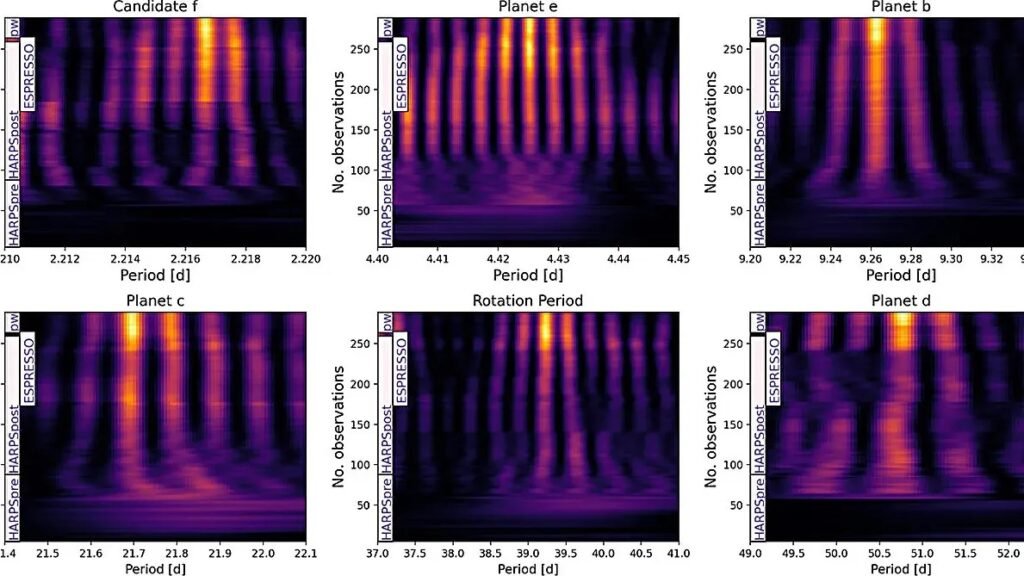
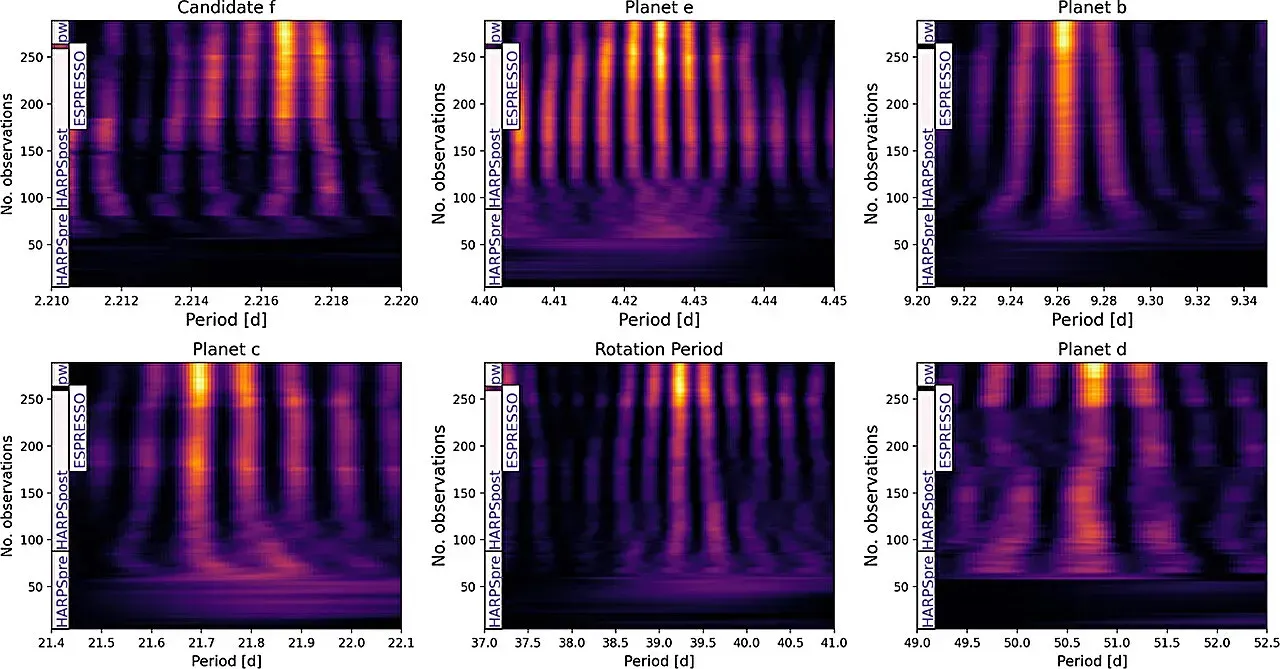
This particular world completes its orbit in just a few days, meaning it sits extremely close to its host star. That short orbital period is what allowed astronomers to detect it in the first place, using precision radial velocity techniques that measure tiny wobbles in starlight caused by a planet’s gravitational pull.
The Detection Method: How Scientists Found It
Here’s the thing about finding planets around dim, quiet stars like red dwarfs. Traditional optical telescopes struggle because these stars emit most of their light in the infrared spectrum. The team behind this discovery used a spectrograph specifically designed to work in that infrared range, which gave them the sensitivity needed to detect something as subtle as a planet tugging on its star.
The instrument used was CARMENES, a high-resolution spectrograph operating from the Calar Alto Observatory in Spain. It was purpose-built for exactly this kind of hunt, targeting red dwarf stars with unprecedented precision. The data required careful long-term observation before the signal could be confirmed with confidence.
Red Dwarf Stars and the Habitability Debate
Let’s be real: red dwarfs have had a complicated reputation in the habitability conversation. They’re prone to violent stellar flares that could strip away planetary atmospheres or bombard surfaces with intense radiation. A planet orbiting as closely as this one does would face serious environmental challenges.
Still, red dwarfs make up the vast majority of all stars in the Milky Way. If life can find a foothold around even a fraction of them, the implications for the abundance of life in the universe are staggering. Some researchers argue that evolution is adaptable enough to handle harsher conditions, though it’s hard to say for sure without more data.
Why This Discovery Matters More Than Most
Proximity is everything in planetary science. Distant exoplanets are fascinating in theory, but studying their atmospheres, surfaces, or potential biosignatures in meaningful detail remains well beyond our current technology. A planet just six light-years away is, by cosmic standards, practically in our backyard.
Future telescopes, including next-generation space-based observatories currently in development, may actually be capable of directly imaging this planet or analyzing its atmospheric composition. That possibility alone transforms this from an interesting data point into a genuine target for some of the most ambitious science of the coming decades. I think that’s what makes this feel different from other exoplanet announcements.
What a Super-Earth This Close Could Tell Us
Super-Earths in close orbits around red dwarfs are often tidally locked, meaning one side of the planet permanently faces the star while the other side sits in eternal darkness. This creates extreme temperature gradients across the surface. Interestingly, some climate models suggest that under the right atmospheric conditions, a thin zone between the scorching day side and the frozen night side could theoretically support liquid water.
Studying this planet up close could offer our clearest test yet of those theoretical models. It would give researchers real observational data to compare against decades of climate and planetary simulations. That kind of ground truth is exactly what the field needs to move beyond speculation.
The Bigger Picture: Reframing Our Cosmic Neighborhood
Honestly, the fact that a potentially significant planet was hiding in plain sight around one of our nearest stellar neighbors says something profound about how much we still have to learn. Barnard’s Star has been studied for well over a century. The idea that it could be harboring worlds we only just confirmed is both humbling and thrilling.
This discovery is part of a larger pattern emerging across modern astronomy: the universe is far more packed with planets than anyone anticipated even twenty years ago. Our galaxy alone is estimated to contain more planets than stars, which means the odds of Earth being unique grow smaller with every new find. What this super-Earth around Barnard’s Star ultimately represents, whether a dead rock or something far more remarkable, may define one of the most important scientific questions of the next generation. What do you think: is our cosmic neighborhood more crowded with life than we ever dared imagine? Drop your thoughts in the comments below.