
What if the boundaries of your mind are far less fixed than you think? Most of us walk through life assuming our thoughts are sealed inside our skulls, private and self-contained, like letters locked in an envelope nobody else can open. Yet a growing body of scientific research is quietly challenging this assumption in ways that are frankly mind-blowing.
From quantum physicists to neuroscientists and biophysicists, researchers across multiple disciplines are now seriously exploring the idea that your consciousness is not just a product of your brain, but something deeply woven into the fabric of the universe itself. The implications, if true, are staggering. Let’s dive in.
You Are Not as Solid as You Think: The Porous Nature of Consciousness
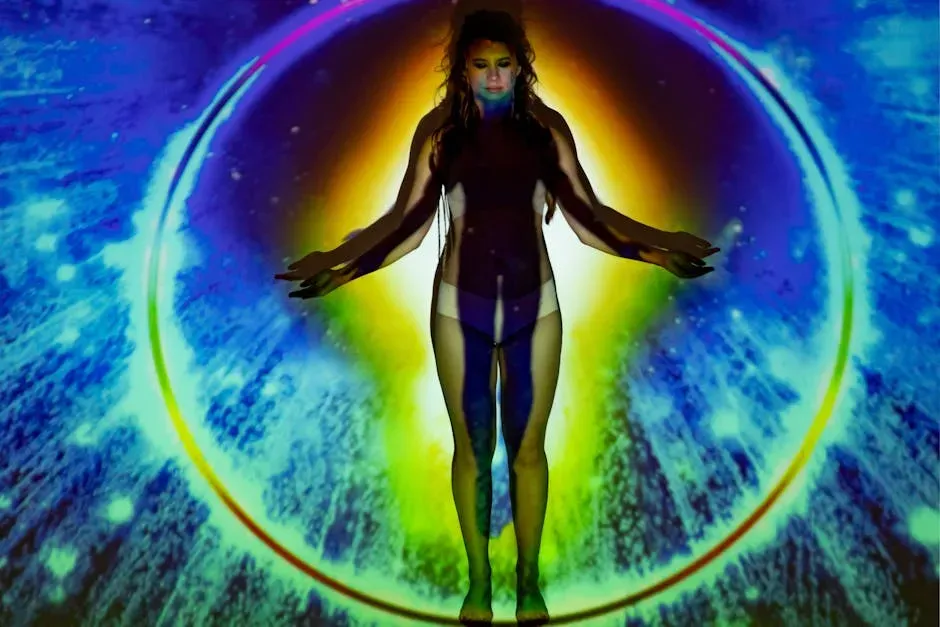
Most of us think of ourselves as solid beings moving through empty space, assuming our brains and their contents are locked in the vault of our skulls, churning out thoughts that stay trapped inside. In reality, we’re much more porous than that. Your body, your brain, your very sense of self is less of a sealed container and more like a sponge sitting in an ocean it cannot separate itself from.
In reality, you are bits of matter and lots of water held together by vast fields of energy. The atoms of your body are made up of energy. Electromagnetic energy binds the hydrogen and oxygen atoms that comprise roughly sixty percent of your body made up of water. Without that electromagnetic energy, you would simply disintegrate. That’s not metaphor. That’s basic physics, and it reframes everything.
The Flow of the Universe: What Scientists Actually Mean by “Going With the Flow”

At the Polytechnic University in Turin, Italy, anesthesiologist Marco Cavaglià and his collaborators are trying to create a map to understand how human biology participates in a larger universal system, how that explains the emergence of thought, of consciousness, and of self. He is not proposing a new theory of consciousness. Instead, the team is building a bridge between established findings across membrane biophysics, neuroscience, and electromagnetism.
Informally, they talk about “going with the flow.” When they refer to “the flow,” they mean the fact that living systems are not static objects. They are ongoing processes: continuous electrical activity, chemical exchange, fluid movement, and constantly changing membrane states. Think of it less like a river and more like the invisible current that carries every river. You are not just in the flow. You are part of it.
Consciousness as the Foundation of Reality: A Physicist’s Radical Claim

A new theoretical framework presents consciousness not as a byproduct of brain activity, but as a fundamental field underlying everything we experience, including matter, space, time, and life itself. This is the remarkable work of Maria Strømme, Professor of Materials Science at Uppsala University, published in the prestigious journal AIP Advances. Honestly, when a materials scientist starts talking about consciousness as the source of the universe, you pay attention.
This new theoretical model, introduced by Strømme in AIP Advances, proposes that consciousness exists first, and time, space, and matter emerge from it. Her theory also suggests that your individual consciousness does not cease at death, but returns to the universal field of consciousness from which it once emerged, a concept she has formulated in quantum-mechanical terms. Whether you find that comforting or unsettling probably says a lot about where you are in life right now.
Your Brain and the Earth’s Heartbeat: The Schumann Resonance Connection

The Earth’s natural electromagnetic environment, particularly the Schumann Resonance, operates within the extremely low-frequency range with a fundamental frequency of 7.83 Hz. This resonance is generated by lightning strikes and propagates within the Earth-ionosphere cavity, acting as a global electromagnetic signal. Interestingly, this frequency aligns with the human brain’s theta waves, which are associated with states of relaxation, meditation, and creativity. This overlap has led to theories about the potential interaction between the Earth’s electromagnetic fields and human consciousness.
Research indicates that human brainwave activity is highly dependent on the Schumann Resonance, implying a correlation between atmospheric electromagnetic frequencies and brain activity. Back in 1952, German doctor Herbert König first discovered that the main resonant frequency of the ionosphere, 7.83 Hz, coincides with the alpha wave range of electromagnetic activity in the human brain, and scientifically proved it. Modern research has confirmed and significantly expanded this scientific fact. Your brain, it seems, is literally tuned to a planetary frequency.
Quantum Consciousness: When Your Mind Behaves Like a Subatomic Particle

Hartmut Neven, a physicist and computational neuroscientist leading Google’s Quantum Artificial Intelligence Lab, believes quantum computing could help explore consciousness. Speaking to New Scientist, Neven outlined experiments and theories suggesting consciousness might emerge from quantum phenomena such as entanglement and superposition within the human brain. He proposes leveraging quantum computers to test these ideas, potentially expanding our understanding of how the mind interacts with the physical world.
At the heart of Neven’s theory is the multiverse interpretation of quantum mechanics. According to this view, every quantum event creates a branching of realities, forming parallel universes. Neven suggests consciousness could be the mechanism by which you experience one specific branch of this multiverse. I know it sounds crazy, but some of the sharpest minds in quantum physics are putting real laboratory resources behind this idea.
The Zero-Point Field: How Your Brain May Resonate With the Fabric of Space
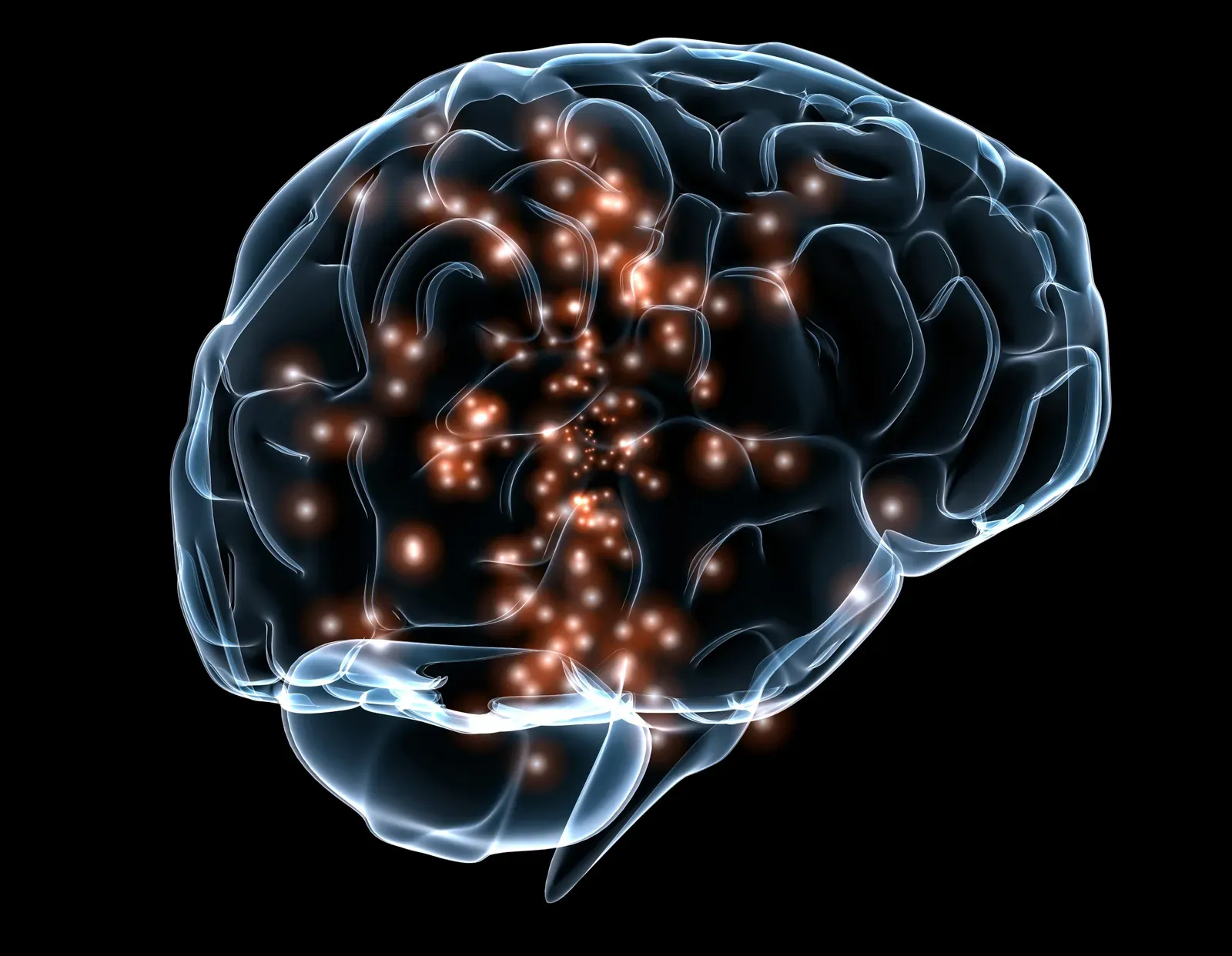
New evidence published in Frontiers in Human Neuroscience indicates that conscious states may arise from the brain’s capacity to resonate with the quantum vacuum, the zero-point field that permeates all of space. In quantum electrodynamics, the vacuum is not empty but filled with a fluctuating ocean of energy known as the electromagnetic zero-point field. Model calculations demonstrate that specific frequencies of this field can resonate with glutamate, the brain’s most abundant neurotransmitter. This resonant interaction takes place in microcolumns, cortical units made up of roughly a hundred neurons bathed in a glutamate pool.
A central prediction from researchers is that your personal thought may interact with the zero-point field, such that quantum fluctuations reflect the influence of directed mental states. In this view, thought acts analogously to a quantum measurement operator, collapsing potential fluctuations into patterned outcomes correlated with intentional content. This interaction could manifest in measurable deviations in the statistical behavior of physical systems. In other words, what you think may physically imprint on the universe around you in ways that are, in principle, measurable.
What This Means for You: Real-World Implications of a Universe-Connected Mind

This framework carries profound ethical and societal implications. If consciousness is indeed universal and fundamental, ethical considerations may extend beyond human cognition to artificial intelligence, environmental responsibility, and the broader web of life. The illusion of separateness, reinforced by individual perception, gives way to a deeper recognition of unity, encouraging empathy, cooperation, and a shared sense of responsibility.
A quantum understanding of consciousness “gives us a world picture in which we can be connected to the universe in a more natural and holistic way.” For now, the universe-wide consciousness model remains a daring explanation rather than proven fact. Still, each year brings fresh data that chips away at the classical firewall between mind and matter, and the conversation is shifting from “if” to “how.” That is perhaps the most exciting sentence in modern science right now.
Conclusion: The Universe Is Listening, and So Are You
Here’s the thing about all of this research: it isn’t asking you to abandon science for mysticism. Quite the opposite. The scientists exploring these ideas are publishing in peer-reviewed journals, designing real experiments, and using the rigorous language of quantum field theory and neuroscience. What they are doing is expanding science’s ceiling, not blowing through its floor.
Your mind, your thoughts, your very awareness may be less like a closed office and more like an open window in a house that is built into the universe itself. The electromagnetic pulse running through your neurons may share a frequency with the planet beneath your feet. The quantum processes in your microtubules may echo effects that stretch across spacetime. You are not just a passenger on this cosmic journey. You may be part of the journey itself.
Whether the final answers arrive in five years or fifty, the direction of inquiry is unmistakable. Consciousness is no longer a philosophical footnote in science. It is becoming the central question. What would you do differently today if you genuinely believed your mind was reaching into the fabric of the universe with every thought you have?