
Imagine your mind is not just a biological machine humming along on electrochemical signals, but something far more extraordinary – a living antenna tuned to the deepest frequencies of the universe. It sounds poetic, maybe even a little out there. Yet some of the most serious scientists in the world are now asking that exact question with laboratory equipment, supercomputers, and peer-reviewed rigor.
The idea that quantum mechanics and consciousness are intertwined has moved well beyond the fringes of philosophy. In 2026, we find ourselves at a genuinely thrilling crossroads, where neuroscience, physics, and even anesthesiology are all pointing at the same jaw-dropping possibility. So whether you’re a skeptic, a dreamer, or just wildly curious, keep reading. What you’re about to discover might change the way you think about thinking itself. Let’s dive in.
The Hard Problem: Why Consciousness Still Stumps Science

Consciousness has long been considered one of the most enigmatic phenomena in science, described by philosopher David Chalmers as the “hard problem.” The question of how subjective experiences arise from physical processes remains unresolved. Think about that for a second. We can map the entire human genome, build machines that beat world chess champions, and send rovers to Mars, yet we still cannot fully explain how the brain produces the feeling of tasting a strawberry or hearing your favorite song.
The question of what generates conscious experience has mesmerized thinkers since the dawn of humanity, yet its origins remain a mystery. The topic of consciousness has gained significant traction in recent years, thanks in part to the development of large language models that now arguably pass the Turing test. Honestly, the fact that AI has reignited this debate is fascinating in itself. The more intelligent our machines become, the more desperately we need to understand what separates programmed cleverness from genuine, felt awareness.
The Orch OR Theory: Quantum Events Deep Inside Your Neurons
Roger Penrose, a Nobel Prize winning cosmologist, has suggested that each collapse of a quantum superposition creates a moment of “proto-conscious.” Penrose, together with the anesthesiologist Stuart Hameroff, posit that small structures in our neurons called microtubules might weave these moments together into full consciousness. This is the Orchestrated Objective Reduction theory, or Orch OR, and it remains the most provocative and debated framework in the quantum mind space. It’s like saying your sense of self is assembled, moment by moment, from tiny quantum events happening inside the scaffolding of your own brain cells.
The Orch OR theory posits that quantum states occurring within neuronal microtubules undergo objective reduction. Researchers have pointed out that the stabilization of these microtubules, necessary to support the quantum hypothesis, is further substantiated by the fact that conventional classical models simply fail to account for certain observed experimental outcomes. Recent experimental evidence points to intraneuronal microtubules as a functional target of inhalational anesthetics. This finding is consistent with the general hypothesis that the biophysical substrate of consciousness is a collective quantum state of microtubules. In other words, the way you lose consciousness under anesthesia might literally be a quantum story.
The Zero-Point Field: Is Your Brain Tuned to the Universe?
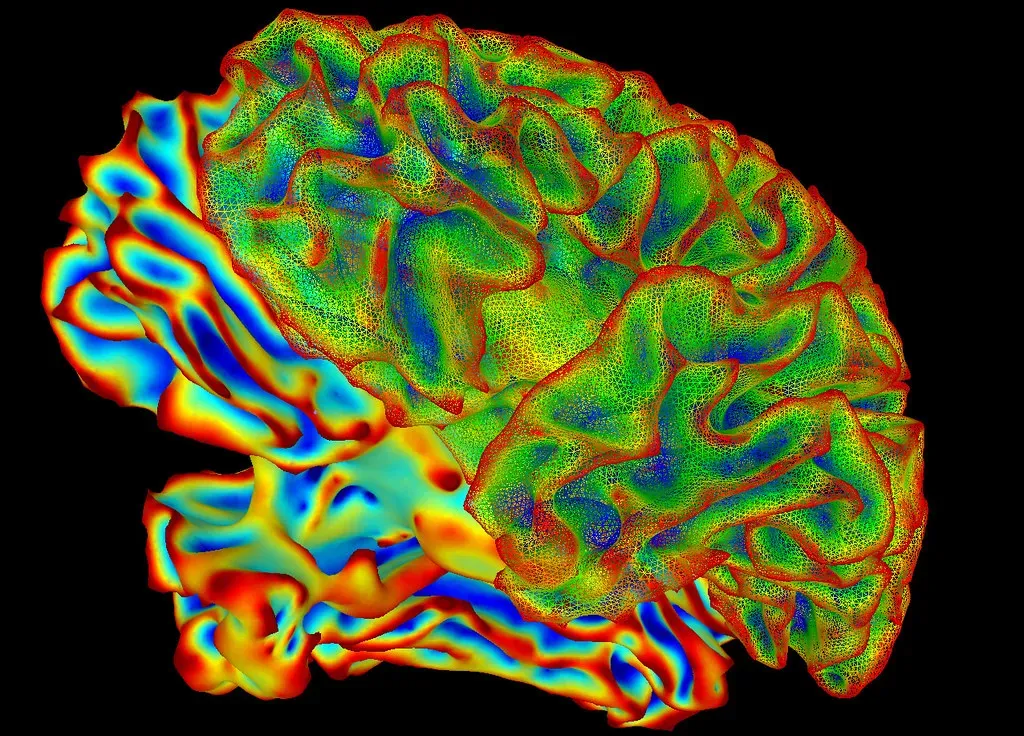
A proposed model suggests that consciousness may result from the brain’s resonant coupling with the quantum electromagnetic zero-point field (ZPF). The zero-point field is not some mystical concept, it is a real phenomenon in quantum physics, the lowest possible energy state that permeates all of space even in a perfect vacuum. The idea that your brain might be coupling with this universal field is, to put it plainly, mind-bending.
The novel synthesis suggests that the brain’s basic functional building blocks, cortical microcolumns, couple directly to the zero-point field, igniting the complex dynamics characteristic of conscious processes. Neuroscientists have long observed that conscious states are linked to synchronized brain activity in the beta and gamma ranges. These patterns display the hallmarks of self-organized criticality, a delicate balance where the brain operates in the vicinity of a critical point of a phase transition. In this regime, sensory inputs can trigger large neuronal avalanches that are thought to underlie conscious perception. Think of it like a radio receiver. Your brain might not be generating the signal of consciousness so much as tuning into one that already exists everywhere.
Quantum Entanglement and Higher States of Awareness
What if quantum entanglement could accelerate learning by unlocking higher states of conscious experience? A study published in 2025 provides empirical and statistical evidence of how quantum entanglement influences consciousness at a biophysical level. This is where things get genuinely exciting. Researchers used the IBM Brisbane supercomputer to run experiments with over two hundred twin participants, testing whether entangled quantum circuits could influence conscious learning differently than non-entangled ones.
To advance this field, researchers introduced the Quantum-Multilinear Integrated Coefficient, a groundbreaking metric capable of estimating variance increases attributable to quantum entanglement effects. Findings revealed that the entanglement of qubits in stimulus configurations explained a significant portion of the variance in accuracy within the experimental group. The metric captured notable increases in variance across twin responses, while neuroplasticity markers also showed measurable gains in cognitive performance under entangled conditions. These results provide robust evidence that quantum entanglement enhances conscious experience and facilitates faster, more efficient learning. Let that sink in: quantum entanglement, the famously spooky phenomenon Einstein couldn’t fully accept, may be quietly supercharging how your awareness works.
Expanding Consciousness Through Brain-Computer Quantum Coupling

Hartmut Neven, a physicist and computational neuroscientist leading Google’s Quantum Artificial Intelligence Lab, believes quantum computing could help explore consciousness. Neven outlined experiments and theories suggesting consciousness might emerge from quantum phenomena, such as entanglement and superposition, within the human brain. He proposes leveraging quantum computers to test these ideas, potentially expanding our understanding of how the mind interacts with the physical world. This is not a fringe voice, this is one of the leading figures at one of the most powerful technology companies on Earth.
By inducing superpositions and collapses in an expanded system, researchers could determine whether participants report richer or altered conscious experiences. The so-called “expansion protocol” hypothesizes that entanglement might temporarily enhance conscious awareness by increasing the informational complexity available to the brain. While technically challenging, this approach could offer a novel way to investigate the quantum underpinnings of consciousness. I think it’s worth pausing here to absorb just how radical this is. We are talking about a real experimental framework, not metaphysics, for literally expanding human consciousness using quantum hardware.
Consciousness as a Foundational Field: A New Physics of the Mind
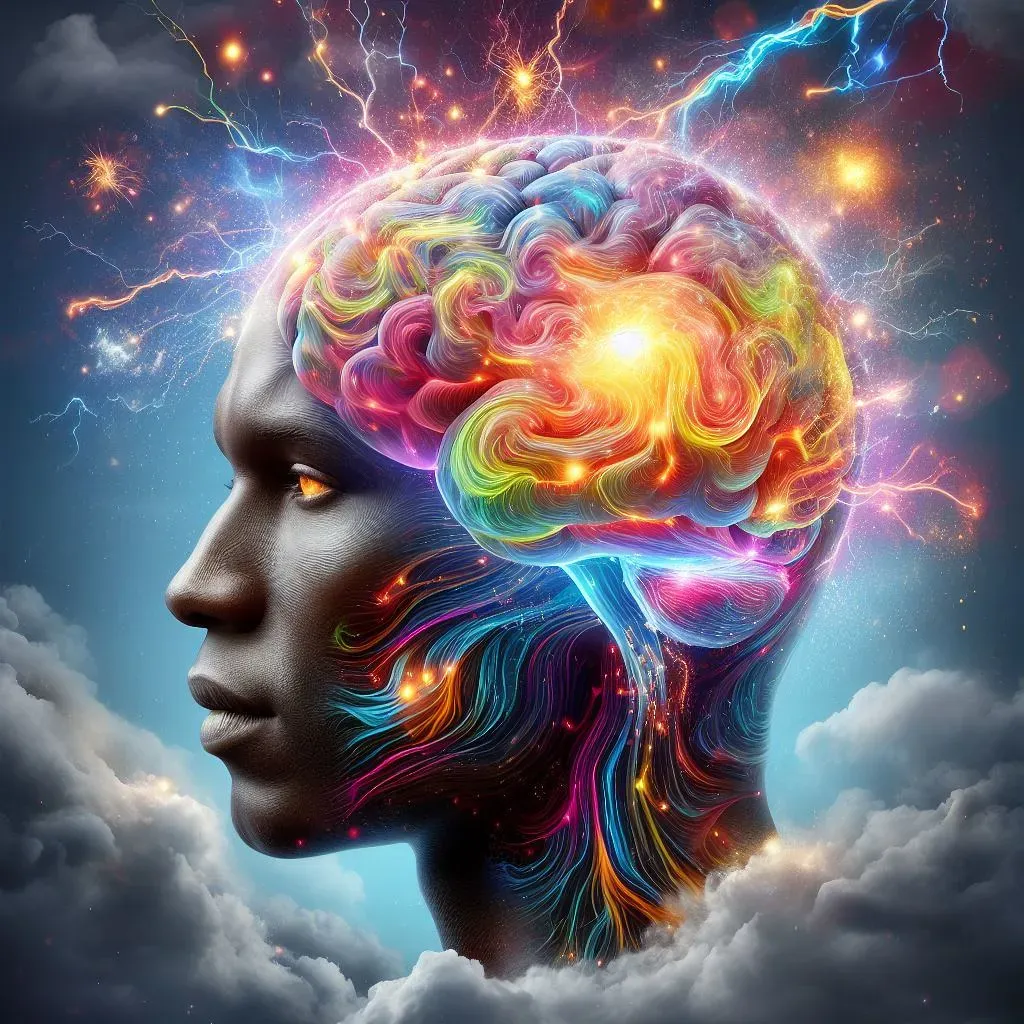
A new theoretical framework presents consciousness not as a byproduct of brain activity, but as a fundamental field underlying everything we experience, including matter, space, time, and life itself. This theory, put forward in 2025 by Professor Maria Strømme of Uppsala University, takes the boldest possible stance. Instead of consciousness emerging from physics, it argues that physics emerges from consciousness. That’s a complete inversion of how most of us were taught to think about reality.
The theory is based on the idea that consciousness constitutes the fundamental element of reality, and that individual consciousnesses are parts of a larger, interconnected field. In this model, phenomena that are now perceived as mysterious, such as telepathy or near-death experiences, can be explained as natural consequences of a shared field of consciousness. Whether you find that thrilling or terrifying probably depends on your worldview. Still, a peer-reviewed paper making this case in mathematical physics deserves more than a dismissive eye-roll.
The Skeptics, the Challenges, and What Science Still Needs to Prove
Let’s be real: not everyone is buying this. Critics of quantum consciousness theories often point to the lack of empirical evidence and argue that introducing quantum mechanics into neuroscience may be unnecessary. That is a fair objection. Science demands reproducibility, falsifiability, and measurable outcomes, and the quantum consciousness field is still working hard to deliver on all three fronts.
Koch notes the profound differences between the frigid conditions necessary for today’s quantum computers, colder than the vacuum of outer space, and the brain’s warm, wet environment. Many believe that setting simply cannot sustain quantum processes, let alone those related to consciousness. It’s a genuinely tricky engineering problem. A demonstration of a quantum effect in the brain has to explain this problem or explain why it is not relevant, or show that the brain somehow circumvents the problem of the loss of quantum coherency at body temperature. This is the wall every quantum consciousness researcher eventually has to climb, and how they do it will define the next decade of the field.
Conclusion

The question of whether consciousness can be expanded through is no longer just a philosophical daydream. It sits at the cutting edge of neuroscience, quantum physics, and computational research, drawing in some of the most credentialed minds on the planet. We are nowhere near a final answer, but the direction of travel is unmistakable: something genuinely quantum may be happening inside the experience of being you.
These ongoing explorations suggest that the scientific community is keenly interested in bridging the gap between the smallest scales of physics and the largest questions of the mind. That gap, it turns out, might be smaller than anyone ever dared to imagine. The next breakthrough in understanding human awareness may not come from a brain scanner or a psychology lab, it may come from a quantum computer sitting in a room colder than outer space.
So here is the question worth sitting with: if your consciousness is not just a product of your neurons, but a resonance with something far deeper and more universal, what does that mean for who you actually are? What would you do with an expanded mind if science gave you the key?