There’s something almost poetic about the idea that the same chemical reactions unfolding in the cold vacuum of interstellar space might also be happening right above our heads. Most of us look up at the sky and think about weather or maybe airplane contrails. Very few of us imagine molecular reactions borrowed from the cosmos quietly influencing the air we breathe.
Scientists are now drawing striking parallels between chemistry observed in space environments and what’s happening in Earth’s atmosphere. The connections are surprising, a little mind-bending, and honestly more relevant to everyday life than you might expect. Let’s dive in.
The Unexpected Link Between Interstellar Space and Our Own Sky
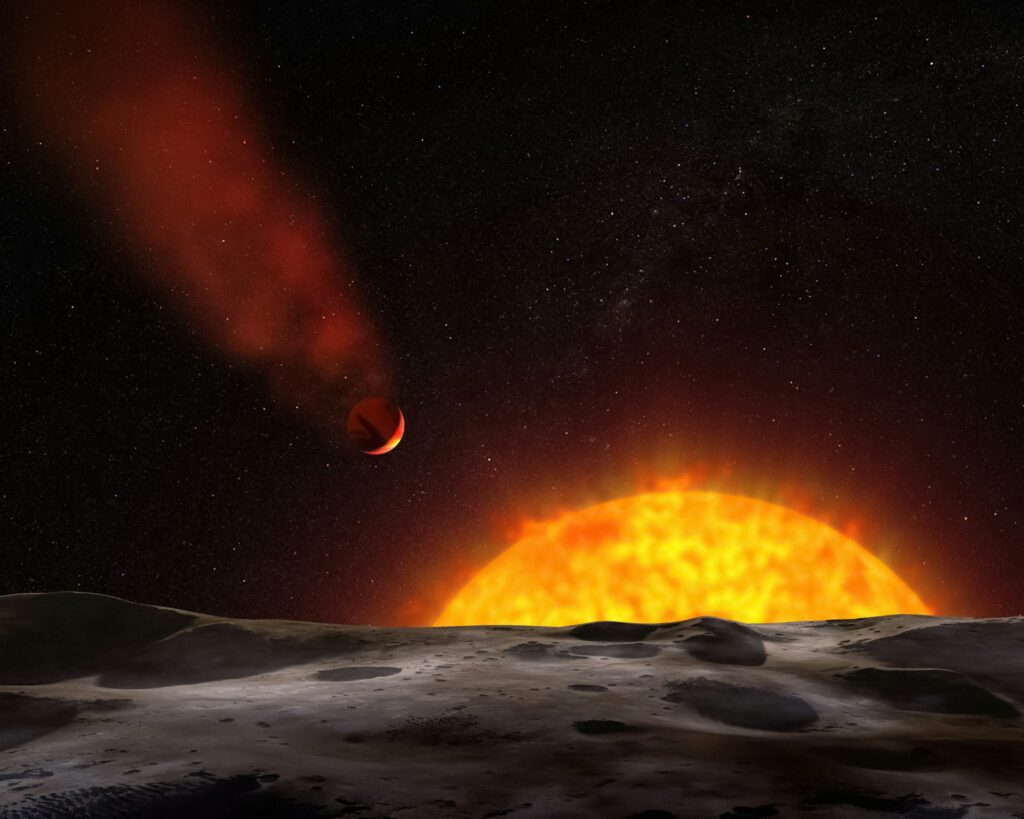
Here’s the thing most people never consider: space isn’t empty. It’s filled with molecules, ions, and chemical reactions happening at temperatures close to absolute zero. Researchers studying these interstellar processes have started noticing that some of the same reaction pathways show up in Earth’s upper atmosphere, which is a discovery that genuinely caught the scientific community off guard.
The connection centers on ion-molecule reactions, a class of chemistry that doesn’t need much energy to get going. In the cold upper layers of our atmosphere, conditions can mimic those found in interstellar molecular clouds more closely than anyone originally anticipated. It sounds like science fiction, but the chemistry doesn’t care where it is.
Ion-Molecule Reactions: The Quiet Chemistry Nobody Talks About
Ion-molecule reactions are essentially chemical exchanges where an electrically charged particle interacts with a neutral molecule. They’re fast, efficient, and remarkably common in low-temperature, low-pressure environments. Atmospheric scientists have studied them for decades, but the space chemistry angle adds an entirely new layer of complexity and meaning.
What makes these reactions so fascinating is their efficiency at extremely low temperatures. Most chemistry slows down dramatically when it gets cold. Ion-molecule reactions, however, can actually speed up or maintain their rate as temperatures drop, which is precisely why they’re relevant both in interstellar clouds and in the mesosphere and stratosphere above Earth. That’s a pretty wild overlap when you think about it.
What the Research Is Actually Revealing
Scientists have been using laboratory simulations and observational data to map out how specific molecules form and break down under space-like conditions. The goal is to understand reaction mechanisms at a fundamental level, and in doing so, researchers are discovering that some atmospheric molecules may form through pathways that weren’t previously accounted for in standard atmospheric chemistry models.
This isn’t a minor tweak to existing science. If certain chemical species in the atmosphere are being produced or destroyed through mechanisms borrowed from astrochemistry, then our current models of atmospheric composition could be missing pieces of the puzzle. That has real implications for how we model air quality, climate processes, and even ozone chemistry. Honestly, the scope of that possibility is a little dizzying.
The Role of the Mesosphere and Upper Atmosphere
The mesosphere, sitting roughly between about 50 and 80 kilometers above Earth’s surface, is one of the least studied regions of our atmosphere. It’s too high for aircraft and too low for most satellites to orbit comfortably, which makes direct observation genuinely difficult. What happens there has long been something of a scientific blind spot.
Recent research suggests that this neglected region may be where space chemistry influences are most pronounced. The low temperatures and reduced atmospheric pressure create conditions that parallel interstellar environments surprisingly well. Understanding what’s happening up there could be key to building a more complete picture of our atmospheric system as a whole, from the ground all the way to the edge of space.
Laboratory Simulations That Bridge Two Worlds
To study these processes, researchers build chamber experiments designed to recreate the extreme cold and low-pressure conditions found in both space and the upper atmosphere. These simulations let scientists observe reactions in real time that would otherwise be impossible to study directly. It’s painstaking work, but the payoff in knowledge is enormous.
What’s particularly clever about this approach is that it lets researchers test astrochemical reaction models against atmospheric data and vice versa. When a reaction observed in a simulated interstellar environment also appears in atmospheric measurements, that’s a significant finding. It suggests the universe operates with a kind of elegant chemical consistency, using the same tools whether it’s building a molecular cloud millions of light years away or quietly assembling molecules above a city skyline.
Why This Matters for Climate and Environmental Science
Let’s be real: the reason most people should care about this research isn’t abstract scientific curiosity. It’s the practical downstream impact on how we understand and model the atmosphere in the context of climate change. If our atmospheric chemistry models are incomplete, then climate projections built on those models carry an unknown degree of uncertainty.
Some of the molecules involved in these space-influenced reaction pathways are connected to processes like aerosol formation and the breakdown of greenhouse gases. Getting those chemistry equations right matters enormously when you’re trying to predict how the atmosphere will behave over the coming decades. Even a relatively small correction to a reaction rate can cascade into significantly different model outputs over time.
A New Era of Atmospheric Science Inspired by the Cosmos
What we’re witnessing is something genuinely exciting: two scientific disciplines that once had very little to say to each other are now informing each other in meaningful ways. Astrochemistry, once considered an almost purely academic pursuit focused on faraway nebulae, is now contributing directly to our understanding of the air envelope that keeps us alive. I think that’s worth pausing to appreciate.
The research is still evolving, and it’s hard to say for sure how far the overlap between space chemistry and atmospheric science will ultimately extend. What seems increasingly clear is that Earth’s atmosphere is stranger and more chemically rich than classical models suggested. The cosmos, it turns out, has been leaving fingerprints in our sky all along. What would you have guessed about where the next breakthrough in atmospheric science would come from?