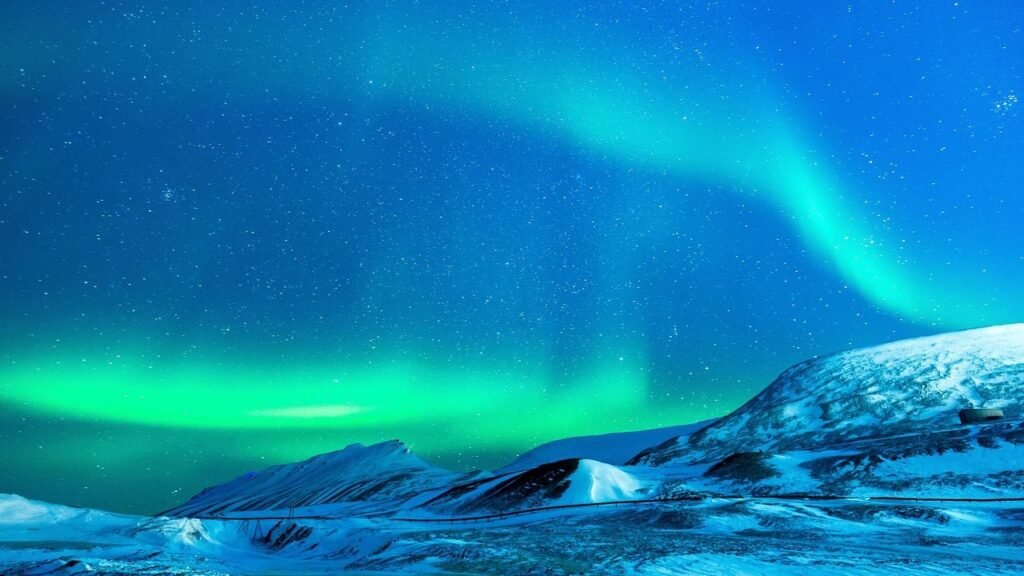
The polar regions have always felt like another planet. Endless ice, months of total darkness, temperatures that would break your spirit in minutes – and yet, above it all, the sky erupts into colors you didn’t even know existed. It’s like nature saved its most outrageous artistic experiments for the places where almost nobody is watching.
From glowing ribbons of hot plasma to clouds built on meteor dust, these phenomena are not just visually overwhelming. They are windows into the complex, almost alien physics happening just above your head. Buckle up, because you are about to see the sky in a way you never expected. Let’s dive in.
1. The Aurora Borealis and Aurora Australis: Earth’s Greatest Light Show
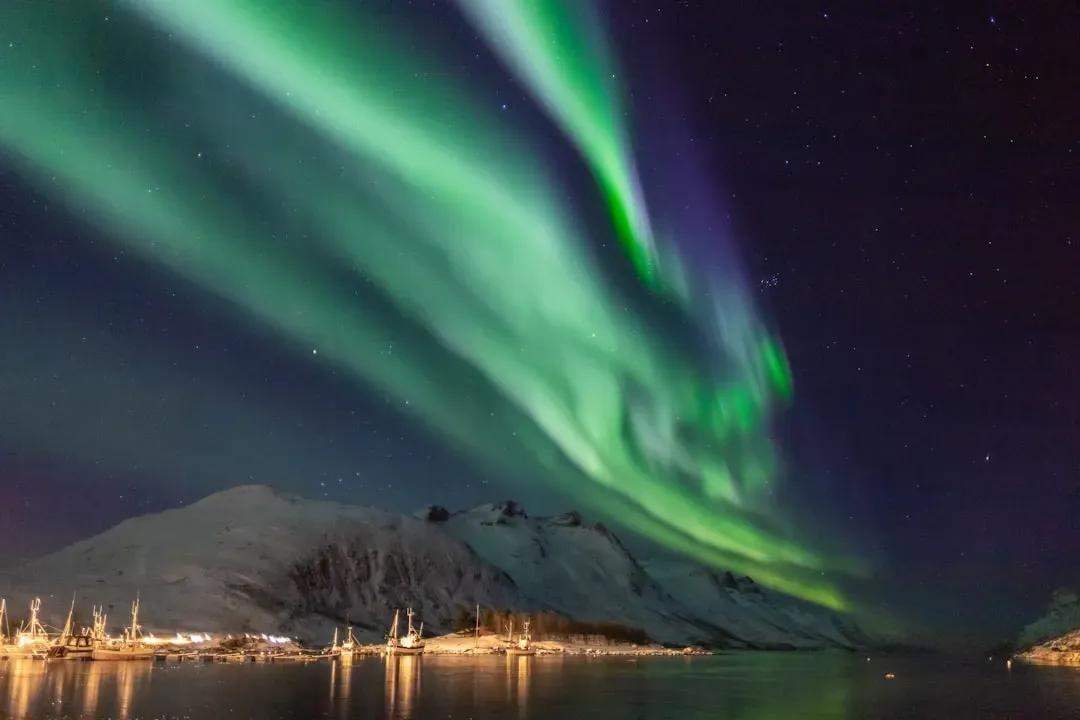
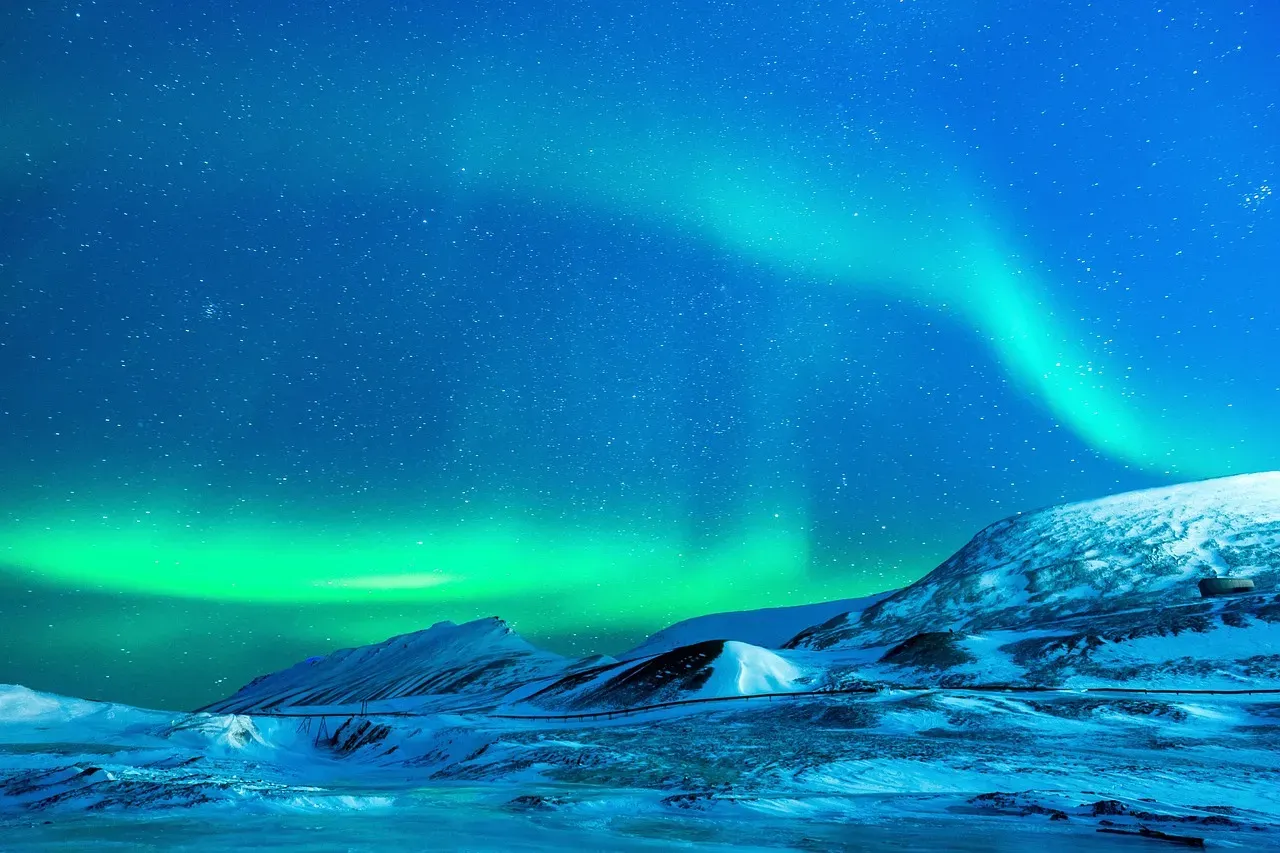
If you’ve ever stood beneath a dancing green curtain in a Norwegian sky, you already know this feeling. Known as the northern lights (aurora borealis) or southern lights (aurora australis), auroras are colorful, dynamic, and often visually delicate displays of an intricate dance of particles and magnetism between the Sun and Earth. That description doesn’t even do it justice. It’s more like watching electricity paint the ceiling of the world.
Auroras occur within one of Earth’s upper atmosphere layers, the thermosphere, where solar particles trapped there interact with different types of gases, mostly nitrogen and oxygen, resulting in unique, colored displays of light. Oxygen gives off green and red light, while nitrogen glows blue and reddish-purple. So what you’re actually witnessing is a chemistry lesson at 100 kilometers above your head, and honestly, it’s the best kind.
Green-colored auroras are most frequent, resulting from interactions with oxygen atoms at lower altitudes, while the less commonly occurring red auroras form from interactions with higher altitude oxygen atoms. If you ever spot a red aurora, consider yourself truly fortunate. Auroras display dynamic patterns of radiant light that appear as curtains, rays, spirals, or dynamic flickers covering the entire sky. No two auroras are ever the same, which is part of what makes them endlessly fascinating.
2. Nacreous Clouds: The Mother-of-Pearl Sky
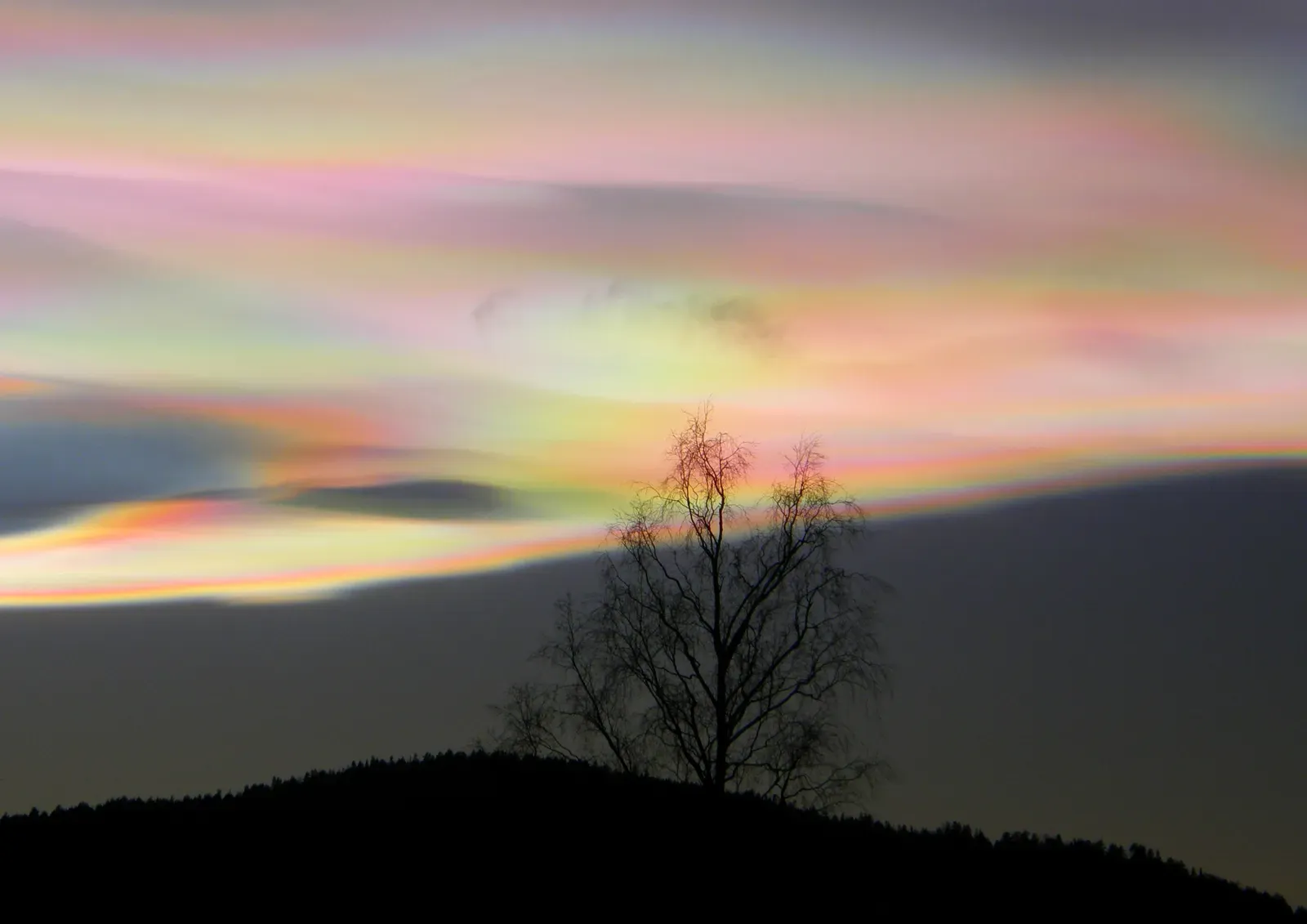
Here’s the thing – most people have never even heard of nacreous clouds, and yet they are arguably one of the most breathtaking things you could ever see in a polar sky. Nacreous clouds are a sight to behold, captivating observers with their vibrant and iridescent colors that resemble the shimmering hues of mother-of-pearl. These clouds form in the lower stratosphere, typically between 15 and 25 kilometers above the Earth’s surface, and are most commonly observed during the polar winter months. Think about that – colors that look like they belong on a butterfly’s wing, hanging in the sky above the Arctic.
The clouds usually form over polar regions at altitudes of 15 to 25 km, during winter and early spring, when temperatures in the stratosphere cool to below minus 78 degrees Celsius. They are made up of ice crystals, which reflect and refract light, producing the bright, iridescent mother-of-pearl colors. Beyond their jaw-dropping beauty, there’s a darker story here too. Nacreous clouds have a darker side – these clouds enhance the breakdown of the Earth’s ozone layer, a vital part of our atmosphere that provides protection from the sun’s harmful ultraviolet rays. It’s hard to believe something so stunningly beautiful could carry such a destructive secret.
3. Noctilucent Clouds: The Glow at the Edge of Space
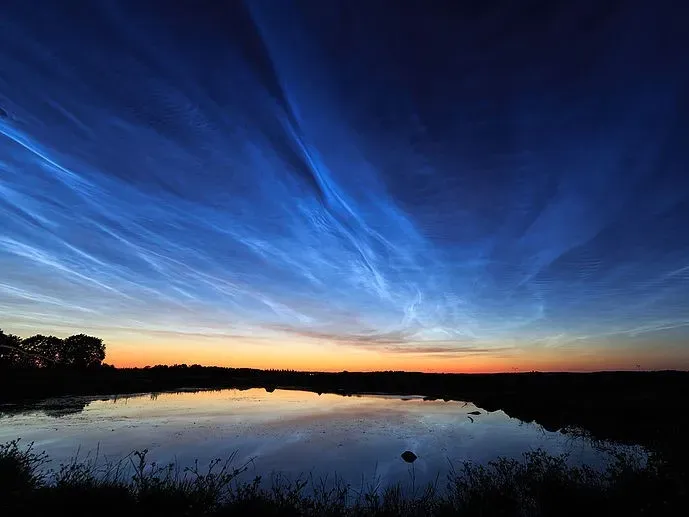
Imagine looking up after sunset in mid-summer and seeing electric-blue clouds still glowing long after all other clouds have gone dark. That’s exactly what happens when you encounter noctilucent clouds, and it is genuinely eerie in the best possible way. Noctilucent clouds are tenuous cloud-like phenomena in the upper atmosphere. When viewed from space, they are called polar mesospheric clouds, detectable as a diffuse scattering layer of water ice crystals near the summer polar mesopause. They consist of ice crystals and from the ground are only visible during astronomical twilight.
They are thought to form when water vapor condenses around seeds of dust from vaporized meteorites, along with other sources that include rocket launches and volcanic eruptions, around 50 miles high in the mesosphere. Their glow is caused by the Sun, whose light still shines at that altitude after sunset from the perspective of ground-based observers. What makes this even more surprising is the timing. Noctilucent clouds form predominantly during summer when, counterintuitively, the mesosphere is coldest as a result of seasonally varying vertical winds, leading to cold summertime conditions in the upper mesosphere. The sky, it seems, loves a good paradox. Noctilucent clouds are increasing both in frequency and in how far south they are observed, a development that may be related to climate change.
4. STEVE: The Purple Streak That Baffled Scientists
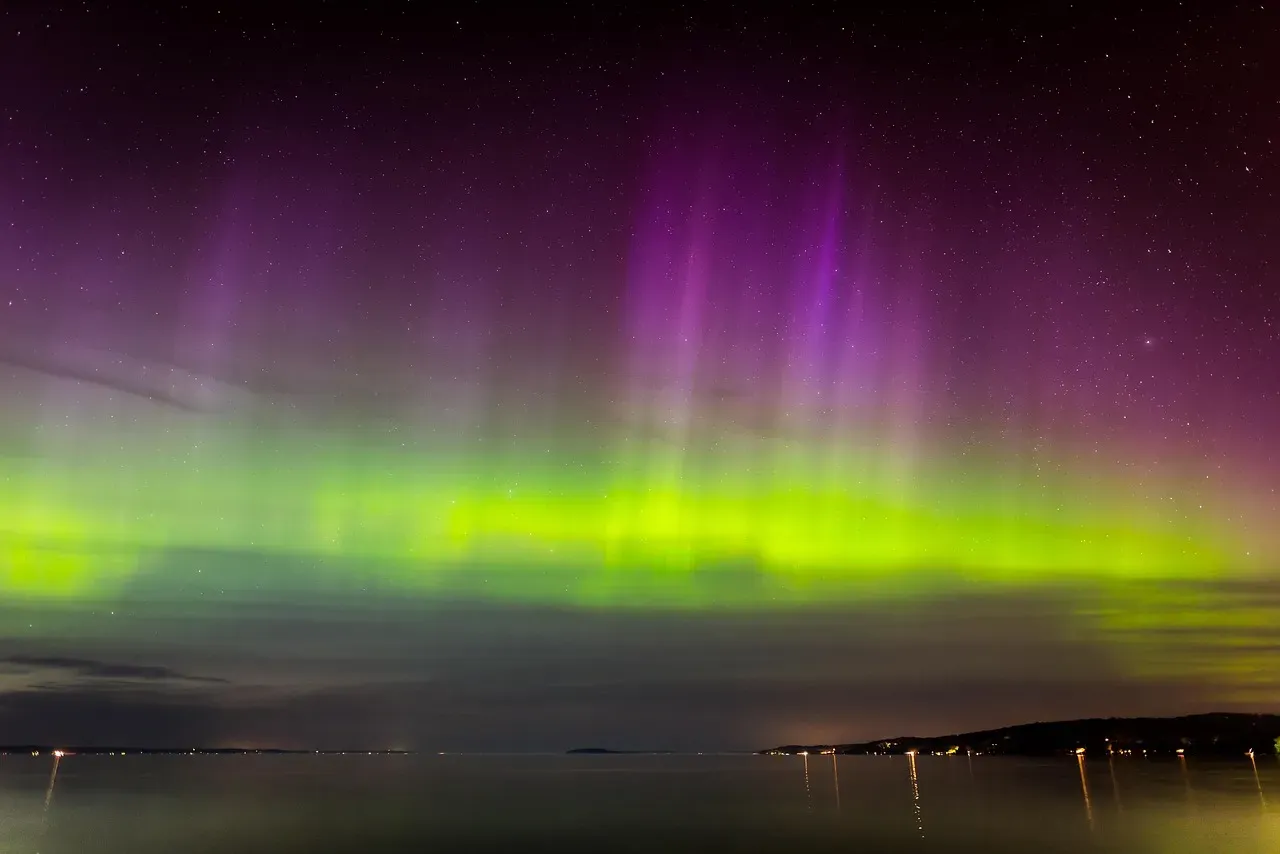
You genuinely could not make this up. A Facebook group of aurora-chasing enthusiasts stumbled upon something so strange that even professional scientists had no idea what it was. STEVE, short for “Strong Thermal Emission Velocity Enhancement,” is an optical phenomenon in the Earth’s upper atmosphere that usually appears as a narrow purple light ribbon, sometimes accompanied by smudges of green lines called “picket fences” owing to their appearance. Known already for many decades, it was named in late 2016 by aurora watchers from Alberta, Canada. Citizen scientists naming a brand new atmospheric phenomenon – honestly, that’s one of the best science stories of recent times.
According to analysis of satellite data from the European Space Agency’s Swarm mission, the phenomenon is caused by a long, 20 to 30 km wide ribbon of fast flowing, hot plasma at an altitude of 130 to 270 km, with a temperature of 3000 degrees. That is extraordinarily hot for something sitting in Earth’s own atmosphere. STEVE is caused by a ribbon of hot gases rather than particles like electrons and protons like the auroras. It looks like an aurora, it appears near auroras – but it is fundamentally something different, and scientists are still working out exactly how and why it forms.
5. Light Pillars: When the Sky Grows Vertical Columns of Color
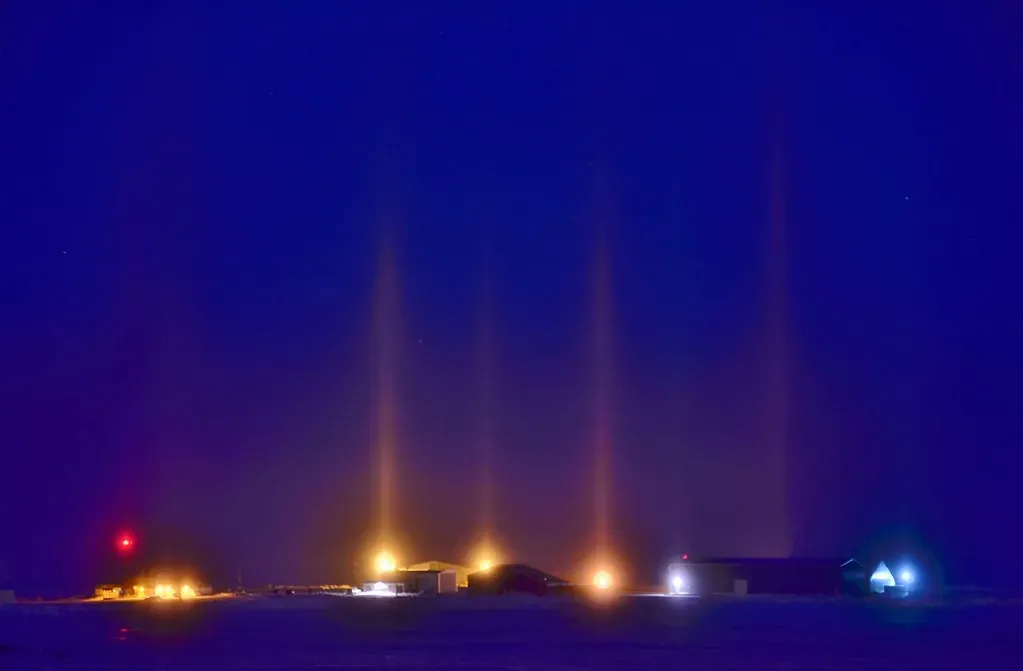
Imagine stepping outside into a bitter polar night and seeing dozens of glowing colored columns shooting straight up into the sky. Your first instinct might be to assume something supernatural is happening. But no – you’ve just encountered light pillars, and they are as awe-inspiring as they are logical once you understand the physics behind them. Generally seen in cold, arctic regions, light pillars are an optical phenomenon where columns of light can be seen emanating from below or above a light source. Light pillars occur when natural or artificial light reflects off flat ice crystals.
The crystals responsible for light pillars usually consist of flat, hexagonal plates, which tend to orient themselves more or less horizontally as they fall through the air. Each flake acts as a tiny mirror which reflects light sources that are appropriately positioned below it, and the presence of flakes at a spread of altitudes causes the reflection to be elongated vertically into a column. Think of it like a hall of mirrors made of ice, floating invisibly in the dark. Because the ice crystals in the atmosphere reflect the source light, light pillars tend to take on the color of the light source. That means in a city near the Arctic, you might see columns of red, orange, and blue rising from traffic lights and street lamps into the frozen sky above.
6. Sun Dogs: Twin Suns on the Horizon
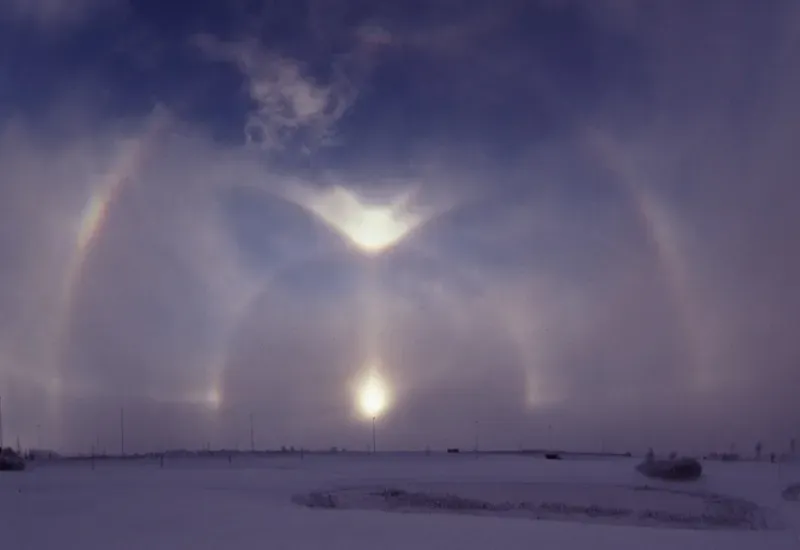
I think sun dogs might be the most underrated sky phenomenon on this entire list. You could see them and genuinely believe for a moment that the solar system has glitched and given Earth two extra suns. Sun dogs, also known as mock sun or parhelion, are halo effects that appear as two bright spots flanking the real Sun, often blazing with the colors of a rainbow. They occur in polar and sub-polar regions with remarkable regularity in winter.
Sun dogs are formed by the refraction of light through ice crystals at exactly 22 degrees. That extraordinary precision is what gives them their vivid, gem-like quality. These are atmospheric phenomena created by the reflection and refraction of light by ice crystals in the atmosphere. The size, shape, and distance from the Earth’s surface of the ice crystals determine what kind of optical phenomenon people on Earth will observe. It also depends on whether the light is reflected or refracted by the ice crystals. In very cold polar air, the conditions for sun dogs can persist for hours, turning an ordinary winter sunrise into something that looks like a still from a science fiction film.
7. Airglow: The Invisible Light You Never Knew Existed
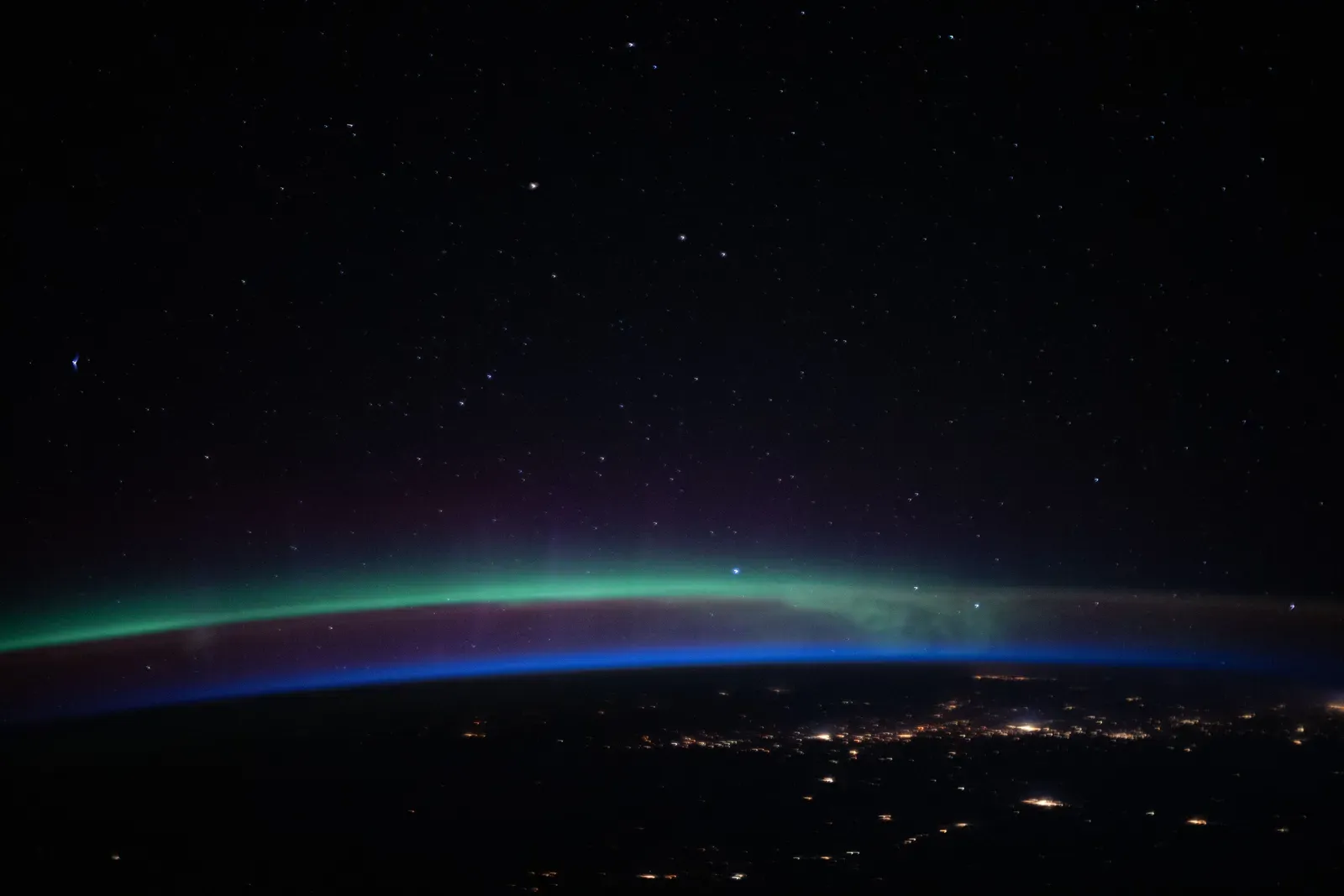
Here’s something that might genuinely blow your mind – the atmosphere above you is glowing right now. Not in a way your naked eye can easily detect, but glowing nonetheless. Our atmosphere glows constantly during both day and night as sunlight interacts with atoms and molecules within the atmosphere, a phenomenon commonly called “airglow.” Most of the airglow emanates from the region about 50 to 300 km above the surface of Earth, with the brightest area concentrated at altitudes around 100 km. It’s like the planet itself is softly humming with light.
Unlike the aurora, airglow does not exhibit structures such as arcs and is emitted from the entire sky at all latitudes at all times. Nightglow results from the recombination of molecules that have been broken apart by solar radiation during the day. The light is emitted when the excited atoms or molecules return to their original unexcited state during the night. In polar regions, where the darkness is most complete and the skies are clearest, this faint luminescence becomes visible to cameras and sometimes even to the human eye, spreading a ghostly green or red wash across the heavens. It’s not dramatic in the way auroras are – but knowing the sky is always, silently glowing is one of those facts that quietly changes how you look upward forever.
Conclusion: A Sky That Never Stops Surprising You
The polar sky is not just a backdrop. It’s an active, living spectacle powered by solar storms, meteor dust, sub-zero chemistry, and the invisible machinery of Earth’s magnetic field. From the electric dance of the aurora to the barely-visible whisper of airglow, every one of these phenomena reminds you that this planet is more extraordinary than your everyday view from the window would ever suggest.
What’s most surprising, perhaps, is not just how beautiful these phenomena are, but how much about them scientists are still working to fully understand. STEVE was hiding in plain sight for decades. Noctilucent clouds are spreading to latitudes that would have seemed impossible a generation ago. The sky keeps offering new questions, even as it puts on the most spectacular show imaginable.
The next time you find yourself somewhere cold, dark, and far from city lights – look up. Really look up. You might just catch a glimpse of something that makes you feel, for a brief and breathless moment, that you’re standing on a completely different world. Which of these seven phenomena surprised you the most? Tell us in the comments.