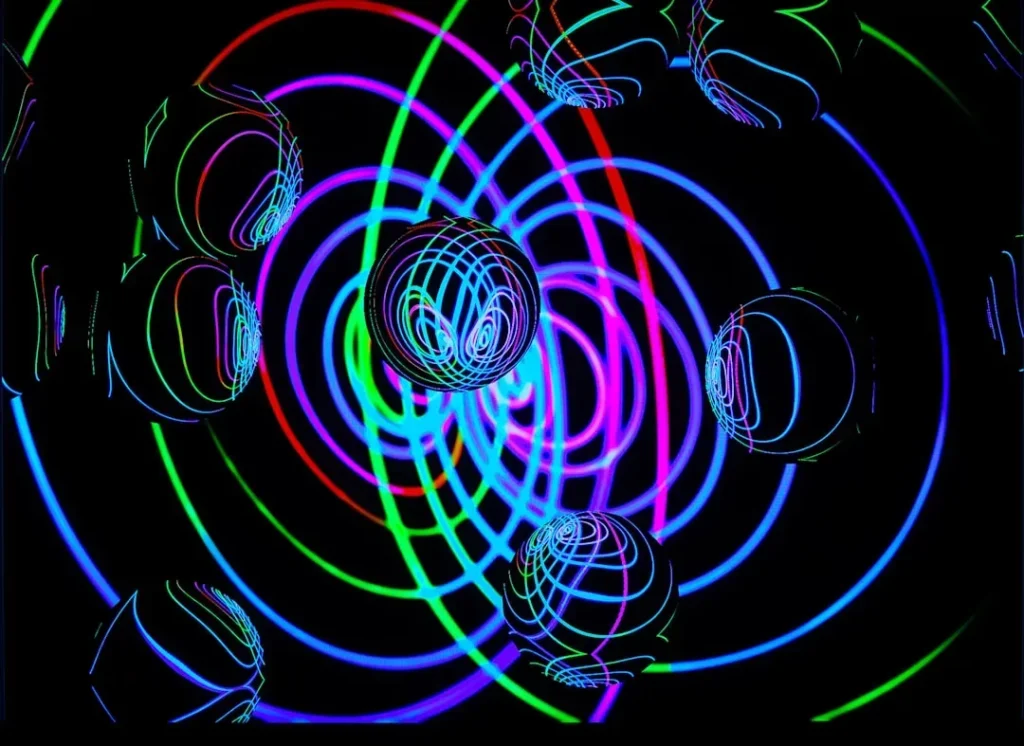

Picture this. You empty a glass jar of every single molecule of air. You seal it perfectly. You cool it down to the coldest temperature the universe allows. You have, by every classical definition, created nothing. A void. An absence of everything. Yet, according to modern physics, what you are actually looking at is one of the most densely active, furiously energetic environments imaginable – a seething, invisible ocean of quantum activity that never, ever stops.
That idea should probably make your head spin a little. The notion that “nothing” is actually “something” runs completely against human intuition. It challenges centuries of scientific assumption. It has forced physicists to rethink what space, energy, and matter truly are, down to the most fundamental level. How deep does this rabbit hole go? You might be surprised. Let’s dive in.
What the Quantum Vacuum Actually Is – And What It Is Not
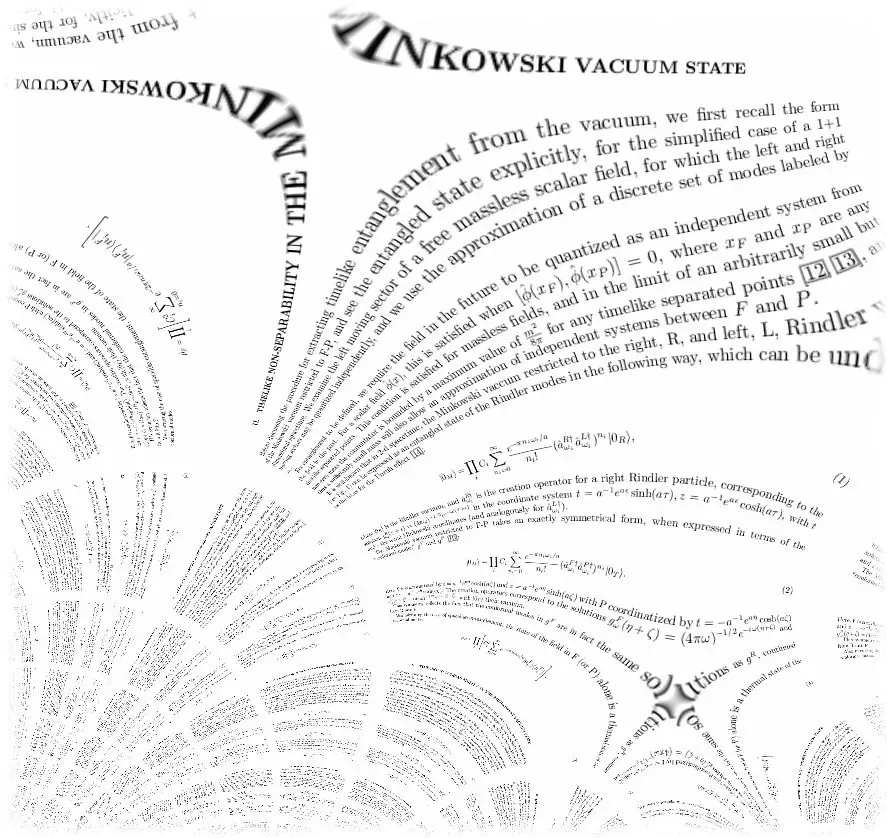
Most of us instinctively picture the vacuum as pure emptiness – nothing but darkness and silence stretching out infinitely. Absolutely empty is how most of us envision the vacuum. Yet, in reality, it is filled with an energetic flickering known as quantum fluctuations. That single distinction separates classical physics from the far stranger world of quantum theory.
In quantum field theory, the quantum vacuum state is the quantum state with the lowest possible energy. Generally, it contains no physical particles. However, the quantum vacuum is not a simple empty space – instead, it contains fleeting electromagnetic waves and particles that pop into and out of the quantum field. Think of it like the surface of the ocean on a perfectly calm day. There are no crashing waves, but the water is still alive, moving, stirring with constant microscopic motion beneath the surface.
Zero-Point Energy: The Energy You Cannot Remove
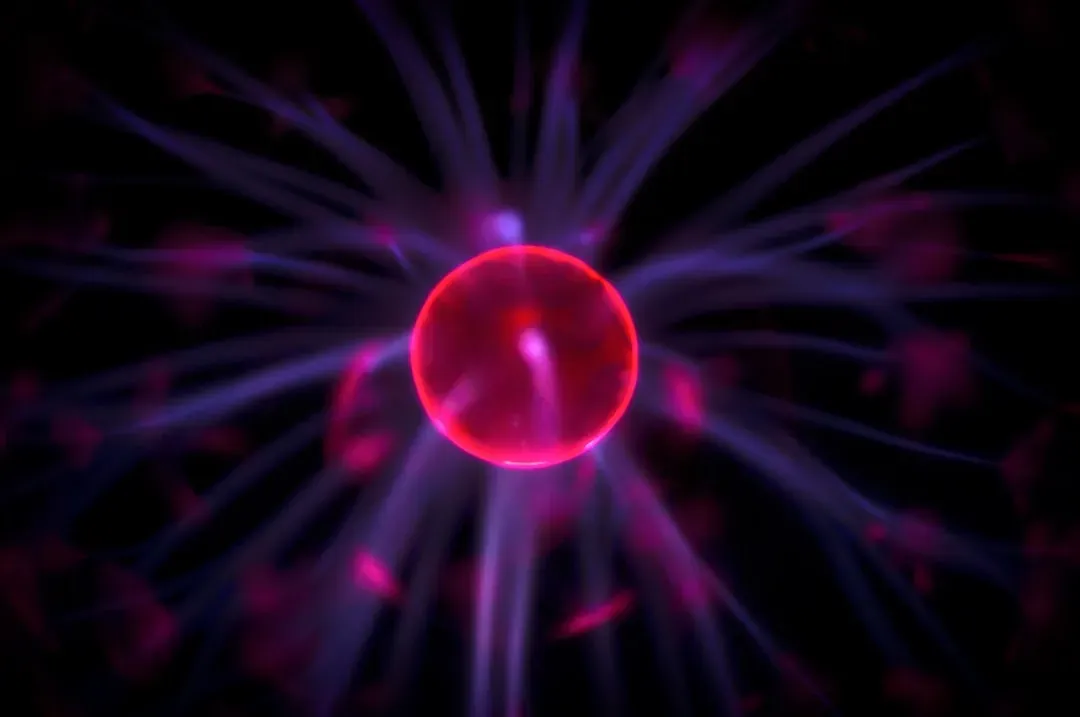
Zero-point energy is the lowest possible energy that a quantum mechanical system may have. Unlike in classical mechanics, quantum systems constantly fluctuate in their lowest energy state as described by the Heisenberg uncertainty principle. This is not just a theoretical quirk – it is a hard boundary imposed by the fundamental rules of nature. You cannot “empty” the vacuum of this energy any more than you can remove color from light itself.
The zero-point energy is an intrinsic and unavoidable part of quantum physics. It has been studied, both theoretically and experimentally, since the discovery of quantum mechanics in the 1920s, and there can be no doubt that it is a real physical effect. I think that last point deserves to be appreciated for a moment – this is not fringe speculation. It is one of the most tested and verified concepts in the history of science.
Virtual Particles: Matter Appearing From Nothingness
According to quantum field theory, even in a perfect vacuum, fluctuations occur due to the presence of virtual particles that constantly pop in and out of existence. These fluctuations are a manifestation of the uncertainty principle, which implies that certain pairs of physical properties cannot both be precisely known at the same time. It is honestly one of the most mind-bending facts in all of science. The universe is continuously borrowing energy from itself, creating matter, and then erasing it – all within the tiniest slivers of time imaginable.
The vacuum is filled with fluctuating energy fields that can briefly create entangled pairs of particles and their opposites, called antiparticles. These “virtual” and inherently linked matter-antimatter pairs blink in and out of existence on very short timescales but never stick around long enough to be counted as “real.” Scientists at Brookhaven National Laboratory recently demonstrated that under the right conditions – using high-energy particle collisions – these virtual particles can receive an extra energy boost that transforms them into real particles that can be detected. Nothingness, literally becoming something.
The Casimir Effect: Proof You Can Touch the Vacuum
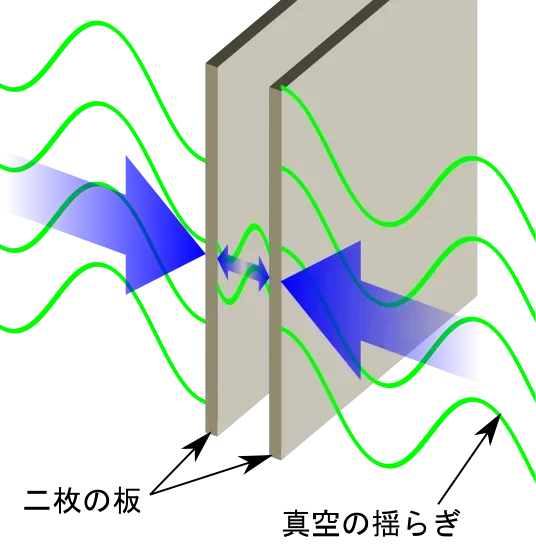
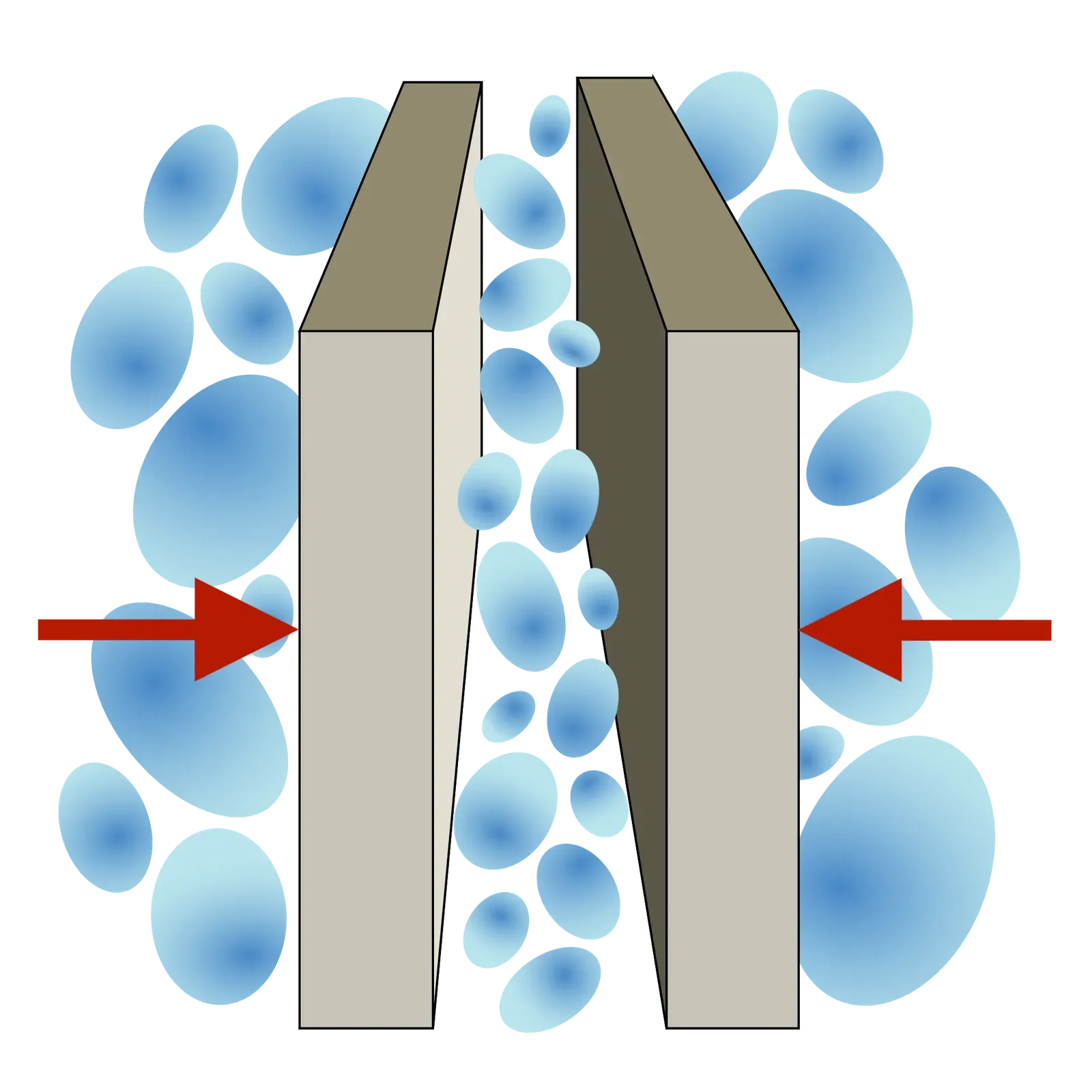
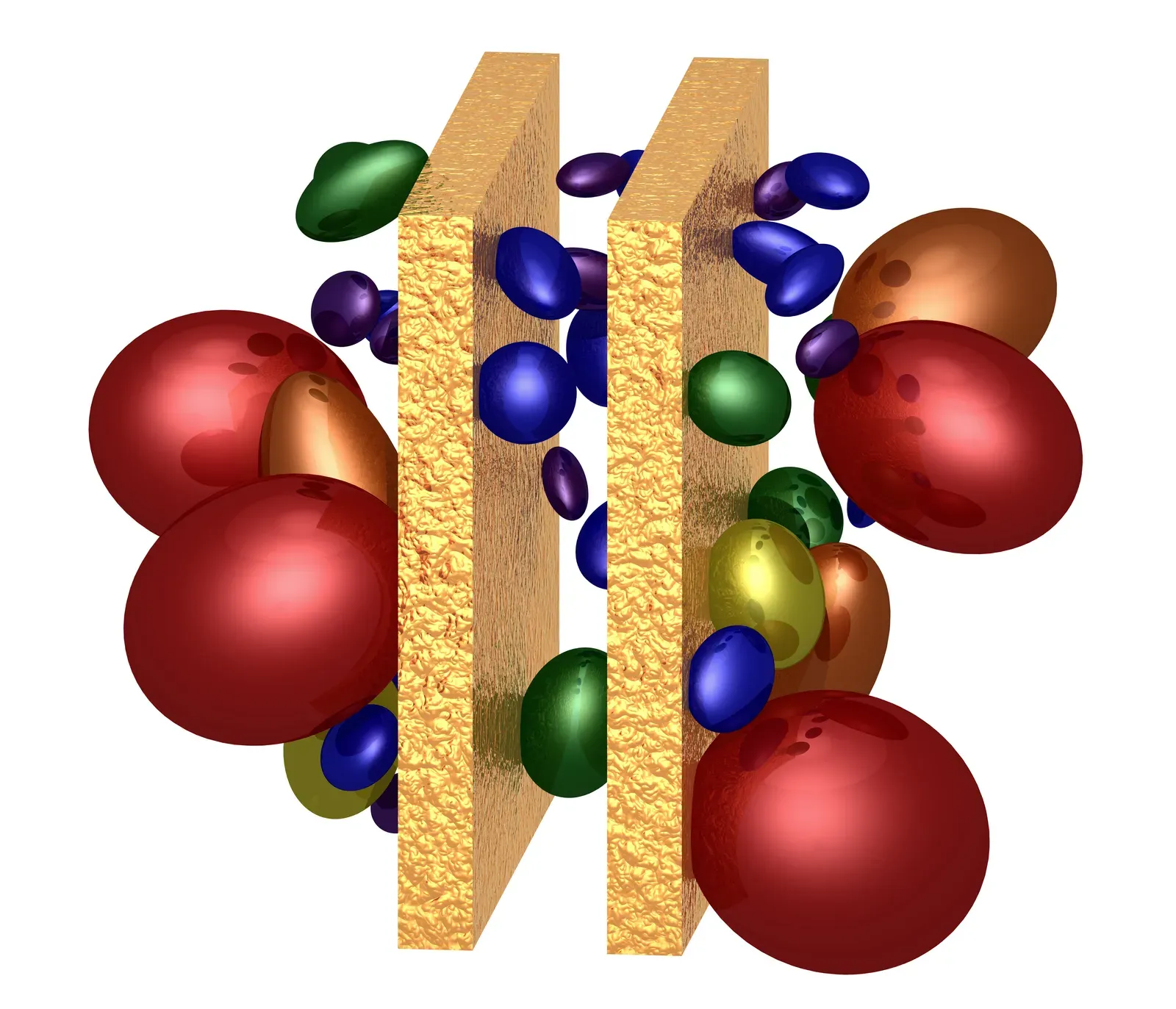
Here is the thing – skeptics might say all of this sounds too abstract to be real. So let’s talk about a physical experiment you can actually run in a laboratory. If you take two metal plates and place them extremely close together, the quantum fields between those plates must behave in a certain way. The wavelengths of their vibrations must fit perfectly between the plates. In the quantum case, there are still an infinite number of vibrations between the plates, but there are not as many infinite vibrations between the plates as there are outside. This means there really are more quantum vibrations outside the two plates than inside.
The result? The plates are pushed together by an invisible force generated entirely by the vacuum itself. This quantum energy contributes to phenomena such as the Casimir effect, where two uncharged plates placed in a vacuum experience an attractive force due to the suppression of certain vacuum fluctuations between them. If you ever needed a physical, tangible demonstration that the vacuum holds real energy, this is it – a force with no classical explanation, born from nothing but the geometry of empty space.
Black Holes, Hawking Radiation, and the Vacuum’s Role
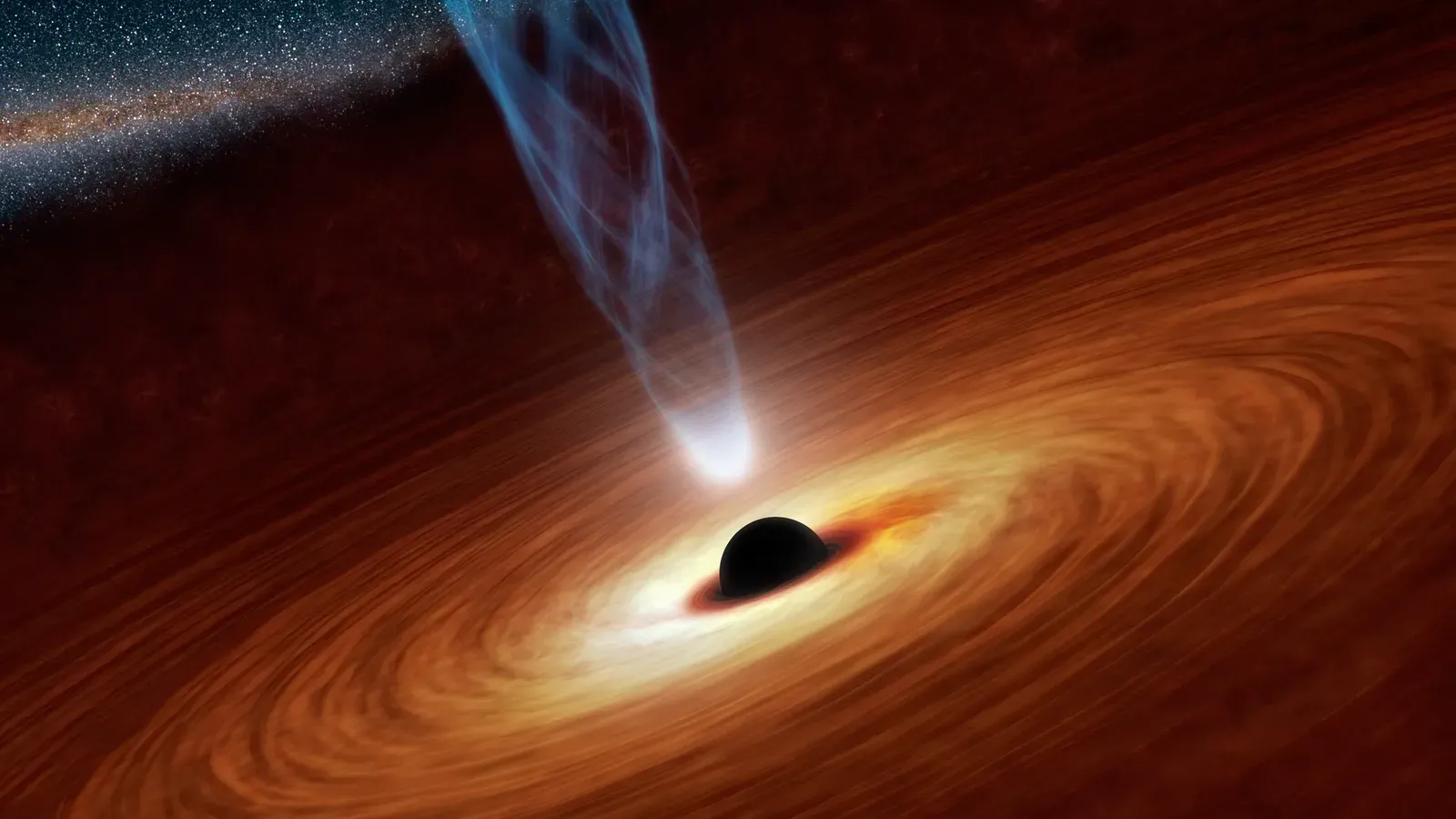
Now things get truly extraordinary. The idea of Hawking radiation is based on the fact that empty space is not actually empty. Although it contains no mass, no particles or quanta of energy, the quantum fields which define them still exist in the vacuum of space. These fields, because they are not required to have zero energy, can create pairs of “virtual particles” – normally a particle-antiparticle pair that quickly annihilate each other.
Near a black hole, it is possible for one of those particles to disappear inside the black hole and be lost forever, while the other one escapes as Hawking radiation. That escaping particle represents energy drawn from the black hole itself. Hawking radiation is black-body radiation released outside a black hole’s event horizon due to quantum effects, according to a model developed by Stephen Hawking in 1974. The vacuum, in other words, plays a starring role in the slow, inevitable evaporation of the most powerful gravitational objects in the known universe. Hard to argue that the vacuum is just “nothing” after hearing that.
The Vacuum Catastrophe: When Physics Breaks Down
Honestly, here is where things get a bit uncomfortable, even for physicists. The cosmological constant problem, also known as the vacuum catastrophe, is the substantial disagreement between the observed values of vacuum energy density and the much larger theoretical value of zero-point energy suggested by quantum field theory. This is not a small discrepancy. It is not like measuring a table and being off by a centimeter.
Depending on the Planck energy cutoff and other factors, the quantum vacuum energy contribution to the effective cosmological constant is calculated to be between 50 and as many as 120 orders of magnitude greater than has actually been observed – a state of affairs described by physicists as “the largest discrepancy between theory and experiment in all of science.” Imagine predicting a mountain the size of the Earth and finding a pebble instead. That is the scale of the mismatch. It remains one of the deepest unsolved problems in all of physics, and it is genuinely humbling.
The Quantum Vacuum, Consciousness, and Cosmology
Perhaps the most extraordinary frontier being explored today is the potential connection between the quantum vacuum and the universe’s expansion – and even human consciousness. In quantum electrodynamics, the vacuum is not empty but filled with a fluctuating ocean of energy known as the electromagnetic zero-point field. Researchers have begun asking whether this field interacts with biology in ways that were previously unthinkable.
A paper published in Frontiers in Human Neuroscience presents new evidence indicating that conscious states may arise from the brain’s capacity to resonate with the quantum vacuum. More specifically, macroscopic quantum effects may be at play inside our heads. Meanwhile, on the cosmic scale, in the late 1990s, astronomers discovered that the expansion of the universe is accelerating, and the simplest explanation for this accelerated expansion is the vacuum energy of the universe. The same invisible energy that may vibrate inside neurons may also be quietly shaping the fate of the entire cosmos. It is hard to say for sure where all this research will lead – but the implications are staggering.
Conclusion: The Ground Beneath Reality
The quantum vacuum may well be the most consequential idea in modern science that almost nobody talks about at the dinner table. It forces you to reconsider what “empty” means, what “nothing” means, and ultimately what “real” means. All the physics of the world – every interaction, every process, every action – takes place on a stage filled with an infinite amount of vacuum energy. As weird as this picture is, it is the result of decades of investigation into quantum theory.
The vacuum is not a backdrop. It is not a neutral canvas. It is arguably the most fundamental layer of reality – buzzing, flickering, generating forces, influencing black holes, potentially shaping consciousness, and driving the expansion of space itself. It challenges classical notions of emptiness and suggests that the vacuum state is not merely a backdrop for physical processes but an active participant in the universe’s dynamics. This insight reshapes our comprehension of reality, revealing that the universe is more interconnected and complex than previously imagined. The next time you stand in a quiet room and feel surrounded by nothing, remember – you are actually standing in the middle of everything.
What does it mean to you, that the very fabric of “empty” space is alive with energy? Drop your thoughts in the comments below.